Software
Houzz Logo Print
a1an

Does this Look like Boxwood Blight to You

7 years ago

I've had zero signs of BB in the garden


This is a spring transplanted boxwood 20G that has been in a fabric pot grown from 3G, 7G, 10G, 15 and then 20G.


Transplanted from it's pot in spring, it even had new flush of leaves appear.

It's been a bit struggling all season. Figuered it would sort itself out next season. Transplant shock.


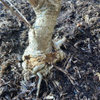
Then I noticed this on the leaves....

Whaddya say. Boxwood blight <eeks>


https://www.dropbox.com/s/rzam2mk5yqlisyf/IMG_3657.JPG?dl=0


Comments (14)

  • 7 years ago

    I hate to say it but it does look like the leaf lesions that appear with boxwood blight in its early stages. Compare to photo images here or here.

  • 7 years ago
    last modified: 7 years ago

    #$(#)@.

    As I sit here googling, dunno do I pull this up and go all nuclear and pull up the rest in this row..All the ones in the row have a bit of leaf curl to it, but all this summer season, I was just saying transplant shock.

    It has taken ~ages~ for these shrubs to grow to this size....as they grow a mere few inches per year. few being the word

    I've noticed one of the fully grown to size ones that have been planted in the ground for at least 6-8 yrs . No signs yet but what I have noticed which was a bit of a concern was some noticable leaf drop on the base. Did not read much into it, thinking it was just the interior of it drying off and dying due to lack of sun.

  • 7 years ago
    last modified: 7 years ago

    I've yet to have the need to pull a plant out due to disease - a very deadly one at that if it eradicates all the BOX on the property... Just shot of making sure I remove it's leaves on the base of soil, I plan to throw a garbage bag over it and tape it tight before any work starts

    Do I just LOP off the stem from the soil line, or does the entire shrub and roots must be dug out in whole ?


    ----

    Cuttings off to the diagnostic lab we go. Stay tuned.

  • 7 years ago

    Happy Dance X2. It's not blight but the local extension is advising leafminer damage. I'm not much of a fungicide sprayer - do have Daconil and Copper on hand. Off to google for mitigation and prevention

  • 7 years ago
    last modified: 7 years ago

    I actually thought it was blight based on my google of pics and not mites. Cut and paste of their diag.


    I'll grab some more cuttings later when @ home.


    Diagnosis/recommendation: The boxwood sample submitted is negative for boxwood blight. The spots on the leaves are injury from boxwood leafminer. A factsheet on this pest can be found here: https://extension.umd.edu/hgic/boxwood-leafminer-shrubs 

    At this time of the year, the adults have already emerged from the foliage, have mated, and have laid their eggs inside new foliage. You can see that the new foliage is rippled and bumpy looking – these are eggs that have been laid and the larvae within has already started to feed. The best time for treatment is in early June, getting good coverage on the undersides of leaves. Apply the active ingredient acephate, carbaryl or malathion. Spinosad can also be used as an organic method. Damaged foliage can be pruned out. Since adults have already laid eggs in new foliage, the new foliage should be pruned out while the plant is still dormant very early next spring to help break the lifecycle of the insect. If not treated, boxwood leafminer can cause significant damage to your boxwoods.

    Since these are new plants, you will want to keep them watered throughout the summer and through the fall. Make sure the boxwoods go into the winter with enough water around their roots to bring them into the spring. When the ground freezes, plants are not able to pull up moisture, but they are still transpiring and losing moisture through their foliage. Ensuring good, deep irrigation

  • 7 years ago
    last modified: 7 years ago

    I forgot I did have a pic of the underside of the original leaf in the 1st post - which was sent to the lab

    https://www.dropbox.com/s/4glte5va92p1u3u/IMG_6187.JPG?dl=0

  • 7 years ago
    last modified: 7 years ago

    gee whiz. just looking at the label on the acephate. Should have CDC on standby -

    I don't like spraying unless I have to.....

    https://assets.greenbook.net/L107498.pdf


    Heres a pic of a new cutting. Front and Back. The original pics posted were the more extreme ones I sent off to the lab


    https://www.dropbox.com/s/lg0rfuaiajhy2u1/IMG_6203.JPG?dl=0

    https://www.dropbox.com/s/abtngznhrv125x4/IMG_6204.JPG?dl=0


  • 7 years ago
    last modified: 7 years ago

    Could you just put your pictures into your post? One needs drop box to view yours and to be willing to open unknown content.

  • 7 years ago

    And can you say roughly where in the USA you are?

  • 7 years ago

    East end LI

  • 7 years ago

    Spoke to extension. They cultured it. They advised they see 100's of boxwood blight yearly and this for sure was not it.


    Off to do some googling as I have ZERO clue what this will do to the soil biology with this soil drench but this can either be sprayed or drenched


    Merit 75WP - primary ingredient - Imidacloprid

  • 7 years ago

    Gracie -


    Indeed. Based on my google of pics, before I sent the cuttings in to the lab, I swore it was BB based on the google pics. Per the last post, I placed a follow-up call to the technician who performed the analysis, and she was adamant it was not BB and even before culturing it, she was adamant it was leafminer. I did state that I took a xacto to a couple of leaves myself and did not find any larvae of any sorts. Regardless, they were pretty confident in their diagnosis.


    I would have to find out it was MIS-Diagnosed, and ultimately, if left unremoved, the BB will mitigate to the other 'box on the property, if not the ones in the immediate hedgeline where this affected 'box sits