Software
Houzz Logo Print
wgmccarthy99

Question about paver driveway base.

7 years ago

Long story short, I'm helping with a DIY paver driveway project. I have no experience with this but have found lots of helpful info online. Most of the base is contained around the sides by with concrete or very hard dirt walls. There are, however 2 sides without any type of wall holding the base from eroding away. Is this going to be a problem?
The area without a wall will be filled in with gravel, so that might help, but I believe it needs some kind of retainer wall.

Comments (6)

  • 7 years ago

  • 7 years ago
    last modified: 7 years ago

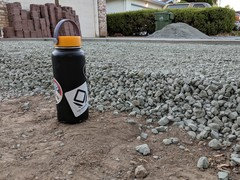
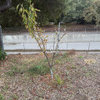
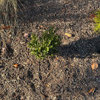
    This is a picture of one of the sides I am talking about. We just put on another layer of base rock, and it has not been compacted yet, so It will not be quite that high. Hopefully this picture helps to convey my question.

    I am worried that as gravel errodes away, it will compromise the driveway. The area will be filled in with more gravel, but not necessarily compacted, unless it has to be. It will not have pavers on it.

  • 7 years ago

    Hey Yardvaark, thank you for that bit of info. My cell phone does not let me send replies on this forum, but I am finally on a laptop sending a progress report.


    We ended up filling in that area in the picture with more gravel, all the way to a hard packed dirt wall. I wish I had taken better pictures to explain what I'm talking about, but basically now all the packed class II base rock is held together on the sides by either very hard packed dirt, or concrete.


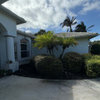
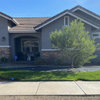
    Down there past the wheel barrow is the area that used to be just dirt. It was filled with gravel then compacted. I took this picture last night after I finished laying these bricks. I still need to sweep in sand into the cracks but it's almost done.


    I am definitely worried about the bricks, and hoping they hold up. We laid out concrete sand over the gravel and ran over it with the vibrating compactor. After that we dug little trenches in the sand and laid down 3/4" PVC (1' outer diameter) and used a straight 2x4 to screed it all to a 1" layer of sand. My worries are that since there were low and high spots after compaction, and since the low spots needed more sand added to them while screeding, that after rain and a car driving on it, the bricks will become very uneven. After we had compacted the sand I realized that there might be a problem, but my friend who lives at the house and is spending all the money on the project likes to rush things and take shortcuts, so we just kept going. I have also heard that the sand should be wet while laying the bricks, and that a compactor needs to be driven over the bricks after they are laid.


    I have never done anything like this but have taken a lot of pride in this driveway. There have been many times that my friend wanted to take some kind of shortcut and I was able to get him to reconsider. It's not my driveway, but I would hate to see this thing fall apart in a couple years.

  • 7 years ago

    Warren, if you know, or can find out, how much did the materials cost and the square footage?

  • PRO
    7 years ago

    It is a bit difficult to follow your story because of terminology. What is "hard packed dirt" ... undisturbed soil? That alone is not sufficient to restrain the edge of a paver field. There has got to be a restraint edge installed ... like what I see at the fore edge of the paving in the picture.

    What you're calling "concrete sand" is probably what we refer to as "paver base" or "limestone screenings" (which could be made of another type of stone in another part of the country.) If there is a gravel base, it is compacted, and then a paver base layer is compacted over it. (In many cases only paver base is used if the traffic is residential or pedestrian.) All whatever compacted layers bring the base to the setting bed level, which is comprised of screeded, but not compacted, paver base sand (One does not carve channels in the compacted base in which to place the screed poles, for which you are using the PVC pipe. One merely lays the poles on the compacted base and their thickness equals the screeded setting bed layer. Then the pavers are placed and once they are in place and restraint is installed, the pavers are machine compacted. (Or in a small job it could be hand compacted with a steel compactor -- which almost everyone calls a "whomper" on account of the sound it makes. But the machine compaction is superior and easier.)

    One sort of tricky bit is matching existing levels, such as where the paver surface must meet an existing driveway. The pavers have to be set high so that when they are compacted, they meet the drive.

    Once the pavers are set and compacted and if there are depressions, the only way to get them out is to lift the affected paver field and "trowel in" some sand and reset the pavers. But this is tricky to get it all smoothed out unless lifting and resetting the whole field and using a screeding method. It's another subject really, that could be detailed and harder to explain.


    Warren McCarthy thanked Yardvaark
Sponsored
Whisler Home Improvement
Average rating: 5 out of 5 stars9 Reviews
Franklin County's Committed Home Improvement Professionals