Software
Houzz Logo Print
yana_sparrow

Schefflera not growing?

7 years ago

Hey guys,

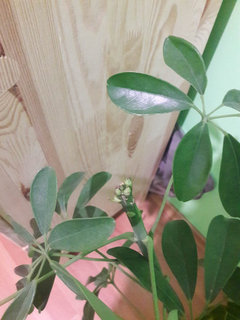
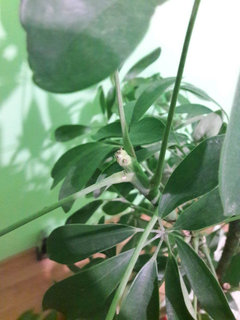
Three months ago my mom gave me her quite big Schefflera plant, because she had no space to grow it anymore and it was sitting in a dark space at the time. It had started shedding the lower leaves because there was no light going to them. Since I brought it home it has stopped dropping leaves, but no new growth appears. I see the little buds of new leaves at the top of the branches, but eventually they turn dark before leaves form and I have to remove the black buds.

At first I put the plant in a south facing room with big windows, but it was quite far form them and I thought that it was not getting enough light so I moved it in a north-west facing very small room where it gets plenty of indirect light. I water about once a week or when the soil feels dry when i stick my finger in it. I fertilize with standard food for indoor plants once a month. Maybe that is too little? Maybe it needs more food? I am not sure when it was last repotted, maybe two years ago, but it does not seem to be very rootbound. Can that be it?

What do you think the problem is? Is it just too stressed still from its previous poor conditions and from the change of moving it home and needs more time to relax and start to grow?

I will put some pictures later, because I don't have any at the moment, sorry.

Thank you in advance : )


Comments (6)

  • 7 years ago

    We’re also getting into fall. The days are getting shorter. You might not see any growth till next spring without Supplemental lighting.

  • 7 years ago

    If it's "quite big" and you're watering when the top of the soil feels dry when you do the finger test, it approaches a 100% certainty you're over-watering. Read what I offer at the end of the post about using a "tell" to determine what a more appropriate watering interval might be. I bet you'll be VERY surprised to discover you only need to water after somewhere around 3-4X the interval you currently adhere to.

    Also, if you're not flushing the soil frequently/with regularity, it's likely the level of dissolved solids (salts) in the soil is/has been building to critically high levels that can only be corrected by a thorough flushing. I'll post something about that after the offering re using a tell.

    Using a 'tell'

    Over-watering saps vitality and is one of the most
    common plant assassins, so learning to avoid it is worth the small
    effort. Plants make and store their own energy source –
    photosynthate - (sugar/glucose). Functioning roots need energy to
    drive their metabolic processes, and in order to get it, they use
    oxygen to burn (oxidize) their food. From this, we can see that
    terrestrial plants need air (oxygen) in the soil to drive root
    function. Many off-the-shelf soils hold too much water and not enough
    air to support good root health, which is a prerequisite to a healthy
    plant. Watering in small sips leads to a build-up of dissolved solids
    (salts) in the soil, which limits a plant's ability to absorb water –
    so watering in sips simply moves us to the other horn of a dilemma.
    It creates another problem that requires resolution. Better, would be
    to simply adopt a soil that drains well enough to allow watering to
    beyond the saturation point, so we're flushing the soil of
    accumulating dissolved solids whenever we water; this, w/o the plant
    being forced to pay a tax in the form of reduced vitality, due to
    prolong periods of soil saturation. Sometimes, though, that's not a
    course we can immediately steer, which makes controlling how often we
    water a very important factor.

    In many cases, we can judge whether or not a
    planting needs watering by hefting the pot. This is especially true
    if the pot is made from light material, like plastic, but doesn't
    work (as) well when the pot is made from heavier material, like clay,
    or when the size/weight of the pot precludes grabbing it with one
    hand to judge its weight and gauge the need for water.

    Fingers stuck an inch or two into the soil work ok
    for shallow pots, but not for deep pots. Deep pots might have 3 or
    more inches of soil that feels totally dry, while the lower several
    inches of the soil is 100% saturated. Obviously, the lack of oxygen
    in the root zone situation can wreak havoc with root health and
    cause the loss of a very notable measure of your plant's potential.
    Inexpensive watering meters don't even measure moisture levels, they
    measure electrical conductivity. Clean the tip and insert it into a
    cup of distilled water and witness the fact it reads 'DRY'.

    One of the most reliable methods of checking a
    planting's need for water is using a 'tell'. You can use a bamboo
    skewer in a pinch, but a wooden dowel rod of about 5/16” (75-85mm)
    would work better. They usually come 48” (120cm) long and can
    usually be cut in half and serve as a pair. Sharpen all 4 ends in a
    pencil sharpener and slightly blunt the tip so it's about the
    diameter of the head on a straight pin. Push the wooden tell deep
    into the soil. Don't worry, it won't harm the root system. If the
    plant is quite root-bound, you might need to try several places until
    you find one where you can push it all the way to the pot's bottom.
    Leave it a few seconds, then withdraw it and inspect the tip for
    moisture. For most plantings, withhold water until the tell comes out
    dry or nearly so. If you see signs of wilting, adjust the interval
    between waterings so drought stress isn't a recurring issue.

    ***************************************************************************************

    Flushing Soils

    When you water, you should be able to flush
    planting's soil to eliminate the potentiality of salts from
    fertilizers and tapwater accumulating in the soil, thereby limiting
    the plant's ability to take up water and the nutrients dissolved in
    the water. If you think you shouldn't flush the soil during your
    regular water applications for fear the soil will remain saturated
    for a lengthy period, limiting root function or worse, you should
    consider a different soil or take steps to reduce the amount of
    excess water your soil can hold. By whatever means necessary, getting
    to the point you can water correctly is going to make a very big
    difference in the opportunity to realize as much of it's genetic
    potential as possible. Once you can water correctly, you no longer
    have to do battle with a water-retentive medium over control of your
    plant's vitality. There are several methods of limiting how much
    water your planting can hold, all but 1 or 2 are completely passive,
    requiring no effort on your part other than set-up, which is monkey
    easy. I can help if you have interest in that, I'm continually
    improving my proficiency at monkey easy tasks.

    To flush the soil of a planting: Water with room
    temperature water until the soil is completely saturated. Allow the
    planting to rest for 15 minutes to an hour to allow as much of the
    salt accumulation as possible to go into solution, then pour a volume
    of room temp water equal to at least 10X the volume of the pot the
    plant is in slowly through the soil. This will remove most of any
    accumulation of offending salts and resolve any skewing of nutrient
    ratios.

    It's a good idea, no matter what time of year, to
    fertilize most plants immediately after flushing the soil. Try to be
    sure you're using a fertilizer that has a ratio as close as possible
    to the ratio at which the plant uses nutrients. The NPK % listed on
    fertilizer packaging is not its ratio. 7-7-7 and 14-14-14 are 1:1:1
    ratios. 9-3-6, 12-4-8, and 24-8-16, are all 3:1:3 ratios. Container
    growers should try very hard to avoid use of fertilizers advertised
    as 'bloom-boosters', or any number with a middle number (Phosphorous)
    higher than either the first or third numbers (Nitrogen or
    Potassium). These fertilizers can badly skew nutrient ratios with
    even the first application). On average, plants use about 6x as much
    N as P, so there is NO potential for a positive outcome when
    supplying many times as much P as the plant requires. I, and a large
    number of other members, use Dyna-Gro's Foliage Pro 9-3-6. It's
    designed to closely mimic the uptake ratio of the average plant, and
    has many other attributes not commonly found in other fertilizers. It
    also has ALL of the nutrients essential to normal growth. Summarized,
    it makes fertilizing as easy as it can be, and from 1 container.

    ***********************************************************************************

    If you apply what you read in this Basic Overview of Good Growing Practices, it will help you avoid ALL of the pitfalls that commonly confront hobby growers. All it takes to become a successful grower able to grow nearly anything you set your mind to is an appropriate medium, fertilizer, temperature level, light level, and watering practices. Once you advance to the point you're using a medium that allows you to water appropriately, the rest (other than light and temperature) is remarkably easy. More often than not, when a grower has chosen an off-the-shelf medium based entirely on small particulates, he has chosen his worst adversary.

    ************************************************************************************

    Appropriate Medium

    From my perspective, an appropriate medium is a medium that allows us
    to water to beyond the point of saturation at will, so we're flushing
    the dissolved solids (salts) that are present in tapwater and
    fertilizer solutions. These dissolved solids are left behind and
    accumulate in soils whenever we're forced to water in sips, which is
    commonly employed as a strategy in order to avoid the sogginess that
    limits root function and wrecks root health. It's important to
    realize that a healthy plant is not possible w/o a healthy root
    system. If you have established goals that include healthy and
    attractive plants, it's critical that you have a plan to avoid the
    limitations imposed by over-watering and an accumulation of dissolved
    solids (salts) in the soil solution.

    Not every grower fully understands the dilemmic issues associated
    with inappropriate soils that force the plant to pay a vitality tax
    resultant of an unhealthy amount of water being retained for extended
    periods when we water correctly – which is to say, when we flush
    the soil to limit salt build-up. On one hand, we have the potential
    for over-watering, and when we act to avoid it by offering dribs and
    drabs of water here and there, we have high salt levels to deal with.
    It's easy to see how we all might benefit from use of a soil that
    allows us to water so we're flushing away excess salts without
    limiting our plant's vitality via waterlogged soils.

    Al


  • 7 years ago

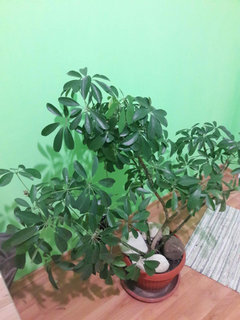
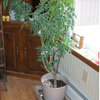
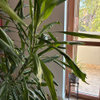
    Thank you for the in depth answers! Here are some photos.


  • 7 years ago


  • 7 years ago