Software
Houzz Logo Print
nodin2000_orlando_fl_9b

Holly problems - terminal?

Hi.

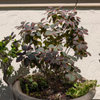
I planted 4 Oakleaf Holly's around 9 months ago.

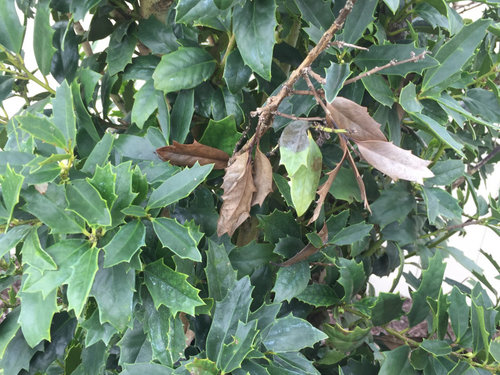
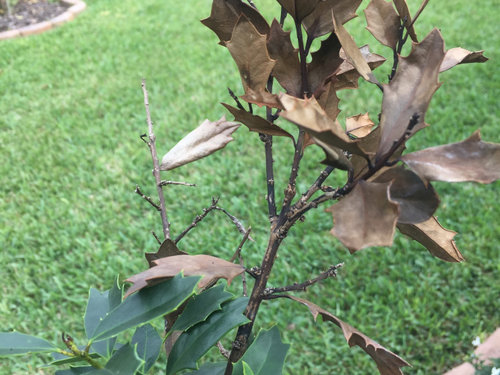
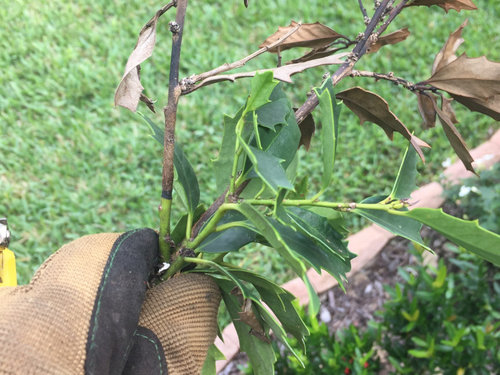
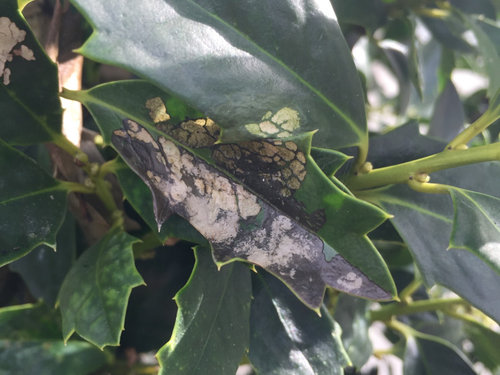
They have not grown much, but the plants appear generally healthy apart from the repeated dying off of several branches. This is occuring on all of the holly's.

We are in Central Florida so it's not frost damage.

The plants are well watered through drip irrigation and well mulched.

They were large (30g) plants when they went in the ground and started browning quote soon afterwards. I initially put this down to transplant shock, but several months later it is just as common.

I prune off the dead branches and dispose of the leaves. But more soon reappear. I'm pruning off as fast as the trees are growing.

I use a systematic granular pesticide and fungicide.

I'm looking to plant some other new bushes nearby, Ligustrum and Cleyera's, and am concerned about spreading infections if this is Phytophthora root rot of something similar.

All thoughts and inputs are greatly appreciated.


Comments (13)

  • 6 years ago

    30G is a huge transplant for a shrub!! And the larger/more mature a plant is at planting, the longer it takes for them to establish.

    Can you tell us a bit about how these were planted? Size of planting hole, amended or not, container soil removed or not and rootball loosened and any girdling roots removed? What was the aftercare like?

  • 6 years ago

    Why do you feel the need to use a systemic? IMPE, holly is pretty hardy and not too many things bother it.

    Wondering if it's harming more than helping?

  • 6 years ago

    Agreed that they were large (and heavy) transplants. I also planted 30g Japanese Blueberry and a Crepe Mrytle at the same time and they have done fine.

    I dug out holes no deeper than the root ball and about 2x as wide (obviously a large hole) and amended with tree/shrub compost about 50/50 with the native sandy Florida soil. Container soil was not removed, rootball was loosened but it was not too tight.

    I actually planted one of these a bit too deep and ended up digging it out a couple of weeks later so I could raise it up - there were already new white roots visible from the root ball.

    I used a holly fertizer in Spring, a few months after planting, and when the browing started a tried a granular insecticide and fungicide to try and improve the situation. It neither worsened or improved.

    The trees where watered via the main lawn sprinklers. As they are in a corner of the garden I suspected that they might not be getting enough water. So I added an extension to the drip irrigation and put them on that as well. Again, no change to the plants.

    They have not grown much in size overall, not that I expected that while they put down new roots, but they definitely have new growth on them.

    But they also have these other noticable branches dying off.

    My main concern is to rule out something that would effect the other smaller plantings, 3g shrubs, that I am putting nearby.

    It would be a blow if these hollies had something terminal, but worse if they damage the surrounding new shrubs too.

  • 6 years ago

    plants are well watered through drip irrigation


    ==>>> how have you verified.. that your watering regimen.. is actually watering the entire root mass planted???? .. which is requisite with large transplants.. for at least a couple years ... i dont understand if the drip you put in.. is on the same timing as the lawn irrigationl... often.. drip requires hours of running.. compared to lawn irrigation ...


    it is rather rare.. that problems cross species ... its possible.. but not probable ... i wouldnt worry about planting other types plants ...


    i would also go much smaller.. smaller plants.. smaller transport problems.. smaller transplant problems ... lesser shock issues ... and of course.. they are cheaper.. so if you lose some... your wallet isnt as shocked ...


    integrated pest management suggest that you REACT to problems .... rather than act prophylactically ...


    i got distracted by the phone.... perhaps i will add more later ...


    ken


  • 6 years ago

    Phytophthora in all its many forms tends to be more of a soil issue rather than specific to plants (host range depending on strain is huge). It is not a fungal organism but an oomycete or water mold and moves across the soil profile with groundwater, rain and irrigation. Generally, it's going to be most common with poor drainage situations or excessive watering. Although amending individual planting holes is not recommended because of interface or drainage issues, I doubt this is the problem here.

    I would also be concerned about watering needs. Lawn sprinklers do not come close to providing adequate irrigation for trees and shrubs. Maybe these shrubs are just showing stress from earlier deprivation. I see no issues with pests or obvious signs of disease so would also opt out of using the granular pesticide. Unless/until an obvious need arose.

  • 6 years ago

    Thanks for the addtional comments. I agree that I think the plants could have had water stress initially, having just been watered by the lawn irrigation through their initial months. That said, summers are wet here so they had some good soakings through the summer and I added the drip system as an addional watering source - they still get a broader soaking from the lawn sprinklers. The drip system I have for them has 3 drip points for each tree, to try and spread the moisture around the roots.

    Great to hear about the lack of signs of pests/disease so I will not add any pesticides.

    For sure, my new plantings are max 3g. As was stated above, much less stress on the plants, and my wallet, both at purchase and should anything go wrong!

  • 6 years ago
    last modified: 6 years ago

    #1 - NEVER depend on a lawn sprinkler to sufficiently water a large tree when it is getting established. Lawn sprinklers only water down to about 2-3 inches. You need to water by hand. I believe the tree was weakened by too little water during our hot, hot summer and succumbed to a disease or had some root death because of it.

    The rule of thumb for all new plantings in Florida is to water well every other day for two weeks, water every third day for two weeks, water once a week for two weeks, then water once a week if there isn't an inch of rain. Fertilize after 8 weeks. When I say water well, I mean stand there with a hose and water for at least 5 minutes, 10 minutes for the size trees you planted. You can also just let the hose trickle near the dripline for about 30 minutes. Drip irrigation is good IF you let it run long enough to soak the rootball. By only watering the first few inches of the ground, the bottom of the rootball will likely die, and the tree will have shallow roots that will make it less stable in storms.

    Never put an insecticide on a tree if you don't know it has the insect that insecticide is used for. A systemic insecticide, indeed even fertilizer, applied to a week tree can kill it.

    I know this sounds apocalyptic, but it's very important stuff to know about planting in Florida. If i were you, I would water well once a week for maybe four weeks, then maybe once a month for the rest of the winter. No fertilizer and no insecticides, sprayed or systemic.

    Here is a page with some diseases of hollies. Two of them may apply to your tree, but I don't think so. I think the tree roots have been dying off over the summer from lack of water, and the tree can only support so much growth, so some is dying off.

    http://www.hollysocam.org/PDF/growing/ANR-1087.pdf 

    BTW, the perennial rule is that they sleep the first year, creep the second year, and leap the third year, so don't worry too much if a newly planted tree or shrub doesn't grow at first.

  • 6 years ago

    Thank you for taking the time to share this with me. I certainly did not water the trees to this extent, so it is quite possible that some of the roots have died off and the tree is not able to support the growth.

    Based on your comments, I am going to follow your instructions and water by hose over the winter, giving it a proper soaking, in addition to the usual irrigation.

    For the new shrubs (Vibernum, Cleyera, Ligustrum) that I've planted today, I will follow the watering plan that you outline above.

    Fingers crossed it's not too late for the hollies.

  • 6 years ago

    As I said above, only water it for a month this late, then once a month until March. Don't go from not watering enough to over-watering. The only reason you can water this late is because October is a good time to plant trees, so it can take up water until it goes dormant. It can't handle this, and more roots will die. And NO fertilizer! Never fertilize a sick plant.

    BTW, what zone are you in? Japanese hollies are best if not grow past zone 9a, where they get some cold weather. How far down in central FL are you -- how close to zone 10a? Climate may have a lot to do with it.

  • 6 years ago

    DG great info!!!

  • 6 years ago

    Yes. Thanks for the extra info. I admit that as a novice, my first thoughts were to use fertizer/fungicide/insecticide like a vitamin...good for prevention. I gather now the latter 2 should be used as medicine, only if needed.


    I'm just west of Orlando, in 9B.

    The hollies are Oak Leaf holly (Ilex x “Conaf”). They are listed as Zone 6-9. Our garden is south facing so I planted them near the western fence line so they can get a bit of shade late in the day.

    So you think it could be too hot for them?

  • 6 years ago

    ^^ what Dave said.