Software
Houzz Logo Print
jen_marie_hans

Help my Fiddle Leaf fig tree!

6 years ago
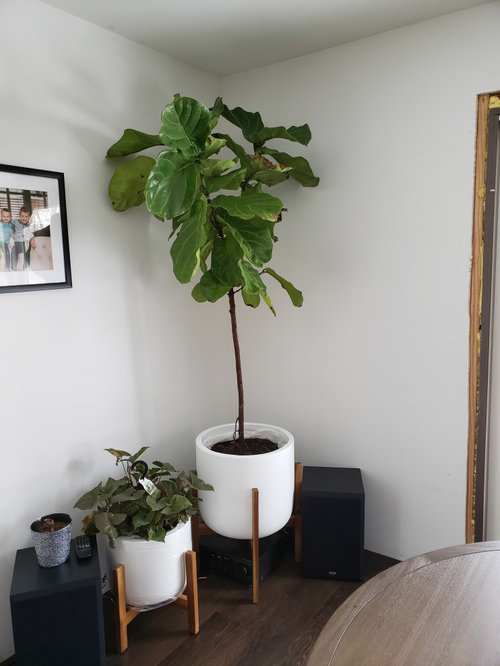
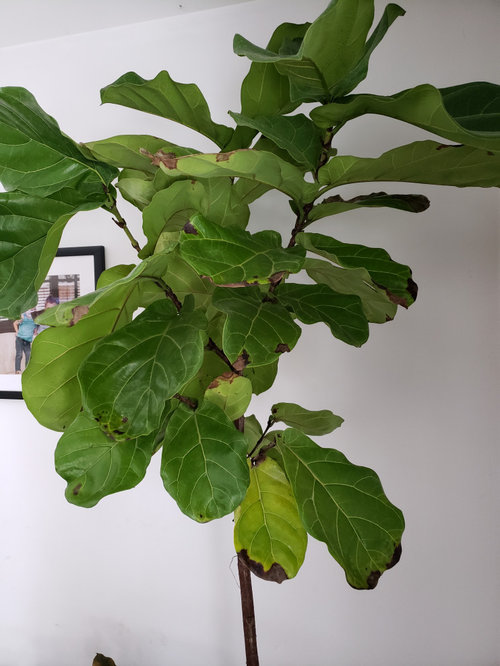
After reading a million articles about dying fiddle leaf figs i can't determine what is wrong with mine.
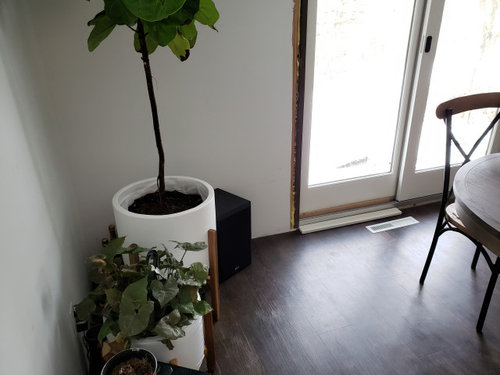
I think it gets enough light.
It is within 5 feet of a vent, so maybe too dry? but the top of the soil stays moist for a loooong time.
I just potted it and maybe used the wrong soil- it was top soil.
It keeps dropping leaves, specifically ones on the bottom it seems.
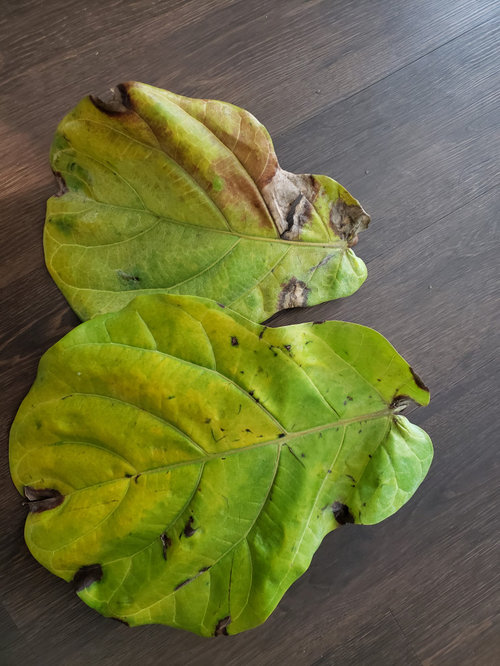
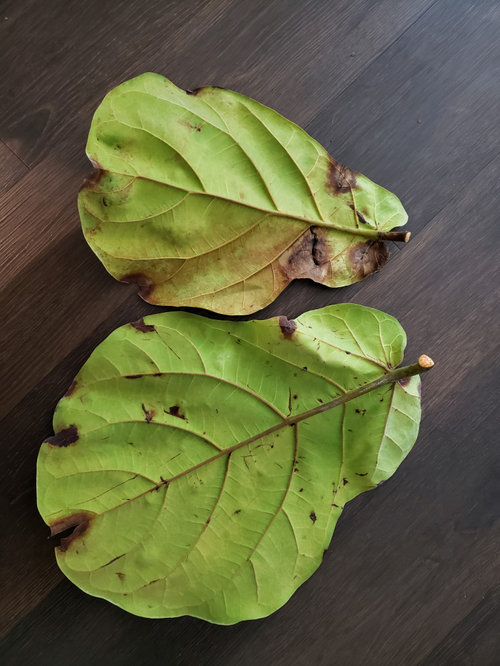
the last two leaves dropped were very yellow.
It always has brown spots on it. even when i bought from nursery.
The yellowing makes me think bacteria...
Please help....

please help.

Comments (10)

  • 6 years ago

    thank you so much! It wouldn't be advised to get it out of the top soil and replace that with indoor potting mix in the same white pot it's in?

    The wooden dowel trick is amazing! Perfect.

    Unfortunately that's really the best light it's gonna get. ...is it doomed from that aspect alone?

  • 6 years ago

    That’s really not an ideal spot. It’s not going to do well there. Its Going to be hard to get it healthy with the low light levels. If it does come back from this, it’s not going to grow very pretty there. It’s going to constantly try and stretch for the light source.


    I wouldn’t repot into an indoor potting mix yet. Getting it back in its original sized pot means less soil. Less soil means less water retention. That’s one of the main issues here. When you do a full repot, do it when the plant is healthy, next summer, with a proper homemade soil mix such as the 5.1.1.


  • 6 years ago

    It's back in the grower pot now! Trying to find a better spot....
    would it be OK to trim the brown spots off the leaves?
    Anything else i can do to keep it alive?

  • 6 years ago
    last modified: 6 years ago

    What you see in the foliage reflects the condition of the root system. Plantings with excessive amounts of water in the soil lack the amount of oxygen needed for normal root function. When this occurs, plants are unable to efficiently move water enough to ensure hydration of their most distal parts - leaf tips and margins. This is why most of the damage is manifested in leaf margins. So, your focus should be on making sure you can keep the root system happy. This can be done in a variety of ways, but as Dave mentions, repotting now isn't the best idea. If it was my plant, I'd get rid of the topsoil w/o disturbing the old root system, then repot in a deeper pot using ballast in the bottom to ensure the planting holds very little perched (excess) water. Then, when the timing is better, I'd do a full repot, which includes bare-rooting and a complete change of soil. Ideally, the soil you choose/make would be one that allows you to water at will w/o need to be concerned that prolonged periods of soil saturation will cause a repeat of what you're currently dealing with.

    The largest bump in the road encountered by hobby growers is their choice of soils. Some learn how to work around poor soils by using some simple science (like using ballast, wick, or highly aerated soils), but the lions share of growers are perpetually limited to a significant degree by soils that hold too much water.

    Let me know if you have interest in chasing this a bit further. Growing trees in pots is very easy if you're using an appropriate soil and working at keeping roots healthy.

    I see no evidence of any bacterial malady. I'd skip trying to cut off the brown patches for now. Next summer, some time after you repot, you can defoliate the tree and wait for the new flush of pristine foliage that will follow the defoliation. First, though, the tree needs to be coaxed into a higher state of vitality.

    Al

  • 6 years ago

    Could you point me in the right direction to the right soil? Even an amazon link for the mix you'd choose. I also have a snake plant and another fiddle leave fig that i potted in the same stuff. ugh.

    To recap, i need to put the tree back into a smaller pot that is a little deeper and add drainage rocks at the bottom. Stick dowel in to see if needs water. Repot next summer to large pot. Can i go that large? The white pot is about 18" larger in diameter than grower pot.

    thank you everyone!

  • 6 years ago

    as far as pot size, I’d go just large enough to fit the roots and soil. That way you’ll play it safe when it comes to water retention. A larger pot with more soil usually just means more water retention unless you use something like the gritty mix.


    there arent really any ready made soil mixes anyone around here will recommend. The homemade 5.1.1. And gritty mixes are what most of us use.


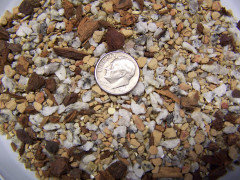
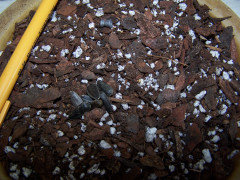
    5.1.1. for example is made of five parts sifted pine bark fines, one part peat, one part perlite with some dolomite lime.

  • 6 years ago

    "Could you point me in the right direction to the right soil? Even an amazon link for the mix you'd choose. I also have a snake plant and another fiddle leave fig that i potted in the same stuff." These are the media I use for almost everything I grow:


    If you're looking to buy a premade soil, about any listed here in the #20 mini size will work, but you can make your own for a fraction of the size, but I don't think it's a good idea to repot struggling plants now. A temporary repot using an off the shelf potting medium mixes with 1 or 2 equal measures of perlite will get you by until you can do a full repot.

    To recap, i need to put the tree back into a smaller pot that is a little deeper and add drainage rocks at the bottom. Drainage layers don't work.


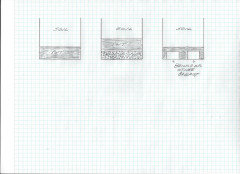
    The shaded portion marked PWT (perched water table) represents the layer of saturated soil that occurs in media comprised of predominantly fine particles - like peat, compost, topsoil, coir, ..... Notice what happens when a drainage layer is used in hope that it will increase drainage. What it does is elevate the perched water table so it perches above the drainage layer instead of above the pot bottom. This is counterproductive. Note though, that other objects CAN be used to displace media that would otherwise be saturated with water. If you plan carefully, you can eliminate more than 90% of the excess water ANY medium can hold. Filling the bottom ALMOST completely with plastic blocks, blocks of foam, overturned pots .....can make an incredible difference insofar as reducing excess water retention. Because of the timing, the best thing you can do is avoid disturbing the roots too much AND reducing water retention. Ballast allows you to do both. More on that to follow if you decide to follow that path.

    Stick dowel in to see if needs water. Repot next summer to large pot. Can i go that large? If you use a medium that holds little or no perched water, you can use a pot as large as you like. It's only when your soil holds excess water in the form of perched water that over-potting becomes a limitation.

    Al

  • 6 years ago

    Al - I have sooooo much to learn. My poor plants.


    I clearly did my drainage wrong. I used rocks about 2" in diameter or bigger, and made a layer of about 5" deep. Then put some soil on top of the layer and then put the original root ball down on that.


    Please walk me through the ballast path. I will buy some potting mix and perlite. And whatever else you tell me, lol, to get my plants healthy again!


    THANK YOU

  • 6 years ago

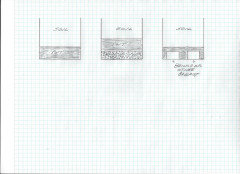
    I don't want to overwhelm you to the point where you decide "this is too much info", and give up; but, the rocks are large enough that they probably were acting as ballast instead of a drainage layer. If a medium supports a 4" column of excess (perched) water, it supports the same 4" of excess no matter what the pot size or shape happens to be. The shaded part below represents perched water:

    I don't want to overwhelm you to the point where you decide "this is too much info", and give up; but, the rocks are large enough that they probably were acting as ballast instead of a drainage layer. If a medium supports a 4" column of excess (perched) water, it supports the same 4" of excess no matter what the pot size or shape happens to be. The shaded part below represents excess/perched water, and that portion of the medium is 100% saturated.


    A few rocks in the pot bottom displaces soil that would otherwise be saturated, so it reduces the amount of water the container can hold. The perched water column is still the same ht, but because of the bricks/stones, there is less soil (and therefore, water) within that height. IF the layer at the bottom is such that disallows a continuous soil column from the upper layer of the soil to the pot bottom, the water will perch above the drainage layer. The water must follow a path through the soil to the bottom of the pot, then out the drain.

    The image on the right works as ballast because there is a continuous soil column from top of soil to pot bottom. Water perches in the middle image because there is no continuous column of soil from top of soil to pot bottom because it's disrupted by the "drainage layer".


    I'll leave you 2 links to look at when you have time. In the meanwhile, keep using a tell to avoid over-watering. It won't matter if you take a couple of weeks or a month to plan your course. Once you understand how important aeration is to root health and thus to the health of the entire organism, and how to effectively control that air:water relationship in the root zone, you'll be pleasantly surprised at how large was the step forward you took.


    A basic overview of good growing habits.


    Using ballast to combat excess water retention.


    Al

Sponsored
Schlabach Woodworks
Average rating: 5 out of 5 stars21 Reviews
Franklin County's Reclaimed Wood Professionals