Software
Houzz Logo Print
webuser_997033148

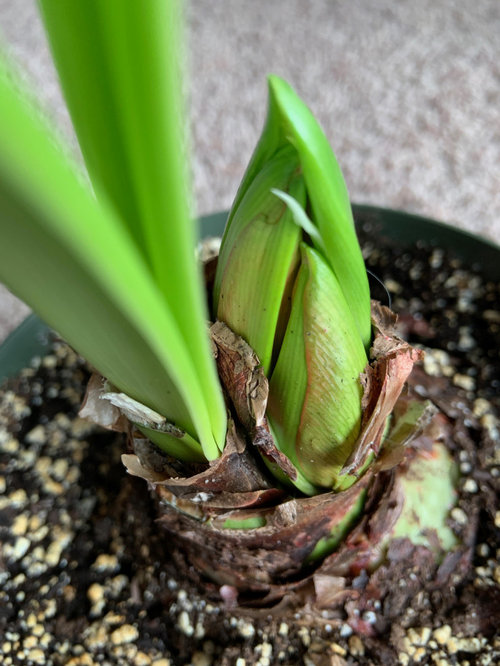
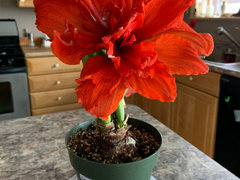
Amaryllis going to open right by bulb

My 'Celica' - new to me last year, grew well, nothing strange happened - looks like it's going to flower just as it emerges from the bulb this year. No others in my collection are doing this; all have been treated the same. Any idea what might cause this?


Comments (23)

  • 6 years ago

    Stunted flowers, as you show, could be caused by: improper storage conditions, nutrient poor soil, or over/under watering. My guess is that watering for this plant differed slightly from the others. Next year's growth will likely be just fine.

  • 6 years ago

    Good guess. Don't see how any of these conditions can have occurred. New soil last year, fertilized regularly (not often) over the summer, depending on growth state. New soil (MG *not* "moisture control") this year, generously augmented with perlite. Watered through and then no water until growth began. I always feel down at least half an inch for dryness before watering. So who knows! Sometimes I think these bulbs are just mysteries.


    I usually use a balanced slow-release fertilizer (Osmocote "green," on schedule, top dressing each three months of the growing season) on the theory that leaves are extremely important. Do you ever supplement your soil mix with bone meal? Is there any danger that there would be too much P, using such a slow-release, organic type fertilizer? I've been wondering about this. I try to bulk up my bulbs each year, but they seem to gradually diminish over time. I want to turn that around this season. Any comments on this will be much appreciated.

  • 6 years ago
    last modified: 6 years ago

    I have mosty experienced this with papilio, however it has happened with other hybrids. I grow outside, year round in pots. Almost all my hippis are evergreen. For me, growth slows/stops in the fall and many of the leaves , not all, die back around Nov/Dec. as they get ready for flowering. I have noticed that when the leaves die back, many times old roots seem to die and accumulate causing the bulb to decline. I have also noticed that when I repot and clean off the dead roots before flowering, I do not have this problem. It`s when I'm lazy and hope I can get by another year that I have noticed both the decline and the occasional flowering close to the bulb/soil. It shouldn't harm bulb or scape to check on the roots. If you notice a lot of brown soft roots, you should be able to easily wash them away and repot. If that's your problem your bulb should perk right up after the repotting. Hoping this helps.

  • 6 years ago

    Yeah, I do all that stuff too. Gardening in Minnesota is similar in that the growing time of year is the same. It's just that, of course, more of the year is spent indoors.


    Do you trim off the bottoms when basal plates get thick? I've read that this state can really rob a bulb. I do it whenever the plates get more than 1/4" thick. Sometimes it means the bulb loses a lot of living roots, but my usual experience is that it just takes a little longer for them to come to bloom, and they're better off for having been trimmed.


    I've done as much reading as I can, particularly on Dave's Garden in the olden days when it was really active. Many amaryllis enthusiasts swore by setting their bulbs out in the garden for the summer: full sun, rich, well-drained soil, regular water. (They posted pictures of bulbs 6 to even 8 inches in diameter!) I can't do that in my yard: too many plantings, no "optional" space, and it's all part sun. But I have a vegetable garden way "out yonder" that might work. Sandy loam, and I can enrich it no end with organic compost. It can be both rich and moisture retentive but also airy. Sand plus organic materials do that for you.


    I take a bit of leave to doubt the common wisdom about all amaryllises doing better in pots. That's not a natural state for any plant. I do it for convenience, but I'm not sure I'm doing the best I could.


    Well, just thoughts. And if you have any experience with supplemental bone meal - would be happy to hear. Many thanks! Good to chat.


  • 6 years ago
    last modified: 6 years ago

    Hey Northern Gardener,


    When you trim the basal plate, do you let it cure and or apply rooting powder? I have had good luck with this technique and they start growing roots right away. The roots start growing even better if you give them some bottom heat, like one of those inexpensive heating mats folks use for starting their vegetable seedlings.

  • 6 years ago

    I dust with cinnamon as an anti-infection treatment (could use Physan I suppose, but the recommendation of other gardeners was cinnamon probably because it's so readily available; not many gardeners have Physan on hand, though I do) and wait for about five to seven days. Maybe not long enough? But I admit, I get impatient. ;p Haven't had any fails yet with this treatment. Bulbs trimmed in this way take a little longer to get going, but they do survive and generally do well.


    I hadn't thought of using rooting hormone at this stage - never seen it discussed - nor the use of bottom heat, but of course both make complete sense. I do have bottom heat mats. Got them many years ago (*not* cheap at the time) and they are still holding up well. I'll give them a try next season.


    When you trim basal plates, how close to the swelling of the bulb do you trim (one or two visible "scales")? And what is your procedure after trimming?


    You are the first gardener I have met since I first started doing this, many years ago, who has ever even heard of basal plate trimming. I'm impressed! and glad to know ya. There is almost zero information out there about this. When I search on it, almost the only thread that comes up with any detail to it is one that I was engaged in at Dave's Garden. Almost every amaryllis culture site just gives the same old general advice, ho hum. Sheesh, if what I was dealing with was "the usual" I wouldn't be searching online!


    Just to be persistent: any thoughts about bone meal supplement? I won't be doing any more basal plate stuff this year, but a Major Goal is bulking up the bulbs so they're *bigger* each year, not smaller. I get okay blooms, but I should be able to improve them, not have them just gradually decline to the point where I go buy new ones.


    Aways learning. Thanks, Fred.


    Joan

  • 6 years ago
    last modified: 6 years ago

    Joan, I agree with everything Fred said :) Seriously, not only is he in your neck of the woods, but he has a lot of experience with a lot of hippeastrum.

    I also cut the basal plate when it gets 1/2 in. or thicker and the bulb appears declining. Although I have physan, powdered and liquid rooting hormone, my usual choice is cinnamon after a cut or when cleaning/scrapping basal plates just because I prefer to use the most natural method first.

    I use pots for many reasons. First our soil has nematodes and since our ground doesn't freeze they aren't killed in winter. Second, since I grow outside, I apply a systemic in the spring to help prevent the spread of the mosaic virus (vectors) as well as prevent narcissus fly infestation and prefer to do anything I can to avoid any leaching into groundwater. My pots range in size from 1 gallon to 7 gallon and some of my bulbs do reach softball size. Not all do and I think it is genetics in most cases. Third, I have controll over the mix I am growing them in (we all have our special mix that works for us ) That being said, I have found some seedlings growing happily in the ground....I moved them into a large pot lol. Fifth, I'm always rearranging things. Now I'm creating a place for my own hybrids so I can keep better track of them.

    I guess what I'm saying is the best way is the one that works best for you and a lot of times we learn this by trial and error. So, if you want to try growing in the ground do it. Now regarding Fred doing this, I can't imagine him planting 300 pots of bulbs in the ground and pulling them each fall, but who knows :)

    Northern Gardener (3b west central MN) thanked jstropic (10a)
  • 6 years ago

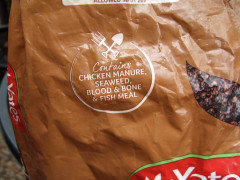
    I have used Blood & Bone for my Hippeastrums both in pots and in the open garden. I have never noticed any drawbacks with being liberal with Blood & Bone ( except my dogs like to dig up the freshly prepared soil ). All my plants are outside growers. I have dabbled with different fertilizers on groups of my hippeastrums with varying outcomes, but for my situation here, I find better results have come from pelleted poultry manure and Blood & Bone meal ( with a slow release fertilizer added as well to the potted plants ). It seems to work under the conditions I have ( outdoor gardening Sydney, Australia Temperate zone ). Also, I'm just not regular enough to keep up with other good water-in type fertilizers ( I do admire that you do this so well, Fed! I'm pretty hopeless with keeping up my applications on time, myself! ).

    I have read that poultry manure does not work so well when used in potted plants, but mine show improvement when it's applied. Maybe there is more bacteria breakdown in the commercial bought soil here than in some other places.


    A lot of old-time gardeners swear by Blood & Bone and put handfuls of the stuff mixed in with soil before planting out in the garden. Blood & Bone must be worked/mixed into the soil at root level to do any good, and not just sprinkled on top.

    I have found that the poultry manure makes the biggest difference, though. Plants respond very quickly when it is applied. This is what I have found works well for me with outside growing. I don't mind the strong smell of the poultry manure pellets ( although others hold their noses closed!! ). In another place and climate? Well, maybe something else works better, or better products are available. It is a matter of what you observe to work for you, in your location, as jstropic mentions.

    Northern Gardener (3b west central MN) thanked Julie Wignell
  • 6 years ago

    Thanks Julie for the info on the blood and bone meal. I bought it long ago but never used it and didn't realize it had to be worked into the soil. I find the same thing about fish fertilizer thst you do about poultry manure. It works great but doesn't smell great! Not sure I would use it indoors. :) Jody

  • 6 years ago

    Northern Gardener, I've seen those short stem blooms often on new bulbs and sometimes on mature bulbs late in the season like their 2nd (or 3rd) bloom late season when the bulb is spent. You have the right fertilization but I think your bulb might benefit from a larger pot for more prolific root growth. I like to give mature bulbs an 11" or larger pot size depending on how vigorous they grow.

    Northern Gardener (3b west central MN) thanked Brian Sakamoto (10a, CA, USA)
  • 6 years ago

    Hi, Jody.........yes, I like the fish emulsion as well, and the plants seems to perk up when it is applied.

    Apparently Blood & Bone does not move well through the soil, so you need to place it where the roots can take it up. I mix it through my potting mix when re-potting, and throw in a couple of handfuls and stir it into the bottom of the hole when preparing to plant in the garden. I like the idea that it is such a slow release product and the plants are receiving some feeding over an extended period. But for inside pots it may not be such a good idea. I would stick to the cleaner chemical fertilizers in that situation.

    Northern Gardener (3b west central MN) thanked Julie Wignell
  • 6 years ago

    Brian, that could be it: bulb is just tired. It bloomed pretty huge last season, and maybe didn't have enough time to bulk up over the growing season. And/or I didn't give it enough fertilizer for its size over the course of the season.


    What's your thought about the common "keep them pot-bound" advice? I've found that some larger bulbs can completely fill even a pretty big pot - 8" - if fertilized well and given a lot of sun. One year I practically couldn't find any soil left, what with the roots climbing out all the way to the surface. o_o wow. I can't use big pots for everything indoors because there's just not enough space. But as a general principle, I wonder if this advice shouldn't be de-bunked.


    Re fish emulsion, Jody - My mom used that (decades ago now) and swore by it. But only on outdoors plants, specifically begonias. We kids who were assigned the "chore" (we had chore lists for when she went to work, we actually loved it in the summer as something to Do) didn't much enjoy the mixing process. But her flowers were the admiration of the neighborhood, and the smell went away in a couple of days.


    Joan

  • 6 years ago

    Hi Joan, I don't follow the old adage of keeping bulbs pot-bound which we've seen written everywhere. Bulbs will adopt accordingly, so a smaller pot will limit growth while bulbs can reach closer to maximum size once the pot size is increased. Depends on vareity, but many of my outdoor bulbs such as doubles & papilio are in 11" pots and have grown a few inches from the edge so I'll need to repot to a 13" this winter.


    Just my experience.

  • 6 years ago

    YAY!! My instincts confirmed by a veteran's experience! I'm going to go pot-shopping and keep everything in at least 8-10" pots.


    To all of you on this thread: My bulbs are mostly in the bud-visible with young leaves stage. Plus or minus, depends on the bulb. Would it be too disturbing to gently up-pot at this point? As long as it doesn't get cold here they never really go dormant on their own. I have to start drying them down in late August. Maybe wait till they're done blooming?

    A (maybe) final question for general observations/discussion: do you find that your bulbs shrink during the bloom cycle? All of mine do. I think it's inevitable, but I'm wondering if there's anything I can do up front to minimize that shrinkage. I just potted up a few that I was given as a Christmas gift - grown in water, ouch, but I did watch the water levels in the glasses and give them weak water soluble fertilizer at every watering. They were husky when they arrived, and have lost about 25-30% of their diameter. While as far as I've observed all bulbs lose mass during the blooming time, these seemed to lose more, faster, than anything grown in soil. Which suggests to me that the fertility of the soil from the get-go really matters.


    I'm sure none of you has ever subjected a bulb to such torture. But hey, it was a gift, and though it hurt my gardener's soul to leave those plants in their pretty sphagnum-stuffed glasses and porous rock medium, it seemed like it would be disrespectful toward the giver if I were to rescue them before they did their intended intensive group bloom. How's that for a Christmas gift: you give a gardener an opportunity to watch extended slow motion plant torture, LOL!! Yet it was also an opportunity to make observations and see how fast I could help them recover, which is the stage I hope I entered today.


    Thanks to everyone who has contributed to this thread. Fred, Jody, Julie, Brian. I have gotten more ideas from this extended conversation with all of you masters than I've ever learned from any published article about amaryllises. Real gardeners with their feet and hands in the ground, and who enjoy sharing that, are the Best.


    Joan


  • 6 years ago

    I've always found a single bulb in any sized pot is not nearly as happy as a bunch of bulbs together in a larger pot. Possibly the more advanced bulbs quickly fill the soil with roots and keep the mix drier and more airy? I'm not sure.

  • 6 years ago

    Interesting, Julie. Perhaps a bunch of bulbs in a larger pot more closely mimics nature. Because, after all, as they multiply they must eventually crowd one another, depleting water resources in the area. (But they must also deplete minerals/food unless somehow it is constantly resupplied.)


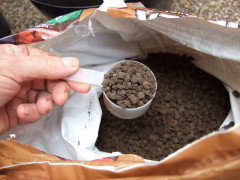
    One other thing: a few comments back, you mentioned poultry manure, but as pellets. I can get poultry manure here - more or less raw, straight the many from turkey farms in the area. It's far from pelleted. I have to shovel it into buckets. And it's a little hard to get, because the turkey farmers are very cautious about any visitor to their properties possibly tracking in pathogens that could be lethal to a flock. Are you referring to a commercially processed product?

  • 6 years ago

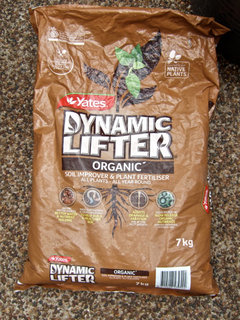
    Yes, it is a commercially processed product. We have it in a few different names, but the most commonly known one is Dynamic Lifter.


    Northern Gardener (3b west central MN) thanked Julie Wignell
  • 6 years ago

    Pictures: wonderful! Thank you. :)

  • 6 years ago

    This is such an informative and interesting thread. Thank you all! I've been grown hippeastrums for a few years and have read quite a bit of cultural information. Never encountered basal plate trimming though. Huh! I've also heard that multiple bulbs in a pot results in happier plants, but I haven't tried that myself. My hippeastrums are just coming out of dormancy now. Nothing fancy, just some well known varieties. All I know is that they're pretty easy plants, and the blooms are so cool. I'll be saving this info in my file!

  • 6 years ago

    Just thought I'd let you all know what happened with this plant. The blooms opened about 6-8" above the bulb, and are enormous. 9" across. That entire scape seems to be malformed. The scape didn't grow much at all, but the individual stalks for each flower got to be 4-5" apiece. There were a total of 8 buds, amazingly. The two most immature have given up all hope (gone yellow), but I'll have had at least five flowers off that scape. Meanwhile a second scape is shooting up as normal. Here's a photo of the first flower. I was blown away. Also, these flowers seem to last *forever,* unlike some of the giant singles I've grown.


    Who knows what caused such a strange event - no scape growth, but *double* the number of flowers, and the earliest ones unbelievably huge. Did two scapes try to grow from the same spot, merge, butt heads, and put all their energy into these amazing flowers? I dunno. But it's sure been interesting to watch.


  • 6 years ago

    Be sure to click on the photo, to see the whole thing. For some reason the preview on the page looks truncated.

  • 6 years ago

    Hi Joan,


    Even though she opened on a short stem, she's quite pretty. Kinda reminds me of a flamenco dancer with a vividly beautiful dress swirling to the music.

    Northern Gardener (3b west central MN) thanked Fred Biasella
Sponsored