Software
Houzz Logo Print
jengallardo

Basement Stairs and Humidity

6 years ago
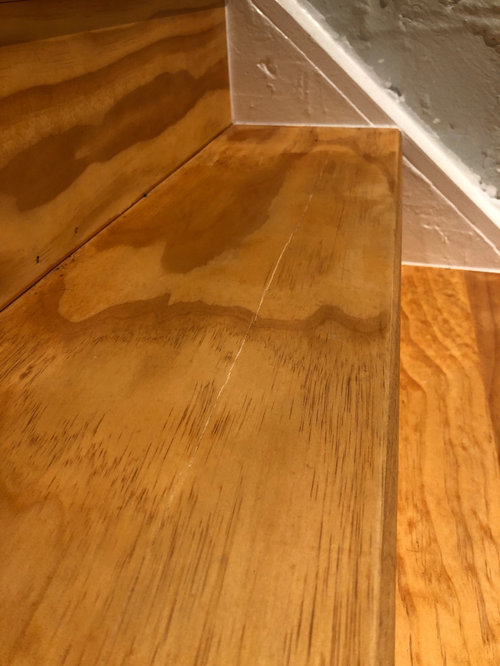
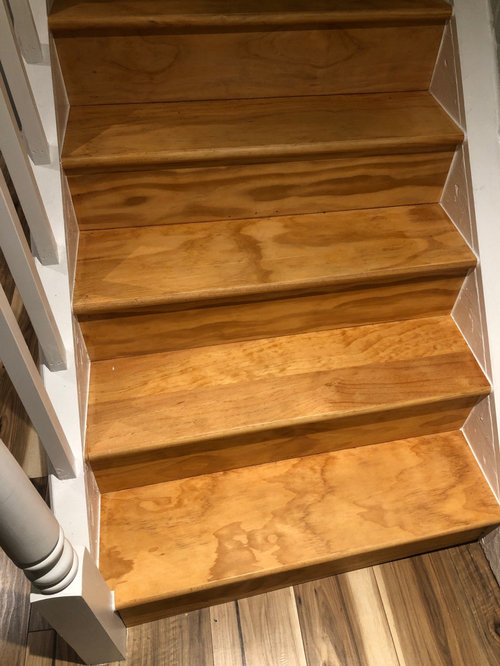
We've been in our house about 2 years and last year we hired a contractor to renovate our basement. One of the big asks was for them to address the staircase leading from kitchen to basement; they fabricated new pine stairs to replace the old stairs (which were rickety to say the least!).

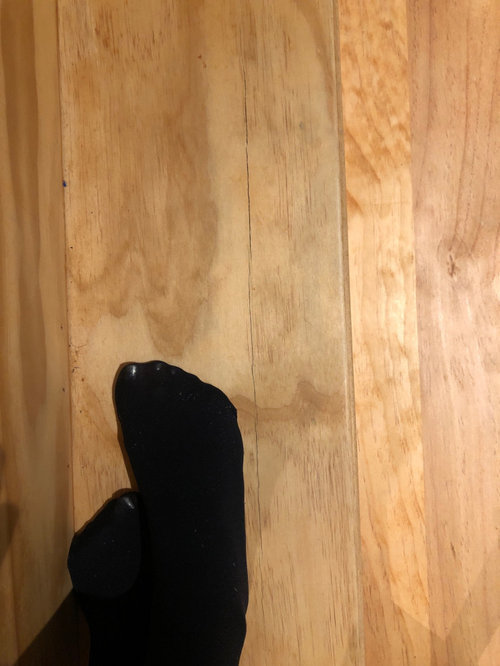
It hasn't been a year yet since the renovation completed and one of the stair treads is already cracked (see photos, included one with my foot for scale - it's a fairly long crack). I've reached out to the contractor to address since this feels like a defect in workmanship versus something we did. For context, there's a separate entry to basement through which we've gotten in all the heavy furniture and there's been no wear other than my husband, myself and the occasional guest (we don't have kids).

I'd like to understand how folks here might approach the situation as I'd like to have an informed conversation with the contractor.

My concern is that, when he took a look at the crack, he said it was probably a humidity issue and he'd have to get back to me about a solve. I'm assuming humidity is a common issue in basements and that lots of people have basements without cracked stairs so, how do I make sure contractor is addressing the root cause of this problem versus a symptom? What is the best solution for ensuring the other treads don't have the same issue? Does finishing the treads a different way than they currently are give them more longevity?

Thank you in advance for any advice you can offer.

Comments (14)

  • 6 years ago

    All the stair treads I've seen at the home stores have been hardwood, not pine. You can fabricate stairs out of any type of wood, but I'm not sure that common pine is expected to be adequate for long lasting stair treads.

    Bruce

  • 6 years ago

    since this feels like a defect in workmanship versus something we did


    The problem is owed to the material selected. The treads (all but one) are single wide boards, fast growth lumber and pine. Fluctuations in humidity levels likely played a part.


    It's a very minor cosmetic problem. Workmanship has nothing to do with it; contractor not to blame and doesn't have any obligation to do anything about it. All that could be done is to replace the tread with another one which will most likely behave the same way as the one that split. Given the material chosen, what happened is to be expected.


  • 6 years ago

    Pine stair treads are very common and just as good as hardwoods. The tread in question probably had a hairline crack when installed and wasn't noticed. There's no reason to believe others will crack in time. Since it's been less than a year a good contractor should replace it under warranty.

  • PRO
    6 years ago

    I don't think the crack is the result of a defect in either materials or installation. I think it's due to natural movement of wood in response to changes in environmental conditions (e.g, temperature and humidity) which are beyond your contractor's control. That said, I believe the treads installed are a grade that is intended to be covered by carpet.

    Judging by the extremely poor quality finish of the stair stringers and the adjacent wall, complaining about a hairline crack in a tread would be applying a total different quality standard.

  • 6 years ago
    last modified: 6 years ago

    I feel bad for the poor contractor if the OP actually believes all the bad "advice" posted here. Hopefully the installer used a good adhesive to install those yellow pine stair treads, a common product sold by just about every stair parts supplier nationwide.

  • 6 years ago

    I agree that is the nature of wood boards that are that wide. I suggest staining the crack now while it is open so it will be less noticeable next winter when it opens up again. It will likely close up when the summer humidity levels go up.

  • 6 years ago

    If you want to repair that tread here is a good video on how a pro would do it.

    https://www.thisoldhouse.com/how-to/how-to-repair-broken-stair-tread

  • 6 years ago

    OP here...

    I probably should’ve added some context:

    • We used a renovation match-making service called Sweeten to help find us a contractor. Allegedly they vet the contractors and we trusted that (our mistake as new homeowners and I advise anyone to run, quickly, in the opposite direction of such “services”).

    • Scope of the project was completely replacing existing stairs, re-doing the bathroom, adding insulation, skim coating/repainting existing walls, replacing the existing outlets/switches with new ones, adding new recessed lighting and adding new vinyl flooring to a roughly 500sq ft space. We took many things off the table to make the project more affordable (not doing laundry room, not connecting the basement to the adjacent garage) and even still, it was a 5 figure project.

    • At the start of the renovation, they asked to use our garage to “store tools” instead of bringing them back and forth each day and, instead, they ended up using our garage for carting trash instead of getting a proper container parked outside the house (we have no street parking restrictions in our neighborhood and have our own driveway so no reason that couldn’t have happened)

    • During the renovation, things they promised in the contract (like sending daily pictures of the work, dusting the area so we could continue to use the laundry room that wasn’t in scope for renovation) weren’t held to — laundry room wasn’t tarped off and was unusable for a chunk of the renovation

    • During our “final walkthrough” of the basement reno, we had to call out major requirement misses (like completely absent “blown in” insulation and an access panel we requested for municipal utility access that was also completely covered by flooring instead of the access panel we specifically asked for)

    • After the renovation, we discovered dangerous electrical shortcuts (like two wires on one terminal of an outlet versus a proper pigtail along with reversed polarity of all the outlets)

    And now we’ve discovered the crack in the stair tread.

    For further context, resilient new stairs was the #1 requirement of this project (something our home inspector noted so we knew needed to be resolved for safety reasons + plans for kids in our future).

    Not sure if this changes any of the advice you’d give but given the track record and the commentary here about the choice of material / lack of quality of the workmanship, feeling like I probably got ripped off.

    You live and you learn, huh?

  • 6 years ago

    I have pine stairs in unconditioned basement thats 25 yo no crack. I have oak in conditioned area that developed a crack about 10 years ago. I think your stair may be just the change in humidity. It can be repaired. The other stuff you were trusting a contract would keep the workmanship honest and on track. You have to self inspect ask lots of questions stay on them to do the work unless its someone you have used before I used a new roofer for one of my projects he was highly referred but i still found short cut faults made him do over before giving final money. Sounds like you got bad deal. THe most important is making sure the electrical is safe and the stair if u feel they aren’t sturdy n built properly. It really sucks to have your hard earn money wasted.

  • 6 years ago

    Sorry to hear that this happened to you. Unfortunately, you're far from the first. And it sounds like you got off easier than many homeowners do.

    I know nothing about "Sweeten," but I haven't found that review and rating services such as Yelp and Angie's List get me tradespeople who are any better than the ones I find by reading the ads in my local tabloid newspaper, and/or picking at random from the Yellow Pages (yes, I still use them). Internet resources used to be more useful, but that was back in the late 1990s and early 2000s, before the contractors were all on the net too.

    I also use references from friends, acquaintances, relatives, and co-workers. This would probably give me more results if I had more friends who weren't DIYs. :\

    Again, I have no direct knowledge of Sweeten, but I'd guess that there's a good chance that your contractor paid Sweeten to be linked up with you. If you didn't pay Sweeten anything, or if you paid them less than your contractor paid them, who do you suppose they were working for?

    About the only other suggestion I have is to, if possible, hire people for small jobs (say 3 figures) first, and see how they do. If they do well for you, give them bigger jobs. If they keep satisfying you reasonably well (don't expect perfection), then you might line them up for something in 4 or 5 figures. And cross your fingers.

    The big problem with that plan is that none of them wants small jobs any more. But just wait until the next recession, which I expect won't be too long now. That should make them a little hungrier and a little more receptive to smaller jobs.

  • 6 years ago

    Not sure if this changes any of the advice you’d give but given the track record and the commentary here about the choice of material / lack of quality of the workmanship,


    No change. This is a minor cosmetic issue. And not an unexpected one if you understand how wood behaves with wide swings in humidity levels and other finer points of bowing, crowning, twisting, etc.


    when he took a look at the crack, he said it was probably a humidity issue... I'm assuming humidity is a common issue in basements and that lots of people have basements without cracked stairs so...


    Yes, humidity is a common issue. Wood is dynamic; it responds to changing humidity levels. It expands under high humidity levels (spring/ summer) and contracts when the level decreases (during the heating season). (Note the slight gap between the treads & risers--evidence of contraction during the heating season.) Decades of this cycle of expansion & contraction with the wood wiggling & pulling against the fasteners during the wet season and then contracting during the dry is how stairs get 'rickety'. In a basement, more so because the swing is wider--the basement being more humid than the rest of the house during the winter.


    how do I make sure contractor is addressing the root cause of this problem versus a symptom?


    I didn't see 'climate control' on the list of work performed. So that is outside the scope of his responsibility. Do you have a whole house humidification/ dehumidification system? Do you run a portable dehumidifier in the summer? Do you add humidity during the winter?


    resilient new stairs was the #1 requirement of this project


    What did you specify in the contract? What do you mean by 'resilient stairs'? Rubber, vinyl, cork??


    In all probability what happened is that that tread has a slight crown and split under normal foot traffic. Crowning is more of a problem with solid wide boards like you have (vs a tread comprised of more narrow edge-glued boards.) More info here: https://www.stair-treads.com/faq/edge-glued-stair-treads.html


    The advise given above--to apply some stain to the crack now--is good advice. When the humidity increases, the split will close up.


    Alternately, you could replace the tread w/ no guarantee that it won't split. Knowing that the stain & finish on the new tread might not match the existing and that you will need to touch up paint.


    The paint job is a whole other issue. Obvious lack of prep; I would have specified new skirt boards...but this goes back to the original contract and what was specified.


    dusting the area so we could continue to use the laundry room that wasn’t in scope for renovation) weren’t held to — laundry room wasn’t tarped off and was unusable for a chunk of the renovation


    One of the facts of life is that no one cares about your stuff like you care about it. Water under the bridge now...but why didn't you call them out on it then? Or remove the machines? Or tarp it off yourself? Or drape some plastic over the machines? Block off HVAC vents? Personally, I would have taken care of it myself because I wouldn't want to pay skilled labor rates for simple housekeeping. Nor haul dirty laundry off to a laundromat just because the laundry room was too dusty...


  • 6 years ago
    last modified: 6 years ago

    5 figures should have been well in the rear view mirror and fading away as you approached 6 figures on a scope like that. You had a low budget and were matched with a low budget contractor. You just didn’t have low budget expectations. The issues are due to the expectations.

  • PRO
    6 years ago

    Unless the tread is poorly installed and moving when walked on, I see you way to attribute the crack to a defect in workmanship. It seems to be quite easy to determine that none of the litany of other complaints have any bearing on the condition of the tread either. Track down some Woodwise or DuraSeal prefinish filler and putty the crack.