Software
Houzz Logo Print
karenr__sternberg

Some Plants Like Office Lights

6 years ago
last modified: 6 years ago
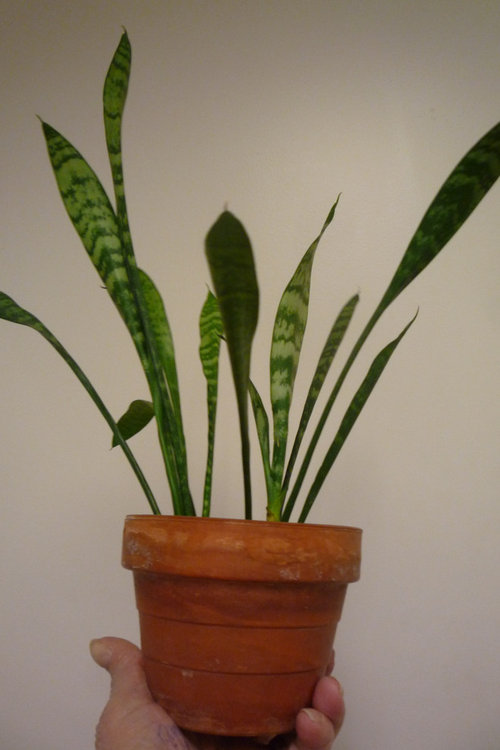
A friend of mine is a professional plantsman, going around town caring for office plants. He told me many plants love office light, which surprised me.

The offices where I work have very little natural light. Most windows' blinds are kept pulled. But my plants weekend in the one room that gets some natural light, blinds open, indirect light of an interior courtyard.

My Sans seems happy enough; I grew this from 3 individual leaves.

I'm almost surprised at how well it's done. I enjoy that it's just green w/ no yellow stripe at all. I don't know its ID.


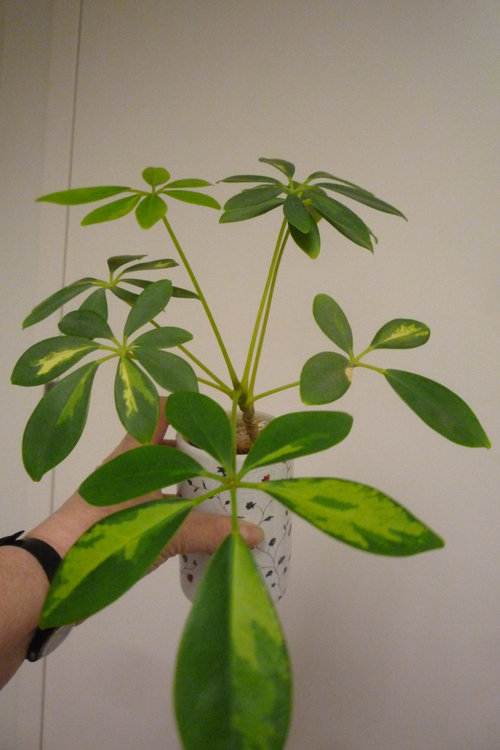
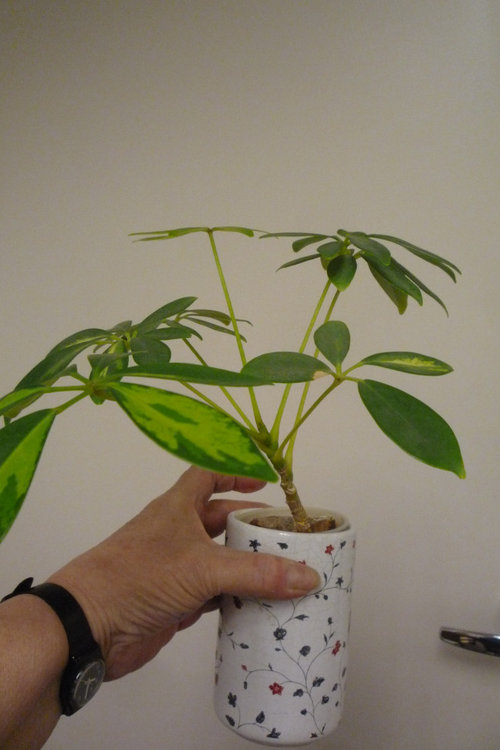
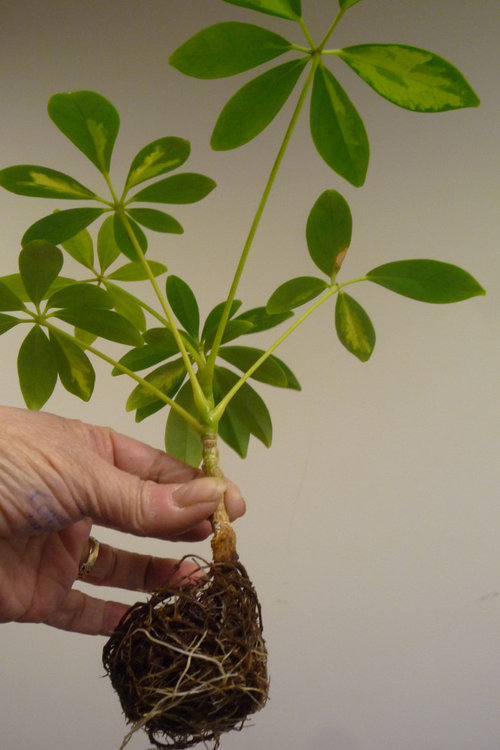
Here's my hydro Schefflera growing in the same situation, but in Leca stones, not mix like the Sans.


Just a mass of roots under there.

Fun to play w/. The Schefflera stays on the ledge in front of my desk, the Sans. on the ledge behind me.

The prior occupant of the office w/ the natural light (a tax attorney) asked me to leave the plants there, as he'd read that having plants in the office would increase productivity, he said by 13%. Who knew ;>)

Comments (38)

  • 6 years ago

    Sanseverias are known for not needing a great deal of light, so I'm not surprised it looks ok. The schefflera is just in water, is that right? If the scheff were mine, I'd pot it up where I think it will do better. It's nice to have plants in the office, so good for you.

  • 6 years ago
    last modified: 6 years ago
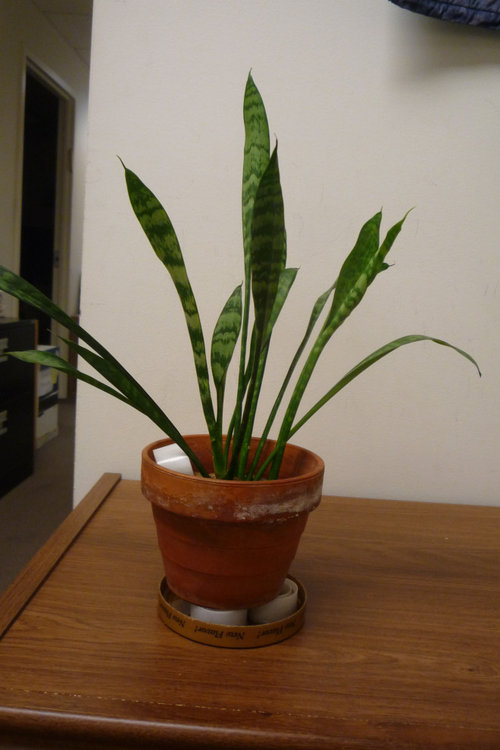
    Yes, I know that abt Sans, but still I find it surprising.

    No, the Scheff sits on a bed of Leca stones in a bit of water, w/ a cork holding it in place. Thanks but I prefer it that way, an experiment I started some yrs. ago which I like the way it is. I think it looks lovely right now & I am a big fan of variegates.

  • 6 years ago

    Parlor Palm is another plant that does surprisingly well under just fluorescent light and it's so soft and friendly too

    Karen S. (7b, NYC) thanked Andrea ME z5b
  • 6 years ago

    Year's ago, one of my Sans lost a leaf. I had no intention of propagating it, so I just tossed the leaf into a drawer for some reason. This ended up becoming my own little unintended science experiment. After ignoring/forgetting about it for a month or so, I noticed that there was absolutely no change in it. It was still firm and deep green as if it were still attached to the original plant. Many more months go by, with zero light and water, and still no change. It wasn't until after half a year that it finally began to show signs of shriveling, although it still remained a deep green. Finally, it slowly began to turn yellow and die back. This leaf remained viable and healthy for the better part of a year in complete darkness with no water. These plants are remarkably tough and tolerate being completely neglected. I can't think of any other plant that can do this with such ease, though I'm sure there are some that can. If they can live for that long without any form of light, then I can see why they can grow so well under office lighting. Both of your plants seem to like it where you're growing them. Thanks for sharing. Very cool.

    Karen S. (7b, NYC) thanked Photo Synthesis
  • 6 years ago
    last modified: 6 years ago
    I wouldn't say they're flourishing with abundant strong growth, but they are growing somewhat.

    So basically, they're managing to exist on office light, that doesn't mean they *like* it.

  • 6 years ago

    I disagree DB, don't think they're just existing, esp.. the Scheffl. You don't see how healthy those leaves look? Then too it IS the dead of winter here w/ lots of steam heat..

    Thanks PhotoS, you seem to get it, that they look fine, & the sort of experimental aspect of it..

    The tax attorney also shared that his wife had a brown thumb, so he liked that I have green one.

  • 6 years ago

    Thanks for sharing; that schleff is a beaut.

    I find it surprising how plants can do well under just fluorescent lights, and so far from them, in offices.

    Karen S. (7b, NYC) thanked hibiscus909
  • 6 years ago

    Thanks, that's exactly my point.

  • 6 years ago
    last modified: 6 years ago
    truth of the matter is that fluo office lights are much much brighter then the light people have at home. even with standard double hung windows there is not enough light even for most so called 'low light houseplants'.

    yes, they are low light in tropics with very high levels of light outside, under the trees and such. but most of them indoors need part sun for sev hours at least to do well.

    the office lights provide diffused even bright light that is about perfect in my view for 'low light' plants (which is what they normally have there for low maintenance).

    they would grow better with higher temps though. Standard 68F is too low for good growth. 65F is winter in tropics :). most tropical houseplants grow best at 75f-85F range.

    but of course, office maintenance people prefer plants to grow very little (low maintenance again).

    Karen S. (7b, NYC) thanked petrushka (7b)
  • 6 years ago

    It's funny you should mention that because I had a meeting with this lady last week. When we walked back to her office, I noticed that she had her overhead fluorescent lights turned off and was using a small desk lamp to light up her office because it wasn't as bright and was less strain on her eyes. It took a minute to adjust to the dimmer lighting, but after our meeting was over, I could see why she did it this way. Needless to say that she didn't have any office plants, HaHa.

  • 6 years ago

    I have to agree with dbarron on this one. Just because they look good now does not mean they like it.

    Plants
    have different degrees of tolerance to adverse conditions. Some can
    tolerate it for longer periods as you have noticed. Eventually, they
    will succumb to it. I would be interested in how long can any of the
    examples above survive in office light conditions. I have been to many
    offices and so far I have not been that impressed by the conditions of
    the plants. They look to be in a sort of stasis at best. My wife took our ZZ plant to put next to her large office window (no direct sunlight). After about 18 months or so it showed clear signs of lack of vigor. We had to bring it back to get it back in shape. Now we rotate plants in her office.

    Human perception of light is very deceiving. Peoples tolerance to various light levels is also very different. I am from the tropics originally and I find most offices to be very low light levels.

    Have a look at various light levels in different scenarios here: https://www.engineeringtoolbox.com/light-level-rooms-d_708.html

    Low light plants need 500-2000lux of light. A normal office is around 500 lux which is right at the low end of the range. I am sure some plants will survive for a while but not necessarily like it. My basement workshop has commercial flourescent lights and it runs about 1000-2000 lux depending on location. I need that because of all the detailed projects I do there. No office will come close to that brightness and yet it will still be considered suitable for low light plants.

  • 6 years ago

    The very last sentence of Karen's original post states that her sans started out with only three leaves. And from what I can see, it has at least eleven or twelve now. For a plant that's allegedly not receiving enough light, it seems to be doing remarkably well, considering that it has quadrupled in size.

    Now is it the best, most optimal growing conditions that it can be grown in? No. But that's not the point that she was trying to make.

    Karen S. (7b, NYC) thanked Photo Synthesis
  • 6 years ago
    last modified: 6 years ago
    tropicofcancer ,thanks for the interesting remarks on "rotating" the plants in order to regenerate their suffering from inadequate light levels. I am struggling with this problem in my house: three sansevierias standing some three meters away from east-facing window receive very little light. I have put them lately on the window sill, but this is temporary only. We have winter, sun comes only once in several days and lighting even directly in the window is low; still, it is the best I can do without artificial additional lighting (I am considering this option, but not yet installed any lamps). How long does it take for a sansevieria to get back into shape after a prolonged exposure to low lighting? I cannot keep my plants on the window sill infinitely, it is crowded anyway.

  • 6 years ago

    You can get a decent LED or T8 fluorescent shop light for around $25 - an inexpensive way to give your plants what they want.


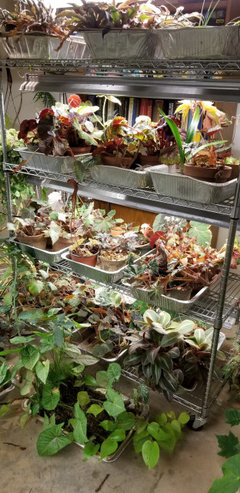
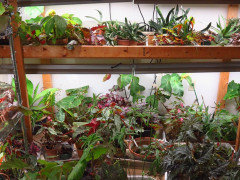
    Here are two shelving units in my basement with T8 lights. As the ballasts go bad, I will replace them with LED lights.


  • 6 years ago

    Karen, My intention is not to disrespect you, or your opinions, but your Sans is just surviving. The leaves are sparse and very thin. It definitely needs some direct sunlight

  • 6 years ago

    Photosynthesis: My comments were aimed at the statement that "some plants LIKE low lights". In the hands of an experienced grower that may seem true for a certain period. Perhaps spending 2 days in a week in bright light serves the Sans well. I admit the Sans pic posted looks good now but I wonder how long it will be like that. I have not grown Sans myself - so I not familiar with their growth pattern, vigor, etc.

    Karen: I do not intend to take away or belittle your enthusiasm. It is your plant and every right to be proud of it and your achievement. This and many other so called low light plants naturally grow in much brighter conditions. So if you did a side-by-side comparison with a Sans grown in bright light would you come to the same conclusion?

    Basia: I make sure the plant spends at least one full season outdoors to bring it back into a vigorous state. I also make sure that the plant gets a full repot into fresh very well aerated/draining soil. Any plant that starts to lose vigor also will have suffered in the root zone. So this is an important step to revive a plant. Outdoors these will spend about 2-4 weeks in open shade before gradually moving them into full Sun (if they need full Sun that is). If you are limited to growing only indoors under light, you can probably rotate them every few months. But you have to choose your plants carefully and provide them as best a condition to grow as feasible - good soil, light, temperature, fertilizer, humidity and airflow. Some plants hate sudden changes and respond by dropping leaves but most can be transitioned fairly easily.

    Karen S. (7b, NYC) thanked tropicofcancer (6b SW-PA)
  • 6 years ago
    last modified: 6 years ago

    these are very yound plants from leaves: so they tend to be slow growing and narrow.

    I have some from separated offsets that are grown in good light that also have this type of very thin at the base leaves. but I've been neglecting them and keeping them on the dry side which also can cause this type of curled thin leaves.

    But on older plants usually narrow base indicates not-enough light. Once the plants are in part sun indoors or better yet outdoors they grow fat strong base.

    in general I keep my sans indoors in west or east window with 3-4 hours of sun when not outside also in part-sun, but mostly in bright indirect NE exposure.

  • 6 years ago
    last modified: 6 years ago

    And the last two posts was the point I was trying to make. They can tolerate it (at least for a while), but are not in as good a shape as they would be with more sun or serious grow lights.

    I didn't want to get into an argument with the OP, who is certainly entitled to her own opinion, however, it's hard for me to see misleading information posted.

  • 6 years ago
    last modified: 6 years ago

    Hc Mcdole, and all those plants are considered low light ones. Wow, very nice.

    Karen, I think that Sans had come a long way for only office lights. Wow. Both of them. Hard to believe they can grow even at the not so optimum conditions!

    Karen S. (7b, NYC) thanked Meyermike(Zone 6a Ma.)
  • 6 years ago

    oh, no! begonias are definitely NOT! low light plants.

  • 6 years ago
    last modified: 6 years ago

    Around here they are. lol They grow like weeds under my most shaded areas in my yard! At least the ones they claim that are.You are right though, probably most not, Ha

  • 6 years ago
    last modified: 6 years ago

    I'm sorry you feel it's misleading info DB. Were it possible (it's not) I'd change the title to something more comfortable for you like "SOME PLANTS DO SURPRISINGLY WELL UNDER OFFICE LIGHTS".

    I'm glad for those who DID get my point as above & appreciate the experimental nature of it. Certainly they could do better in stronger, more direct light, but that's not the point I was making.

    Manuel, we can disagree w/out me feeling you mean any disrespect. (Did you get the email I sent you? I didn't hear back, nor get word of a problem w/ the email addy.)

    But really I wish you could see these in person to better see that are NOT just surviving. The Sans is a thin leafed variety, its parent leaves were the same & yes I started that plant from 3 individual leaves, which each yielded a plant, so what you see there are the 3 resulting divisions, which as PhotoS noted now have 3-4 leaves each.

    I've had each of these 3 plants for some time, the Scheffl is several yrs. old at least & I've hacked back 2/3 of the roots at least twice now to keep it small.

    Anyway, I'm enjoying the plants, it's the front of my office & I've tried to warm it up a bit w/ a couple of pots of plants & one of my smaller quilts on the wall.

  • 6 years ago

    light outdoors is much stronger even in the shade.

  • 6 years ago

    Of course that's true, that's not in question anywhere here.

  • 6 years ago

    I was responding to meyermike post, saying that begonias are low light plants and they do wonderfully outdoors in the deep shade for him: that does not mean that they will do well in the low light indoors.

  • 6 years ago

    Thank you Petrushka )

  • 6 years ago

    A week ago when I first noticed the title of the original post ("Some Plants Like Office Lights") I thought about making the same comment others have made re the difference between 'tolerate' and 'appreciate' or words to that effect, but decided not to. Given the varying opinions, I thought I might offer a thought. Whether they "like" it or not is probably too subjective to argue about, but there is little question there is more room to move on the side of increasing light to an ideal level than there is on the side of decreasing light to an intolerable level.

    A plant's light compensation point (LCP) is the point at which carbohydrates
    required by plants in respiration are exactly equal to carbohydrates produced
    by photosynthesis. IOW, the photosynthetic rate of energy (food) production must at least equal the rate of energy consumption during respiration if
    the plant is to survive. Plants at their LCP would also be releasing exactly as much CO2 as they assimilate for use during photosynthesis, and the release of oxygen that occurs in the photosynthetic phase is exactly equal to that which is assimilated during respiration. If the plant's systems are in order, an increase in light levels increases photosynthetic ability up until another point, the light saturation point, (LSP) which is the point where a graph depicting the increase in crease in photosynthesis as photo load increased goes flat. IOW, there is no further gain to be had from the light currently striking the plant's photo-receptors. If I had to guess, I'd say the plants pictured are somewhere near 1/3 of the way from the LCP to the more nearly ideal LSP; not to disparage plants or people, just providing an alternate way of framing the topic.


    Al


  • 6 years ago
    last modified: 6 years ago

    RE: OP's scheff

    the petioles are quite long and leaves are sparse.

    compare this to my Scheff grown in part-sun NE-E exposure. You see how dense the foliage is: this is normal healthy habit in good light. In this pic it's about 3.5 years from cuttings (2 cuttings in a pot), pinched several times, but only branched after 3 years of growth. It's a dwarf 'Trinette' cultivar.

  • 6 years ago

    Yes, of course, light makes all the difference.

  • 6 years ago

    Thank you, thank you, thank you, PhotoS, that IS all I was trying to show. Hard for me to see why others have trouble getting the point.

    I'm sharing my experiences, what I can manage, given my conditions. Do I really need to state that I can't bring supplemental lighting into where I work?

    Side Note:

    Guess it doesn't occur to many of you, it's gotten VERY slow around here. Few regulars are left, not much going on. Rina can't be everywhere all the time.

    So, I was also trying to initiate some activity around here. I invite you all to spend less time pounding away at points which are not in question & more time posting some activity of your own.

    Share a conversation, initiate a discussion, post some pix (Tapla being the exception). Show a little initiative pls people, & maybe, just maybe try to appreciate those who do.

  • 6 years ago
    last modified: 6 years ago

    to OP:

    I grew many plants under office lights that did very well, but not the ones you're growing.

    you say 'they like it' - I say they are just making it.

    perhaps, when you open a topic you want a discussion ;)? people are giving you a discussion. discussion contains various opinions, by definition.

    looks like you just want praise and pats on the shoulder though.

    I had gigantic asparagus fern (no pic, was 30 years ago :)), that was in a basket hooked to the ceiling tiles and trailing down to eye level: no shedding of needles either, did very well.

    on the smaller side I had many in 6" pots : podocarpus, several Ficus alii. all plants that now I would grow in part-sun, of course. But I always was in open floor plant with cubicles with giant wall-to-wall windows on all 2-3 walls, with very good overhead lighting.

    not all offices are like that.

    point is: not all plants are suitable for offices long-term. and of course just like in homes the light levels might be very different in offices too.

    and what you selected is not the best choice for yours since plants are etiolated. I think the cuttings in general need more light to get going and be healthy.

    larger mature , well established plants do better then small ones in my experience.

    i'm obviously taking initiative and offering information. not just for you, but for other people who will come to read the posts here, perhaps looking for info on what to grow in their work-space.

  • 6 years ago

    I most certainly welcome discussions. So let's discuss.

    • This is a gardening forum, is it not?
    • Who amongst us is not guilty of showing off our plants?
    • Should other members be admonished for showing off theirs?
    • Was Karen seeking advice on better ways to grow hers?

    I completely understand wanting to help others grow healthier plants. That's the majority of what goes on in here on a daily basis. But that help is usually reserved for those that seek it. There have even been cases where novices came here seeking help, and the response from other members was to just "google it..." What's the point of this forum if we help those that don't ask for it, but refuse to help those that do? No wonder people leave and go elsewhere.

    That's one reason why I stopped frequenting another forum for orchids. A similar encounter happened to me in there. I was simply inquiring about something I noticed about one of my Cymbidiums. My orchid was in perfect health and had gorgeous blooms on several spikes. Rather than answer my questions, they started spoonfeeding me advice on caring for it, as if my plant was sick and in desperate need of their guidance, when it was clear in my photos that they did not. I've been obsessed with growing orchids for most of my life, but their outright snobbery and passive aggressive behaviour that they just automatically knew better than me left a bad taste in my mouth and I stopped going back there. Which sucked because I actually liked being an active member of that forum. At least I used to. I just no longer wanted to associate with people like that. Now I'm not saying that that's what's going on here. I'm just giving an example of something that happened to me. I don't pretend to know everything, and there have been numerous times when I was corrected on something that I had gotten wrong. Nothing wrong with that, and I even welcome it. But I will stand my ground and defend my advice with evidence when others try and make it seem as though I'm misleading others. If I'm not confident in the advice I give, then I wouldn't be giving it. Now, I'm not trying to say that I am right and others are wrong. I'm simply pointing out to others the success I've had with what works for me. What others decide to do with that advice is entirely up to them.

    Getting back to the subject at hand, this is about plants that Karen's had success with in growing them in her office. There is only so much that one can do at their places of work. Using common sense, we can't be hauling in growing equipment and expecting our employers to just foot the bill for our hobby; all so that we can grow plants in a perfect environment. That's just not feasible. So we have to do the best that we can do with whatever it is that we have to work with. Karen was simply showing others the success that she has had with these two plants, so that others may know if they want to grow plants in their office space, too.

    Another plant that I think would do great in a work environment would be a spider plant. But I didn't suggest it because these plants can be picky when it come to the water we use to water them. They don't do well with tap water, but that could easily be circumvented if you just bring a gallon of distilled water to keep on hand. Some people may be able to do this, and some may not. Again, there is only so much that one can do in the places that they work at. We have to take this into consideration when we offer others advice. Especially when they're not asking for it.

  • 6 years ago
    last modified: 6 years ago

    "i'm obviously taking initiative and offering information. not just for you, but for other people who will come to read the posts here, perhaps looking for info on what to grow in their work-space." [sic]

    This ^^^ is a very important point. One I intended to make after reading the last half dozen (or so) posts. What I might have done differently is, addressing it more to the forum than Karen.

    It's more the rule that the exception that conversations shape themselves and normally end up more nearly a meandering stream as opposed to a pipeline of information laser focused on a singular topic/question. So we regularly see the point someone is trying to make branch several times into discussions about any number of other secondary topics, all of which would be appropriate and germane to the OT. This thread is a manifestation of that idea. Someone might say that Eleanor's VF-11 is a spectacular product, which provides someone else an opportunity to become a benefactor by dispelling the myth. Every perspective holds learning or teaching opportunities, most often - both.

    Petruska's comment in bold above expresses something some of us are always conscious of, i.e., we aren't necessarily writing for the benefit of the OP, we are writing for (what we hope is) the benefit of the forum and anyone who finds their way to our post in the future. That is always foremost in my mind whenever I post, my contributions to this post included. While it is decidedly bad form to criticize the grower or her plants, it's not untoward to point to the idea that plants many feet from fluorescent light fixtures in the office ceiling will probably not be able to realize a measure of growth, vitality, ability to defend themselves, ......., that will be even in the upper half of what they're capable of achieving, genetically.

    So good on Karen for perking up the Houseplants Forum during the dog days of winter, but good on those who branched off to share information that provide relative learning opportunities for today and into the future.

    Al

    Karen S. (7b, NYC) thanked tapla (mid-Michigan, USDA z5b-6a)
  • 6 years ago

    Al said: Every perspective holds learning or teaching opportunities, most often - both.

    As for me this post was quite exciting (when nothing else is happening around here). We may have got caught up in semantics more than anything else. Nevertheless it was better/different than many other posts.

    Karen: I am also guilty of not starting any posts. I have not done in a long time - sheer laziness. I will think of something.

    Karen S. (7b, NYC) thanked tropicofcancer (6b SW-PA)
  • 6 years ago
    last modified: 6 years ago

    Petrushka,

    paraphrasing ---- Not just looking for praise & pats on the shoulder.

    I was content enough when PhotoS responded saying 'pretty cool, thanks for sharing'.

  • 6 years ago

    Many years back I had a radermachera my office, 24 hours fluorescent lights and a bit of north light from a window, it got to be about 6 feet tall. Fortunately, one of the people who worked there really liked it and wanted to know where she could get on like it. I told her to take that one, it was too big for me. Those used to be really common, I haven't seen one for years.


  • 6 years ago

    They're still readily available in these parts (mid-MI) - I see them most in 3", 4", or 6" pots.

    Al


Sponsored