Software
Houzz Logo Print
ruthj98

Is this bulb sick?

I lost a few of my amaryllis last year either due to the narcissus bulb fly or virus. I was just getting better at growing amaryllis! Of course, the ones that I loved are the ones I lost.

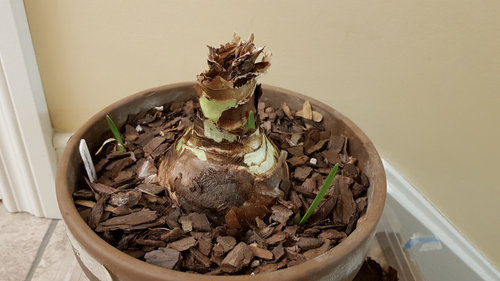
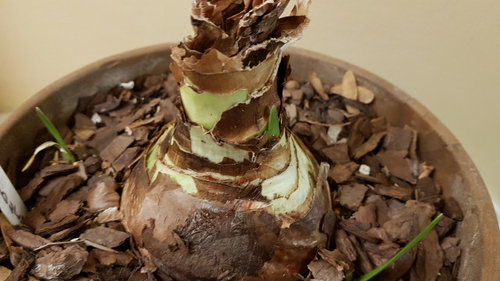
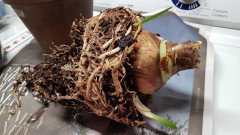
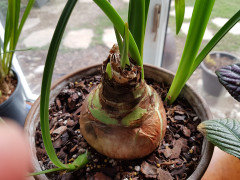
Now I have only two left. One already bloomed, but one hasn't. The bulb was a good size. I brought in indoors and withheld watering. Now I see it has several bulblets but no sign of growth in the original bulb. The bulb is not soft. I was going to repot it and have a look. Something tells me this isn't growing right. I removed some of the media on the top. The bulb still seems firm.


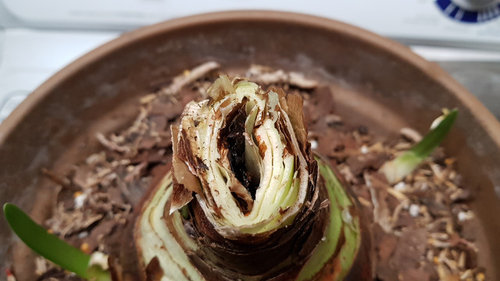
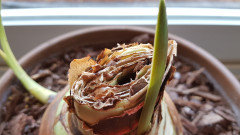
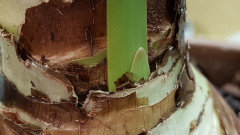
The neck was a bit long so I trimmed it. The center isn't looking great.


What do you think happened to this bulb? I guess I should remove all the media?

Comments (29)

  • 5 years ago

    ....is that the tip of a flower scape emerging on the side of your main bulb?

    newhostalady Z6 ON, Canada thanked Julie Wignell
  • 5 years ago

    I see signs of life on the side of the main bulb. I would be inclined to wait it out for a bit to see what happens.

    newhostalady Z6 ON, Canada thanked popmama (Colorado, USDA z5)
  • 5 years ago
    last modified: 5 years ago

    Julie, at the side is just another leaf, No flower scape I'm afraid.

  • 5 years ago

    I just removed some of the media from the bottom so that I could view or feel the bottom of the bulb. Looks fine there. I feel that there has been some kind of rot inside the bulb. A flower stalk should have appeared by now. Disappointing.

  • 5 years ago
    last modified: 5 years ago

    I'm no expert, but a couple years ago in the fall, out of ignorance, I removed a bulb's foliage before it went into even partial dormancy, then put it into a dry place that gradually cooled, etc. My hypothesis was, "If I leave it outside tonight the hard freeze is going to kill it anyway." I didn't realize that, as much as I wanted to tidy everything up, that period of drying down to a state of rest is really very necessary. I now think that trimming living, very vascular (wet) tissue, as I did, and then placing a plant into a cooler environment is an invitation to various forms of disease.

    At potting time that December, that and one or two other bulbs showed signs of mold in the center of the bulb, and that particular one rotted. It had two offsets that did not die, however; and I left everything alone to grow over the summer (including the rotting mother bulb, in case it had anything to give to the babies; and besides, I was being lazy). This winter, at potting season, I took the strongest of the two offsets and put it in a community pot, with the intention of growing it on. Even though it was so small, it still produced a bloom spike and is now growing well. I'm going to try to beef it up over the next couple years and see what happens.

    In the one or two others similarly afflicted, apparently the rot didn't go deep enough to kill the mother bulb. On the other hand, I've had to cull a couple bulbs this year, sadly, due to red blotch. Which I think might have cropped up in those bulbs that I mistreated? I didn't mark them (should've). They bloomed, yay, but I probably should have gotten rid of them at first sign, so as to avoid spreading it to other plants. Hope I didn't accidentally infect others this winter. I'm trying to keep everything growing vigorously and hopefully give them a chance to fight it off, if I did. I'm on the watch.

    Like I say, I'm no expert, but that blackness in the middle of the mother bulb looks a little ominous. Be sure to review cultural practices and see if you can figure out what happened.

    newhostalady Z6 ON, Canada thanked Northern Gardener (3b west central MN)
  • 5 years ago
    last modified: 5 years ago

    There was a discussion a few years back and I tried to find the string but couldn't. Basically, if it is damage due to NBF, I would leave the bulb alone. These little buggers secrete a substance that prevents the bulb from rotting all the through and in doing so, the bulb thinks it's damaged. The article explains that in time, it will produce a great number of offsets but at the expense of the mother bulb. If you can, extract the pupating larva and try not to get any water in the in the chewed out portion. You have nothing to lose at this point and you may end up with a surprising number of offsets from the surviving basal plate. I had this happen to me a few years back but didn't know then what I know now and I threw them away. Of course these dang little buggers munched on some prized ones that I haven't been able to replace but it's been so long, I forgot which ones they were. Keep us informed and post pictures if you can.

    newhostalady Z6 ON, Canada thanked Fred Biasella
  • 5 years ago

    Very useful, Fred. I've not been into the fancy that long, so what's NBF?

    Also, what do you think about my observations (just above your comment)? Am I fulla beans, or onto something with regard to my fall bulb abuse a couple years back? Thanks in advance for your expertise!

    newhostalady Z6 ON, Canada thanked Northern Gardener (3b west central MN)
  • 5 years ago

    Hi Northern Gardener,


    NBF is the dang little bugger Narcissus Bulb Fly and please be warned....it's a very wise little bugger that seems to know which are your most prized and expensive hippies. You are absolutely NOT full of beans unless you ate a bunch of 'em last night :-))))) This is an observation from what I experienced but I have also had many issues where the center of the bulb just rots out and has a pretty nasty smell. In that case I had zero expectations of the bulb surviving.


    As for the red blotch, I use sulpher powder on mine when I see it raise it's ugly head (and probably my fault) and I keep the bulb as dry as possible. Even though I'm allergic to it, I'll swear by it. Another possible treatment is Physan 20, it's a concentrated powerful anti fungal, disinfectant, anti viral, algaecide and anti bacterial liquid that I've also used wit great success.


    I hope this helps :-)))


    newhostalady Z6 ON, Canada thanked Fred Biasella
  • 5 years ago

    It does help, Fred. Shoot, maybe I shouldn't have tossed those two bulbs out... Well, how do you apply Physan, and when? I have it on hand. Ditto for sulphur powder, if I should get hold of some. And do you use either as a general prophylactic?

    Joan

    newhostalady Z6 ON, Canada thanked Northern Gardener (3b west central MN)
  • 5 years ago
    last modified: 5 years ago

    Hi Joan,

    In the past and depending on the out break, I have peeled back and badly infected tissue then as a soak in Physan 20 for an hour or so. Then let the bulb dry for a day or so and plant it in a very well draining mix (I use 1/2 pumice and 1/2 coarse vermiculite) and keep it on the slightly drier side it until it starts to root, then I'll transplant it into a regular growing mix.

    As for the sulpher powder, I dig out as much of the soil in the pot till I reach the base then I use a dedicated paint brush and dust it from stem to stern. I don't water it for a few days to make sure that the sulpher isn't washed off.

    I haven't used it prophylactically and will only do so if there's an infection. Over the years I've learned that cool + wet = red blotch so I keep my eye on them towards the end of the growing season and in preparation for their snooze, that they're as dry as possible.

    newhostalady Z6 ON, Canada thanked Fred Biasella
  • 5 years ago

    Think maybe there were some typos in the first paragraph, so I'm not quite sure what to do. Here's my summary, which please correct:

    Unpot the bulb and remove all possible infected tissue (and I have observed it inside scape stems, as well as on leaves, and sometimes on the scales of the bulb, so I'm not sure what to remove: whole leaves? and the red ick goes down the inside of the stems like into the middle of the bulb, in some cases).

    Submerge entire bulb in Physan 20 for a couple hours.

    Then proceed with "hospitalization/rehab," as directed.

    Ah. Cool + wet. Here in Minnesota I do get my bulbs out of the house as soon as possible in the spring (by which time they're turning into a jungle and taking over every bright location), probably about when night temps are above 45, which is maybe still pretty cold. I'll make a point of keeping them sheltered and on the dry side while trying to maximize sun exposure. Hmm. Avoiding the irrigation system may be problematic. But I'll figure it out! There are a few places where the only irrigation is of the drip type. Maybe I can stick them there until true summer arrives.

    Can't tell you and everyone else who contributes here how GREAT it is to talk to people who have real experience!! and don't just go "look it up on the web" and then spout it back to me, pretending to be Master Gardeners. Sigh. Thank you so much for being here, everybody.

    newhostalady Z6 ON, Canada thanked Northern Gardener (3b west central MN)
  • 5 years ago
    last modified: 5 years ago

    Hi Joan,

    Believe me I am light years away from being anything even remotely close to a master gardener. it's just that I have killed so many things that after a while, things start to sink in and a light goes of in my head that says "yeah, don't do that"

    Your summary is right on target. I was trying to type while I was at work and the dang telephone kept ringing. It doesn't take much for my choo choo train to derail :-)))

    newhostalady Z6 ON, Canada thanked Fred Biasella
  • 5 years ago

    Sorry that I have missed all this conversation, Fred and Joan. It is wonderful to hear your views! It was interesting to hear your comments Joan about going into dormancy. My routine has been to repot the bulb when it comes out of dormancy. It gives me a chance to have a look at the bulb and check for health. It grows on indoors, and is set outside when possible. In fall, I keep the bulb outside as long as possible. When I bring it indoors, I leave it in a cooler room with some light, and I don't water anymore. I let the leaves rot down and then remove them.


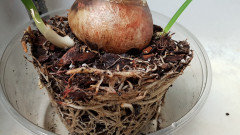
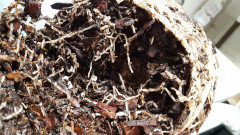
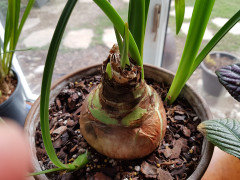
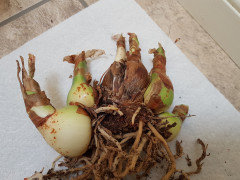
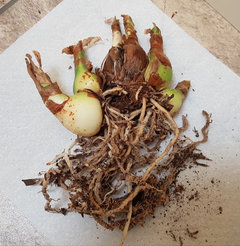
    Fred, twice my bulbs have had the NBF. I never saw any pupating larva. I threw out the bulbs. I went to remove the media from this bulb in question. There was no hole on the bottom of the bulb and no softness of the bulb that I could find. I did NOT remove ALL the media because I thought the roots looked good and that the bulb's roots do not like to be disturbed (true?). I thought I would just wait and see what happened.


    From underneath


    Shall I do a full repot? I guess if there is a pupating larva inside, then things will just go downhill? There is no smell from the top of the bulb.


    Thanks Fred for the detailed information on how to treat red blotch. Very informative.


    And you're so right about the NBF knowing which amaryllis bulbs are your favorites!

  • 5 years ago
    last modified: 5 years ago

    NewHostaLady, those are great photos!! And what a great root system, congrats on that.

    Obviously my particular bulb-abuse missteps did not occur in your case. I now wonder about NBF, and how to find it. If anybody has any photos of the beastie in question, feel free to share here. Thanks! [Edit: I found some answers about this on the University of Minnesota Extension site. Good pics.]

    Meanwhile, I am pretty sure my mid-bulb rot was due to my chopping the bulbs' living leaves in late fall, which promoted general fungal invasion.

    Oh, so many ways to screw things up.

    By the way, I do hold the title "Master Gardener," but I'm here to tell you it's *all* local/regional/experiential knowledge, and you add to it over a lifetime. Nobody can possibly know everything, but titled Master Gardeners just tend to know a lot more about a broad range of circumstances - where they live! and not necessarily elsewhere - than most people. And there are a lot of masterful gardeners in my community who only lack the title because they didn't sign up for the course like I did, once upon a time. We just all help each other the best we can, and I definitely rely on you in this community, with regard to our common interests.

    I guess I just wish that when a Master Gardener is responding to a detailed question and has no personal experience, and can't find anything truly detailed on the web (which geez I've already searched, so I guess every time I ask I'm actually looking for specialist information), they'd simply say so.

    Joan

    newhostalady Z6 ON, Canada thanked Northern Gardener (3b west central MN)
  • 5 years ago
    last modified: 5 years ago

    Joan,

    I couldn't have said it better and this is how life should be. Learn, share, commiserate and pass the knowledge along :-)))

    newhostalady Z6 ON, Canada thanked Fred Biasella
  • 5 years ago

    Thanks Joan on your compliments on the root system of my amaryllis. I have been learning about media and fertilizer---mostly from this forum. It has been a wonderful resource!


    As I go along on my "gardening journey," I learn that there is so much to learn. The more detailed I become, the more I learn and the more there is to add to that knowledge.


    Thank you for being a Master Gardener. I have recently learned more about that program, and I understand that part of the program is to give back to the community. That is wonderful!


    The two bulbs of mine that had evidence of NBF (after removing media while repotting), had a soften area on the bulb and a definite hole exposed. I was disappointed to see that, but unwilling to really inspect the bulb and threw it out. I regret that now. I wish I had cut open the bulbs to inspect and really see what was going on.


    So with my bulb now, I am going to use it as an experiment. I will continue to take care of it and see if the bulb rots or not.


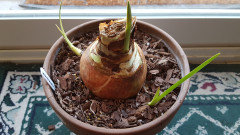
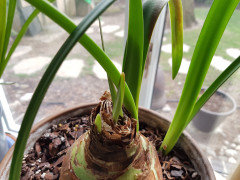
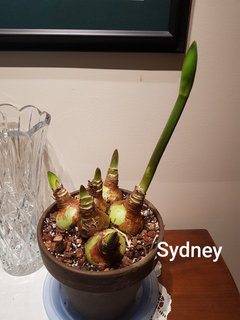
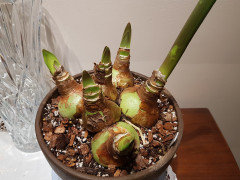
    Here it is today:


    and here is what it once was:


  • 5 years ago
    last modified: 5 years ago

    And I found two sites quite informative:

    Narcissus Bulb Fly (1) and


    Narcissus Bulb Fly (2)


  • 5 years ago

    Is there a tip of a bud just beside that leave that comes straight out of the side of that bulb? You can see it on the second foto. This would be strange. Or is it just another leave?

    newhostalady Z6 ON, Canada thanked catsandhippies
  • 5 years ago

    When I went back and looked at the picture, catsandhippies, I could see what you meant. Unfortunately, it's just a leaf.


  • 5 years ago

    Update:

    I found it interesting that my bulb began growing in the center which I thought was dead.

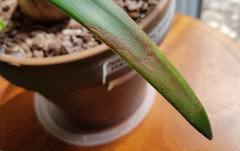
    But now I see this:

    Is that a virus or something else?

  • 5 years ago

    I'm so glad to see an explosion of growth :-)))) It does look like there was enough of the basal plate to generate some good growth. As for the leaf damage, it doesn't look like it's virused but more like mechanical damage. I would just cut it off just below the damaged part and with a disinfected knife and you should be all set. Let us know how it's growing :-)))

    newhostalady Z6 ON, Canada thanked Fred Biasella
  • 5 years ago

    Well, that's good news Fred! Thank you. I plan to get it outside when it warms up. There it will get more sun and hopefully continue growing!

  • 4 years ago

    Here is my update:


    Last year in April 2020 my bulb looked like this:


    Now May 2021, it looks like this:


    So do I keep all the bulbs together or separate? My preference would be to keep them together because of lack of space. But what is best for the bulb?

  • 4 years ago

    Thanks for the update newhostalady. Always insightful when someone updates their post. Yea, the thin center leaves last year looked like new offsets splitting down the middle, now confirmed. The largest looks about 2 years away from being ready to bloom.

    newhostalady Z6 ON, Canada thanked Brian Sakamoto (10a, CA, USA)
  • 4 years ago

    Thanks for your comments Brian.

  • 3 years ago
    last modified: 3 years ago

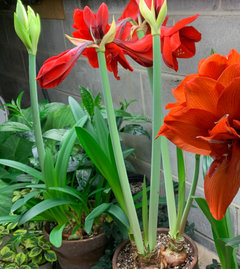
    Update on this particular amaryllis. Current picture April 2022:


    I probably should have separated all the bulbs, but I didn't think I had the room for them all outdoors. If all goes well this year, I will separate next year.

    Three out of six bulbs will bloom. Should be a nice show!

  • 3 years ago

    Cool update! Three out of six bulbs blooming will be an excellent show.

    Three or so years ago I had a bulb fly attack that did some damage to my collection. Two bulbs in an older pot of an unamed white did something similar to yours, where the center was killed and a bunch of chips developed after I dug the center to pull out the grub. This year a daughter bulb from the original bulb put out two nice blooms (one just in time for Easter, it was our fake Easter lily!) and there are about a dozen offsets, a few of which will hopefully bloom next year.

    I'm going to see if I can keep them all in one big pot. It will make a nice show if it works. Not the best picture, but you can see the stuffed pot on the left from about a month ago.


    newhostalady Z6 ON, Canada thanked katob Z6ish, NE Pa
  • 3 years ago

    Oh yes I see the stuffed pot! Your amaryllis are growing so well! Good to hear of your experience. A dozen offsets! Wow! That would be one heck of a show next year! Thanks for sharing!


Sponsored
SK Interiors
Average rating: 5 out of 5 stars55 Reviews
Loudoun County's Top Kitchen & Bath Designer I Best of Houzz 2014-2025