Software
Houzz Logo Print
raymond_balboa

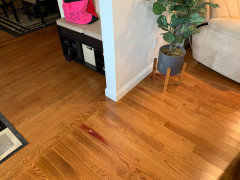
Any idea what’s causing this stain?

6 years ago

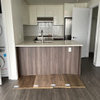
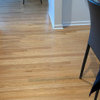
I noticed this mysterious red stain In my hardwood floor a few months back. I started to notice it appearing in more spots not far from it. It is has to be coming up from underneath (house is on a slab). There is also some buckling in the wood around the same area. I thought It could be heating oil from the old buried tank but it’s location has no relationship between the old tank and the boiler. Maybe moisture? any thoughts? Thanks.


Comments (18)

  • 6 years ago


  • 6 years ago

    The hole in the middle is a spot I was able to scrape off with my nail

  • PRO
    6 years ago

    You definitely have a moisture issue. The floor boards are cupped.


    What are those dark spots on the end boards in the passageway caused from?

    Basement below?

    Subfloor type?

    Moisture retarder paper underlayment type?

    Humidity level down below?

    Any known pipes or ducts in the area?

    Pets?

    Cleaning regime?

    How long ago was the floor finished?

    raymond balboa thanked G & S Floor Service
  • 6 years ago

    Dark spots were caused by me trying to clean it with heat. stupid. No basement, house is on a slab. I do not know what is underneath, I bought the house already remodeled. No pets. Floor is mopped with water and a multi surface floor cleaner.

  • 6 years ago

    Floor was finished about 2 and a half years ago.

  • PRO
    6 years ago

    The floor boards will need to be pulled in that area. Subfloor will need to be evaluated for any underlying issues, before repairs can be made.


    Whatever moisture you may have is causing a chemical reaction with the materials under the floor boards. Cannot give you any further evaluation without seeing under the floor boards and knowing how the original installation was performed.


    I have seen a solid wood floor turn pink, because of the use of red rosin paper. You are on a slab, which makes it a engineered floor and not a solid. Unless, a subfloor was installed and then solid flooring was put in afterwards.

    raymond balboa thanked G & S Floor Service
  • 6 years ago

    Thank you. So you don’t think it could be heating oil? around how much do you think this would cost me, I’m in Long Island NY.

  • PRO
    6 years ago

    If, oil is getting underneath- yes.


    not sure what cost would be. But it involves removing the affected boards and repairing the moisture issue.

  • 6 years ago

    The ARTIFICIAL red colour reminds me of 'red guard'. It has the same colour that I would expect to see from the roll on product.


    I've *heard through the grape vine (yikes) that some *professionals (ahem...not my word for them...) have used Red Guard over damp concrete slabs before they glue down hardwood.


    Of course red guard is ABSOLUTELY the wrong product for that situation...but some of our not-so-bright bunnies have decided it would be a good idea underneath a glue down hardwood over cement.


    It is just a thought...It would require a wood flooring professional to remove the damaged planks to see what is going on.


    How long ago were the floors INSTALLED? How old is the home/slab?

  • 6 years ago

    Thank you. Floor was installed 2 and a half years ago. The house was built in 1948.

  • 6 years ago

    Ahhhh....there it is. An old wet slab covered with hardwood. Was the floor glued down? What was the previous floor? I'm going to guess it was carpet.


    Concrete slabs rarely had ANY moisture barriers used underneath them/in them until the mid 1990's. A house built in 1948 is guaranteed to have a slab touching raw earth. And so long as the concrete touches the earth, it will be moving moisture up through the slab (called wicking) and out through the surface. Carpets were often used because of their 'breatheability'.


    Once a slab - such as yours - is 'capped' with a rigid surface that moisture starts to build up. It builds and builds and builds until the slab (if tested once again) turns up SOPPING WET. Not just a little moisture in there. No. Not a chance. A HUGE amount of moisture is pushing up into the wood.


    For this reason, I'm guessing the deep red colour is coming from a product, such as glue or red guard, that has LEACHED into the wood (there is so much water pressure built up it is forcing colour into the wood from whatever is sitting on the slab).


    Please call in a wood floor professional to tell you what it will take to have your floors removed. ***If I'm right, this will have to be redone. I'm hoping I'm wrong...but something tells me with a BRAND NEW hardwood floor (probably glued down) over an OLD and most likely WET slab, this floor will need a redo.

  • 6 years ago

    The floor was done 2 years ago, why wouldn’t they use a moisture barrier?

  • 6 years ago

    In fact it’s almost 3 years, my house is 1800 square feet so about 900 feet and only appearing in a small specific spot, why isn’t it happening anywhere else? lowest point?

  • 6 years ago

    Was the floor glued down?

  • 6 years ago

    The staining may only be happening in a few boards but the CUPPING of the planks is more wide spread. That's the biggest issue.


    As for moisture mitigation during install, it would be up to you to contact the original installer to find out what was done. Only they can answer those questions for you.


    But I will give you a heads up on that one. These OLD slabs (1948 = post war era building boom) are often thought of as DRY when carpet is removed (again, this is why I asked what USED to be on the floor). The slab will 'test' as dry because it has been happily evaporating off moisture THROUGH the carpet for decades. And decades. And decades.


    Many moisture tests (ie. anhydrous calcium chloride test) will see how much PRESSURE is in the slab on that day. If carpet is removed and there is NO BUILD-UP of moisture/pressure BEFORE that day, it will 'read' as a nice dry-ish slab.


    Once the slab is CAPPED (solid flooring put over top = nowhere for the water to escape = HIGH moisture content/pressure) it gets MUCH more difficult to deal with. If you test the slab TODAY it will be MUCH HIGHER than the slab was before you put the wood on it.


    The moisture barrier treatment at the TIME was 'good enough' for the reading (3 years ago before the slab filled with water). But NOW the moisture has overwhelmed the system used.


    This is why it takes wet-basement specialists to figure out some of these old slabs. The moisture tests done before they were capped probably looked very good (or very promising to be good in the future) but the wood flooring people could not predict the pressure build up over 3 years. That's not their level of expertise.


    A wet-slab/basement specialist *MIGHT have been able to guestimate the issues...but they too might have guessed wrong. These old slabs are SUPER TRICKY to predict.


    Please tell us if your floors are glued down to the concrete or if they are floating. Please add more photos of the cupping please. Tell us how much of the 1800sf is having moisture issues (cupping/staining, popping, etc).

  • 6 years ago

    I used to have old pictures of my house and I believe there were wood floors. This is the only area with cupping/staining.

  • 6 years ago

    Again, are they glue down?