Software
Houzz Logo Print
webuser_990628425

bluebell invasion

6 years ago
last modified: 6 years ago
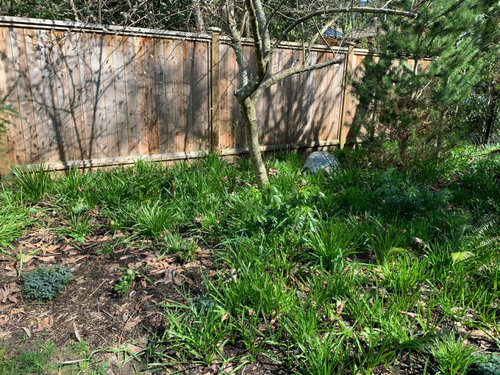
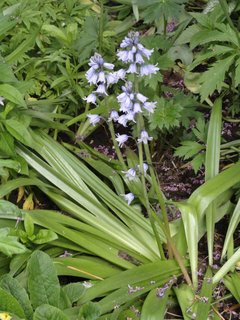
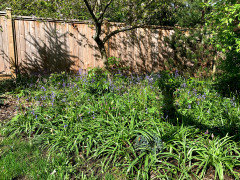
Despite best efforts these darn bluebells have made their second appearance.

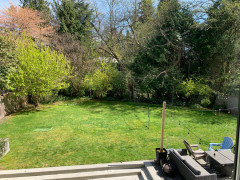
This is a new home as of 1.5 years ago. The lot was cleared, debris etc all removed. New grading done I including new soil and then sod.

Last year the blue bells destroyed the sod and pushed on through. So we removed the sod. Dug it all up, put down new spoil, planted new plants, mulched in fall, with recommendation of gardener we left leaves on mulch for winter.

Fast forward to now and the bluebells are back. So what to do?

A lot of me is fine with this back area being a bit of a bluebell mess and managing the rest of the gardens but I have a few questions.

Will the bluebells stay green like this through summer or die off?

Is it best to remove the plants I put in last year and relocate them so they don’t get swarmed by bluebells? It’s hard to see but there are Mexican orange bushes, pachysandra, ferns, modo pines in the chaos.

This is PNW and creek side.


There is a magnolia tree and two evergreens in the area as well.


Comments (48)

  • 6 years ago

    Bluebells only bloom for a short while. Why not just leave them for a splash of color in the early spring. Then they die off a little later in the season and won't have their leaves. We always mow them around the time the daffodils leaves start looking bad and they come back every year.

  • 6 years ago

    There are several flowers with the common name bluebell, both herbaceous plants in the genera Campanula, Eustoma, and Mertensia, and bulbs in the genus Hyacinthoides. The greenery looks more like bulb growth. Hyacinthoides is a bulb of southern gardens with winter leaves and spring flowers and summer dormancy. *What a horrible problem to have!*

  • 6 years ago

    So as I said in the post I'm not even asking to take them out. We already tried that and it failed. I said I was fine with them being there now. I'm asking how to manage the rest of the plants that are now no longer visible because of the bluebells.


    I also cannot mow over them because this is a garden full of other plants so that is not a viable solution.


    I know they won't last forever and have now received local guidance. I will leave them as is for now and when the leaves wilt I will pull them out and the other plants will enjoy themselves for the summer.


  • 6 years ago

    Can you put a close up of the flower? You might get some interest from people that would send you a plant trade or postage for your bluebells on the Plant Exchange site. If they were Virginia bluebells I would love some. We had a marsh filled with these every spring and they were beautiful and smelled wonderful.

  • 6 years ago

    I think we are going to embrace them. Once they wilt will remove the leaves but just embrace the green for now.

  • 6 years ago

    If these are the big hybrid Spanish bluebells their leaves grow huge and floppy. In my garden they don't disappear in summer. However, in this, candidly rather scruffy, corner and can't see what harm they're doing. Your other plants should be able to cope. The Choysia in particular will soon overtop them.

    I'd also like to see the flowers in due course because the foliage looks slightly atypical to me. But they are definitely bulbous and not any of the other plants sometimes called bluebells mentioned above.

  • 6 years ago

    They're definitely not Virginia bluebells.

  • PRO
    6 years ago
    last modified: 6 years ago

    I am confused I thought they were coming up in the grass(sod) so Iam not sure whay you cant just mow them when you mow the grass.The picture you show there is no grass, I actually dislike grass so I think bluebells are a lot prettier than grass

  • 6 years ago
    last modified: 6 years ago

    Different experience with English-Spanish hybrid (or just Spanish?) bluebells. These (a number of dozen) were planted as English bluebells. Over the years, I've dug out a few, but would say that the survivors just linger. Being poisonous, I'm assuming that the voles can't take credit for this. Picture: a June 4 when the mixed perennial beds here are starting to look more crowded.


  • 6 years ago

    Patricia we had sod in this area originally. They pushed through and ruined the sod. It was insane. That was last spring.

    So last spring we decided to pull up the sod and make a garden back there. It’s quite damp in that area so the sod was inconsistent anyway. It’s been a garden for about a year now. So no longer can be mowed.

  • 6 years ago

    without a full and complete ID ... its hard to make recommendations on how to tame them ...


    its the usual downfall of using common names ...


    plz ... plz.. give us a pic of flowers. when they appear ...


    ken

  • 6 years ago

    Ken, we do not an ID any more complete than that of Hyacinthoides, which they most definite are!! The control of the plants is not different based on the couple of species that can occur here or their very common hybrid.

  • 6 years ago

    Sunny, I can confirm that your plants aren't English bluebells, Hyacinthoides non-scripta.

  • 6 years ago

    Gardengal lives close to me so knows what they are :)

    It’s all good. We have a plan now that I’m fine with.

  • 6 years ago

    Thanks, Floral. Remembered spreads of the English ones, near High Wycombe, Bucks, when I was a kid. Well, at least I have the primroses!

  • 6 years ago

    Spanish bluebells are horribly invasive in Portland OR, been trying to get rid of them for two decades with no luck. They do smother other plants to death including hostas, epimediums, dicentra, ferns, other bulbs. I hate hate hate them.

  • 6 years ago

    Yep invasive here but just accepting it for what it is. Ferns seem fine so far and the mondo pines. Pachysandra not sure. Time will tell

  • 6 years ago

    Also PNW. Take that long weeder tool with the small forked end and pop them out. It will take some time. I think they should come out easier than dandelions. You have a damp spot there and they will get worse over time, because they have ideal growing conditions. But if your'e diligent, you can succeed.

  • 6 years ago

    Juli last summer I dug several inches down and pulled out what i thought was a million bulbs and they all still came back.

  • 6 years ago

    It's probably going to take heavier equipment then, maybe more than just a shovel?

  • 6 years ago

    We are leaving it. Thanks though. I’ll wait till they wilt and pull the leaves. All good

  • 6 years ago

    Bluebells are all flowering now and quite pretty. I'm glad I left it for now. Am keeping an eye on the other plants in there too and they seem good :)

  • 6 years ago
    last modified: 6 years ago

    I have several acres of Spanish Bluebells. I told you they were invasive sunnyborders. I'm still undecided how much the competition hurts the other plants growing in them. Too many other factors involved to fully blame the Bluebells

    AS, it would take years of repeated digging and pulling to reduce the numbers. Pulling the foliage around your other plants to give them more elbow room will certainly help them and no reason to wait for that until they finish blooming and the foliage starts to die back. You will have plenty left over to bloom.

    I would think if a person was determined to get rid of the them, consistently pulling all the foliage and any bulbs that came with early in the spring for a few years, stopping the bloom and growth phase, would slowly starve the bulbs and greatly reduce their numbers over time.

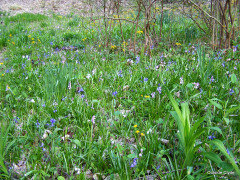
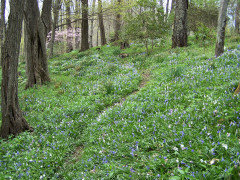
    Some Spanish Bluebells in the wild cultivated gardens about to reach peak bloom. I won't be pulling any. That ship has sailed.


  • 6 years ago

    Yeah I’m not trying to reduce them. Just will tackle once they wilt. For now enjoying

  • 6 years ago

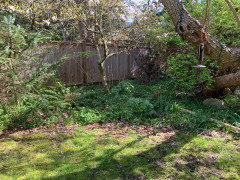
    Well here it is today. Utter chaos and sadly it is stifling a few of the plants I actually want. Argh. I'm going to try and pull them on the weekend assuming it doesn't rain. They aren't quite ready yet though as they don't pull easily.

  • 6 years ago

    They don't pull well at all!! Pulling just rips off the foliage leaving the bulb(s) in place. They need to be dug out (ask me how I know :-))

  • 6 years ago

    Seattle here. I can't be sure, but I had a patch of what I think were bluebells where the leaves stayed green and beautiful all year -- to the end of winter! (since it was a full year ago, I can't remember if it was a bluebell or different flower.) I like how they look, but then again, I like my yard being wild and random so it works.

  • 6 years ago

    I'm not digging them all up. My only goal at this point is to pull them, once they start wilting, so that the rest of the garden is fine for the rest of spring and summer. I know they will be back next year with a vengeance. But I cannot redo this garden for the third time. So am just managing best I can.

  • 6 years ago

    @BF I was fully on board until they started choking some of my other plants. They completely took down a large fern and are smothering a few others. I feel like they did wilt and die off last year but more like early summer so I may just have to dig up some that are causing issues and leave the rest for now.

  • 6 years ago

    oh no! now I will be sure to watch mine. yikes.

  • 6 years ago

    If you only get the leaves, no bulbs, pulled from around your preferred plants giving them more elbow room, air and light that will be good enough for now while they get established.

    Yes digging the bulbs would be best, but next year after they get tall enough to grab just pull all the foliage you can at the beginning of the season. Do not let them go for their entire growth cycle storing more energy in the bulb. Without the leaves the bulbs will starve … eventually.

    Remember - she persisted.

  • 4 years ago

    Funny this was revived. The bluebells continues to be wild but the other plants are somewhat more established and we try and coexist together for awhile and then I pull most of them out. I’ve come to accept that Creek side with lots of native plants around too it’s a bit of a messy west coast garden but one I still like tinkering in and enjoy so it is what it is.

  • 4 years ago
    last modified: 4 years ago

    "it’s a bit of a messy west/east coast garden but one I still like tinkering in and enjoy so it is what it is."

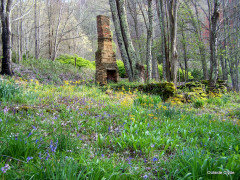
    Nothing wrong with that. One person's mess and invasion can become another's garden fantasy come to life. Come for a quiet walk with the Bluebells in Bulbarella's garden if you like.

    Outside Clyde: A Walk With Bluebells


  • 2 years ago

    I’m curious if anyone has tried choking them out with cardboard. We’re in Portland, OR, as well, and I agree they are relentless. Pulling only works about half the time and I haven’t detected a pattern for when it works and when it doesn’t. Thoughts, suggestions?

  • 2 years ago

    I posted this four years ago and have given up. I let them run wild for when they are alive and then mid summer I pull the remnants to clean up the area but that’s it.

  • 2 years ago

    Good to know! It does feel futile and perhaps my time is better spent elsewhere in the yard.

  • 2 years ago

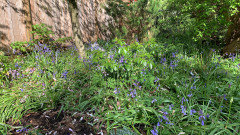
    Here it is now in all its glory

  • 2 years ago

    At least it doesn’t look like it’s gotten any worse!

  • 2 years ago
    last modified: 2 years ago

    WCHopeful - I'm sorry you are struggling with this and that your plans have been thwarted. I do not have this plant on my property so I can't contribute anything specific. But I have had invasive plants that have resisted all efforts to be free of them. One was witch grass, that I really did give up on and gave up my 25x25ft vegetable garden when they overran it. I had tried to pull them, but every time you left a tiny piece of root, they multiplied. Then I made the mistake of using an electric tiller and tried just tilling over the whole 25ft garden area. Big mistake, all it did was multiply them even more. So I stopped growing anything there for 2 full years. But I always was on the lookout for a solution.

    I was in a forum reading threads and someone was talking about smothering an invasive plant. And I got the idea of taking a very large heavy plastic sheeting we had leftover from an ice rink we made for the kids when they were little. We covered the whole area and left it there for a year. It was a hot dry summer and that area baked. After we removed it a year later, I haven't seen that witch grass back since.

    I have another invasive that is in different areas in my garden and it just keeps coming back. It was all around the base of a rose I enjoy and it was just increasing and encroaching on it, so as a last resort - I am an organic gardener and won't use a chemical - and we had repeatedly pulled it like 20x in one growing season to no avail. This time I dug the whole area out soil and all, about a foot deep and threw away all the soil that came out of it. I was able to leave most of the rose roots covered well, but I left the foot deep trench open all winter. So far this spring I have not seen any. And it has come back in other areas, so I know it already should be growing. So I filled it in and so happy to see it gone. BUT - we'll see....lol. Whether it will be back before the growing season is over. You could try this method in a small area, by digging out all the bulbs and the soil around one of your favorite plants in the autumn and leave the trench open and fill it in with new soil in the spring, if the plants don't come back. If that worked, then you could just do a little bit at a time at your own pace.

    I would like to ask, is this bulb reproducing by seed? Is that why you removed all the sod and soil and it still came back? And do you have another area on your property that you can have another garden space? If you had it running wild on a large property away from where you were trying to garden and just left it, I could see doing that. But if it is overtaking valuable space that makes it impossible to use, I guess I'd think about trying some different ideas and keep looking for a solution. You could experiment with different methods on small patches so you could see if any of them were effective.

    One other thing you might try if your preference is to just leave it, is to plant something that would fight with your hyacinths and keep it from increasing further. something that is also invasive? It is running over more delicate plants like ferns, etc. I wonder how you would feel about adding Autumn Fern to the mix, which also spreads?

  • 2 years ago

    We have a large property and tons of garden spaces. The area where the bluebells are is way in the back and not very used. We aren’t worried. Bluebells are a small section top left.

  • 2 years ago

    That's excellent! I have a 1/4 acre property with limited sunlight so I was forced to do something drastic. Nice property! I guess you could enjoy them from a distance from your sitting area. :-)

  • 2 years ago
    last modified: 2 years ago

    Virginia bluebells are ephemeral and will die back and disappear until next year. Other things you plant will fill in that empty space after they die.


    I love my bluebells.

  • 2 years ago

    Again, post is 4 years old and I said a few comments up we don’t do anything. They are still a huge pain and while some people love them I’m not one of them. Hence why I posted four years ago.

  • 2 years ago
    last modified: 2 years ago

    Virginia bluebells are not at all the same plant as the bluebells that inhabit gardens in the PNW. Those are bulbs in the genus Hyacinthoides and include Spanish bluebells (H. hispanica), English bluebells (H. non-scripta) and a hybrid between the two (H. massartiana). Massartiana is the one most often found here, it is extremely weedy and spreads both by seeds and by bulbs.

    I've had to deal with it in all of my gardens and it is a major PITA!!

  • 2 years ago
    last modified: 2 years ago

    ah, GG, would not have mentioned our Virginia bluebells (Mertensia virginica) if I had known. A good reason to use the Latin names. Sorry. Also missed that it was an old post.

  • last year

    I'm in England, UK, and am battling a Spanish Bluebell invasion. Seven years of digging up bulbs, bagging up soil, etc. It's a nightmare with no end in sight. My appalling neighbours have many of these bluebells in their gardens but do not do anything to stop the spread despite knowing how invasive they are. They are so robust they can survive my compost bin! They can grow in tiny nooks and crannies in paving and brickwork. I honestly fear these plants will be big news in a few years time as they are so destructive. You can either have a cultivated garden or you can have a carpet of Spanish Bluebells but you cannot have both - not for long anyway! I once viewed a house to buy and noticed the neighbour's garden was covered in a blue haze - every area, every pot, every paving gap had these bluebells growing! I don't believe it's possible to eradicate them from a garden unless the garden is bombed to smithereens. The only answer is to remind ourselves that this is Earth and not heaven. Hopefully, when I'm in heaven, I will have a beautiful garden to enjoy.

  • last year

    I’ve long ago given up on managing them!