Software
Houzz Logo Print
webuser_74471788

Is my plant overwatered???

6 years ago

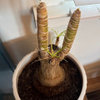
Quick question, I’ve been keeping an eye on my plants these past few days and although I know they are due a watering one of my plants has overwatering symptom.


The leaves are very soft and droopy which is signs of overwatering yet i make every effort to water as little as possible, my Instincts are telling me it needs watering but as I’ve said the leaves ain’t dry and crumbly so not sure what to do

Comments (16)

  • 6 years ago
    last modified: 6 years ago

    Soft and droopy are also signs of underwatering. If you wait till the leaves are dry and crumbly it's dying ... or dead.

    As an aside the pot needs to be fuller.

    Ryan Lewis thanked floral_uk z.8/9 SW UK
  • 6 years ago
    last modified: 6 years ago

    If wilting occurs while the soil is still moist, there is almost no chance you're under-watering. If it wilts when the soil is dry, and you should be able to tell when it's dry by simply hefting the pot, don't allow it to get so dry. For larger pots where it's not so clear whether or not the plant actually needs watering, use a 'tell' to 'tell' you when it's time to water.

    I'm not sure if it's the light or not, but it looks like your plant needs fertilizing and more light.

    Using a 'tell'

    Over-watering saps vitality and is one of the most
    common plant assassins, so learning to avoid it is worth the small
    effort. Plants make and store their own energy source –
    photosynthate - (sugar/glucose). Functioning roots need energy to
    drive their metabolic processes, and in order to get it, they use
    oxygen to burn (oxidize) their food. From this, we can see that
    terrestrial plants need air (oxygen) in the soil to drive root
    function. Many off-the-shelf soils hold too much water and not enough
    air to support good root health, which is a prerequisite to a healthy
    plant. Watering in small sips leads to a build-up of dissolved solids
    (salts) in the soil, which limits a plant's ability to absorb water –
    so watering in sips simply moves us to the other horn of a dilemma.
    It creates another problem that requires resolution. Better, would be
    to simply adopt a soil that drains well enough to allow watering to
    beyond the saturation point, so we're flushing the soil of
    accumulating dissolved solids whenever we water; this, w/o the plant
    being forced to pay a tax in the form of reduced vitality, due to
    prolong periods of soil saturation. Sometimes, though, that's not a
    course we can immediately steer, which makes controlling how often we
    water a very important factor.

    In many cases, we can judge whether or not a
    planting needs watering by hefting the pot. This is especially true
    if the pot is made from light material, like plastic, but doesn't
    work (as) well when the pot is made from heavier material, like clay,
    or when the size/weight of the pot precludes grabbing it with one
    hand to judge its weight and gauge the need for water.

    Fingers stuck an inch or two into the soil work ok
    for shallow pots, but not for deep pots. Deep pots might have 3 or
    more inches of soil that feels totally dry, while the lower several
    inches of the soil is 100% saturated. Obviously, the lack of oxygen
    in the root zone situation can wreak havoc with root health and
    cause the loss of a very notable measure of your plant's potential.
    Inexpensive watering meters don't even measure moisture levels, they
    measure electrical conductivity. Clean the tip and insert it into a
    cup of distilled water and witness the fact it reads 'DRY'.

    One of the most reliable methods of checking a
    planting's need for water is using a 'tell'. You can use a bamboo
    skewer in a pinch, but a wooden dowel rod of about 5/16” (75-85mm)
    would work better. They usually come 48” (120cm) long and can
    usually be cut in half and serve as a pair. Sharpen all 4 ends in a
    pencil sharpener and slightly blunt the tip so it's about the
    diameter of the head on a straight pin. Push the wooden tell deep
    into the soil. Don't worry, it won't harm the root system. If the
    plant is quite root-bound, you might need to try several places until
    you find one where you can push it all the way to the pot's bottom.
    Leave it a few seconds, then withdraw it and inspect the tip for
    moisture. For most plantings, withhold water until the tell comes out
    dry or nearly so. If you see signs of wilting, adjust the interval
    between waterings so drought stress isn't a recurring issue.

    Al

  • 6 years ago

    I have 6 plants and this is the only 1 wilting, I did forget to mention that this plant has been put in compost ment for early life plants, I’d say it’s around 50% john Innes no1 as I ran out of my main stuff when potting them up. Unfortunately I’m unable to acquire any compost right now due to lockdown or I would try repotting it! Would simply giving it liquid feed keep it going untill I’m able to get some good compost and repot???? All advice appreciated

  • 6 years ago

    OK, now we know you're in the U.K. (US readers, don't be put off by the term 'compost') Give it a feed and try to give it a lot more light. Do you have a greenhouse or conservatory? I'm assuming you bought the plants in, rather than growing from seed, given their size so early in the year? In which case you might have one which is not the same variety.

    Ryan Lewis thanked floral_uk z.8/9 SW UK
  • 6 years ago

    Water thoroughly when you water, so the entire soil mass is saturated - then hold the plant over the sink or a bucket and move it up and down. You'll note on the reversal from downward to upward, Newton's First Law of Motion takes over and any excess water in the soil continues to move downward and out of the drain hole. You can eliminate ALL excess water via that simple trick. Then, wait until the plant actually NEEDS water before you water thoroughly again ......... and don't forget to fertilize.

    Al

    Ryan Lewis thanked tapla (mid-Michigan, USDA z5b-6a)
  • 6 years ago

    I grew the plants from seed my self, are they not a good size for this time of year???? I started them 2nd January, It was a novelty “grow your own pepper can” I never expected it to actualy grow and never expected 6 plants from it but here I am 3 months later and I really want to succeed. I will use tapla’s advice on watering and see how I go.


    ive another question also as I hear different things from different ppl, should I remove all buds and flowers forming as of right now? I’ve 1 plant that’s just over a foot tall and has close to 25 buds growing on it and I want my plant as big as possible so should I remove them all? I’ve been told it’s growth will be serverly stunted if not?????

  • 6 years ago

    I meant they are very large for this time of year! That's why I thought you'd bought them in rather than growing them yourself. I'm not growing any this year since I have enough dried chillis from last year to last ages but if I were probably wouldn't have even sown the seed until March. You've done amazingly well given the winter light levels here. Since it was a novelty can it's quite possible they're not all the same.

    Regarding disbudding, I never have. But make sure you feed them so they can support the crop. Give them as much light as possible. You don't need a huge plant. Mine are usually about two feet and 6 of them supply me with all the chillis I could ever need for about three years!

  • 6 years ago

    Ok man thanx for the advice! Regarding plants getting plenty of sun, is it possible to put them outside for an hour or so on days like today when the weather pretty melo, or should I just wait untill I’m hardening them off later in the year?

  • 6 years ago

    You've done a good job so far, Ryan. Are you intending to grow these for their fruit, or the size of the plant, or some other reason? What is your thinking on/ reason for the debudding? Trees and herbaceous plants prioritize their parts, but perhaps it's better to say that the strength of a plant's energy sinks has a distinct order: Energy is first allocated to respiratory function, i.e. to maintenance of living tissues, then, to production of fine roots, followed by flower and seed/fruit production, then primary growth (extension of both roots and shoots), then secondary growth (thickening), and finally, the synthesis of defensive chemicals. You can see that reproductive parts are a stronger energy sink than either additive or extension growth, so removing reproductive parts definitely has the potential to increase the plant's dry mass, which is the true measure of growth. As a bonsai practitioner, defoliating and removing reproductive parts are key considerations in controlling how energy flows about the plant.

    Be cautious about putting them in sun initially. Depending on what their photo load is now, full sun might cause photo-oxidation (sunburn) in foliage and stem tissues. Move them into dappled shade for half a day and gradually increase sun intensity and duration of exposure. I have about half of my trees on nursery carts now, and I roll them in and out of the garage as weather allows.

    Are you going to grow them in the ground or a larger pot. In either case, when you transplant, you should remove the lower leaves, being sure to scrape of the new branches in leaf axils, and transplant them very deep.

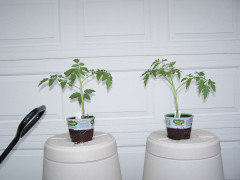
    Here ^^^ I've removed all the lower leaves on these tomato plants.

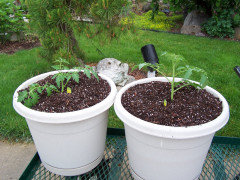
    See them transplanted below:

    This technique quickly produces a much larger root system and faster growth. Also, though it seems counter intuitive, I make sure there is no root congestion in the root/soil mass when I transplant by unceremoniously ripping the bottom 1/2-2/3 of the roots off the sets, then work my fingers into remaining roots to spread them horizontally on top of the soil before I backfill the pot to the desired ht of soil. This actually has a strong rejuvenating effect on roots, and I do this with all plants I grow or purchase. If, when you go to transplant, the root soil mass stays intact when lifted from the pot, spreading out the roots is particularly advantageous.

    Al

    Ryan Lewis thanked tapla (mid-Michigan, USDA z5b-6a)
  • 6 years ago

    My reason for asking about debudding is that pretty much every single YouTube video I’ve watched they recommend this, stating that failure to remove buds and flower untill it’s in its final pot/gound will most likely mean the plant thinks it’s as big as it needs to be and will stop producing new leaves and branches and will focus on the few buds it already has instead of growing more. I want as many fruits as I can get off the plant where possible

  • 6 years ago

    To be honest, Ryan, unless you have a very warm sunny spot such as a S facing patio right next to the house wall, I wouldn't put them outside permanently. I know some people do but I've found over the years that our weather is just not reliable enough. I keep mine in a conservatory full time so they can roast. But a breath of fresh air on fine days won't hurt them and a bit of air movement helps strengthen stems and discourage aphids.

    Ryan Lewis thanked floral_uk z.8/9 SW UK
  • 6 years ago
    last modified: 6 years ago

    I’ve just finished repotting 2 on the garden although they ain’t staying out there.


    As you can see there are a fair few buds on it, a little over 20 that I counted, my worry is without debudding it will stay this size(1foot) and struggle to produce more than a few peppers with it being on the small side, if it stays that size of course.


    btw why against a wall??

  • 6 years ago
    last modified: 6 years ago

    It's warmer against a S facing wall. Masonry stores heat. That's why old kitchen gardens had walls and peaches and figs got the S facing ones .

    I wouldn't worry about the buds or the size of the plant. Peppers are really not complicated. Just make sure they're fed and watered and let them get on with it. Even a relatively small plant can produce lots of fruit.

    btw I am assuming throughout that you are growing hot peppers/chillis.

    Ryan Lewis thanked floral_uk z.8/9 SW UK
  • 6 years ago

    There's no question the plant will get larger if you remove the blooms and embryonic fruit, and it will not harm the plant. You'll get fewer early fruit and more late fruit. Whenever I make my mixed display plantings for the gardens/decks, I always pinch all blooms and buds from the flowering plants as I put the plantings together. You probably can't see it, but the blooms have been pinched from the tomato plants above, too. Your strategy is sound - I just needed to understand what your objective was.

    Good luck to you.

    Al


    Ryan Lewis thanked tapla (mid-Michigan, USDA z5b-6a)
  • 6 years ago

    Thanks for the advice from both you guys, just don’t wanna fail now having nursed them for the past 3 months is all

Sponsored
Peabody Landscape Group
Average rating: 3.5 out of 5 stars8 Reviews
Columbus' Reliable Landscape Design & Contracting