Software
Houzz Logo Print
tangerinedoor

ID 4 ME, Please: 2 shrubs + 2 trees in Vermont

6 years ago
last modified: 6 years ago
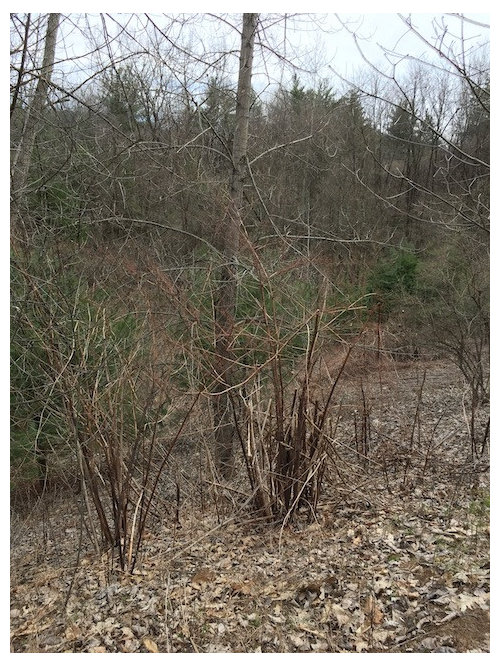
I'm getting to know my garden. I'm also trying to take cuttings from shrubs so I can fill out the space. I could use some help identifying these two shrubs and two trees (because I'm curious).

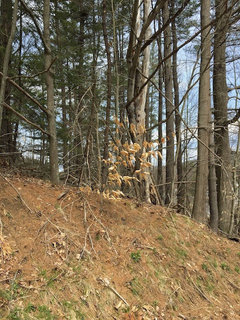
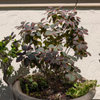
Shrub #1, dried-out crackly reddish broken stalks, with no new growth at this time:


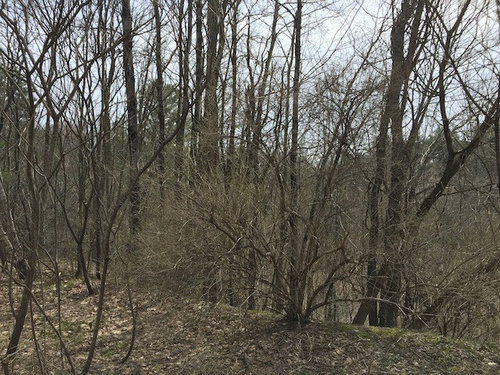
Shrub #2 (light brown with a gazillion teensy weensy twiglets):


I believe this is also Shrub #2:


Comments (18)

  • 6 years ago

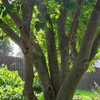
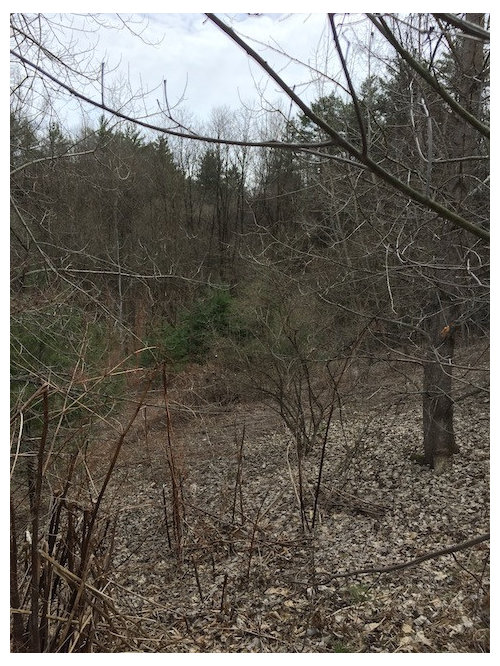
    The two trees.


    Tree #1 has a bunch of leaves sticking to it. Many examples of these in the woods:

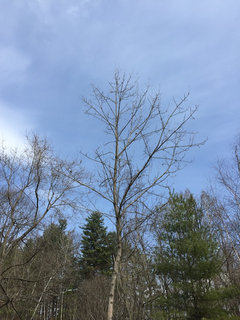
    Tree #2 has fat-ish shoots that don't alternate. Not a whole lot of twiglets happening. I might have to get another photo of this when the light is better.

  • 6 years ago

    Photo 1 and the plant in the lower left of photo 3 looks like it might be Japanese knotweed, but I would need better photos. If it is, it isn’t woody, just a really large perennial and so the stems will be hollow and dead, and new growth will sprout from the base. Japanese knotweed is a serious invasive and should be removed via any means necessary, but don’t do anything until it is clearly IDed. For photo 2, I would like closeups of the twigs and branches.

    tangerinedoor thanked NHBabs z4b-5a NH
  • 6 years ago

    You're awesome!

  • 6 years ago

    I agree it looks like JK but we really need much closer shots of twigs and buds for any shrub you want identified.

    tangerinedoor thanked floral_uk z.8/9 SW UK
  • 6 years ago

    ....and the other shrub might be a type of bush honeysuckle, if so it's also invasive :(

    tangerinedoor thanked katob Z6ish, NE Pa
  • 6 years ago

    I will do some close-ups tomorrow. Sigh, I prolly have invaders everywhere. Question is, what do I do about them. #1 and #2 shrubs above might actually be just over my property line, but could easily end up with root systems in my property. They're in urban "wilderness" that will never be developed.

  • 6 years ago

    With the close-ups we might get a better identification, but did want to mention that not all honeysuckle bushes are invasive. Lonicera canadensis is native to the northeastern US. We have some in our woods that we almost ripped out thinking they were Japanese variety; it didnt look quite the same, though, and when it fruited, it confirmed itself to be American honeysuckle ... so not entirely hopeless. We do have plenty of other invasives, though, lol.

    tangerinedoor thanked BlueberryBundtcake - 6a/5b MA
  • 6 years ago

    Figuring out what to do about the invasives is difficult.

  • 6 years ago
    last modified: 6 years ago
    Small woody invasive species I pull out by the roots with a large set of pliers. There are also tools designed for pulling woody plants typically called something like a weed wrench that can be used for things a bit larger.

    If you cannot pull or dig it out, cut it to the ground after which you have a couple choices.

    For Japanese knotweed and larger woodies, I cut down and paint stumps with a brush strength herbicide. I am not an indiscriminate user of lawn and garden herbicides, but in this instance I think it is the lesser of two evils, and since I have more than 100 acres with lots of invasives, this is my only hope of removal. I have researched to find what won’t stay in the soil and wear protective equipment. Painting on cut stems uses less herbicide and in a very targeted fashion.

    Alternatively, cut them to ground level and then religiously check for sprouts every week or so. Remove the sprouts. Continue this for a season or two, or for Japanese knotweed, it might be longer. This will use up the plant’s stored resources without allowing it to replenish. But it only works if you are very, very consistent.

    IMO removing invasives from public land that adjoins your property is totally reasonable. But as I said above, don’t remove until you have a positive ID.

    tangerinedoor thanked NHBabs z4b-5a NH
  • 6 years ago
    last modified: 6 years ago
    I agree with Katob that the shrub does seem to look a bit like one of the shrubby honeysuckles, but I cannot be sure from that photo. When it starts leafing out, if it hasn’t been IDed by then, this key to honeysuckles found in New England, both native and not, might help. The Native Plant Trust used to be called the New England Wildflower Society.

    https://gobotany.nativeplanttrust.org/dkey/lonicera/

    There are two native species found in your county, Lonicera caerulea var. villosa, and L. canadensis that Blueberry mentioned. But in your semi urban area, it is more likely to be one of the invasive honeysuckles, if it is a honeysuckle.

    tangerinedoor thanked NHBabs z4b-5a NH
  • 6 years ago

    What time of year do you cut and treat the knotweed? So far it has laughed off pretty much everything I’ve tried, and there’s just too much here to dig.

    tangerinedoor thanked katob Z6ish, NE Pa
  • 6 years ago

    Actually, my hatred of this plant rubbed off on my DH and he took it on as a mission, eliminating a large patch that was spreading rapidly in about three years. My memory is that he waited until it was well grown early in the season, probably June here, and then mowed it down and sprayed or painted it since there were no other plants in its immediate area because it had choked out everything. Then repeated midsummer and again before frost. We use brush strength glyphosate here since it has a short half-life. As mentioned above, one year didn’t do it, but he did get rid of it. Sorry that I don’t have more details.

    tangerinedoor thanked NHBabs z4b-5a NH
  • 6 years ago

    Thanks, that’s just what I was looking for. I tried spraying without cutting and there were maybe a few brown spots that showed up.

    tangerinedoor thanked katob Z6ish, NE Pa
  • 6 years ago

    Scott’s combo of cutting and using brush strength glyphosate really helped. So you cannot get the premixed stuff, but need to get the concentrate. It was in a spot where he visited periodically anyway, so he would have noticed when it started showing leaves again. But it definitely wasn’t a single shot or even a single growing season. And each year it came back smaller because it hadn’t been able to store food the previous season. I checked the last two years and haven’t seen it return.

    tangerinedoor thanked NHBabs z4b-5a NH
  • 6 years ago
    last modified: 6 years ago

    What do you think about the chance that Shrub #2 is snowberry? It seems to grow only in isolated bushes. It's pouring outside--too dark for me to get another photo.

  • 6 years ago
    last modified: 6 years ago

    Gosh, I just got off line trying to order garden stuff. All kinds of price gouging. For a moment, I thought I'd be stuck with the pink wheelbarrow. I lucked out and got the ladybird red with ladybird spots. Black was $30 extra. No green left. None left at local Home Depot.

    No seeds 'til June. No mulch locally. Nor potting soil.

  • 6 years ago

    I don't think it's Snowberry. That grows in congested twiggy thickets rather than as a large shrub issuing from a sturdy central trunk or trunks.

    tangerinedoor thanked floral_uk z.8/9 SW UK