

Bluestar Hood questions
Hi everyone!
I just placed an order last week for a 60” RNB Bluestar range and hood. My problem is although I looked at Bluestar years ago, I was not able to look at a set-up recently before I ordered due to quarantine, or have any real discussions with a sales rep about what all I should consider. I know it’s the range I want, so that’s not an issue, but I may have messed up my hood order. I ordered a 60” hood through them as well, based on the majority of ranges I have seen that have matching range and hood sizes. I’m going to see if there’s any possibility to change that to the 66”, but if not can other people tell me their thoughts on how equal sized hoods and high btu ranges have worked out for them? Also, we did not want to get the external blower after talking to a chef who has some experience with both kinds, but I had decided on the in-line blower, I thought, until I just looked at my hood quote again and saw that they had put down in-hood blower. Both are 1200cfm, so maybe not a problem, but I’m concerned about noise levels.
Basically, I really botched this part of the order, and I’m a little nervous that I might not be able to upgrade a week after I placed my order despite the fact that we’re supposed to be 3 months out from receiving it. Any thoughts, or better yet experiences, that might allay my nerves that I messed this up? I was really excited until I realized these two possible gaffes. Thanks for your input!
Comments (19)
 6 years ago
An external or in-line blower provides the opportunity, depending on architecture, of adding a silencer into the duct path, thereby significantly lowering noise in the kitchen near the hood.
Due to cooking plume expansion, one wants the hood's capture aperture to overlap the plume size at the hood height. Typically, +/- three inches beyond the cooktop, which is more beyond the actual pans in most cases, is deemed adequate. If with the 60-inch hood you find plume effluent escaping capture, cook the greasiest/odoriferous foods on inner burners. If this is deemed inconvenient or too much of a compromise, try to order the 66-inch model.
Note that the 66-inch model may need a 1500 CFM blower, depending on hood aperture area, fan curve effects, MUA pressure loss, etc. as addressed here in many threads.
bckwincy thanked kasekibckwincy
Original Author6 years agoKaseki,
Thanks for the reply! It looks like I’m going to be sticking with the 60” hood. I checked on the upgrade to the 66” and it was going to be $4800 more than the 60”!! I know they had a price increase at the beginning of May, but that seemed a bit excessive. They said that the vast majority (well north of 90%) of the residential hoods they sell are the same size as the range and my rep (who really has been quite phenomenal: knowledgeable and in the business a long time) has personally had no one ever complain they are underpowered or don’t have enough capture area. The chef I spoke to (who cooks on the exact same range I’m getting), ordered his hood the same size as the range and he said it is more than adequate even when using a wok on the corner front burners. I don’t have a grill (I went with griddle as we are big griddle people with 5 kids), so I’m hopeful we’ll be covered. On the plus side, I can maintain my cabinets on either side that I was going to have to get rid of entirely if I went to the 66”. I may also check on having one of my highest btu burners moved next to the griddle in the center of the stove, which would accomplish what you mentioned. Thanks again, and I plan to report back in the future on my experience with the whole set up, though I’m guessing that is months away. Feeling better about all of it though!Related Professionals
Nashua Kitchen & Bathroom Designers · Cumberland Bathroom Remodelers · Bronx Bathroom Remodelers · McAllen Kitchen Remodelers · Seattle Kitchen Remodelers · Birmingham Kitchen & Bathroom Designers · Oklahoma City Kitchen & Bathroom Designers · Leominster Kitchen & Bathroom Designers · Madison Kitchen & Bathroom Designers · Roswell Kitchen & Bathroom Designers · Sheridan Kitchen & Bathroom Designers · Spanish Fork Kitchen Remodelers · Bronx Kitchen Remodelers · Decatur Custom Countertops · Ottumwa Custom Countertops- 6 years ago
Side cabinets help with capture on the sides, particularly for the rear burners, so I expect that you will be OK.
bckwincy thanked kaseki - 6 years ago
I ordered the Blue Star hood ( Prestige) with my RNB. It was all installed before Christmas. I have the 30 " range and 33" hood. We wok almost every night. We use the front right burner as it is the highest BTU. We did get the 1200 cfm upgrade. I will tell you the details : The 1200 is simply the two 600 blowers side by side directly above the baffles. When you remove the baffles there they are. As far as sound goes on low you can barely tell the unit is on. Med is not awful and high is very loud. The biggest drawback and I do mean BIGGEST is the cleaning issue . I had a 54" in Tradewind liner with a 1400 cfm remote blower before. It was the most efficient wonderful easy to clean system I have ever seen. It worked perfectly year in and year out from install 2007 till we sold the house in 2018. We had a built in Miele deep fat fryer as well as high BTU burners and woked almost every night all those years. Cleaning was super easy. Run the three baffles through the dishwasher and place them back in . As soon as they had a grease film. on them they were cleaned and thus there was never the first odor in our house or any residue on the many open shelves in our kitchen.
A hood should always be oversized as far as CFM in order to NOT use the highest setting. You never want to run on highest as it creates turbulence in the duct and the smells etc come back inside. Always start the blower some minutes before needed and leave running. CLEAN as soon as you see any buildup. Now for the awful news on your Prestige hood. The motors are right there. The oil accumulates ALL over the motors and on every inch of the area inside the hood liner including the dangling electric connectors which are cloth covered. It's a HUGE pain to clean. You need to use Awesome brand grease cutter and spray it on a cloth NOT inside the hood and clean and clean. With your best intentions you will have way more mess than is desirable. We had NONE with the Tradewind ever. As soon as you smell food odors as you cook you will discover you have waited too long to clean the baffles. They do catch a LOT but they have to be kept pristine to and when they are they work excellently and you will never know you are frying bacon or fish or hot peppers in stirfry. I had tried to get the Tradewind rep to get in touch so I could duplicate my last set up only on a smaller scale. I am sorry I didn't stomp my feet and get it done.
I hate to be the bearer of this news but the system does work its just a lot of work and attention. Good Luck and please post back after you have done a week of serious cooking. cbckwincy thanked User bckwincy
Original Author6 years agoTrailrunner D, thanks for this feedback! I’m glad to hear that the hood works, though the cleaning sounds a little daunting. It will likely be worth it for me (cognitive dissonance clearly fully employed) as we have a crappy little hood that is original to our house at the moment, and I honestly won’t know any better. This will be the best hood I’ve ever owned! ;) It is good to know what I’m facing in advance on the maintenance front though, but I’m glad my main concerns that it works and isn’t deafening at low and medium sounds pretty promising. My present hood is quite loud, even on low, but it’s from 1967 so I need to cut it some slack. It’s also truly gross and not easy to clean, so perhaps I shouldn’t cut it any slack.
I did move one of my 22k btu burners toward the middle of the hood capture area per Kaseki’s recommendation and I feel like this is going to accomplish my main goal of capturing all of my wok sizzle!
I’d love to see a picture of your setup! Thanks again for some real world experience with this hood. It makes me feel better and a little more prepared. I hope to report back someday but my understanding is they are quite backed up so I’ll probably be waiting another 2-3 months.- 6 years ago
Darn just wrote a big response and the stupid site kicked it out! Here are pics
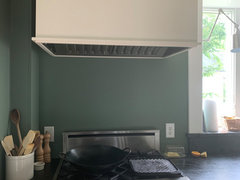
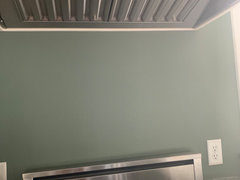
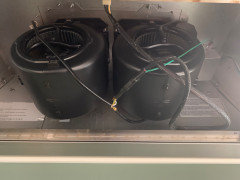
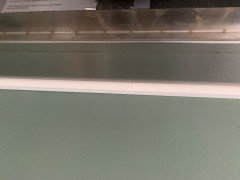 bckwincy thanked HU-797908698
- 6 years ago
Darn just wrote a big response and the stupid site kicked it out! Here are pics
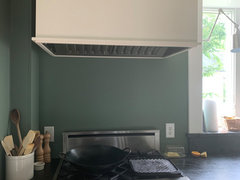
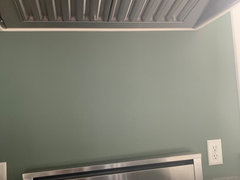
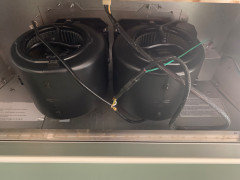
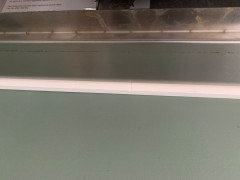
- 6 years ago
Prizer Painter was the original Blue Star in 2017 they bought Abbaka so I guess that is who makes them. I have 30” range with 34” pro hood liner. There is still an offer on Blue Star if you buy the range you get a $1000 bonus so that pays for the second 600 cfm. The liner comes with one 600 cfm already.
last photo shows gold colored grease buildup after one week. Clean often! Note cloth covered electrical wires.
any other questions just ask. We vented straight out but your liner has the opening in the top then you have a 90 degree turn. The cabinet above has the short duct but still has plenty of room for storage. cbckwincy thanked HU-797908698  6 years ago
The hood in the photos lacks any containment area. Anytime the rising effluent is greater than the blowers ability to exhaust (which happens frequently when cooking) then all of that effluent will scatter throughout the kitchen and house.
- 6 years ago
Opaone I’m not sure what you are saying as far as containment area . The range is 30” and the hood is 34”. The effluent rises absolutely perfectly when we are cooking with the wok on the Right front burner. You can not only see the vapors rising perfectly in a column but there is ZERO odor anywhere in the kitchen or house. Also the cabinet and the surrounding areas are always grease free. The baffles collect the grease .
Your understanding of the hood and cfm and the capture of HOGS is lacking. c - 6 years ago
I doubt @opaone lacks understanding of hood effluent characteristics and capture/containment requirements.
What @opaone is trying to express is that ideally there should be a volume below the baffles to help deal with transient plumes that might, if continuous, overwhelm the hood's ability to contain. (For reference, capture happens before the baffles, containment is the process of moving the effluent to the blower side of the baffles, from which it can't return.)
For example, suppose one is wok cooking in segments and, having fried the various veggies, is about to throw into the wok the meat and liquids that the meat has been soaking in. If the wok is at caramelization temperature the water will boil off as steam in a very short time (depending on heat settings, wok thermal capacity, quantity of liquid, etc.). This sudden steam blast may (depending on hood design and CFM) partially reflect out of the capture volume below the baffles in proportion to the capture volume vs. the steam volume. Opaone calls this capture volume the containment area. It contributes to containment, but in my view it may be clearer to the reader to associate it with capture. Failed capture, of course, implies failed containment.
bckwincy
Original Author6 years agoThanks HUHU-797908698! It’s helpful to see the inside and understand what we‘re going to have. Having bought this during quarantine I’m going off of recommendations, reviews, and long-held dreams, so visuals are always helpful. Do you likewise find cleaning this hood to be hard to do? I guess it doesn’t matter for me now as I will be cleaning it one way or another, but if you have any tips (I am planning on the Awesome brand grease cutter recommended below) I will surely appreciate them!
- 6 years ago
Containment is industry standard terminology. As explained to me by engineers the process is:
Capture - For the most part this is the size of the bottom opening where effluent first enters the hood. Effluent that does not enter the hood, that is not captured, will generally spread out in the room/house space unless there is a secondary exhaust system.
Containment - This is simply a bunch of open space to contain effluent until it can be exhausted - a holding space. The effluent from cooking is often very bursty so, in CFM terms, perhaps 100 CFM for a minute and then a burst of 5,000 CFM for a few seconds (when something is flipped, etc.). Even a 1,200 CFM blower cannot keep up with a 5,000 CFM burst. So, lacking sufficient containment area, the excess effluent rolls out from under the hood and in to the room. Quit often the majority of effluent is contained in these short bursts, not in the effluent produced between bursts.
Exhaust - The blower exhausts the contained effluent.
Higher CFM's mostly cannot make up for too small a capture area (aperture). Hot effluent that's rising is not easily controllable and it takes an enormous amount of airflow to change its trajectory enough to pull it in to capture it. If it's not captured it can't be exhausted.
Higher CFM's have a better chance against lack of containment. A 2,400 CFM blower (assuming it actually achieves that) may be able to get 70% of the excess left by a 1,200 CFM blower leaving only 30% to roll out in to the room. But that's a still big, expensive, loud, costly to operate blower (and duct system). This is why better hoods are designed with a large containment area because then the blower need only keep up with the average effluent over time rather than try to keep up with the bursts.
This is why a commercial hood with a large containment area (and why all commercial hoods have large containment areas) can perform better running at a silent 300 CFM than a consumer hood running at 1200 CFM. The 300 CFM blower need only keep up with the average effluent over time. The 1200 CFM blower is exhausting 90% fresh air much of the time and then when a burst comes can only exhaust 20% of it while the other 80% goes out in to the room.
Hope this helps.
- 6 years ago
Whatever... in real life after cooking with first the 54” Tradewind liner for 11 YEARS with a 1400 cfm remote roof mounted blower and now the Blue Star liner with 1200 cfm and essentially direct line out the wall behind the stove I can state categorically that there isn’t any HOGS escaping. I’m a meticulous housekeeper and my DH is an amazing cook and we’re perfectly capable of seeing if there is a lack of containment. I’ve read this forum for years. I‘ve seen more hogwash about homeowners needing expensive makeup air and commercial hoods... yada yada... y’all wouldn’t know a good home setup if you smelled it! I’m through trying to help the poor unsuspecting individuals who put themselves at the mercy of the two self proclaimed experts. Good luck.
bckwincy
Original Author6 years agoI said that I would leave an update once we got our new Bluestar and had tested it thoroughly, so here’s our take. We love it! Both range and hood have been amazing. We have the 60” RNB with 24” griddle and the 60” Bluestar hood with 1200cfm internal blower. We have used it for everything from wok cooking to smash burgers on the griddle and the hood has kept up with absolutely no problem. We’ve cleaned the hood and that did not even prove to be an issue. Wiping down the inside took about 10 minutes and I just put the baffles and the metal pieces that catch the grease in our dishwasher (it was amazing how much grease there was after only two weeks, it really works) and it was clean! So easy! I was concerned about not catching effluent since we had the same size hood and range but it has not been an issue even when I’m searing my fish on an outside burner. The high btu burners I can’t say enough about, wok cooking indoors had never been an option before, but with the high output burner and high cfm hood, it has been amazing. We are still learning how to do our exact bakes in the new ovens, but we are getting the hang of it. Our bread has been delicious and the added bonus of those broilers has made the jump to gas ovens really worth it. My favorite part though?? The griddle!! I love that thing, we use it so many ways and I’m so glad I went with the 24” griddle. Overall I feel lucky that it has worked out so well. And as far as hood noise goes, low is quiet, but fairly effective for normal cooking: a little steam, smell, and heat, medium and high are similar in volume and louder because of the air moving through but still not deafening, but high really sucks everything out and is only necessary in the more intense situations (smash burgers and wok cooking to name a couple). Again, it’s a hood and it works really well, and with that much air movement the sound is less than I had feared. Thanks for all the input from everyone. I love my new range/hood now to finish up the rest of the kitchen!
- 6 years ago
Thanks for that. It always makes me happy to hear reports of people who are happy with new kitchens or appliances! Congrats and may you have many great times and meals in your new kitchen.
bckwincy thanked opaone - 6 years ago
Thanks from me also. Too many threads end up missing experimental results to support or refute theoretical assertions.
One thing I noticed missing from this thread, upon rereading it, is addressing the effects of blower location on grease condensation. An external roof blower (centrifugal type such as Abbaka and Broan make) has the advantage of slinging any remaining grease that impinges on the blades out onto the roof where typically solar UV disassociates it, keeping the roof appearing clean. @opaone has noted in a recent thread that commercial (up-blast) blowers provide a grease collection means.
An external blower mounted on a house wall may sling some grease on the wall where it might remain if the blower is continuously in the shade. In-line blowers directed at wall caps may do the same, but could also puddle grease past the blower if horizontal. In all cases, occasional inspection of horizontal ducting is desirable.
Internal blowers, while the noisiest approach, likely will keep condensed grease in the hood where it can be dealt with during baffle cleaning -- much like VaH blowers do without the pre-filtering of the baffles.
bckwincy thanked kaseki - 6 years ago
An external blower mounted on a house wall may sling some grease on the wall where it might remain if the blower is continuously in the shade. In-line blowers directed at wall caps may do the same, but could also puddle grease past the blower if horizontal. In all cases, occasional inspection of horizontal ducting is desirable.
This is the exact reason external blowers are not the best choice for range hoods. I do not know about anyone else but I am not going to want to climb up on my roof or get a tall ladder to look at my blower on the side of my house to "inspect" the blower and clean the grease off my roof or the side of my house in the middle of winter, this is what the hood should do inside the hood, like the VAH. I have owned a VAH for many years and used other baffle style hoods. The VAH has always been quieter than the baffle filters when they are all turned on full speed and full speed is required for baffle filters to work properly. I was looking at both when i was in the market and heard both sides of the story. The blower mounted on a roof with a silencer does not reduce the noise. the noise comes from air movement not a motor, no air movement no ventilation. I personally want the grease inside the hood in the box around the motors where it can be cleaned out. Not in a baffle filter that only collects a portion of the grease and then trying to clean the grease off the hood that is past the baffle filters.bckwincy thanked regbob


kaseki