Software
Houzz Logo Print
rouge21_gw

Two perennials to give a bee keeper?

6 years ago
last modified: 6 years ago

I have a former work colleague that does "bee keeping" as a hobby. For the past 5 years he is so generous in gifting me jars of honey throughout the year always insisting that he does not want any monies in return. For awhile I would "repay" him with gift cards and the like i.e. no actual money. But even so he doesn't want even that. But after his most recent drop off on the front porch I thought that a gift of a couple of bee magnet perennials might be willingly accepted by Bill.

I know there are lots of threads about perennials that are good for pollinators but maybe some current input from my GW perennials forum friends would be ok?

I am envisioning these gifted plants will be planted near the hives which he may visit only weekly...so these plants cannot be any "shrinking violets" i.e. they must be hardy (say zone 5) and I am thinking more on the taller side as the area around the hives is a bit 'untamed'.

I already am pretty sure of one of the perennials I will give him. Our garden has many varieties of perennials but nothing comes close to CULVER'S ROOT for attracting bees.

And so I need one more.

Comments (44)

  • 6 years ago
    last modified: 6 years ago

    You grow any mountain mint, giant Agastache, Liatris, Anaphalis, New England aster, Joe Pye, Solidago or Verbesina?

    rouge21_gw (CDN Z5b/6a) thanked Skip1909
  • 6 years ago
    last modified: 6 years ago

    Liatris and Joe Pye Weed are plants I will consider. Thank you.

    (I know Mountain Mint will not be easy to source for me. And it is my experience that Agastache will not be a reliable 'returner' for the location in question.)

  • 6 years ago

    The two biggest bee magnets in my yard are agastache foeniculum and oregano.

    I wintersowed agastache YEARS ago and have never had to replant it. It seeds freely around the garden, but not invasively, IMO, and if it's somewhere I don't want it I easily rip it out. It makes a great filler in bouquets as well. It's very very hardy. I hardly ever water it, since it's not really in any of my beds. It's near my cinder-block raised vegetable beds, and it self-sows in the little open squares of the cinder blocks and you can imagine how dry those get, and it still does well. A very carefree plant and it's covered in bees.

    I also sowed some oregano a few years back. It's grown into quite a patch, and that also seeds freely. I discovered after I planted it that my husband the cook doesn't really like oregano (what's wrong with him?) so we barely use it and it does spread, but I literally keep it just for the bees. They love it.

    :)
    Dee

    rouge21_gw (CDN Z5b/6a) thanked diggerdee zone 6 CT
  • 6 years ago
    last modified: 6 years ago

    It's not a perennial, but it's the first thing that came to mind because I have noticed the past two years, that my Blue Holly is covered with bees when the tiny flowers open. My shrub is very large now. Up to the gutters of my house and about 8 ft wide. It's the male version and bumble bees especially love it. Mountain Mint, reminds me of the Holly, because it has the same tiny flowers all over it. And the Holly blooms pretty early for a shrub and I'm pretty sure, it was the earliest I saw bumble bees this season, when they visited the Holly.

    rouge21_gw (CDN Z5b/6a) thanked prairiemoon2 z6b MA
  • 6 years ago

    Excellent suggestions all of you. Thank you.

    Dee am I correct in saying that your agastache only come back each spring as a reseeding (rather than the original plant surviving the winter)?

    Oregano is good as well and given that it needs little water is an added bonus.

    prairiemoon2, I plan on looking up "Blue Holly" as I had never heard of it. I wonder if it is readily available in my neck of the woods.

  • 6 years ago

    what a lovely idea, Rouge! I am sure he will appreciate it!

    rouge21_gw (CDN Z5b/6a) thanked cyn427 (z. 7, N. VA)
  • 6 years ago

    You know rouge, that's a good question. It does reseed, but I do think there are some big clumps that actually come back. I have to be honest and say that for the most part I really pay no attention to this plant whatsoever. I adore it when it's in bloom and the bees are buzzing, and when I'm cutting for bouquets, but other than that I really don't bother with it. It's just always there, lol. And there. And some over here...

    But I do think there may be several original (or at least a few-years-old) clumps out in the veggie garden area. I have this vague memory of being disappointed when I got the seeds and realized they weren't hardy, but then was happily surprised when there was growth in the same spot the next year. Whether that was regrowth of the original or seeding in place, I'm not sure, but I do have some really heavy-duty rooted clumps, the type that when you try to get them out of the pot the pot cracks, or need a fork and lots of elbow grease to dig up. Even in early spring. So I think that perhaps it may overwinter in z6, at least maybe in a protected area, and at least for a year or two.

    If you are worried about it only lasting one season for him, I wouldn't be. Like I said, I planted it once from seed at least 15 years ago and have never been without since. Just tell him not to cut it back too soon.

    :)
    Dee

    rouge21_gw (CDN Z5b/6a) thanked diggerdee zone 6 CT
  • 6 years ago

    Great info Dee. I have learned lots.

  • 6 years ago

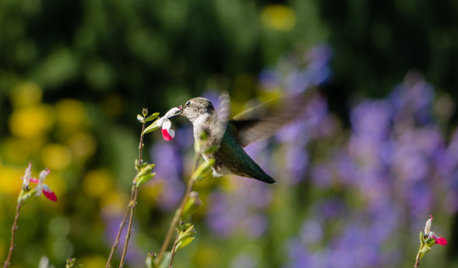
    Maybe this link will give you some additional choices. Other than lavender, which would top my list, I'd go with monarda - they don't call it bee balm for nothing!! And any visiting hummers will enjoy it as well.

    rouge21_gw (CDN Z5b/6a) thanked gardengal48 (PNW Z8/9)
  • 6 years ago
    last modified: 6 years ago

    Thanks 'gg'. A good link (but no sign of "my" Culver's Root). Bee Balm is an excellent suggestion as it is very hardy. (Lavender is hit and miss in this area).

  • 6 years ago

    The bees are most active around my Joe Pye Weed and borage plants.

    rouge21_gw (CDN Z5b/6a) thanked donna_in_sask
  • 6 years ago

    'donna', do you find that your established JPW needs moist soil?

  • 6 years ago

    Bees love my May Night salvia, which is blooming beautifully right now. Monarda (bee balm) is also super easy and spreads nicely.

    rouge21_gw (CDN Z5b/6a) thanked CatsCoffeePlants (Zone 5B)
  • 6 years ago

    Monarda (bee balm) is also super easy and spreads nicely.


    That has been my experience as well. (Several years ago I dug out Monarda as I was changing up that particular area. Even now I still get "Bee Balm" there each season.


  • 6 years ago
    last modified: 6 years ago

    No, they are like a weed in my garden, popping up in odd places. Likewise with the Filipendula. I don't have it growing in a really dry exposed area though.


    rouge21_gw (CDN Z5b/6a) thanked donna_in_sask
  • 6 years ago

    I couldn’t begin to count how many bees are on my Walker’s low nepeta. They swarm around it every year.


    And rouge, I have slender mountain mint if you want some. :) It grows wild around here if I can locate some.

    rouge21_gw (CDN Z5b/6a) thanked Dillybeansown (6b in the Ozarks)
  • 6 years ago

    For later in the season Helianthus 'Lemon Queen' is magnet for bees and it certainly is tall enough.

    I hesitate a bit to recommend a favorite of mine, albeit rather aggressive Macleaya cordata. The honey bees go crazy for it.

    rouge21_gw (CDN Z5b/6a) thanked peren.all Zone 5a Ontario Canada
  • 6 years ago

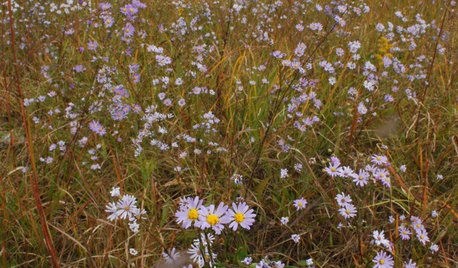
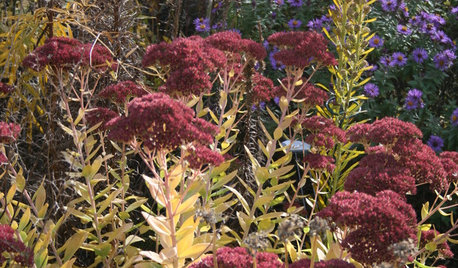
    For fall blooming plants goldenrod, asters, and sedum are all good choices. My sedum is just loaded with them every year.

    rouge21_gw (CDN Z5b/6a) thanked perennialfan275
  • 6 years ago

    " Macleaya cordata " Yowza!! That's a brave recommendation!! Next to trumpet vine and Jerusalem artichoke, the one plant I wish I had never planted and spent way too much effort trying to eradicate. But if out in an untended or only semi-tended hive area, its aggressiveness may not be an issue.

    rouge21_gw (CDN Z5b/6a) thanked gardengal48 (PNW Z8/9)
  • 6 years ago
    last modified: 6 years ago

    Easily Late Figowrt: Scrophularia marilandica. There is also Early Figwort, but I have Late figwort. I’d gift him the seeds, plant in the fall and let ‘er rip. It begins to bloom for me in late June and when you think it’s done, you see more flowers, and more flowers, and more until frost. If you need more ideas I would use the most excellent book, “100 plants to feed the bees.”


    But as I was reading your post, and about 2 sentences before you wrote it, I was going to say “Culver’s root.”


    I’m also a beekeeper and my girls are all over the Lacy Phacelia, Penstemon, Ilex verticillata, Oregano, salvia, gaillardia...


    The Agastache I had in one area of my yard and it NEVER came back, never reseeded, nothing. I planted it at least three times before I gave up. I decided one last time to try them in a new location and now I pull seedlings out of EVERYTHING. There are three main plants that ARE perennial but when it flowers it readily reseeds.

    When I visited Mr. Cuba Center, bottlebrush buckeye was COVERED in every possible pollinator, including honey bees. That’s very easy to grow and a large, beautiful bush.

    rouge21_gw (CDN Z5b/6a) thanked Anna (6B/7A in MD)
  • 6 years ago

    I'm a beekeeper & recommend Russian sage, bee balm, oregano, & agastathe because they bloom all summer & into the fall. hollies are a bee magnet but they are a flash in the pan bloom wise. if he has a fringe area where taller plants will work give him some sweet yellow clover seed.

    rouge21_gw (CDN Z5b/6a) thanked rober49
  • 6 years ago

    Dear group, this 'stupid' houzz thread format i.e. I try and thank each of you for your excellent posts but it never seems to stick. Please accept my thanks for your excellent suggestions. Because of certain constraints (mostly time) I have gifted the bee keeper a clump of Joe Pye Weed and a clump of monarda.

  • 6 years ago

    Good choices! I'm sure he and his bees will love them!

    :)
    Dee

    rouge21_gw (CDN Z5b/6a) thanked diggerdee zone 6 CT
  • 6 years ago
    last modified: 6 years ago

    There are only a couple of Agastaches that reseed in my garden. Most of them do not come back as plants from the season before but I get a lot of reseeding from Honey Bee Blue. And I used to get reseeding from the yellow version - I forget the name. I don't think it is as vigorous. Honey Bee Blue has honey bee in the name and I love having it, I planted it once and now I get seedlings every season. and they make nice fillers where they show up and are easy to pull where you don't need them. They're not that tall, maybe 1.5ft. What I love best about them, is the fragrance of the leaves. When you run your hand along them, they smell like root beer. [g]

    Hollies are a 'flash in the pan', but a good 2 weeks of bloom at a time of the year, when bees are just coming out and there's not a lot else in bloom. And a really large shrub can feed a lot of bees and get them off to a good start for the season. Sure, you need more for later in the year.

    Rouge - hitting like is just as good to me as a thank you. :-). Glad you were able to choose something. And I like your choices. I've had both. Joe Pye Weed is a great plant. A native which is always a bonus and it draws lots of different pollinators not just bees. Mondarda, will draw in the hummingbirds too which is sometimes the reason people choose them.

    rouge21_gw (CDN Z5b/6a) thanked prairiemoon2 z6b MA
  • 6 years ago

    PM2 thank you! I've been racking my brains trying to remember what kind of agastache I have, and I think it's Honey Bee Blue. I know it had a "blue" in its name and as soon as I read it I think that's the one. So thanks for that!

    I had two huge pieris shrubs in front of my house (along with two huge yews and a GIANT rhodie). All the shrubs were WAY too big and WAY too tall for the house (a cape, so only one floor in front) and WAY too close to the foundation. But for 20 years I couldn't bring myself to cut them down. I like the yews, the rhodie was a lovely light pink (and we would look out the window and use it as a thermometer to see how cold it was and how to dress, lol) and birds nested in the pieris almost every year. And in the spring, there were masses of giant bees (bumblebees? - they looked like they were wearing fur coats, lol, very large) and they adored the pieris in bloom. I kept thinking if I take those down, I'm taking one of the earliest food sources away.

    Well, about five years ago we finally took everything down. I think the roots were pushing in my foundation! We took them down in maybe February and come a few weeks later I felt so guilty because the bees were there... and the pieris weren't! I felt terrible, lol.

    But I have to fess up. Just couldn't bring myself to completely take down the rhodie. After many failed attempts at rooting cuttings, I cut it from about 15 feet tall to one foot. I keep telling myself I'm going to try to transplant it, but I'm afraid to try because the soil there is like cement!

    :)
    Dee


    rouge21_gw (CDN Z5b/6a) thanked diggerdee zone 6 CT
  • 6 years ago

    Too many excellent comments from people with far more experience than me, but just wanted to add that if bees actually landed on the plants they eat, my Nepeta wouldn't have a single stalk left upright. Now, this is bumblebees, but my bumblebees are fixated on my Nepeta, and it blooms for a long time and is hard to kill.

    rouge21_gw (CDN Z5b/6a) thanked deanna in ME Barely zone 6a, more like 5b
  • 6 years ago
    last modified: 6 years ago

    Dee, I have a Taxus that was original to my house in my front foundation bed. [g]. Built in the 1950s. It was a huge overgrown mess, but I've worked on it for the past 5 years to gradually get it into shape. For a long time I tried to do as little as possible with it, because I couldn't decide whether to take it out. It was just too much trouble, so I decided to see if I could live with it. Right now, it doesn't look too bad. It's not in front of a window but on the corner of the house. I haven't pruned it yet this year, but I keep trying to take another foot off it each year.

    The Holly I have in front of my window, is a really good screen. I'm too close to the street and I prefer the privacy there because I have a cape and that is a bedroom window. I do end up pruning that a lot to keep it in bounds, and give me just enough screen without making the room too dark. I'm due to give it a good cut back this month.

    My neighbor has a huge Rhodie in front of his house. In front of his Living room window. It's above the gutters and I think he did prune some of it back last year, but barely. It is gorgeous and covered with blooms every year. It makes his Living Room dark, but they do have a family room in the back that they use more than the Living Room.

    Have you ever thought of just taking cuttings from your Rhodie?

    Edit:

    Oops, I see you already tried cuttings. I rarely do cuttings, but with a lot of plants the timing of when you take the cutting can be crucial. I've had success with a few things, by finding out the timing and then when I've taken the cutting, I used rooting hormone. I also don't like an indoor set up where I have to keep them humid with bags. I bought a large plastic sweater box with opaque sides and top. I put a mix of 50/50 compost and sand about 2 inches deep in the bottom and put the cuttings in there. Watered it and put the cover on it and just left it outside in the shade of a tree and forgot about it for about a month.. I got about 75% success with boxwood cuttings. Which may be easier than Rhodies, I don't know. I can't remember if I put holes in the top. I would sometimes pass by it and take the cover off to check for moisture, and if needed leave the top off for a half hour and put it back on. I still have it and next time I see it, I'll notice whether there are holes or not.

    rouge21_gw (CDN Z5b/6a) thanked prairiemoon2 z6b MA
  • 6 years ago

    @prairiemoon Honey bee blue reseeds quite a bit for me also. It's become my favorite agastache.

  • 6 years ago

    PM2 it sounds like the original owners of our houses had the same landscape designer lol! Same here - cape style house, plantings that were way too big - the rhodie grew well above the gutter - and too close to the house.

    I have a huge bay window in my living room and the pieris was taller than I was when standing inside my living room looking out. It was a wonderful privacy screen and we didn't mind the blockage of sun - we get the late afternoon sun in that window so it was like being in a shade garden in the living room lol. And the birds nesting was like having a nest cam lol.

    But from the outside it was a hot mess. We spent a lot of money to have the house sided (against my wishes, that was my husband's choice) but then not only could you not see the front of the house, but what you did see was overgrown and wild.

    We do miss the privacy - especially as you say in front of the bedroom window, but it looks better, the foundation will be happier, and now I get to design a front foundation planting!

    Yeah I just had no luck with the cuttings, even though I tried several times. I used milk jugs like with winter-sowing, after doing a lot of research, similar to your set-up with the plastic box. I may try again with cuttings before trying to dig out the rhodie. It's just one of those huge old-fashioned ones you don't really see anymore, and a nice soft pink, not the bright pink of many you see. And I can use it as a privacy screen on the neighbors' boundary. I'd just buy a new one if I could find one like it!

    :)
    Dee

  • 6 years ago
    last modified: 6 years ago

    Dee, I'm grateful that previous owners never removed some of the original plants though. Some of them are really nice. I have a Kolkwitiza that blooms it's head off every June, that copes very well with neglect and is very fragrant. And I have a deutzia that I'm told is not really in circulation in the nurseries now. I just am not crazy about the location where they put them.

    I can't get a Pieris to grow for anything, so yours sounds like it was very happy.

    We had a robin raise three babies in our Holly this spring. :-)

    Sometimes Dee, you just get lucky with the cuttings or you don't. And again, timing of the cutting, because I've just taken cuttings at all different times of the growing season and use the same process and lots didn't take and then one set does. But if you really like the plant, I think it would make you very happy to have a cutting before you tried removing it. When I haven't had much luck, it's not very motivating to try again, I get it. Maybe you have a gardening friend who has more luck with cuttings than you do that might help you out? Or, you might try another way of reproducing it, by making a small cut in a lower branch and burying it in the soil and anchoring it with a rock. You do have to wait awhile for that to work though.

    I did pull out all of the front foundation plants except the big old Taxus and started over. The Holly I planted probably in 2004. It is really nice to start over. And I put an Itea under my LR window, that the final height reaches just to the bottom of my window. It's just about to bloom and that's another bee magnet. So have fun with the new foundation beds.

  • 6 years ago

    So I was out watering the veggie garden a few days ago and gave a bit of water to the agastache that is growing in the holes of the cinderblocks in the walls of the raised beds, and I remembered rouge's question about whether my agastache only comes back as reseeders, or does it overwinter. I now definitely believe that it is both. As I mentioned above, I have several large clumps, but as I watered it dawned on me that these clumps are a good 2 to 2.5 feet tall, whereas there are also many areas of smaller plants, about 1 to 6 inches tall. I'm guessing that the large clumps are established overwinterers, while the shorter swaths are newer, reseeded growth.

    Just thought I'd follow up on the question and share my observations. I always like to plug a good, hardy, carefree, "bee-loved" plant!

    :)
    Dee

    rouge21_gw (CDN Z5b/6a) thanked diggerdee zone 6 CT
  • 6 years ago

    Dee, thanks so much for the followup. I am curious when the "reseeders" begin to flower. And of course pictures are always welcome.

  • 6 years ago

    I was thinking of this thread this morning, watering a spirea that was in flower. it was covered with bees. They seem to have just finished up with the Itea and have moved on to that. So, I guess unless it is a double hybrid without pollen for them, they love anything that blooms. Maybe part of the trick is to focus on plants that bloom for a long time with open flowers that bees like.

    rouge21_gw (CDN Z5b/6a) thanked prairiemoon2 z6b MA
  • 6 years ago

    Sedums are very low maintenance and drought tolerant, and bees swarm all over them in late summer through fall. Another option for anyone trying to support pollinators of all sorts.

    Martha

    rouge21_gw (CDN Z5b/6a) thanked docmom_gw
  • 6 years ago

    My sedums are starting to color up already and I see the bees impatiently checking them out. Between the sedums and the asters, and some open centers Chrysanthemums, the bees get a good meal in the Fall.

  • 6 years ago
    last modified: 6 years ago

    The two biggest bee magnets in my yard are agastache......

    In mid June I bought my first ever Agastache (Blue Fortune). It was small and w/o flowers. As expected it took awhile to bulk up and then come into flower. I had it out front in a container and yes I did see bees on it but nothing 'crazy'. But then earlier this week I moved it to the backyard and like 'magic' it became a pollinator magnet. It is mesmerizing to see it covered with bees and the like. And just this morning there were humming birds. Thanks so much for this suggestion. I have benefited.


  • 6 years ago
    last modified: 6 years ago

    The honey bees really went nuts for my common milkweed when it was in bloom


    They like wild senna too


    Both deer resistant

    rouge21_gw (CDN Z5b/6a) thanked Skip1909
  • 6 years ago
    last modified: 6 years ago

    Another suggestion is Boneset. It's new to me as of recently, but those who said it attracts every pollinator in the area weren't kidding -- I have two of them still in pots by the water spigot (so I don't forget to give them a drink) and every time I brush against them I see a cloud of buzzers swirling around. No clue what some of them even are but they are crazy for the boneset. My observation has been that the bumbles prefer the Joe Pye over the boneset, while the smaller pollinators prefer the boneset - wonder why that is. Regardless, I think both are good choices for bees. I've also noticed a lot on the new agastache "Black Adder" I bought, but hardiness of that has been discussed above. I don't think you can go wrong with swamp milkweed (Asclepias incarnata) either.

    rouge21_gw (CDN Z5b/6a) thanked porkchop_z5b_MI
  • 6 years ago
    last modified: 6 years ago

    I'm really surprised no one has mentioned this (unless I missed it), but two plants I'd like to recommend are borage and milk thistle. I was on a walk at a park near me and the bees (and butterflies) were going CRAZY over it (milk thistle). Borage is an annual a friend of mind planted in the past, and it's been covered with honeybees every year. The leaves and flowers are also edible, and have a cucumber like taste to them. I don't know if it will reseed for your friend, so if he decides to grow this tell him to try to collect a few seeds in case it does not.

    rouge21_gw (CDN Z5b/6a) thanked perennialfan275
  • 6 years ago

    My borage has reseeded on it's own every year. And my dog used to love to eat it. [g]

    rouge21_gw (CDN Z5b/6a) thanked prairiemoon2 z6b MA
  • 6 years ago

    In general, most plants in the mint family they love as well.

    rouge21_gw (CDN Z5b/6a) thanked perennialfan275
  • 6 years ago

    A big bee magnet in late summer in my garden is sneezeweed. That is the most gorgeous marvelous plant but suffers from a lot of PR problems!! It doesn't even make you sneeze! It should be called "Beesweed!" The only other problem with it is it isn't much to look at until late in the summer/early fall. And it doesn't take shade or dry. It gets tall and can flop but I had mine in a wildflower garden so didn't bother staking it.

    rouge21_gw (CDN Z5b/6a) thanked l pinkmountain
  • 5 years ago

    Goldenrod will be a good choice

    rouge21_gw (CDN Z5b/6a) thanked Patrick K.
Sponsored