Software
Houzz Logo Print
hzdeleted_48726482

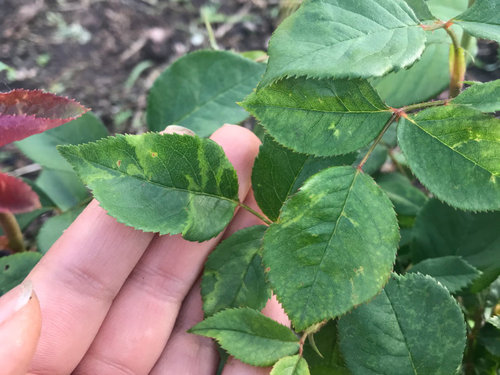
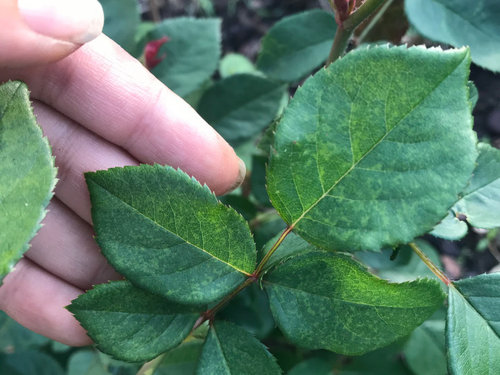
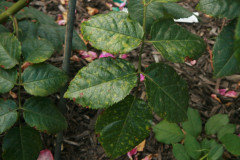
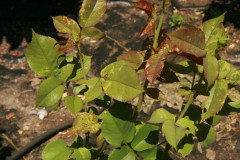
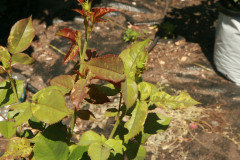
Help! Is this Mosaic Virus?

6 years ago
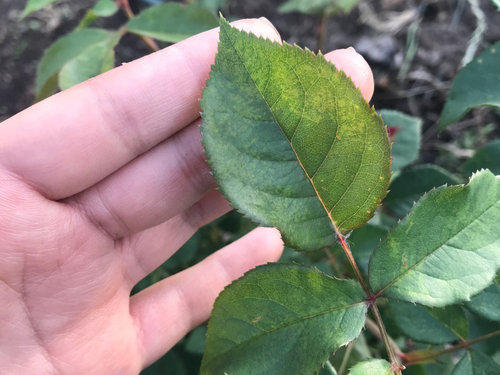


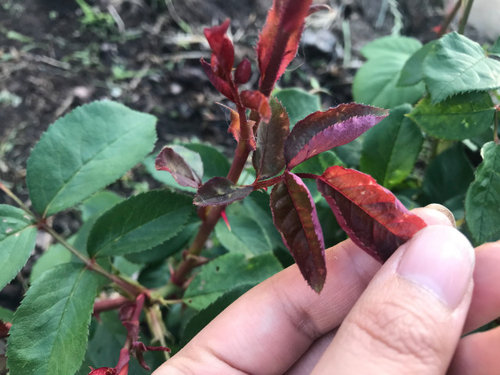
This is the new growth also spotty:


Both of my Desdemona Bushes are like this, none of my other roses have this. Same amount of sun and fertilizer. Please let me know your thoughts!

Comments (23)

  • 6 years ago

    Ok! I did not know it didn't affect them in a big way. I was concerned because Desdemona happened to be the weaker two roses in my garden. Do you think the virus is affecting it or is it just because my other ones are so robust? The other 2nd season roses I have: Poet's Wife and Queen of Sweden.

  • 6 years ago

    That is hard to know without a control group. My Queen of Sweden does seem strong. I don't have Desdemona or Poet's Wife. I have had wimpy roses on occasion and I wish I knew exactly what caused it.

  • 6 years ago

    That does look a lot like RMV. I have a number of roses that are infected, but only show the tell-tale “mosaic” on the leaves when they are heat or drought stressed. Otherwise, they seem fine. I try to see it as a good warning system, lol. The swirly yellow pattern shows up, I know they need a little extra TLC. 😊

  • 6 years ago

    Unless you are buying "Virus Indexed" ( a heat treatment process that kills the virus) roses, which are very hard to find and VERY expensive, most roses sold in the US are virused. Even own root roses are virused because, more than likely, they were grown from cuttings from virused, grafted roses.

  • 6 years ago

    What is your temperature zone?


  • 6 years ago

    Since I did not receive a reply, I will post a general answer. Roses have a temperature dependent immune system against some (many?) viruses.

    See:

    https://sites.google.com/site/temperatureandrosemosaicvirus/home

  • 6 years ago

    Hi All, apologies and thanks for your replies and input I was traveling for two days. That is very interesting about the virus and temperature. Do you guys know exactly how it spreads if it cannot spread through soil or wind/pollinators? Does it spread if I cut one cane and cut another rose’s cane without sanitation? If that is the case I would rather toss them 😕 ive had one Jude the Obscure from DA with the virus and it was extremely weak and wimpy while my other one thrived (no virus). It probably depends on a case-by-case basis on how each rose does, but my zone is 5a so I’m guessing they will never be as robust as the ones without the virus.

  • 6 years ago

    That is Interesting that you have it on Desdamona. I have it on one of my Desdamonas and nothing else. It hasn't affected bloom or growth.

  • 6 years ago

    Thank you for the zone 5 information. In order to discuss possible spread, one would have to know which virus (or viruses) you have. At least one of the most common (rose spring dwarf) spreads by aphids. Another of the more common (PNRSV) in cool climates may spread by pollen. This link leads to a recent paper concerning possible pollen spread of PNRSV:

    "However, there is limited information regarding the movement of ArMV by nematodes and PNRSV via pollen."

    https://extension.tennessee.edu/publications/Documents/W833.pdf

    -----------------------------------------------------------------------

    Also, in cool climates PNRSV may be in the sap in the above ground canes so pruning may spread the virus.


  • 6 years ago

    Spreading in the garden is not a problem Grace. Evaluate your plant on it's merits. It was either grafted on infected rootstock or grown from infected cutting tissue.


  • 6 years ago

    Even if you have seen NO signs of the virus, unless they were virus indexed plants they more than likely have it. Keep them healthy and they will grow for many years to come!

  • 6 years ago
    last modified: 6 years ago

    Many rosarians cut their garden roses to display in the home. Is there any danger to them if they inhale virus infected pollen?

    The plant virus that has been studied the most is probably Tobacco Mosaic Virus.

    "Tobacco smoking has been shown to cause cancers [6], heart disease [7], and chronic obstructive lung disease [8]. It also increases the risk for development of multiple autoimmune disorders such as rheumatoid arthritis [9] and multiple sclerosis [10], [11], [12]_"

    H.Kuska comment: please note "and multiple scierosis".

    "Tobacco mosaic virus (TMV), a widespread plant pathogen, is found in tobacco (including cigarettes and smokeless tobacco) as well as in many other plants. Plant viruses do not replicate or cause infection in humans or other mammals. This study was done to determine whether exposure to tobacco products [b]induces an immune response [/b]to TMV in humans."

    https://www.ncbi.nlm.nih.gov/pmc/articles/PMC3615994/

    Can a virus that infects roses (such as PNRSV) also induce an immune response?

    "The proposed study of the cases of 11 botanical researchers would update the
    7-year-old investigation into the deaths in the mid-1970s of OSU botanical
    scientists John A. Milbrath and Knud Swenson.


    Dr. Milbrath, a 64-year-old plant pathologist, died in July 1974 after he was
    stricken with a disease resembling multiple sclerosis (https://www.apsnet.org/publications/phytopathology/backissues/Documents/1976Articles/phyto66n07_821.pdf). Dr. Swenson, a 52-year-old entomologist, died the following year with similar symptoms.

    (https://academic.oup.com/jee/article-abstract/69/1/130/2212043?redirectedFrom=PDF)


    Swenson told the head of the plant pathology department before his death that
    he suspected the prunus ring-spot virus which he and Milbrath both had used in
    research. The virus affects many fruit trees, roses, cucumber and other common
    plants."

    https://www.upi.com/Archives/1982/05/05/Plant-virus-may-have-killed-researchers/6424389419200/

    -----------------------------------------------------------------------

    Now, the present thread concerns a rose virus in a relatively cool climate. The probability of one having health problems due to getting an autoimmune disease from infected rose pollen is probably much higher than it would be in a hot climate since, in a hot climate, the virus will be mainly in the roots during much of the flowering season.

    Even in a cool climate one is talking probability - for example, not everyone who was/is exposed to tobacco mosaic virus will get multiple sclerosis. What is being considered here is the possible application of the precautionary principle.

    "precautionary principle
    noun
    1.
    the precept that an action should not be taken if the consequences are uncertain and potentially dangerous"

    http://www.dictionary.com/browse/precau ... -principle


  • 6 years ago
    last modified: 6 years ago

    Grace, I'm an M.D. You'll be fine.

  • 6 years ago

    "7. Immune Responses to Plant Viruses in Invertebrates, Non-Human Vertebrates and Humans

    Plant viruses were found to trigger immune responses in invertebrates, vertebrates and humans, which might only reflect a history of exposure to foreign proteins and does not necessarily imply a role of the plant virus in pathogenesis. TSWV infection has been shown to induce a strong immune response in Frankliniella occidentalis, its major insect vector [106]. In addition, CPMV has been shown to induce humoral and persistent systemic and local immune responses in mice as detected by ELISA following oral administration [107], mice inoculated with Potato Virus Y developed antibodies to the virus [108], and we detected anti-TMV total antibodies in serum samples from mice inoculated intratracheally with TMV, seven days after inoculation [92]. In another work, inoculation to mice of ATCV-1, a phycodnavirus that infects green algae, was associated with the appearance of antibodies to this virus in 36% of the mice [72]. Finally, we found anti-PMMoV antibodies in humans, significantly more frequently in serum samples from patients with PMMoV, and, than in serum samples from controls [62], and anti-TMV IgG were recently detected by another team at a higher level in smokers than in non-smokers [109]."

    https://www.ncbi.nlm.nih.gov/pmc/articles/PMC4411691/

    --------------------------------------------------------------------------------------

    For background reading. The general classification is known as autoimmune disease, see:

    https://www.google.com/search?newwindow=1&sxsrf=ALeKk01WIIiUS1ZXrFKI5SLfKQVO81CnIg%3A1592410523431&source=hp&ei=m0HqXueHF9CztQacgZLoDg&q=autoimmune+diseases&oq=autoimmune&gs_lcp=CgZwc3ktYWIQARgAMggIABCxAxCRAjIFCAAQsQMyBQgAELEDMgUIABCxAzIFCAAQsQMyAggAMgUIABCxAzIFCAAQsQMyBQgAELEDMgIIADoECCMQJzoFCAAQkQI6BQgAEIMBUMMNWO5DYKJhaABwAHgAgAFgiAHUBpIBAjEwmAEAoAEBqgEHZ3dzLXdpeg&sclient=psy-ab


  • 6 years ago

    Hi Henry!


    Quite interesting facts you bring to the discussion, I haven't even thought of plant viruses affecting humans. But if we think about what is happening in the world today, we were infected by viruses from animals multiple times throughout history. Here is a study I found confirming that humans do have the antibodies for the virus. https://journals.plos.org/plosone/article?id=10.1371/journal.pone.0060621 This study is a direct (small, but direct) study of the relationship between TMV and the presence of the antibody in humans specifically. I will be referencing the facts listed on this study (could not find more studies like this).


    The "molecular mimicry" that the virus causes seems to show potential to help in lowering the chance of Parkinson's Disease. However, the study also suggests that this "molecular mimicry" is also the root of the issue of many naturally occurring human disease (including multiple sclerosis and alzheimer's). These do fall under the autoimmune diseases. Does the virus affect the plants in the same way and is this why it cannot spread to other plants? Or can it only be spread from infected Tobacco? Very interesting study, but the study itself even claims at the bottom that they do not have a large enough pool of people (nor the variety of ethnic backgrounds) to be able to claim that TMV does, in fact, cause significant molecular mimicry to the point where diseases develop. Definitely think there needs to be further proof for us to be sure that a plant virus can cause such serious illnesses. After all, this study confirms that smokers already have higher amounts of antibodies. That means quite a few number of people probably have had them since long ago, when smoking was much more common. It would be a reach to claim that a significant portion of these people developed some type of autoimmune disease as a direct result of having these antibodies. Perhaps when our immune systems are low, they have a higher chance of causing increased molecular mimicry? Interesting and very important information that is great to know, so happy you shared! I hope to see more studies done on a larger scale. I think it is very fitting of the times since we are currently suffering from a pandemic. Still, I believe the best thing we can do regardless of all of these studies is to take care of ourselves: exercise, do those small things that make us happy (like making a great cup of joe), and garden of course. I dream of the day where even if we do have sick friends and family, everyone can be provided with the best healthcare and surrounded with love. Stay safe everyone! I think I'll just dig up those roses this winter after all. You win some you lose some! That's gardening :) I've got my eyes on Princess Charlene de Monaco and Francis Meilland! Need some space for that!

  • 6 years ago

    I have Poet's Wife, Queen of Sweden, and Desdemona. Desdemona is the youngest, but also the smallest of these. In fact, I plan to move my Desdemona come bare root season so it's in the front of the bed. It's too small to be where it is now, and I don't see any signs of virus, so I think it's just that the bush is much smaller, more delicate. Mine are 2 years old.

  • 6 years ago

    Deborah, thank you for letting know that! That makes me feel better :) maybe the virus really does not affect the plant significantly. I did, however, read that it does lower the performance of the bush and also the lifespan of it. If I had a balcony I would pot it up and baby it, but I'm working with a very small garden space! For everyone wondering, they were from Burpee. I have ordered twice from Burpee and both times I've gotten a strange rose here and there. They were happy to replace the ones with visible issues. The Desdemona, I'm not sure if they will replace a second time (first one came visibly weak and brown). All other roses were also grafted on Dr. Huey rootstock so I'm thinking Desdemona itself was cut from an infected plant.

  • 6 years ago

    So friends is this RMV on two Laguna I have? The mottled, yellow-spottedness on these leaves? I bought these as tiny bands last fall and planted them in the soil. I did not see anything then This spring I saw spotting and yellowing on the earlier leaves, ie those lower down the canes. I removed so, so many leaves. I still see them lower down. The new leaves don't show this spotting, but does not mean the spotting wont eventually show up.


    If it is, does it mean then that these two plants are in someway be weak performers or die soon?? Should I remove them?


  • 6 years ago

    @katyajini Check the underside of your leaves, it could be rust. If you don’t see anything strange on the underside of the leaves you might have the RMV disease, I’m sure it affects each rose differently and that’s why it might be showing up as only spots. My Desdemona took a whole year to show symptoms (had to go through our frost). From what I understand, how the Rose does widely varies. Different responses from different people. It probably depends on whether there is enough sunlight and the health of soil. If you have the space maybe you could pot them up to see how they do? I do not, otherwise I would! Forum members here say their roses with RMV performed just fine, but I live in Zone 5 and I don’t wanna deal with even the potential for low performers... our season is short here and my maximum rose count has been exceeded (only 7 in my tiny plot)

  • 6 years ago
    last modified: 6 years ago

    thank you Grace! No. No rust. Laguna is such a big rose and I am not equipped to get into pot culture. I will observe what happens for a while. There is at least one other rose, from a different source, that is showing symptoms too. Hopefully it will be not detrimental.

  • 6 years ago

    Here is another rose, grafted bare root Grande Dame that has RMV too I think:


  • 6 years ago

    Yes see how the plant performs! Those patterns seem like the virus. Hope the plant still thrives regardless!