Software
Houzz Logo Print
socalnolympia

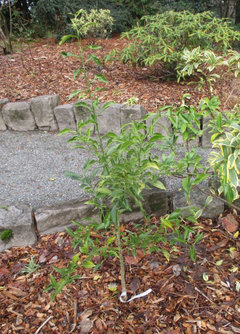
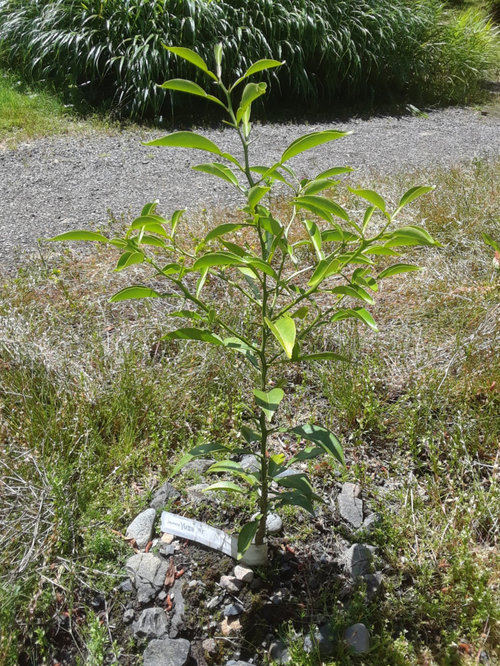
Yuzu seedling in the North

6 years ago
last modified: 6 years ago
This topic will be a continuation of the topic citrus seedlings in the ground in the North, an experiment.


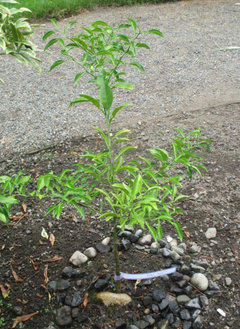
June 17, 2020

Olympia, WA


This seedling was not covered or protected last winter (2019-2020). The winter before that (2018-2019) was unusually cold, and the little seedling was killed back to the ground, but was later able to start recovering, in about June.

This seedling is planted outside in the ground, growing on its own roots (not grafted).


The notable thing about this, of course, is that a citrus seedling is growing so far north, in a state that is definitely not in "citrus territory".

Of course Yuzu is a bit more cold hardy than other normal citrus. This is in climate zone 8a. If it was any colder (zone 7), I don't think this seedling would make it.

Comments (24)

  • 6 years ago

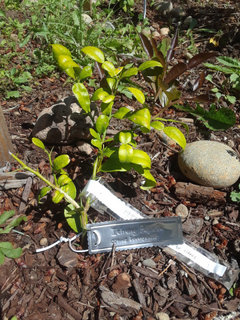
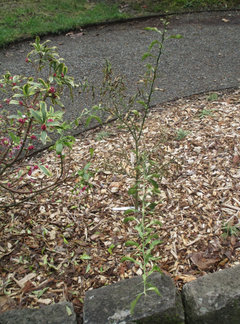
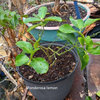
    This is my little Ichang papeda (Citrus ichangensis) seedling


    It also survived through this winter (2019-2020). It's only about 5 and a half inches high, also growing on its own roots (not grafted).

    The darker reddish leaves are the new growth the seedling has put out so far this year.
    This little seedling is growing in the ground, outside, survived the winter here unprotected.


    Ichang papeda is supposedly somewhat more hardy than Yuzu, but I do not really know about that, they could be about the same.

    Yuzu is believed to be closely related to Ichang papeda; perhaps it even resulted through hybridization of some sort, with mandarin orange (C. reticulata). Ichang papeda originates from an area in China just a little bit further north than where Yuzu originates from.

  • 6 years ago
    last modified: 6 years ago

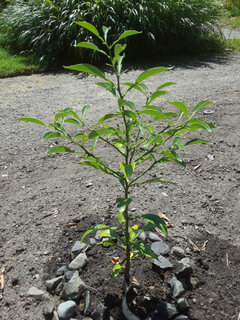
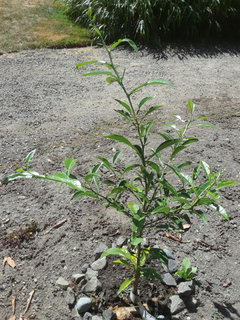
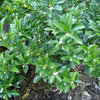
    here's the Yuzu seedling


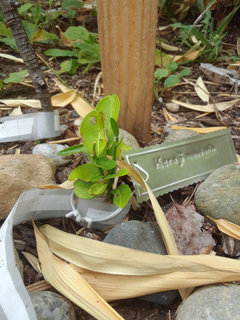
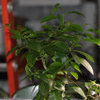
    here's the tiny Keraji seedling, just beginning to put on new growth


    July 21, 2020

  • 6 years ago
    last modified: 6 years ago

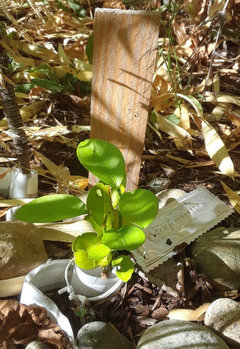
    Keraji seedling


    August 17, 2020

  • 6 years ago

    Keraji is one vigorous mandarin!


  • 6 years ago
    last modified: 6 years ago

    Definitely not as vigorous as Yuzu, but I have proved that it can survive here. That very small seedling has been in the ground through two winters so far (actually almost two and a half, because it was planted out in March early in the year and suffered a bit of die-back and leaf drop). It is true that during the very cold winter (particularly early February 2019) both the Yuzu and Keraji were practically killed back to the ground, but the very small seedlings were not very established then.

    I am trying to keep them well watered through the hot dry season, hoping that will help them be able to put on enough growth to overcome the winter, because the growing season is pretty short at this latitude and the temperatures are very cool for much of the year (not freezing but too low for citrus, even hardy citrus, to be able to put on much growth).

    It is amazing that small seedlings, growing on their own roots (not grafted on trifoliate) could have survived through being buried in snow.


    Neither Yuzu nor Keraji have any trifoliate in their parentage, from what I have been able to research. Yuzu is believed to be closely related to C. ichangensis, while Keraji is more related to Satsuma mandarin except with only some very distant possible tachibana and ichangensis relation going back in its ancestry. (Some Japanese genetic studies have clarified that it resulted from Shikuwasa getting repeatedly backcrossed with Kunenbo three times; Shikuwasa seems to be closely related to tachibana but not in a definite determined way, and it also seems to have some genetic markers indicating likely distant relation to ichangensis too; Kunenbo is like a sort of tangor, and is one of the parents of Satsuma too, the other parent being Kishu, but Kunenbo had a Kishu parent as well, so there is a lot of interrelated backcrossing. I believe it could be said Kunenbo was more like mandarin but probably had a little bit of distant pomelo ancestry. It's all rather complicated, but there it is for anyone curious who really wants to know the details. Tachibana is believed to be the only citrus species originally native to the Japanese islands, though many other strange varieties came later)


    My research (mostly gathered from numerous anecdotal accounts in archived forums) indicated that Keraji should be able to survive down to 12 to 14 degrees F, while Yuzu can survive down to 10 F, but probably suffers some minor damage that low, though it can come through completely unscathed at 14 F. Bigger plants surviving through cold better than very small plants.

  • 6 years ago

    Socal I just love yuzu I would Plant it in ground here in vancouver but We have such hard clay soil perhaps I’ll try to do it on a raised mound! So good to see that it survived :)

  • 6 years ago
    last modified: 6 years ago

    You can always improve the soil! Just throw down a couple bags of fir bark and let it decompose for a year or so. Then plant!

    Socal have you tried Citrus taiwanica?

  • 6 years ago
    last modified: 6 years ago

    I do not have have taiwanica, but I've read good things about its hardiness and vigor in growing. It is probably very nearly as hardy as Yuzu. In Japan, I know there isn't really much use for it besides it being ornamental, since the fruits can hang on the tree forever, and in the very old days they might sometimes use it to make vinegar.

    I do have three taiwanica x trifoliate (tai-tri) seedlings that were left outside in containers on the patio over the winter. They all looked good, even kept their leaves. I know the fruits of this hybrid aren't that much better than ordinary trifoliate though.

    I don't think anyone would want to eat taiwanica, though you could. Disclaimer: I have never actually tasted them. They are probably much like sour orange but even a bit lower in flavor quality. If you've ever tasted a Chinotto sour orange, you know it is not really eating quality, has a slight bitterness, very sour, very aromatic but still not the best flavor. Maybe at the most you could snack on half of a fruit before you've had enough.

  • 6 years ago
    last modified: 6 years ago

    For the planting of Yuzu in Vancouver, yes, I think it does have a chance of surviving. Vancouver, being a big city, has a little bit of an urban heat island effect, helping prevent temperatures from going too low. If you planted it up against a house, especially on a warm south-facing side, I think there may be a good chance it would survive. Especially if you do not live too far away from the water.


    I have in the past seen a blog that showed a picture of a Yuzu tree growing in Vancouver (BC). That blog is now long gone (the address doesn't work), but you are in luck because I did save the picture:

    They said the tree produced many "lemons".


    For the planting in hard soil, I would get a good shovel, and at least try to dig down 45 cm. You might need a strong person to help you with this. Then you could create a smaller mound (45 cm) on top of that. Try to put some decaying cut branches in the mound. It will help give it structural integrity, and act like a sponge to help hold water during the dry half of the year.

  • 6 years ago

    I was looking to get a yuzu tree myself in the Vancouver area from Phoenix but unfortunately they were sold out. But from my conversation with a staff there (or maybe she's the owner?), yuzu should survive in this area....might just need a bit of a careful selection of planting location (closer to the house?). She was super knowledgeable and helpful so I think if you have any questions about you can give them a shout!

  • 6 years ago

    The Yuzu seedling has now reached just over 2 feet tall


    August 19, 2020


    Yashiro Japanese garden, downtown Olympia, WA

  • 6 years ago
    last modified: 6 years ago

    If I lived where only Yuzu was hardy, I’d certainly plant Yuzu! What about Morton citrange?


    Socal— my potted Keraji from seed has been one of my most vigorous plants. Maybe they just really enjoy our hot humid summers.

  • 6 years ago

    Adelaide, that Yuzu I actually grew from a seed, inside a special enclosure indoors under artificial light, before eventually transitioning outside, and then finally going into the ground.

    You might try finding a high-end specialty grocery market, or a Japanese market, if you live close to a large urban center. These markets will sometimes carry Yuzu fruit, but it is only for a very short season of the year. I think that season is soon approaching though, late November, early December. The fruits are full of big seeds, so you only need one.

  • 5 years ago

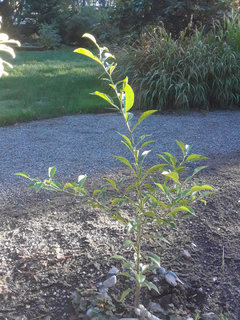
    Yuzu seedling, a little over 2 feet high now, doing very well


    September 27, 2020

  • 5 years ago

    Very nice)

  • 5 years ago

    Im interested on trying Yuzu. What are the benefits of this variety? Is it as cold hardy as trifoliata? Can it be used as rootstock? What about indoors only? Living in Alaska


    Sorry for spamming questions lol. I got curious about this variety cuz I found some dude posting his Yuzu clips to Youtube. U can check it out here if interested https://www.youtube.com/watch?v=KsNw2GtNHd0

  • 5 years ago

    No, Yuzu is definitely not even close to being as hardy as trifoliata. However, Yuzu has culinary uses and can be used to add flavor to food (especially use of the peel), whereas trifoliata has a terrible terrible flavor and is considered virtually inedible.

    However, compared to other normal varieties of citrus, Yuzu has shown to be surprisingly much more cold tolerant. By that, I am talking about the colder part of zone 8, including a more northerly climate like Seattle.

    Yes, Yuzu can be used as a rootstock. In fact in Japan, it was traditionally often used as a rootstock for Satsuma mandarin. Although it is not the most dwarfing rootstock (meaning the tree could still get pretty big and it will take a while before it begins producing fruit).

    Yes, it could be grown indoors, and would probably be one of the easier varieties to grow inside a container.

    Unfortunately it is unlikely it would be able to survive outside in Alaska. (Although there are ways to put it up against a south-facing wall with a retractable covering over it, but you would still have to be in climate zone 8)


    You have asked too many questions for me to give a very detailed fully complete answer to all of your questions.


    You should do your own research about what Yuzu is actually like before you go to the trouble of buying one so that you will not be disappointed, or waste your money.

    I can try to summarize it this way and say that Yuzu will not have very much use unless you are using the peel along with the inside.

    It does have a unique flavor though.

  • 5 years ago

    Hey thanks for the wide information! You seem to know a lot about cold hardy citruses and you gave many interesting facts about these species. This was very good answer and sorry for dropping so many questions.


    Which varieties in your opinion would be the cold-hardiest of all the varieties in Citrus family? Yuzu seems to draw my attention, maybe its the Japanese thing or the samurai or the whole idea of a nasty sour little citrus.


    Thanks and keep on doing ya thing, good job!

  • 5 years ago

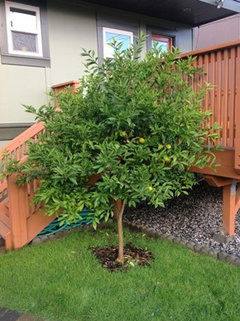
    Here's the Yuzu seedling as of June 29, 2021


    The trunk looks like it's gaining some thickness. Now maybe just a little bit thicker than pencil-thickness.

    The coloration of the leaves look just okay, not really good and healthy but not too bad either. The older leaves have regained most of their green color back since the winter.

  • 4 years ago

    any updates

  • 4 years ago
    last modified: 4 years ago

    December 17, 2021


    It's over 3 feet tall right now.

    Temperatures have not gone below freezing yet, in this season.

    The tree is looking pretty good.

  • 4 years ago
    last modified: 4 years ago

    An update, February 17, 2022
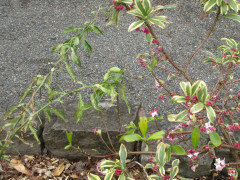
    This is a time when not much is happening in the climate where most northern growers live, but the PNW is kind of a strange climate. Due to the very "mild" (but still cold) winters, all sorts of certain species of plants can be blooming surprisingly late into the early part of winter, or early in the late part of winter (just not during the very coldest part of the winter, which might only last 2 or 3 weeks).
    In this picture you can see the Yuzu plant with a Daphne bush right next to it beginning to bloom. (I also saw a large red camellia bush in the neighborhood just beginning to bloom today). On some parts of the plant the leaves are completely fried, other parts nearly completely so, yet on other parts of the plant the leaves seem only moderately damaged. You can still see some leaves on the plant that look green and relatively healthy.


    The temperature got down to maybe 18 °F at the lowest, during an arctic blast that happened right after Christmas.

  • 3 years ago

    How's it been?

Sponsored
Wannemacher Interiors
Average rating: 5 out of 5 stars26 Reviews
Customized Award-Winning Interior Design Solutions in Franklin Cnty OH