Software
Houzz Logo Print
pk_241011

511 mix after 3 years

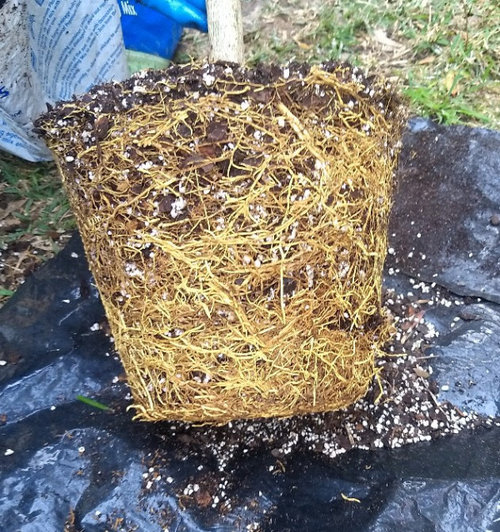
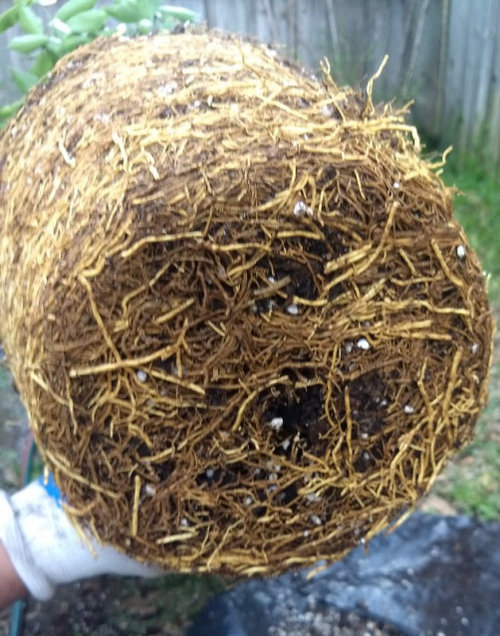
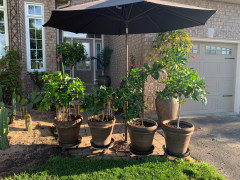
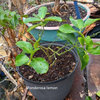
Today I root pruned my lemon trees and put them back in the same pots. They had gone into 511 mix three years ago.


So here are my observations on how 511 mix ages.


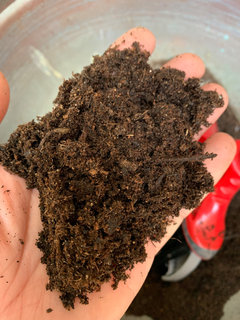
1. It ages well !!! It did not break down much. The pine bark pieces were a bit more flaky when I wanted to break them. A hint of sponginess.


2. The mix can actually last for 5 years given how little it had decomposed. But any plant in a pot has to be either root pruned or potted up in 3 years. So might as well change the mix.


3. Dolomitic lime powder was still there. I guess it gets used up real slow.


4. Roots were very healthy and rather tightly packed. It is a very forgiving mix for beginners.


5. I avoid the pricey stuff. Source of my pine bark is the playground mulch they sell here. I just sieve it. Needless to say it also has quite a bit of the softwood splinters in it. I was always worried that they will rot away faster and turn into mud like slurry. They did not. They still held their shape but were much more decomposed compared to bark. They were spongy to press and released water as they dis-intergated between fingers. Also they did not steal much of nitrogen as they trees grew very fast in them.


Lesson: Pine bark quality matters but it is not the end of the world if it is not the top notch quality. Get the size of the particles right. After that your results totally depend on your watering, feeding and pruning schedule.


6. The biggest issue with 511 mix remains the summers of Australia. Since it does not retain much of water it is difficult to keep the plants hydrated the whole day. And add to that water restrictions of drought.


7. My expensive Osmanthus, Camellia and Michelia Alba stay in 511 mix.


8. Seeing as the winters are getting progressively warmer and drier here in Australia, I might be adding some compost to 511 mix in some test pots to see how it fares.


Oh yes, they went back into 511 mix.


Comments (67)

  • 6 years ago

    "I would never use 511. That's a Citrus or indoor only/indoor - outdoor plant thing."


    Not at all sure why you would say this. It contains nothing specifically that would restrict it to only indoor use or citrus. As I stated previously, I have been using it for ALL my outdoor containers for the past 25 years and with no ill effects!! Hydrangeas, rhodies, various other shrubs, raspberries and blueberries, tomatoes and other veggies, all my containerized perennials and annuals, hanging baskets.....and the aforementioned collection of JM's and conifers. ALL in the 5-1-1.

    I also use it for all my houseplants with the exception of cacti and succulents.

  • 6 years ago

    I agree with gardengal, 511 is a good mix. The main problem is when one has many containers in 511 it seems like you are spending much of your time watering.

  • 6 years ago

    Watering frequency is dependent on a number of things - how large the container is, how thirsty the plant might be and of course the weather :-) We have very dry summers were I live - virtually no measurable precipitation for 3-4 months - but not very much heat. But even in the hottest, driest parts of the summer, I rarely need to water more than every third day or so.

  • 6 years ago

    Mine are all in 511 or gritty mix or a variations of those. Eg in some 511 I have pumice instead of Perlite and some have a measure of turface in them for a bit more water retention. Gritty is similar to bonsai mixes and like those there are many variations and types of ingredients. Succulents get more grit than turface and so do my pines and other conifers.

    I do not select the mix based on indoor/outdoor either but based purely on the plant. For larger plants I tend to favor 511 since it is lot lighter.

    Durability is also a function of climate. Prolonged cold winters do cause some breakdown of the bark. It is quite possible that in milder and warmer zones the the bark lasts a bit longer.

  • 6 years ago

    Wow Sydney that’s amazing Root growth! I’m glad 511 seems to be working for a lot of people :) nice growing!

  • 6 years ago

    All by itself pine bark does not provide enough of anything to really support plant life (except for possibly orchids). It robs vitality from your citrus by robbing nitrogen from the soil. In a container bark is as close to a junk food as nature can provide.

  • 6 years ago

    try using grass clippings for fertilizer

  • 6 years ago

    Lemon Lime wrote .....>In a container bark is as close to a junk food<.......


    I say BS.


    Bark is among the most used ingredient for media world wide.

  • 6 years ago

    Flour is probably the most used cooking ingredient but it doesn't make a balanced diet when used in excess. It does sustain when nothing else is available. When used correctly it can become part of a balanced diet. When abused can lead to all sorts of health issues.

  • 6 years ago

    "by itself pine bark does not provide enough of anything to really support plant life (except for possibly orchids). It robs vitality from your citrus by robbing nitrogen from the soil. In a container bark is as close to a junk food as nature can provide."

    I would have to say that these statements demonstrate little understanding of growing anything in a container! Container media is not intended to support plant life....except in a structural way. ALL it needs to do is provide an anchorage for the roots, allow water and soluble nutrients to pass through it easily and retain porosity and aeration. Bark does all of this in spades!

    It is not intended to be a "food", junk or otherwise. It is a structural ingredient, not a fertilizer. And routine fertilization - SOP for any container growing - offsets any issues of so-called "nutrient robbing".

    Lemon Lime Orange, I think you need to hit the books again. You missed a lot the first time around.

  • 6 years ago

    I never said 511 isn't a good mix. I've tried it on other things besides Citrus with mixed results soe, good some bad. But then again I'm not married to the plants. Today was 93 - tomorrow 97, here in NYC you really get all 4 seasons. I'm watering Citrus in 511 outside now, which coincides with my rear yard full sun gardening at large watering. I can't have houseplants (not that many) or my front yard demanding a watering as well. Stuff breaks down. A bagged mix for many things is good enough for stuff that stays outside year round and can handle a moister/wetter soil including the dreaded miracle grow potting soil.

  • 6 years ago

    Lemon Lime Orange: Agreeing with Silica and Gardengal that you have no idea what you are talking about with respect to bark. One can make the similar statements of most soil components including Perlite, peat, coir, turface, etc and none of it will make sense. And none of your soup and flour analogies make any sense either except to sound erudite.

    If you are worried about bark locking nitrogen, just provide more of it. In order to lock nitrogen, there would have to have sufficient microbial activity too. In a container microbial activity is, at best, boom and bust.

    Besides something to anchor onto, roots need water, air and nutrients. And the soil must be structurally stable so that it does not collapse and compact overt time to significantly alter the desirable properties of soil. The choice of soil components determine how air spaces, water retention properties are in a desirable zone and stay stable over time. All nutrients required need to be externally supplied. Some soil components hold and release nutrients better than others. Perlite can neither hold nutrients or water nor it can provide air by itself (because of its closed cell structure). On the face of it, it would seem it is the worst soil component ever. But its use is widespread and for good reasons too.

  • 6 years ago

    they don't care they're just in it for the money

  • 6 years ago

    Howard, who's in it for money? Can you explain? Thanks)

  • 6 years ago

    Juststarted, wonderful work and thank you so much for sharing. Can you go into detail on the sizes you used, whether or not you sifted, if you used just peat and one portion, and perlite for another? What size perlite? Did you let your mix soak at all? What bark? Is there a way you could take a pic of it.

    Letting us know how you made it, what size ingredients, and what kind of ingredients will help many here, trust me))

  • 6 years ago

    From the hard side or FAR SIDE of gardening.


    "Container media is not intended to support plant life....except in a structural way."


    "All nutrients required need to be externally supplied."


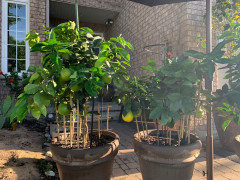
    I learned how to grow hybrid tea roses really well. Than I switched to growing sweet Oranges indoors (not a greenhouse) for 12 months of the year. Once I mastered that I began bringing my citrus outdoors for 6 months in the summer. I live in Toronto Canada where temperatures fall to -4F and than soar to 96F. I will let my results speak for themselves.


    Citrus, Cacti, Succulents, Photography · More Info


  • 6 years ago

    LLO: Do you really have a point to make besides soups, flour and cartoons? Your plants look good but do not underestimate many other gardeners here. You will be easily out competed by many here. Many are cold climate gardeners including me.

    As I said before this thread is about the OPs experience with 511 mix. If you have experience with this personally you are welcome to express it. If you can scientifically argue for or against the mix please do so.

  • 6 years ago

    So easy to spot the garden trolls. They never post photographs.

  • 6 years ago

    Well if that's the explanation, welcome troll!!

    (it is not hard to determine who may be or may not be a troll around here by the length of time they have been posting, how many comments have been made and how many followers they have. LLO, you qualify for trolldom on all 3 counts!!)

    Since nothing you have posted so far has any credence whatsoever, I think it is pretty safe to ignore any or all contributions from this source.

  • 6 years ago

    my trees are too young right now the only reason most companies only use pine bark because it's cheap and easily accessible to get ahold of

  • 6 years ago

    Lemon lime juice your trees and cactus are great looking :) What kinds of citrus do you have? It’s hard to believe you had it indoors year round at one point didn’t you get bombarded with pests? I went down that route many many years ago before I got my greenhouse and many did not survive But of course I didn’t have the windows that you have Either!


    the 511 seems to work for so many here! And their trees look amazing! for some reason I’ve never had luck with it mine tends to separate out to sludge and bark with the sludge at the bottom No matter what peat I use before that I tried my hand at gritty mix and all my citrus died! Again I think it’s user error I just can’t get used to watering anything but soil I’m afraid im a terrible gauge at when to water too!! I’m pretty sure it’s user error since nobody else has that problem. But for now I’m happy with promix hp :)

  • 6 years ago

    Peat, I believe, is cheaper than pine bark by volume and easier to find. Peat being lighter is also cheaper to transport too. Most potting soil mix for home gardeners is primarily peat. Reputable companies also make Pro versions (eg SunGro) of their soil and they contain lot more bark in them in addition to peat. They are targeted at commercial growers. Usually they use aged pine bark and that means more processing time. All that adds to the cost.

  • 6 years ago
    last modified: 6 years ago

    LLO: So easy to spot the garden trolls. They never post photographs.

    Sounds like you are running out of ammunition. You want to change the topic badly and have me fall for it. But I really do not see a reason to be involved in a photo competition with you. I have posted enough photos in various contexts, posted tutorials and detailed scientific explanations wherever I could.

    As GG already said you are not doing much to help your credence. We have clashed before over the years starting with VPD days when you swore how you can successfully grow indoors all year round. Then you spent a season with spraying micronutrients and pest control. Recently you started your plants moving plants outside and swearing by EC meters and such. And most recent is the promix thread where you inserted yourself with out of context information just like you did in this thread.

    You want to portray that you have this vast knowledge and everyone else is out to lunch. I have suggested this before in several of our previous encounters, start a thread of your own. Take ownership of your ideas and knowledge and put yourself out there. Avoid piggy backing on someone else's thread with your condescending advises.

    And BTW, from your out of context info on the promix thread, growing paddle cactus in rich soil is nothing new. They do that in Mexico because it is a desirable food source. If you provide rich soil they grow fast. And because of growing unnaturally fast they cannot support themselves. Happens with many food crops where the sole purpose is to grow and produce fast. It is possible to do this because it is in the ground. In a container you will encounter whole another set of problems. The quality of the plant suffers because of fast growth in ground. It also indicates that the source of nitrogen is ammonium or urea. It causes internode elongation and thus weaker plants that cannot support themselves. If the source is nitrate the internodes are closer and plant is more robust and self supporting.

  • 6 years ago

    that detail Iknow nothing about

  • 6 years ago

    Hi Jan, thanks for your feedback. If you like cactus you might like my ideabook. Every cactus in my garden has to be painstakingly transplanted and containerized at the end of the summer and replanted in the spring. To answer your question about my orange trees, one is a Washington navel which is grafted. The other three are sweet oranges from cuttings. The exact cultivars unknown. My living room faces south and during the winter there is not enough sun to grow oranges. I have to augment the natural light with powerful LED lights from Spectrum King LED. My LED add about 100,000 lumen. I found the hardest months to grow indoors are the coldest and hottest days of the year. The spring and fall were very pleasant. If you want to grow indoors the easiest method would be a grow tent and low profile LED like Spectrum King LowPro Flower or the new Gavita Pro 1700e LED.

  • 6 years ago

    @Lemon_Lime what are all the components in your soil mix? Your photos look like perlite, compost, sawdust, and peat.

    Bark only ties up nitrogen if you incorporate it into your garden soil, and that is because organisms in the soil end up going to the non-bark part of the soil and taking more nitrogen out of it. In container gardening, nutrition for the plants comes from synthetic fertilizer, not compost and not soil organisms. The components in a structured soil are designed to keep the perched water table in the container as low as possible while still allowing for good water and air retention in the root zone. In a structured soil, the bark is carefully sized and used for water retention.

  • 6 years ago
    last modified: 6 years ago

    Jan the secret I found to growing indoors is eliminating variables, and keeping any remaining variables in tight control. You don't want to introduce more variables. For someone in the North I recommend buying a potting mix off the shelf because you know the maximum water content of the mix, you know it is enriched, you know the pH, you know the product is balanced, you know it will age well, and you know it will not contain any insects or disease. In the north you know the RH of the home in the winter is low. Use this to your advantage. By using a clay pot your moisture content will cycle between the MMC and the Home humidity. Even if you grossly overwater it will still bounce back and fluctuate between those two points. If you use a PVC pot and a do it yourself recipe you are adding a ton of variables You really need tight control of the maximum humidity of the mix and you need tight control of the fertilzer.

    People I have found who are really successful growing high light plants indoors with artificial light don't shop at garden centers. They shop at hydroponic stores. I hope you make the inference because I don't want to spell it out. That industry has learned to grow in a closet, in a bathroom, under a sink or in an attic and they are leap years ahead in technical information compared to a citrus forum. When I have a technical question that is usually where I will look for answers. Even the LED manufactures have very few to no customers growing citrus indoors


    Compare 5-1-1 to Foxfarm Happy Frog Potting Soil, or super soil organic concentrate, or coco loco potting mix, or Mother Earth Coco Plus Perlite Mix, or Roots organics Coco Soilless Mix, or BIg Rootz all-purpose potting soil, or Roots organics rod original potting soil. The growing techniques are like night and day.


    https://101growlights.com/best-soil-for-weed/

  • 6 years ago

    Westes that was picture I posted of the soil that arrived this week in a mail order citrus. I was going to get around to enquiring about it. It may have been transplanted in Quebec are transplanted that way from Florida. To avoid confusion I have deleted that photo and resubmit to my ideabook what I transplanted with.

  • 6 years ago

    @Lemon_Lime So you are using a commercial potting soil? That would be perlite, bark, peat, and compost. The advantage of such a mix is it has about six months of nutrition stored in the soil so you will not need to constantly fertilize. The disadvantage is it has many small particles in it, so it will have a high perched water table, and that limits the growth of your plant roots.

    If you grow in 5-1-1, you need to fertilize the plants with synthetic fertilizer, but the roots are able to grow into a larger area of the pot and stay healthy.

    And - by the way - if you are going to hydroponic stores, that is a textbook example of container growing with inorganic soil substrate. They sometimes grow those plants in pure stone or glass and provide all nutrition by synthetic fertilizers. If you understand that approach, I do not understand why you are using a commercial potting soil. 5-1-1 is much closer to the principles of hydroponics than is commercial potting soil.

  • 6 years ago

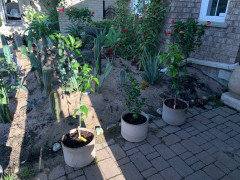
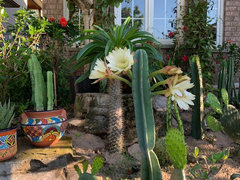
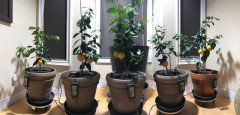
    These are my results.

  • 6 years ago

    Lemon - what is the purpose of all the electronics in your pic?

  • 6 years ago

    Hi Vladimir. Was testing different growth rates based on different root temperatures. Was experimenting with seedling mats wrapped around galvanized steel pails.

  • 6 years ago
    last modified: 6 years ago

    LLO your trees look healthy enough, but they certainly don't seem to have put on much growth,,nor have they filled out much. Unless these are very new young trees.

  • 6 years ago

    Indoors it becomes a balancing act between growth and the LED heat and the canopy clearance. The light I am using recommended 42" over canopy of veg and 18" distance for flower for weed. Those numbers just fry citrus. You have to factor in the height of the light and the clearance to the ceiling for passive cooling. As LED's fall in price their is more interest in rack lighting because of the lower clearances to canopy. As you back the lights off you loose the intensity and loose the ability to penetrate the canopy.

  • 6 years ago
    last modified: 6 years ago

    LED does not produce enough heat to worry about. I use HID lighting, which puts out much much much more heat then LED. I put the HID lighting about 4 inches above the tree with zero problems. Doing so, and with bottom heat, produces 4 or 5 flushes per year. No light, or low light = no growth or very little growth,

  • 6 years ago

    Silica: what is the power output of your HID light? I used to have a 250W that I could keep close but the 600W one I had to keep it at least foot from the top of the foliage. It was a wonderful light but for the sake of saving on electricity switched to LEDs a while back.

    Commercial mixes for residential use are designed mainly for short term planting for annuals, veges, herbs etc. Specialty mixes like fox farms mixes are also short term mixes. Weed is grown in a very tightly controlled environment for short term 4-6 months max. In these situations a peat based mix works. Most of these will also have a catch all component called forest products which often is pine bark fines.

    Check out sungro.com. They have very interesting mixes and a nice informative blog too. The only manufacturer I know who provides quite a bit of detail on their products and properties. Compare their Pro versions with the consumer versions. First they all have bark to some extent or the other. Their Pro versions tend to have more bark and more coarser material. If you read their blogs they talk about longevity of their mixes. Their long term mixes are heavy on the bark side, and less to none added fertilizer. They do add low amounts of slow release nitrogen to compensate for bark sucking up nitrogen. It is up to the grower to add appropriate fertilizer and adapt it to their growing conditions.

    You will also notice that they classify peat mixes as short term for propagation, annuals, veges etc. Most are loaded with organic and/or inorganic fertilizer. These are all consumer version who probably find these more convenient to have an all-in-one package.

  • 6 years ago

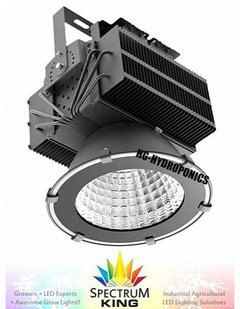
    Some people think that due to the high efficiency of LED lamps they would hardly produce heat. Unfortunately this is a dream yet to come true, because even with current LED technology there is still a certain amount of waste heat. Her is a picture of my light. It has a massive heat sink to passively remove heat. HID lights are very good but also very dangerous if they break. Not something I would want in my living room. When HID fail the extremely hot glass and other lamp parts may fall on combustible material igniting them and causing a fire. My light is the same intensity as a 1000-Watt high pressure sodium bulb.

  • 6 years ago

    I have no need for that yet

  • 6 years ago

    This is the shortest brightest LED on the market. Allows heat to dissipate because of the heat sink design. It is the equivalent to 1200 watt dual ended HPS.

  • 6 years ago

    Lemon lime thank you so much for your informative post! If I ever have to try to grow indoors I will definitely try out some of those lights! One day I suppose We will downsize and this might be a reality for me! right now though i keep my growing cold and shady for the winter inside the greenhouse I keep it no warmer than above freezing Keeps the pests at bay but I do not get the growth over the winter months that’s for sure!

  • 6 years ago
    last modified: 6 years ago

    Tropicofcancer, my HID light is a 250W. As you wrote the running time cost of HID is more expensive than LED. Even so we are only talking nickles & dimes. Personally I would never even consider LEDs. The amount of tree growth between the two light systems is immense.

  • 6 years ago

    Silica I used to work at an indoor factory farm where I was in cahrge of setting up lighting systems. Back then It was HID and these super new fangled lights call T-8. The plants we grew determined the light used. The HID's were used to grow grass. The T-8's were used to grow micro greens and gaarden starter plants Tomatoes, etc. With my indoor citrus i am swing over to LED's as my CFL' burn out.

    Steve

  • 6 years ago

    Poncirusguy, people certainly can buy any type of light that they prefer. I am always sticking with HID.

  • 6 years ago

    After 30 years Gavita is finally entering the LED market. Some people will always use traditional bulbs and others will take advantage of the long life, 30-40% lower cooling requirement and more lumen per watt. There are a lot of dubious LED manufacturers so it pays to do your homework before buying.

    https://gavita.com/retail/

  • 6 years ago

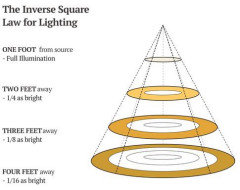
    For reference have seen LED articles reference 10,000 Lumen per square ft as a benchmark for the sun. A 100,000 light will light an area 1'x10' one foot off the canopy. As soon as you double the distance you only have 50,000 lumen for plants and double it again you have 25,000. High Lumen and close to the canopy are important features to look for. There are 3 points of heat; the LED chips, the digital driver, and either a fan or passive cooling.

  • 6 years ago

    This applies to all lights

  • 6 years ago

    Lemon, beautiful trees you have there. Love the front yard scape too. Nothing more beautiful than Cacti placed perfectly. I have always wanted to live in a climate like that! Actually nice home too and windows. Can we switch places? ha

  • 6 years ago

    Thanks Mike

  • 6 years ago

    know I live in Kentucky not Arizona