Software
Houzz Logo Print
shenue

Anthurium Veitchii pest? Please help.

6 years ago
last modified: 6 years ago

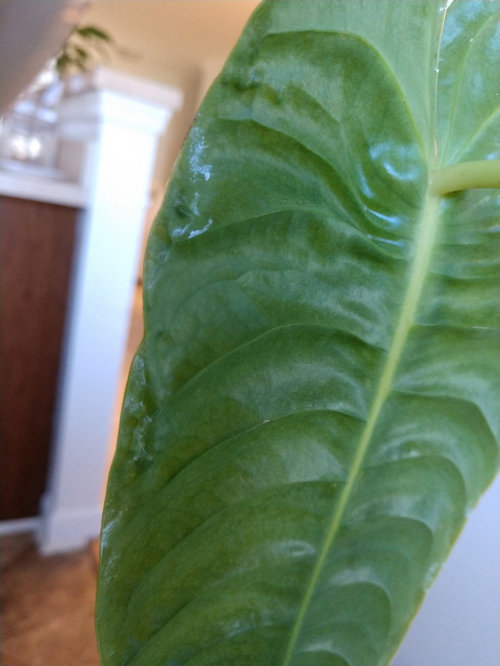
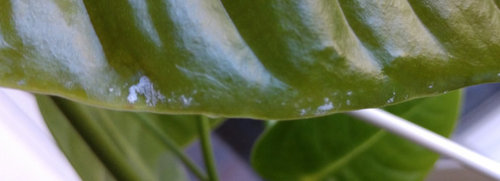
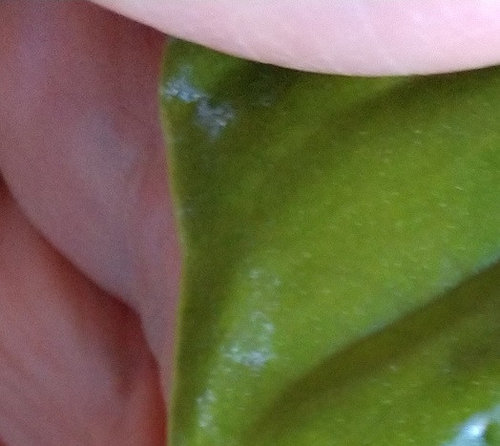
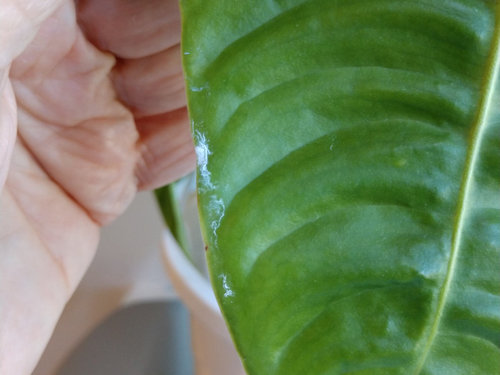
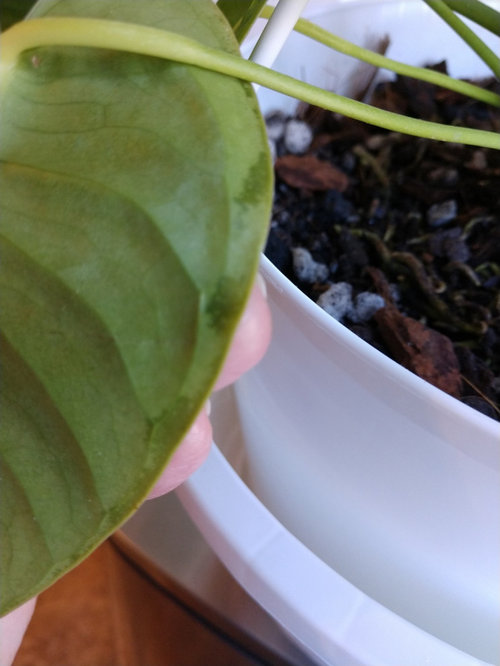
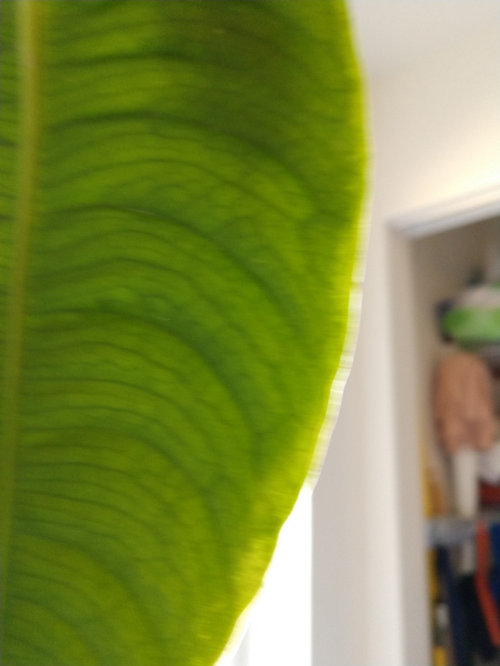
Help please. This is something I've never seen before in all my many years of having houseplants. The edges of the Veitchii leaves are getting kind of translucent/yellow. There is a bit of white along the edges but after careful examination I really don't think it is a pest. I have looked at this stuff, examined it with a magnifier, scraped some off and checked it out. There is absolutely no indication that this is some kind of an insect. Most of it looks like a kind of residue from a liquid drying and leaving behind some minerals. The plant gets misted each morning with distilled water. I've been doing this each day since I got it about a year ago and there has never been any residue left behind from the distilled water. The white is very flat and not fuzzy at all like mealy bugs or fungus or bacteria problems. I am just stumped. 99% of this is on the edges, with very little on the rest of the leaves and every leaf is affected. Any white you see on the rest of the leaves is a reflection from the light, even though it may look like a powder residue, it isn't. The white is only along/close to the edges. The pictures show the white along the edges and the two blurry pictures and the end are to show how the edges are getting more yellow and a bit translucent. It gets watered with filtered water, not straight tap water. I hope someone can help me so I don't lose this plant. I hope the pictures below can help. Thanks so much for anyone that can help!


Comments (6)

  • 6 years ago
    last modified: 6 years ago

    I'd say you're a far far way from losing this plant.


    The water soaked spots and residue along the margins could be from an excess of water at the root level. She might be guttating along the leaf margins (the edges) to release excess water. Since you say "Most of it looks like a kind of residue from a liquid drying and leaving behind some minerals." so guttation would be my guess - the plant is releasing excess moisture that it's pushing up from the roots.


    Some plants just guttate, and it doesn't really matter what the environmental factors are. But if you're noticing this for the first time it might indicate there are some changes you could make that your plant would appreciate.


    If what you're seeing is the result of guttation, I don't think the plant is in danger but there are some things that you could try to reduce guttation and improve the environment so the plant doesn't need to squeeze out excess water.


    1. Increase air flow. Air flow increases evaporation. Since plant transpiration is basically a passive process that relies on evaporation at the leaf level, increasing air flow should help the plant transpire excess water and not have to push it out through guttation. Transpiration does not leave liquid water on the leaves like guttation does, so this might solve the problem.


    2. Make sure you're only watering when she really needs it. She looks like she's planted in a course medium, but that could just be a top dressing of orchid bark? If she's in a water retentive medium you'll need to be extra cautious of over watering and leaving her in soggy soil. If she is in a course medium, it still might stay wetter at the bottom than you would think (this is why I mostly don't like self watering planters). If she's not actively growing, if the temperature inside your home is pretty cool (from air con maybe?), if she's not getting much air flow, or if she's staying too humid, all of those things will reduce her water needs and she might not be using up all of the water in the pot before you water again. Use a bamboo skewer like a cake tester to see if the soil all the way at the bottom of the pot is still damp before you water, or stick your finger in the bottom drain hole to see if the medium is still damp.


    3. Decrease Humidity and/or increase heat - high humidity or low temperature can decrease transpiration and favors conditions for guttation. I don't find that misting really helps increase humidity around plants and many people have run little home experiments that show that the increased humidity in the air around the plant is only minimally increased after misting and it drops back to normal room humidity very quickly. That said, misting might increase humidity at a cool time of day just enough to encourage guttation.


    4. Increase Light and/or Nutrients - Getting your plant to actively grow is one way of increasing water demands which means she'll chug through the water in your pot more quickly. Go slow when increasing light, and use a light touch when using fertilizer. Fertilizing "weakly weekly" is better than a huge dose of ferts twice a year in my opinion.


    A few other things to consider. If you bottom water, dissolved minerals that aren't removed by your filter might accumulate and cause a small amount of root stress. If you already use fertilizer and you never totally saturate then flush the soil, you might have the same issue. Salt or ferlilizer burn like that typically causes brown edges and tips rather than white ones, but you might be catching it so early that it doesn't look like the typical sign. So if you bottom water or never flush the soil, it might be time for a good flush.

  • 6 years ago

    Thanks so much for answering! Yes she is planted in a chunky/coarse medium that I make up myself. It's not just a top dressing. I make sure it is dry to the bottom before watering. It seems to be much better now, so I'm not sure what caused it. But, I really do appreciate the information in your post! I believe this can help me a lot with this plant and others too.

  • 6 years ago
    last modified: 6 years ago

    I was just taking a closer look at the leaves of my plant. The white is gone but a few of the bigger leaves are still yellowing at the edge and looking a bit translucent in spots too. Katlandreth you had mentioned/questioned about bottom watering. She always gets top watered when the medium is dry to the bottom. I would be afraid to give her any more additional light. She gets a lot now. Hmmmm I was just thinking, when I posted the original message, I had forgotten that she had been repotted about 6 weeks ago and now I am wondering if any of this leaf problem has anything to do with that. I think it started after the repotting but I'm not really sure. Well now I am even more perplexed. I'll just keep chugging along with her and see what happens. *sigh*

  • 6 years ago

    this happens when plant absorbs too much water. since it's in free draining medium, it should not happen, unless the bottom was sitting in water. unfortunately once the arias along the edges start getting translucent they will then go yellow /necrotic. the only thing to help with this immediately would be to put the pot on heat mat to dry up faster.

    what are your day/night temps? when temps are below 70F water very sparingly. and do not alow the temps to go below 65F ever.

    your medium is coarse, but bark can remain wet inside the pot and at the bottom for a very long time: 2 weeks easily when it's cooler. cooler means 70F :). anthuriums really like to be at 80-90F for good health.

  • 6 years ago

    Hi Shenue. Yes repotting can be responsible for a large part of leaf die-back when you have less than ideal conditions. Since this is really a greenhouse plant, and not a great houseplant, you definitely have less than ideal conditions. Say for instance that your old root-bound pot caused extra aeration and drainage just from crowded roots, but the roots haven't filled up the new bigger pot yet. So even if it was a similar soil mix, it could possibly want much less water for awhile, perhaps leading to overwatering conditions if you're not careful. Also, several growers have claimed better success growing these in smaller pots to reduce die-back.


    Usually we don't think of such a coarse mix as being susceptible to overwatering, but bark mixes in general do not dry very evenly. They don't transfer the water throughout the pot near as much as more common peat & coir based mixes. So especially in a new pot where the roots don't fill it up yet, it is still possible to have a top layer which is dryer than we think and a bottom layer wetter than we think; which these epiphytes really dislike. There was some great advice here about watering times and temperature.


    One small note about temperature, I believe the top end max for these should perhaps be a little lower than the 90 F mentioned. The big commercial growers who study Anthurium on huge scale found that growth was significantly reduced even at temps up to 88 F, with most of them using a max temp in the range of 80-82 F.


    If you are still misting daily, that is perhaps not ideal in an average dry home. The plant's stomata open and close slowly. Your misting triggers them to open, but the water drys faster than they can close, leading them to evaporate off more water than they gained. A net loss of water! Also, opening the stomata frequently wide open like that increases the guttation, and releases not just water, but also proteins for help in defense of bacterial infections and to expel excess salts (both causing your white deposits). Since you are growing this in a dry house, not a rainforest, these proteins dry much faster than normal, and they are not being washed off by frequent rains. So when they unnaturally accumulate there near the leaf margins, they end up having the opposite of their intended effect and can actually encourage bacterial blights! So perhaps washing the leaves heavily and thoroughly whenever you water is a better path than misting daily.

  • 6 years ago

    I want to thank the three of you for all the help and information you have given to me. I'm going to make a couple changes and see if it does better. The average temperatures run between 72 to 76 day and about the same at night except winters. Winter night time temps where she is (near a window) can get as low as 64. So all in all, the temps are almost always within that range year round. Again thanks so much to the 3 of you. I really do appreciate that you took the time to help me!


0