Software
Houzz Logo Print
bonsai_citrus_and_indoor_gardening

Supplemental Winter Lighting

So, I've been doing some research into this topic and though I've found some research studies from UFL, etc. that show increased growth for plants offered supplemental lighting in winter, I wanted to see if anyone had any direct experience related to this. Since I started my indoor garden a few years ago, I've simply let the seasons take their course. My plants usually grow fairly well, slow down growth in winter, then pick up again in spring as one would expect. For some reference, all of my plants, but especially my trees (that have been given the prime lit spots in my growing area), get very bright indirect and reflected light during the spring/summer months starting around 6-6:30 depending on the time of year, then get around 6 hours of bright direct sunlight during the afternoons. In the winter, however, we get cloud cover pretty regularly coupled with the short days. As a result most of my plants slow or stop growth during this time. I've been investigating the possibility of using supplemental grow lights in winter, and was wondering if anyone does this and if it's worth it. My citrus grow just fine as-is, both flowering and fruiting. So I was curious if others have seen an increased yield, or if it's not worth the investment. Thoughts?

Comments (24)

  • 6 years ago

    Using supplemental winter lighting is a very common practice, and done by most all northern growers.

  • 6 years ago

    sometimes it is needed up north I'm originally from northwestern Ohio

  • 6 years ago

    I guess I'm trying to determine what "needed" might look like. I'm aware the practice is fairly common, I guess my question is: Is the amount of extra growth significant enough as to make the grow lights a worthwhile investment if the plants don't lose leaves/fruit over the winter but simply slow growth? I'm curious of people's experiences who have done both, grown with grow lights as supplemental during the dark winter months, and who ride through winter with the normal light from large windows (my windows are ceiling to floor west-southwest facing), I would be utilizing the supplemental light to extend the day a bit specifically for my trees in the hopes of extending my growing season a bit.

  • 6 years ago

    Okay decide what strength of grow light you want

  • 6 years ago
    last modified: 6 years ago

    I would say an extended photoperiod has helped my citrus but wouldn’t exactly say it extends the season.

  • 6 years ago

    ok you might want the highest strength you can find

  • 6 years ago

    but I'm no expert

  • 6 years ago

    I do you use supplemental lighting since I just do not have enough windows. But my aim is not to induce heavy growth. I keep my grow area on the cooler side and humidity around 50%. Most of plants do not start growing until about March or so. This is also when my grow area becomes warmer because it tends to get warmer outdoors too. But new growth and warmth also attracts bugs. With no natural predators indoors I have to also resort to various pesticides. Luckily only some plants seem to be more affected but my tropicals do OK indoors. I also maintain a good amount of airflow and that helps keeping pest population lower. My take is that unless I have a proper greenhouse it is not worth the trouble for me with so many tropicals. If I had a small collections I may be tempted to provide the conditions to grow during winter.

  • 6 years ago

    Tropic, I do have a rather large greenhouse, but even so, during winter months to continue promoting growth flushes some additional lighting is necessary between sun set and about 9:30 PM.

  • 6 years ago

    Silica: Agreed that greenhouse in northern climates would indeed need supplemental lighting. What I meant was it would be easier to provide the conditions needed in a greenhouse including things like properly watering and spraying if needed without hindrances of growing indoors. More flexibility with regards to a lot of tasks and variables.

  • 6 years ago

    Good information. I would be curious to know if additional light would still promote additional growth flushes if the root zone wasn't 80F, if instead it stayed somewhere between 68-70 during the day and 60-65 at night. I know there's a pretty good correlation between light requirements and temperature, but I'd have to do some more research to know. Right now without anything my plants usually just slow growth, picking up again with growth flushes starting around february/march depending on weather conditions and ambient light.


    @Silica so do you only utilize additional lighting during those hours? If so what kind of lights?

  • 6 years ago

    I have those temp/light conditions and I do not recall any winter growth flushes. Although, half of my collection consists of kumquats which I would not expect to do much anyway.

    I am curious to find an effective way to warm root zone for container plants in the house. More stuff to plug in, yea!

  • 6 years ago

    My citrus trees do most of their growing indoors under light fall through winter. We run the house temperature around 60F-65F

    Steve

  • 6 years ago

    bonsai_citrus, I use HID lighting .

  • 6 years ago
    last modified: 6 years ago

    Bonsai, I can give you a ton of information on this subject. I grew sweet oranges indoors 12 months of the year in my living room and are now growing outdoors 4 months and indoors for 8 months. I started growing citrus with SunBlaster T5's than LED strip lights, than a Spectrum King SK 400+ and have ordered a Spectrum King LowPro Flower this month. Have had some professional training courses in HVAC which helps me greatly understand the ins and out of greenhouse design and the nuances of heating, ventilation and air conditioning citrus indoors. When you are growing indoors for long periods you have to be very technical. The further North you go the more technical you need to be with less suplemental light and lower RH. What I did was break down 5 cardinal parameters of gardening above the soil which are light, temperature, humidity, wind, and CO2 and the 4 parameters below the soil which are root zone temperature, water, nutrients, oxygen and figured out what I could tweak and what I couldn't.

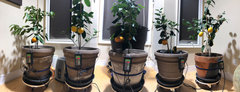
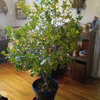
    The pictures below are from a couple of years ago. I have experimented with a lot of different light configurations, soil media, fertilizers, and types of pots and temperatures. At one point I was growing in galvanized pots and heating the galvanized pots with germination heating pads. I tried this first with plastic oxygen pots and regular plastic pots and than galvanized and than clay. The heating pads raised the root temperature which in theory should work well but didn't. The heating pads created a micro climate around the leaves where temperature rose and humidity fell.

    Indoors you want to grow slow and steady. You have to cut way back on fertilizer and apply fertilize sparingly if required. Indoors your ambient air temperature is going to be exactly the same as root temperature. The temperature I am grow at indoors is 73F (wife sets thermostat). It would be a lot easier to grow in the mid to upper 60's. The lower the temperature the lower the stress from VPD. In a greenhouse you can control the heat and humidity any way you want. In your home you usually have very limited adjustment in T and RH. I grow indoors at 73F ambient temperature, 73F root temperature and about 40-50% RH right around the plants. Spring and fall were very easy months. Summer and winter were very hard because of the change in heat load.

    What is needed is a very simple question, the same light you would grow cannabis indoors. LED companies use 10,000 lumen per square foot as a reference for full sun. Citrus and Weed are very similar in that they both need a lot of light. If you want to grow indoors and not just overwinter you have to provide a light designed for cannabis. They say indoors that 2000 lumen per square foot is the bare minimum and 5000 lumen per square foot is the sweet spot. The best bang for you buck is always going to be in a grow tent because of all the reflective surfaces.

    https://spectrumkingled.com/pages/shining-light-on-intensity


    Citrus, Cacti, Succulents, Photography · More Info


  • 6 years ago

    I found 12 hours per day with my lights the sweet spot for growing. Tried 18 hours per day and it just was extra stress with no extra gain.

  • 6 years ago
    last modified: 6 years ago

    Indoors I tried many different containers including PVC garden pots, Oxygen Pots, galvanized pails, and clay pots. Indoors I found clay far superior and extremely advantageous to grow under. With my FIXED temperature of 73F and low humidity 40% I cycled my pots between 60% maximum potting soil humidity and 40% room RH With great ease. When I used PVC pots I would find the pots very wet and very complicated to water because of the moisture that would get trapped inside. Clay pots and sphagnum peat moss potting soils worked really well under grow lights 12 months of the year keeping the soil really moist but not wet indoors. Indoors you don't have wind and this takes a huge toll on the leaves. GOOD LED Lights generate a lot of heat as you increase intensity. I tried all sorts of artificial fans to cool the leaves but it was very hard to find a balance between cooling and distance to canopy. T5's just didn't have enough Lumens and probably too much UV. They dried the leaves out a lot. The recommended Veg and Flower distances for my SK 400+ didn't work because of the heat. You have 3 sources if heat with LED; the digital driver, passive fins or fans and the LED chips themselves.

  • 6 years ago
    last modified: 6 years ago

    This is brand new LED by Gavita that just hit the market in June. Rack lightening is becoming very popular for retail users because it allows you to get closer to the canopy in a room with a lower ceiling. https://gavita.com/retail/lp-1700/

    There is a lot of hokey LED on the market where they try to manipulate the spectrum which gives them very good numbers on paper. To me I wanted to replicate the sun and use a natural spectrum of light.

  • 6 years ago
    last modified: 6 years ago

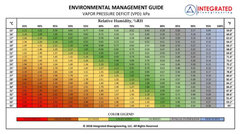
    In a greenhouse that has supporting light you would get better root activity at 80F roots if you had a high humidity. There was a good study done on this in Florida that looked at root temperature in a greenhouse during the winter and they found heating the roots beneficial. In a greenhouse it works because you have high humidity. A greenhouse example 80F & 80RH and VPD=.71.

    Indoors in a grow room with 80F & 40RH you have a very stressful VPD =2.14. Indoors if you raise the root temperature with a heating pad you will raise the micro climate around the leaves so indoors root temperature is pretty much the same as air temperature.

    Indoors you don't have natural wind cooling so the leaf temperature runs hotter than the ambient air from radiant heat and the VPD is often worse. Indoors under grow lights I just didn't find a fan anywhere close to natural wind.

    Citrus, Cacti, Succulents, Photography · More Info


  • 6 years ago

    Thanks for the info Lemon Lime. I've grown my trees indoors for awhile now, learning what I can and picking the brains of others who have done it successfully longer than I have. I actually got started in citrus because I had been successfully growing non-fruiting tropicals, that were typically difficult to grow in my area, for awhile and after deciding that I wanted to grow something that fruits I did some research, asked around, and got turned towards citrus. Since then I've been successfully growing a Nagami and Fukushu Kumquat (which is currently in the process of ripening about 30 fruit that I've been able to count), as well as a number of bonsai trees that include a fruiting fig, and now an unknown variety of lemon that was gifted to me by a family member. I usually regulate my temperature between 63/72 during the day in summer and 60/70 in winter, and I have a ceiling to floor, insulated picture window that spans a wall of my living room and faces southwest, so light isn't usually an issue in the spring/summer/fall (though I have found that heat can be as my kumquats don't seem to like it if the temperature in their window goes above 85). In winter I usually just leave the curtains open from sun-up to sun-down, but all my plants seem to slow growth in November around Thanksgiving and then start up again around February when days get longer. Cloud cover seems to be less of an issue than day length. Because my plants do just fine and don't show any severe issues (no leaf drop, wilting, nutrient issues, etc), I'm trying to determine the utility of using some grow lights during the darker winter days and whether I can get away with something that provides a more natural spectrum of light (the room with the massive window is my living room so whatever I choose I have to live with it), or if I would need a more sophisticated setup in order to see noticeable results. Basically trying to determine if it's worth the investment. I tend to peruse academic papers when I can and had read from the university of florida that grow lights to extend the day during winter had shown a marked improvement in foliar growth all other factors held constant, but didn't see much with regards to fruiting and flowering so I was curious of others experiences.

  • 6 years ago

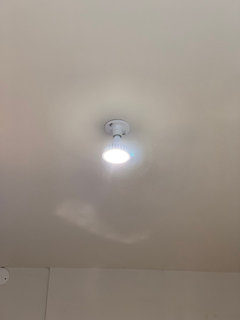
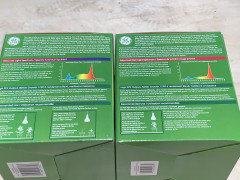
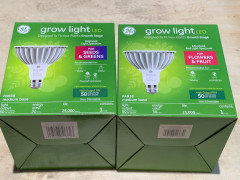
    Hi Bonsai, on the weekend at Lowes I saw these LED lights. I put them in the garage. They were only $45 each. One is full spectrum and the other is for flowering so has a hint of red. I much prefer the natural spectrum especially indoors. Previously had CFL grow lights in the garage. These appear brighter than the CFL.

  • 6 years ago

    Some growers have found LED strip lights work better in a vertical upright position as opposed to overhead in a horizontal position.

    bonsai_citrus_and_indoor_gardening thanked Lemon Lime Orange Zone 6a
  • 6 years ago

    actually some growers and upright positions for light is the only type they have room for