Software
Houzz Logo Print
jaycie14

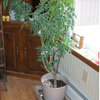
FLF: will notching help my tree?

6 years ago

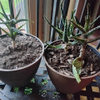
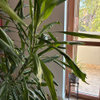
I purchased an FLF last summer and up until recently it has dropped around two dozen leaves. Demoralized, I almost gave away the tree to a more suitable parent last month but decided to give it another go.

To my surprise, the tree has since sprouted three new leaves on different branches. I was wondering if I could take advantage of this new growth trajectory to try and fill in some bare spots.

I’m not necessarily looking to add branches but would love to fill in the gaps, ideally with leaves, but to my knowledge that’s not really how FLFs grow.any advice/suggestions welcomed.

Comments (8)

  • 6 years ago

    It looks nice

  • 6 years ago

    It looks like it's not getting enough light where it is.

  • 6 years ago

    @Mike, thank you!

    @tropic, this was taken at 8:30pm, which is why it’s darker. To the right of the tree is a 6’ wide south facing window which is the best I can do.

  • 6 years ago

    Generally in low light they'll grow more spindly with fewer leaves lower down. That can be difficult to overcome indoors. If you can give it some time outdoors it might help. Remembering of course not to move it suddenly from low light into direct intense sun.

  • 6 years ago

    I agree the plant isn't getting anywhere near the light it wants. If you answer some questions, I'll tell you how to get it to back-bud and fill in.

    Have you been fertilizing? with what? NPK %s?

    How do you tell when it's time to water?

    When you water, are you watering to beyond the point of saturation and making sure the entire soil mass gets soaked, and at least 20-30% of the total volume of water applied exits the drain hole?

    Do you remove the plant from the cache pot when you water, or do you water while it's still in the cache pot and allow the plant so soak up the effluent that exits the drain hole?


    Al

  • 6 years ago

    @tapla:
    I can try to relocate it to be right in front of the window if that might help?

    1. Just fertilized the other day after not having done so for a while. I used the Parkwood All Purpose Plant Food, 20-20-20. Watered with a 2L dilution of the mixture.
    2. I let the moisture meter get to “dry” in the soil all around.
    3. I try my best to let the entire soil mass is soaked and allow the water to exit the drain hole.
    4. All excess water drains out of the pot - it does not sit in the water.

    Thank you in advance.

  • 6 years ago

    I can try to relocate it to be right in front of the window if that might help? That would be helpful and help the plant move closer to natural back-budding as opposed to forced back-budding by pruning. Can also limit leaf loss if it is currently being driven by low light conditions. More on back-budding later.

    1. Just fertilized the other day after not having done so for a while. I used the Parkwood All Purpose Plant Food, 20-20-20. Watered with a 2L dilution of the mixture. Again - helpful. I noticed the slightly chlorotic (yellow-green) coloring and thought if probably was suffering from low fertility, particularly nitrogen. The 20-20-20 is a 1:1:1 ratio fertilizer, same as 10-20-10 and 14-14-14. Your plant uses about 6X as much N as P, and about 3/5 as much K as N, so 1:1:1 ratio fertilizers aren't the best choice, for two reasons. One is they force you to use more P and K than necessary to meet the plants N needs. 'Unnecessary' fertilizer in the soil solution makes it more difficult for the plant to take up water and nutrients. Also, if you're not flushing thoroughly, using fertilizers that don't closely match the ratio at which the plant is actually using nutrients can quickly cause skewing of the ratio actually in the soil. Think of a car assembly line. If in the supply chain they could only get parts in packages of 20 engines, 20 wheels, and 20 headlights, they will soon be driven out of the factory because of all the stored parts. Better if the packages container 80 wheels, 40 headlights, and 20 engines. Fertilizers with a 3:1:2 NPK ratio come closest to providing nutrients at the exact ratio your plant uses them, and Foliage-Pro 9-3-6 is the best 3:1:2 ratio fertilizer I've found to date. It also contains ALL nutrients essential to normal growth (yours probably lacks Ca, Mg, and several micronutrients) and it doesn't derive it's N from urea, as your fertilizer does, so it's easier on plants and you don't get the coarse growth you get with ureic forms of N.
    2. I let the moisture meter get to dry” in the soil all around. Moisture meters don't read moisture levels - they read electrical conductivity. Clean the probe and dip it in a cup of distilled (deionized) water and you'll note it reads "DRY". Sprinkle some table salt into the water (add some ions for electrical conductivity) and watch the needle go to "WET". It's better to use a tell so we know what moisture conditions are at the bottom of the pot. The commonly parroted advice that you should "water when the top inch or two of soil is dry" or "when the soil feels dry to the second knuckle of your index finger" are perfect examples of poor advice because the ensure you'll be over-watering if your pot is more than about 5" deep. More on a "tell" below.
    3. I try my best to let the entire soil mass is soaked and allow the water to exit the drain hole. Good, it's critical to keeping the TDS (salt) level in the soil from getting too high, and it keeps the ratio of nutrients in the soil from becoming skewed. Skewed fertilizer ratioos commonly cause antagonistic deficiencies - an excess of nutrient A makes it difficult for the plant to take up enough of nutrient B.
    4. All excess water drains out of the pot - it does not sit in the water. Good.

    Improving cultural conditions will make the plant less reluctant to back-bud naturally. If you put itr outdopors in dappled or open shade, it would likely back-bud somewhat w/o pruning. The added light, air movement, and appropriate fertility are the biggest contributors to natural back-budding. The relatively higher N level of FP 9-3-6 fertilizer would also be helpful.


    Your plant needs a pruning anyway, and a hard pruning will definitely force back-budding, but you need to be willing to prune it hard. It's not the risk you think it is; so, if you're concerned, ask for pictures of some of the work I've done on ficus trees to force back-budding.


    I'll wait until I hear back from you before I go any further.


    This might also be helpful.


    Using a 'tell'

    Over-watering saps vitality and is one of the most common plant assassins, so learning to avoid it is worth the small effort. Plants make and store their own energy source – photosynthate - (sugar/glucose). Functioning roots need energy to drive their metabolic processes, and in order to get it, they use oxygen to burn (oxidize) their food. From this, we can see that terrestrial plants need plenty of air (oxygen) in the soil to drive root function. Many off-the-shelf soils hold too much water and not enough air to support the kind of root health most growers would like to see; and, a healthy root system is a prerequisite to a healthy plant.

    Watering in small sips leads to avoid over-watering leads to a residual build-up of dissolved solids (salts) in the soil from tapwater and fertilizer solutions, which limits a plant's ability to absorb water – so watering in sips simply moves us to the other horn of a dilemma. It creates another problem that requires resolution. Better, would be to simply adopt a soil that drains well enough to allow watering to beyond the saturation point, so we're flushing the soil of accumulating dissolved solids whenever we water; this, w/o the plant being forced to pay a tax in the form of reduced vitality, due to prolong periods of soil saturation. Sometimes, though, that's not a course we can immediately steer, which makes controlling how often we water a very important factor.

    In many cases, we can judge whether or not a planting needs watering by hefting the pot. This is especially true if the pot is made from light material, like plastic, but doesn't work (as) well when the pot is made from heavier material, like clay, or when the size/weight of the pot precludes grabbing it with one hand to judge its weight and gauge the need for water.

    Fingers stuck an inch or two into the soil work ok for shallow pots, but not for deep pots. Deep pots might have 3 or more inches of soil that feels totally dry, while the lower several inches of the soil is 100% saturated. Obviously, the lack of oxygen in the root zone situation can wreak havoc with root health and cause the loss of a very notable measure of your plant's potential. Inexpensive watering meters don't even measure moisture levels, they measure electrical conductivity. Clean the tip and insert it into a cup of distilled water and witness the fact it reads 'DRY'.

    One of the most reliable methods of checking a planting's need for water is using a 'tell'. You can use a bamboo skewer in a pinch, but a wooden dowel rod of about 5/16” (75-85mm) would work better. They usually come 48” (120cm) long and can usually be cut in half and serve as a pair. Sharpen all 4 ends in a pencil sharpener and slightly blunt the tip so it's about the diameter of the head on a straight pin. Push the wooden tell deep into the soil. Don't worry, it won't harm the root system. If the plant is quite root-bound, you might need to try several places until you find one where you can push it all the way to the pot's bottom. Leave it a few seconds, then withdraw it and inspect the tip for moisture. For most plantings, withhold water until the tell comes out dry or nearly so. If you see signs of wilting, adjust the interval between waterings so drought stress isn't a recurring issue.


    Al


  • 6 years ago

    @al: thank you for your patience and thoughtful suggestions. I will certainly take action on all these.

    I am open to pruning — just unsure where to prune in order to improve on the tree shape so your examples will be gladly received.

    I should also note that there appears to be some grey, powdery mould pockets in and on top of the soil. Is this detrimental? Is there a way to get rid of it without doing a full re-potting?

    Thank you, again.