Software
Houzz Logo Print
hellkitchenguy

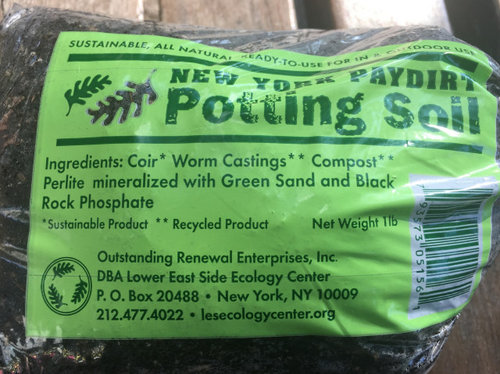
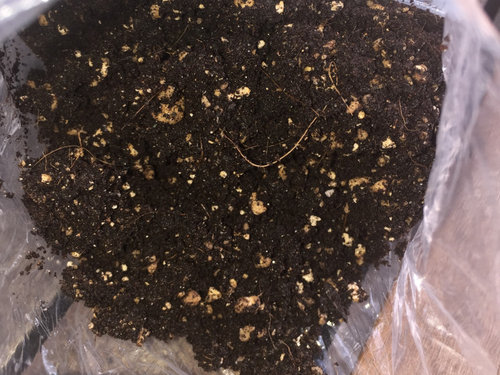
Farmers Market soil

Hello guys, and gals. I just picked up two small bags of soil at the farmers market of Union Square Park. They make it themselves. Would you use it for anything? No peat in the ingredients. I was thinking 50/50 with Pumice


Comments (9)

  • 6 years ago

    Looks good. Maybe just add perlite to it(?)

    hellkitchenguy Manuel thanked woodnative
  • 6 years ago
    last modified: 6 years ago

    Thanks. I'm also not a fan of Perlite, and do have lots of Pumice on hand. I'm thinking of using it for my Sansevierias. Maybe just add 1/3 pumice, as I find my Sand don't do too well in too much grit. What do you all think of using it for a Spathyphilum ?

  • 6 years ago

    Wow that looks really interesting. I love to try new and different medias. I would experiment for sure!

  • 6 years ago

    I like the looks of that as is. I'd use it in a heartbeat for my medicinal plants or any of my non 'Gold' trifasciata Sansevieria, especially for the 5-6 months they get to play outside. I am not a 'soil' genius, but I know coir has a neutral pH, I think green sand will raise it. Depending in what your compost is, it could raise it. Sans seem to be tolerant of a wide range of confitions, which is pretty wonderful and good natured of them.

    I look forward to seeing what becomes of your experiments and to the story with photos to enjoy, if course.

  • 6 years ago

    Sorry to ruin the party, but I truly think you'll very likely be sorry. It's going to be very water-retentive and the fact that coir is the primary fraction is also an issue. Something I wrote about coir and CHCs.

    Peat vs. Coir

    Sphagnum peat and coir have
    nearly identical water retention curves. They both retain about
    90-95% of their volume in water at saturation and release it over
    approximately the same curve until they both lock water up so tightly
    it's unavailable for plant uptake at about 30-33% saturation. Coir
    actually has less loft than sphagnum peat, and therefore, less
    aeration. Because of this propensity, coir should be used in mixes at
    lower %s than peat. Because of the tendency to compact, in the
    greenhouse industry, coir is primarily used in containers in
    sub-irrigation (bottom-watering) situations. Many sources produce
    coir that is high in soluble salts, so this can also be an issue.

    Using coir as the primary
    component of container media virtually eliminates lime or dolomitic
    lime as a possible Ca source because of coir's high pH (6+). Gypsum
    should be used as a Ca source, which eliminates coir's low S content.
    All coir products are very high in K, very low in Ca, and have a
    potentially high Mn content, which can interfere with the uptake of
    Fe. Several studies have also shown that the significant presence of
    phenolic allelochemicals in fresh coir can be very problematic for a
    high % of plants, causing poor growth and reduced yields.

    I haven't tested coir
    thoroughly, but I have done some testing of CHCs (coconut husk chips)
    with some loose controls in place. After very thoroughly leaching and
    rinsing the chips, I made a 5:1:1 soil of pine bark:peat:perlite
    (which I know to be very productive) and a 5:1:1 mix of
    CHCs:peat:perlite. I planted 6 cuttings of snapdragon and 6 cuttings
    of Coleus (each from the same plant to help reduce genetic
    influences) in containers (same size/shape) of the different soils. I
    added dolomitic lime to the bark soil and gypsum to the CHC soil.
    After the cuttings struck, I eliminated all but the three strongest
    in each of the 4 containers. I watered each container with a weak
    solution of MG 12-4-8 with STEM added at each watering, and watered
    on an 'as needed basis', not on a schedule. The only difference in
    the fertilizer regimen was the fact that I included a small amount of
    MgSO4 (Epsom salts) to provide MG (the dolomitic lime in the bark
    soil contained the MG, while the gypsum (CaSO4) in the CHC soil did
    not. This difference was necessary because or the high pH of CHCs and
    coir.) for the CHC soil.

    The results were startling. In
    both cases, the cuttings grown in the CHC's exhibited < 1/2 the
    biomass at summers end as the plants in the bark mix.

    I just find it very difficult
    for a solid case to be made (besides "It works for me") for
    the use of coir or CHC's. They're more expensive and more difficult
    to use effectively. The fact that some believe peat is in short
    supply (no where near true, btw) is easily offset by the effect of
    the carbon footprint of coir in its trek to the US from Sri Lanka or
    other exotic locales.

    That's the view from here.
    YMMV

    Coir Study:
    https://sites.google.com/site/plantandsoildigest/usu-crop-physiology-laboratory/coconut-coir-studies


    Al

    hellkitchenguy Manuel thanked tapla (mid-Michigan, USDA z5b-6a)
  • 6 years ago

    tapla,

    Al, I have Sansevierias in a gritty mix I made of 2/3 turface and 1/3 orchiata pine bark, both from RepotMe. The plant did well for the first year, and then got stunted, looks horrible, and it stopped giving pups 2 years ago. I fertilize at almost every watering. Any idea why it failed to thrive?

  • 6 years ago

    Likely due to too much water retention - especially if the Turface wasn't the right product (should be Turface MVP or Allsport) and/or it wasn't screened. What size was the Orchiata? If it was larger than 1/8-1/4, that would be a factor as well, as it would cause a lack of media homogenity such that in effect you'd end up growing in the Turface product alone, despite the minor presence of the Orchiata. Sort of like, if you have a jar 2/3 full of sand and added 1/3 jar of BBs and mixed, you'd still be growing in sand and the medium as a whole would have the drainage and aeration characteristics of sand.


    Al

  • 6 years ago

    Manuel, Too bad they don't show the ratios of the mix. Usually they go in an order of most to least but not always. My mix is mostly my own compost from my pile of many years of glass clippings and maple tree leaves (smaller amount). My lawn is not treated so it's more natural.


    Try if you could, grow as gotten and some/one with the 50/50 pumice. I would love to use pumice but too expensive to ship here. Perlite is cheap and I use some in my mix. I know Sans like the ph of 6 to 6.5 but I don't have a way to check mine. First year results were great on my mix. Following years are not in yet. I am lazy and don't expect to change soil in my plants for many years after potting up.

Sponsored
Designing Beautiful, Sustainable Homes in Columbus