Software
Houzz Logo Print
gregily

advice on selecting a range hood

13 years ago
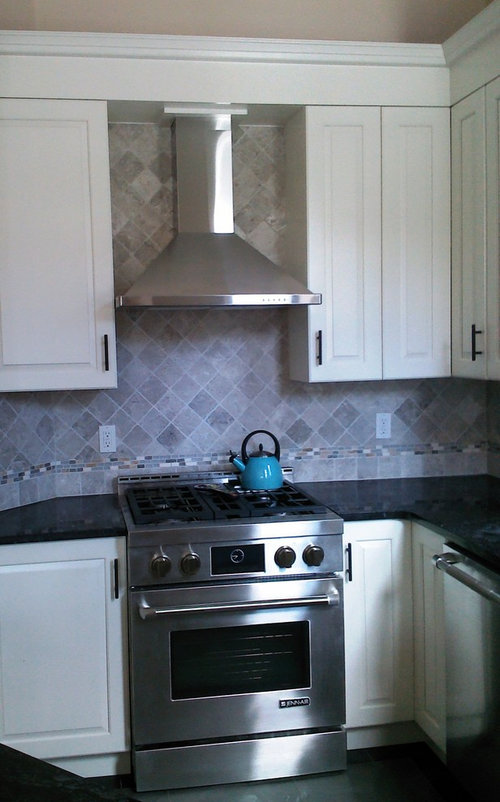
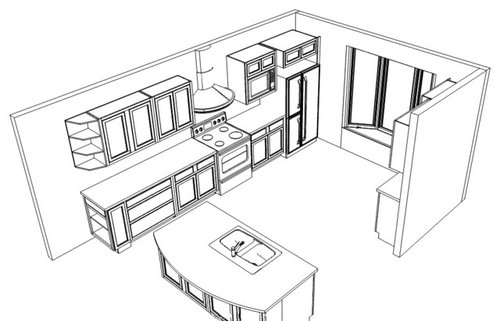
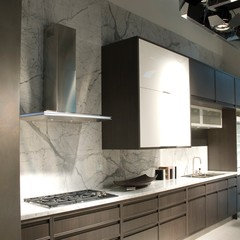
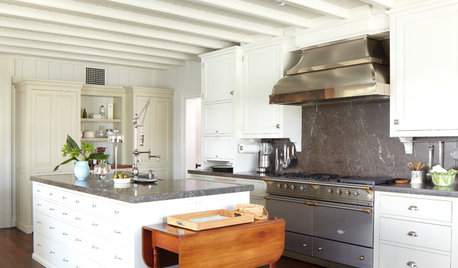
We're trying to choose a chimney-style range hood for our kitchen remodel, and could use advice on brands & specs. I like the looks of the chimney style (see image as example).

Here are my questions:
* We will be purchasing a new range (electric, free-standing) in stainless, so I want the hood in stainless, also - is matching the metals a problem if you mix brands?

* What is an optimal CFM?

* Range is 30" wide, so we have set it up for the hood to also be 30".

* Ceiling is high (vaulted to roofline) so we will need to have additional length on the chimney to vent it out.

I've read so many different articles on this that I'm getting overloaded - I really want to know from people who have them - what do you have, do you like it, does it do a good job, etc.

Thanks!!!
Emily & Greg from Clearwater, FL

Comments (10)

  • PRO
    13 years ago
    We always make the hood 6" wider than the range below when possible - it looks much better. Also don't get a hood more powerful than 600 CFM without replacement air if your windows will be closed in the winter. It can pull carbon Monoxide into your home from your heating system.
  • 13 years ago
    We went with "Proline", mainly because with needed a rear venting (rather then roof venting) hood and they were hard to come by. We love everything about our hood. it's welded construction, no name labels plastered over the front, its 1000 cfm, ....

    Would highly recommend Proline.
  • 13 years ago
    Emily and Greg, those are very relevant questions (which we wish more people would ask!). As a manufacturer & distributor of high-end range hoods, we can offer the following advice:

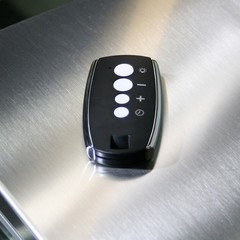
    1.) Matching stainless steel - usually not a concern, most stainless-steel appliances are finished with a fine polish (example attached), so they will match, more or less. However, there are a couple of exceptions to watch out for:

    * Anything labeled as a "brushed" finish may have a much rougher texture - ask for a close-up photo or a sample of steel if you're not sure.
    * Some refrigerators are finished in a "fingerprint-free" surface, which is much more matte and non-directional (microscopic "dots" or "sparkles" rather than fine lines).

    2.) There are many CFM guidelines, however, it boils down to "having enough ventilation power to accommodate your personal cooking habits, without making the range hood sound like a 747 at takeoff, and without sucking all the air out of the house".

    For most people, who will cook on 1-3 burners at a time (since most of us aren't trying out for Chopped or Iron Chef), airflow in the neighborhood of 600-900 CFM is adequate. Lower CFM is usually not enough, and hoods producing more than 900-1000 CFM are usually too noisy for comfortable use.

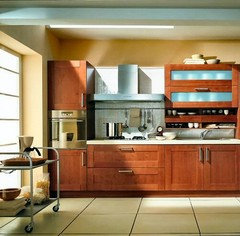
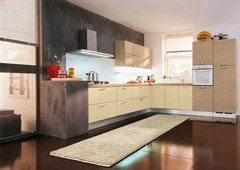
    3.) With a wall-mount hood, the chimney cover only needs to be high enough to cover the duct. If your duct will be routed into the wall (i.e. with a 45 or 90-degree angle), you don't have to worry about the chimney reaching the ceiling (example attached). If the duct will be going into the ceiling, most range hood manufacturers offer "chimney extensions". However, if the ceiling is sloped, you may need to build a small soffit or moulding, or cut the chimney at an angle to match the ceiling.

    We offer more than 200 models of high-end, designer range hoods, made in Italy. Please feel free to give us a call at (800) 230-3565 for a personalized consultation - with this kind of selection, we're confident that you'll find the right range hood for your requirements!

    Best Regards,
    The Futuro Futuro Team
  • 13 years ago
    M1503.4 Makeup air required.
    Exhaust hood systems capable of exhausting in excess of 400 cubic feet per minute (0.19 m3/s) shall be provided with makeup air at a rate approximately equal to the exhaust air rate. Such makeup air systems shall be equipped with a means of closure and shall be automatically controlled to start and operate simultaneously with the exhaust system.
    http://publicecodes.cyberregs.com/icod/irc/2012/icod_irc_2012_15_sec003.htm?bu2=undefined
  • 13 years ago
    @ Main Line Kitchen Design:

    You raise a very important point - CFM restrictions and MUA requirements exist in many locations, and with good reason.

    However, we didn't want to make our response even more complex & overloaded. You and we both know that if we try to cover even a few aspects of kitchen ventilation, 1.) we'll be here all day, and 2.) this page will rival Wikipedia articles on the topic ;)

    As a manufacturer who distributes products all over the US and Canada, we advise our clients to always check with their local building code authorities / licensed contractor / kitchen designer / home inspector, in order to make sure their ventilation solution is legal and safe.

    If CFM restriction is required, we offer an option to limit operation to 300, 400, or 600 CFM. Since our hoods are electronically controlled, our technicians can reprogram the ECM at our facility prior to shipping, free of charge.

    Also, the depressurization issue is the reason why our hoods are equipped with a safety feature that will limit operation at the highest speed to 15 minutes, after which the hood will automatically step down to a lower speed.

    P.S. Pennsylvanians are lucky to have a kitchen designer available to them who not only creates beautiful environments, but also knows the intricacies of building codes!
  • 13 years ago
    last modified: 13 years ago
    @ futuro, SAFETY FIRST! International residential code states;
    "Such makeup air systems shall be equipped with a means of closure and shall be automatically controlled to start and operate simultaneously with the exhaust system."
    This system often costs well over $2k on top of the price of the hood. I suspect that is a better motivation for not bringing it up.
    How do you make the make up air turn on "simultaneously" with your hood if you don't bring it up during purchasing of a hood? Are your hoods equipped with a relay? Or do they have to come up with a less convenient solution to this problem on their own?
  • PRO
    13 years ago
    The make up air issue has been a problem since homeowners started using professional ranges. Kitchen designers and appliance salespeople were usually only concerned if they couldn't get past the building inspector and codes in the US have only recently been changing. Most people should never be getting these powerful hoods and everyone knows it now, but many salespeople still turns a blind eye to get a sale. How you are handling the make up air issue should be a salespersons FIRST question.
  • 13 years ago
    One thing I wish we had considered when we installed our "high end" Dacor hood... the stupid light fixture built into it required very specialized, and very hard to find, lightbulbs. The problem with replacing the bulbs was that they had to fit EXACTLY into the fixture. Otherwise, the smoke/steam/grease was actually blown down right back into the kitchen! It was a terrible problem. (The original bulbs were not a perfect seal either.) We couldn't find any lightbulbs that fit exactly, in the US or Europe. We had to keep the dead bulbs installed (and work without light) to prevent the blower from just moving the polluted air back into the kitchen. Dacor was not helpful to us in resolving this design flaw. We ended up finding the closest bulb available (American made, special ordered, very expensive), and STILL my husband had to solder each bulb's contact end to make them fit correctly and, sort-of work. They never did work as well as the original bulbs. They were just a fraction of an inch too short.

    This was just not something I would have known to look at while shopping, but we have learned to look closely at the design of the lighting inside the unit. I would ask to see a unit in operation. They all look great in the showroom, but had we seen this Dacor in a kitchen setting, actually "removing" greasy steam, with the lights on, we might have seen that some of that steam actually leaked down around the lights, even with the original bulbs properly installed.
  • 13 years ago
    Thanks for the advice, everyone - I'll double check with our contractor re: codes in FL to ensure we're buying the right thing!