Software
Houzz Logo Print
westes

Using Compost as Mulch for Shrubs

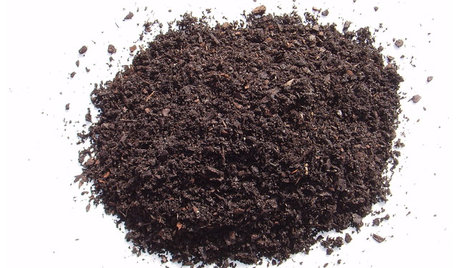
How do others here feel about using compost as a mulch for shrubs instead of bark? I have a local arborist who is telling me he has had more luck using compost as the mulch for shrubs.

Comments (16)

  • 5 years ago

    I put an extra thick layer of compost on all of my planting beds this spring -- trees, shrubs, perennials and ground covers. I used a forest product on the pathways but nowhere else. My garden has never looked better and I've had far fewer weeds this year.. The only negative was the dog . . . when the compost first went down he loved it too much and on rainy days brought a shocking amount of wet, black compost into the house. But he's a little velcro dog who prefers to be dirty. You might not have that problem. I say "yes" to compost.

    westes Zone 9b California SF Bay thanked einportlandor
  • 5 years ago

    BTDT, do it every year with my Knockout roses and a tree or two with the compost tossed 80% done out of the bin from my gardens in fall and the completed compost that got done over the winter in spring.

    It doesn't have the durability of bark mulch, which will last quite a while. Compost is gone more quickly. Incomplete compost is gone much, much more quickly as it finishes atop the soil. But the roses absolutely seem to adore it.


    As far as "luck," I'm not sure what he means. Both mulch quite well, both suppress weeds (although weeds will grow in compost much more easily than in the better-draining bark mulch), and both eventually add organic matter to the soil in large amounts.


    Compost really has to be kept a bit further from the trunks and shrub bark than mulch does as it retains a ton more water. Neither should be piled against the trunks of anything, of course (more a warning for beginners than us, who know that already). So I tend to ring around the rosie and never get particularly close in to the canes.


    (and more beginner's warnings) With incomplete compost, use thinner layers to make sure they stay oxygenated, use on established and sturdy plants you know can handle the stress, keep a full 3" away from stems and trunks, and so on. It can be problematic if one isn't quite careful.

    If you didn't make the compost yourself, and don't know exactly what's in it, and don't have a really good reason to use it when incomplete, don't use incomplete compost at all. In my case, by incomplete, I mean that when I turn it, I can only get the core temperature to rise by five degrees or so. It's not done, but it's not active, either.

    westes Zone 9b California SF Bay thanked User
  • 5 years ago

    Compost is all I use to mulch any of my garden beds and I've been following this same practice for years. I dislike the appearance and texture of bark.

    It does need to be applied more frequently than a wood based mulch but then it also offers a better nutrient load than a wood mulch as well. I rarely have had a need to use any supplemental fertilization if using the compost.

    westes Zone 9b California SF Bay thanked gardengal48 (PNW Z8/9)
  • 5 years ago

    Compost is the only mulch I use.

    westes Zone 9b California SF Bay thanked annpat
  • 5 years ago

    the basic issue here are the words ...


    compost is a soil conditioner .. and as such.. its very short lived as it quickly breaks down to .. wait for it.. condition the soil ...


    mulch on the other hand is a much longer lived product ... lasting perhaps a few years.. depending on depth and type ... of course.. it does eventually breakdown into compost.. at the soil level.. and disappears into the soil ... so you have to refresh it lightly every other year or so ...


    can compost be a mulch.. sure.. but plan on replenishing it every year.. and to be honest.. most of us dont generate enough to do that yearly ...


    but until it breaks down at soil level.. mulch is usually not compost ...


    whatever you want to call it ... do whatever makes you happy.. lifes too short ... and if it works for you ... it makes me happy for you .....


    and.. if you did mulch.. pull it back if you want to add some compost to the soil.. and then put it back ... it probably cost a lot more than the mulch ... so may as well preserve it as long as you can ....


    ken

    westes Zone 9b California SF Bay thanked ken_adrian Adrian MI cold Z5
  • 5 years ago
    last modified: 5 years ago

    @morpheuspa By "luck" he means the plants seem to grow better with compost versus bark as the mulch.

    I buy the compost from a local landscape supplier by the cubic yard. I have no way to know how finished it is. They told me the compost is made from garden waste, so presumably, this is grass and leaves and chopped up branches. I have to believe it is a pretty well-finished compost.

  • 5 years ago

    How long does compost last for each of you, and is the answer different for shrubs versus roses?

  • 5 years ago

    I would say to Ken that compost has probably been used as a mulch longer than any other he can name. In fact, when I was growing up, the pile in our back yard was called the 'mulch pile'.

    westes Zone 9b California SF Bay thanked annpat
  • 5 years ago

    I still occasionally call my compost my mulch piles...and the dogs I’ve had who liked to jump up into them were called mulch monkeys.

    tj

    westes Zone 9b California SF Bay thanked tsugajunkie z5 SE WI ♱
  • 5 years ago

    It is worth mentioning that I tried two seasons ago to start using pine needles and redwood tree leaves as a mulch for a rose garden. The roses have progressively done worse after that mulch was added. I wonder if there is a pH problem there.

  • 5 years ago

    Coniferous needles don’t alter pH. They don’t acidifying soil.

    westes Zone 9b California SF Bay thanked floral_uk z.8/9 SW UK
  • 5 years ago

    I don't fully understand the question, I guess - if compost seemingly/reportedly works better in your conditions, try that. If it works, keep doing it.

    Bark mulch seems to get used most in places where a visible line wants to be drawn between e.g. lawn and area under a tree. Also (where I see most) in planters and roadside areas/commercial 'islands', I presume because it's cheaper (I think often areas where if a plant isn't doing well, they just replace). I suspect also because lots of other stuff will germinate directly in compost and so can look messier. Anyway my point being I think in some of the uses they don't care all that much about how well the plants growing there are doing.

    I've used bark - cheapest available - when I had some ground to cover and not much available. Nothing special, it was the smaller bits (because cheaper) and disappeared fairly quickly, don't wish to repeat.

    Under my own mixed shrubs/trees/flowering bushes, except for the one time, have used whatever is available - mostly wood chips (mixed/relatively green), often immediately after chipping, but also some compost and fairly well decomposed leaves. The bushes and shrubs are happy with them all, the wood chips have lasted longer - not long, but longer. Since those are areas somewhat out of sight, that's my go-to place for wood chips.

    So personally not going to bother with bark mulch (I go with what's free and mostly works), but to close with my first point - use whatever works for you.

    westes Zone 9b California SF Bay thanked armoured
  • 5 years ago

    @floral_uk That is what I had read as well, yet the rose bushes do not seem to like it

  • 5 years ago

    The mulch may not be responsible for the decline in the roses. There are lots of variables.

    westes Zone 9b California SF Bay thanked floral_uk z.8/9 SW UK
  • 5 years ago

    Fortunately I'm not responsible for the flowers in my household, but agree too many variables to attribute to the mulch. But by all means try some other mulch.

    Stepping back a little, I think there's different points and goals going on here. One is mulch as a weed suppressant, and mulch as long-term soil amendment/enrichment. All organic mulches eventually contribute to a decent soil, once they've broken down. In thick enough layers, they deprive weeds below of sunlight, and generally make weeding easier, if weeds are less numerous and in loose mulch. Healthy perennials and annuals planted below that mulch do fine.

    Then there's mulch that doesn't provide a good environment for germinating (hence we bring seedlings in and plant through/below the mulch). This is where I think these ideas that e.g. wood chips steal nitrogen and pine needles are too acidic - they may well be environments that are hostile to germination/growth of young plants in the mulch above the soil. The points are true in a specific sense but don't generalise to e.g. compost made from this stuff or what it does to full grown plants.

    As a mulch, that may be true at the top mulch layer, but won't matter much several inches down if plants have rooted. If it was true when the mulch was first laid down, decomposition and time will deal with the imbalances (ph level tends to neutral, nitrogen "hungry' mulch gets colonised by fungi and bacteria that bring their nitrogen with them, some natural chemicals get broken down over time).

    So yeah, for example, under conifers with lots of needles underneath, not much else grows, and if you test that top layer, it may be acidic. So not much new germinates or grows under (some) big conifers - although that is almost certainly partly due to lack of light and the soil that the conifers prefer to grow in, too, not to mention their heavy consumption of nutrients in the soil and root systems, etc. (Also true under some other trees too so it's not just needles)

    Anyway, sorry for the verbiage, still comes down to 'if something seems to be working, keep doing that', perhaps supplemented by 'if something doesn't work, it doesn't mean the mulch you just tried was the issue' (although clearly didn't solve the problem either).

    westes Zone 9b California SF Bay thanked armoured
Sponsored
J.Holderby - Renovations
Average rating: 5 out of 5 stars4 Reviews
Franklin County's Leading General Contractors - 2X Best of Houzz!