Software
Houzz Logo Print
webuser_997033148

An offering re thrips

Aegis scared the bejeebers out of me this week with his tale of thrips - see B Snow's thread "AV flowers wilting" - so I've been doing some digging, on the AVSA website and elsewhere.

My personal experience with thrips was when, living across the road from a giant field of sunflowers, the thrips that annually invaded the flower heads would come across into our yard and chew on US. They coated anything that was light-colored: my white station wagon looked like it was covered with dust. I couldn't buy light-colored clothes for my little kids, for summer wear. In sunflower season thrips crawled over my bare arms when I was out gardening, and over my kids' bare skin when they were out playing, and they BIT. Not deeply, but irritatingly, and we'd be scratching, scratching, uff da. (It was a relief to move away from sunflower country.) I know from thrips.

In my searches today I found a link to a video called "Thrips on My African Violets and Orchids - what I tried, what worked, what didn't". I clicked. I was amazed to find that it was by a YouTuber I subscribe to.

I'm an orchid enthusiast as well, and last winter stumbled upon "MissOrchidGirl" on YouTube. She also grows AVs but doesn't presume to be a guide on them, though people ask her all the time. Her videos tend to be on the long side and somewhat chatty, but there are plenty of gems in them, for the patient, and I've come to enjoy her style. So here's the link. I'm neither suggesting nor endorsing, just saying - worth thinking about.

https://www.youtube.com/watch?v=UTsSG0vsRcA

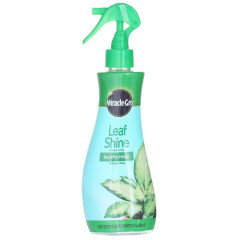
In summary, a very light coating of "Leaf Shine," in a formulation that contains mineral oil, seems to do the trick. Her thrips were leaf-suckers more than flower/pollen-suckers (different species?) but I can sure see where drowning in an oily coating would do for any sort of thrip. I'm tempted to get some Leaf Shine and spray it on a flower stem, and one or two leaves, experimentally, before there's ever a problem, just so I know its effect.

As I said: just an offering of a unique idea I haven't seen anywhere else.

Joan


Comments (19)

  • 6 years ago
    last modified: 6 years ago

    Here's another possibility that seems to me potentially credible: I've been scrolling through the comments on the aforementioned video, and one person said, "I used a drop of my dog's Advantage on each pot and it wiped out all the gnats, thrips and white fly overnight. I tried traps, and natural remedies, Safer's, and nothing worked. I don't have access to leaf shine where I live." MissOrchidGirl replied, "Is that the anti-flea medicine you put on the neck of your pet?" Answer, "Flea medicine, yes... The one that works the best is Advantix." I do recognize 'Advantix' as a flea remedy for pets.

    Edit: this reminds me of what Rosie (rosie1949) said at one point in our talks, about adding a couple drops of liquid soap (detergent? they're not the same) to each gallon of wicking-water. Could be a little goes a long way.

  • 6 years ago
    last modified: 6 years ago

    I never heard of using a drop of Advantage or Advantix flea stuff on each pot. Where do you put it? On the rim of the pot? Actually on a leaf? I do know that stuff is pricey. But if it works I guess it would be ok!

    As far as Leaf Shine, it has been around for a lot of years. It is generally used on plants that have smooth leaves like philodendren, pothos, scindapsis etc. Supposed to make them real shiny. Because it is oil based I am not sure it would be good on the hairy leaves of african violets. And a lot of people think that putting an oil based "shine" on plants may look good but at the same time a lot of folks think it clogs the breathing pores of the plants. I am inclined to agree. I don't know what its effect would be for thrips since you would have to spray the flowers also.


    Any other opinions from anyone???? WOW! Sorry that pix is so large, I copied it off of the internet. This was priced under $7. There are many other brands of "leaf shine" products.

    I would still recommend putting a drop or two of dishsoap regularly in a gallon of water but I guess whatever works has to be ok! Thanks for the info!!!! Rosie

  • 6 years ago
    last modified: 6 years ago

    Rosie, I know, right!?? It's an unusual idea. But just because we've never heard of it doesn't mean it has no credibility. So that's why I titled this thread "an offering."

    The person who mentioned Advantix said "a drop per pot". Eh what, say you and I? I guess I'd better comment on the comment and ask how he/she applied that pet insecticide, because I have no idea re the specifics. But my guess would be a drop on the soil surface, and hope it disperses from there. NO DOCUMENTED SCIENCE here, right?? So who knows.... (OMG can't wait for my grandson to grow up old enough to have a shot at Science Fair! You all want to suggest ideas????)

    Nevertheless, it's a thought. Maybe some of us who are interested in experimentation, and have enough plants of which there may be duplicates that we could therefore risk, could maybe try to dissolve a drop or two in some top-applied water, or in reservoir-supplied water. Or even just, what the heck, apply a drop at soil level and see what happens as it percolates down? I dunno. I'm no expert and I'm not saying I've applied any of the ideas suggested. I'm just presenting credible avenues for exploration on this forum, for the curious and adventurous who may have room in their lives for this kind of investigation.

    Re clogging pores etc, for any foliar spray: this is why I personally would only apply it to one leaf per plant, as an experiment. Did you actually listen to the video all the way through? To do so does require some patience. She discusses possible negative effects. Note that she applies it extremely lightly! And she comments that over a very short period of time it all evaporates.

    All I'm suggesting here is that, while it may buck the trend and raise eyebrows, it's well worth consideration, especially by those who have a large enough collection, with duplications, to isolate infected pairs, and who may be willing to do just a light spray, even WITHOUT thrips present, and compare leaf/flower results. Then (shudder) intentionally introduce thrips, treat similarly and variously, and observe effectiveness. If I had the luxury, I would totally do this. But this is not my life, at present.

    I myself don't have enough of a collection or environment to provide comparative results: what would be required would be an unaffected control plant, unsprayed; an infected control plant, unsprayed; and genetically similar plants, unaffected and infected, which got the spray; and then repeated similar comparative experiments for various varieties/species/pests. Which is why it's worth supporting SCIENCE.

    Sorry, all, for the kinda diatribe, but for me it's Science, all the time. There are no instant answers, but if we try, together, we can come up with useful answers. Even if they turn out to be Kitchen Counter (like "Leaf Shine", maybe).

  • 6 years ago

    That sounds awful, Judy. Glad you recovered!

    Joan

  • 6 years ago

    Ok,,,,all in the name of science. Interesting conversation though! Here is what I know. Many many many years ago,,,,leaf shine products were invented. A lot of people used them to make the leave of their plant look like a highly waxed floor! And it does!!! Then came some who said "why buy leaf shine??? I will just use Mayo or Miracle Whip!" No kidding this really was a "thing". I never did it because I was not wasting food product on plants, I did use the leaf shine a few times, but purist that I have been accused of being (lol) I stopped because the leaves looked great but people started talking about clogging the surface of the leaves so the plant could not function fully. It did make sense to me, I was putting an oil base on the top of the leaf so maybe it could not operate on all cylinders! Anyway,,,,I stopped using it and I can't say who was right. I didn't use it long enough for a "study" but realistically it was one less thing I had to do and my plants still thrived.

    I kinda stick with simple things. Soapy water. Bayer Rose care something, it is a spray in a blue plastic bottle I think. Reasonable care when bringing anything new in etc etc, etc,

    I have been lucky and never had to resort to Avid or stuff like it.

    Many years ago there used to be a granular systemic that you sprinkled on the surface of the soil, watered it in and it made the entire plant toxic to bugs. I don't think they make it anymore. It was in all the stores, but I haven't seen it for years. I kind of liked it though.

    Oh well,,,,,the things we do for plants!!!! Rosie

    PS.... I will keep the mayo for my sandwich!!! lol

  • 6 years ago

    Rosie, the granular system you refer to may be granular Bonide which contains a low dose of Imidacloprid, which I've used on orchids for spider mites, and it has seemed to help. Never tried it with AV's for anything. I think you can still get it at garden stores and maybe Home Depot or Lowes.

  • 6 years ago
    last modified: 6 years ago

    I am not sure Judy. I have looked at Lowe's, Walmart and Meijer. No dice. We don't have a Home Depot or Menards for 30 miles in any direction. I only get there if something takes me in that direction which,,,,,sigh,,,,,doesn't happen. BUT I have even asked for a granular systemic and they always tell me they don't carry it. darn. But thanks! Rosie

  • 6 years ago

    I found Bonide at Amazon. I haven't looked in the big stores.

    I heard the same thing about Leaf Shine, Rosie, and so did the author of the video. However, she uses only the very lightest spray - no more than that is needed - and the Leaf Shine evaporates within a short time (a week? Two? I don't remember).

    I know it takes some time to listen to the whole thing, but I think it's worth it. and interesting.

    Well, if I ever get thrips, I'll isolate at least one plant and try it, and do Bonide on the rest.

  • 6 years ago

    So far for me, neem oil and dilutated alcohol baths have worked. I live in an apartment with no AC so we open the window right by the violets occasionally and thrips keep flying in....I got rid of them this spring and I just discovered two yesterday so I'm back to square one.

  • 6 years ago

    Oof. Bad luck, BaraYoukai. Are you going to stick with neem oil and alcohol baths?

  • 6 years ago

    For right now, yes. Hopefully it works again.

  • 6 years ago

    👍

  • 6 years ago

    Every time you open a door or a window... or God forbid somebody brings you a bunch of flowers ... you are back to the square one.


    The most efficient way - is what Judy did - attack and do them in. Avid is a systemic, removing blossoms prevents them from burrowing in the pollen sacks, feeding and hiding.


    The pyrethroids or Neem oil - work on contact. You nail it - fine, it was hiding - they are back in no time. You need to do multiple applications with no guarantee.


    Imidacloprid is effective for 30 days to kill them if they feed on foliage... Blossoms are protected - the plant doesn't let any foreign substance into sex organs...


    Northern Gardener (3b west central MN) thanked irina_co
  • 6 years ago

    HORROR, Irina. Thank goodness I no longer live near fields of sunflowers. I'd be doomed.

    Thank you for the thought that blossoms are protected. That's news that will dictate future courses of treatment for many. Yet... It doesn't square at all with the idea that imidacloprid is affecting the pollinator population by getting into flowers, nectar, and pollen.

    ???

    Are African violets different from other plants?

    Joan

  • 6 years ago

    Correct - imidacloprid is lethal for insects and fish.


    I am thinking that the life of imidacloprid is 3 months in a moist environment - at the moment you repot your plants and chuck the old soil - it is already safe. Using it outside... the bees go into decline... and bees are mandatory for human survival. Without bees... we will lose our crops.


    Since Saintpaulias do not produce nectar, and their pollen is not released in its own...they are not attracting bees. I am thinking - the pollinator is some kind of African thrips... So ... your enemy here - is somebody's friend there...

    Northern Gardener (3b west central MN) thanked irina_co
  • 6 years ago

    I'm confused, Irina. The subject of this thread is thrips on AV flowers. And we've gotten onto imidacloprid as a systemic insecticide. What is it, in the flower of an African violet, that thrips feed upon? And how is it that that part of the plant cannot be infused with the insect-poisonous systemic, imidacloprid?

    Joan

  • 6 years ago

    Joan -


    thrips feed on pollen, but if the plant is not in bloom - they will feed on youngest leaves leaving permanent streaks and distortion. At some point - they pupate in soil. If you will have the blossoms removed - and the plant saturated with systemic - imidacloprid - or recently sprayed with AVID -which stays active in a plant tissue for 30 days. they will get poisoned and croak.


    Northern Gardener (3b west central MN) thanked irina_co
  • 6 years ago

    Northern Gardener - I have been watching MissOrchidGirl online for years. She is the most careful person I've even seen with regard to her plants, so if she says that the leaf shine is safe, then the leaf shine is safe, as far as I'm concerned, and I wouldn't hesitate for a second to use it. I've also watched the video you're referencing, like almost all of her videos, it is long, but very informative and entertaining. She says that just a little while later when she touches the plants there is no oil transferred to her hands, so it's off the plants in a very short time.

    Northern Gardener (3b west central MN) thanked beaudoinjill
Sponsored