Software
Houzz Logo Print
darlingtonia

Cork flooring in the basement play room?

5 years ago

We are having our basement finished, mostly as a play room for the kids. We were going to just do carpet, but I wanted something:

*easier to keep clean (thinking allergies here),
*that would also be better for play with blocks and brio (carpet is a little too squishy),
*and messy stuff like play doh,
*while still being soft underfoot and forgiving when the kids fall.
*We also want something that won't put off VOCs and reduce our interior air quality (looking at you, luxury vinyl planks).

So I started to think about cork. Is this a dumb idea in a basement with kids (no dogs)?

I'm pretty confused about floating versus glue down, and tiles/planks. Does it require a cork underlayment or is that optional? Is a moisture barrier required in a basement? In order for cork to be durable, does it need to be treated with products that are going to be exuding VOCs like vinyl?

And of course, we've already hired our contractor. I'm pretty sure he's never done cork before. Is it really so different from other flooring that is unlikely to be done right the first time?

Thanks for your input, real humans of the internet!!

Comments (7)

  • 5 years ago

    Cork flooring pro to the rescue! OK. First things first. Let's start with your needs and end up with the 'wants'. I'm a cork pro who lives in Canada...and I've had hundreds of cork floors installed in Canadian basements...not a one of them has had an issue (excluding hurricane water surges = 10ft tidal surge in the basement). So feel at ease with cork and basements they go together like two Robins in Spring (thank you Jan & Dean).


    Now onto your requirements. Basements MUST use floating cork flooring. Must. Glue down tiles are reserved for: A. MILLION dollar homes; and B: Bathrooms, kitchens, entranceways above grade (above the ground level).


    Here is the order of installation:

    A. Subfloor prep to the requirements of a cork floating floor = 3mm over 1m (1/8" over 10ft).


    1. Vapour barrier (6mil poly sheeting taped at the seams with Red Duct Tape (moisture resistant) = $0.20/sf total material price (yep...it is that cheap and easy).

    2. Cork underlayment (if you wish). Cork underlay is floated (just sits there) over the vapour barrier. Your location (hot, cold or 'temperate') will dictate your choice of cork underlay.

    3. Click together the cork planks just like laminate. The same click edge system is used with cork as it is with laminate. Be aware that cork needs a snick more time and a snick more patience than laminate. It CANNOT be slammed together like laminate. It takes a deft touch. I always suggest $0.50/sf MORE for cork floating floor install than laminate. It will offer the appropriate amount of money for the extra time needed to install the floor.


    4. A cork floating floor with a traditional polyurethane finish (not a cheap acrylic, polyacrylic or PE or PP finish or PVC finish) can be site finished to add wear layer (makes it super tough) as well as makes it 'spill proof' for anyone playing an exciting game of 'adult Yatzee' or Tequila Pigs.


    For awesome prices and samples of these types of floors: www.icorkfloor.com Tell Anne Stephanie mentioned her on Houzz. She'll make sure you are taken care of properly!

    darlingtonia thanked SJ McCarthy
  • 5 years ago

    Thanks so much!! I received some samples yesterday from icork. They are a little harder than I imagined, but maybe that's a good thing. I'm in Colorado (hardiness zone 5b FWIW, pretty temperate but we certainly do have seasons), so I am inclined to try doing a thicker cork underlayment both for bounciness/sponginess underfoot and for insulating properties.


    Could a thicker (and therefore presumably softer) underlayment have enough give that it might destabilize the joints between the floating cork planks? Are there other negatives to doing an underlayment that I might have missed? I suppose it might make the basement too warm in summer when we want a cool retreat.

  • 5 years ago

    First things first: cork is a rigid structure. it is still wood...it's just the softest hardwood in the world. It will not squish. It will not visibly compress when you step on it. What it will do is absorb the energy of a foot step. That means when the foot hits the cork, the leg's energy (all of your weight on the heal of your foot = ?150? lbs/square inch???) will be absorbed. The jolt of hitting the floor will be deadened. That means the jolt of the ground hitting the foot (remember: for each action there is an equal and opposite reaction15) 0lbs/sq. inch coming down onto the floor is going to be the same energy going UP the leg. That's the type of jolt that damages feet, ankles, knees, hips, lower back, mid-back, upper back, shoulders and neck.


    Every step you take on cork is going to be the same (on the body) as stepping on plush carpet. You won't 'sink' like you do over carpet but the cork will do the same thing. That's why people purchase cork. It is a solid surface (just like hardwood, laminate or vinyl) that treats your body like carpet does.


    Cork underlayment will add to this energy absorption. The more the merrier in my books. Generally I like to stick to 6mm cork underlayment with 1/2" cork floating floor (11mm or 12mm). That gives you 3/4" floor height which works nicely with doors and trim. It works nicely with stone/porcelain tiles in entranceways (they often sit 3/4" high).


    Adding a 'squishy' underlayment is going to do one thing: cause the floor to bounce and buck (most people hate this feeling...but if you like walking on a trampoline then perhaps it is what you are looking for). A squishy underlay (like foam = almost useless compared to cork) will also cause the click edge to fail much faster than if you had a solid underlay like 6mm cork.


    Colorado is a cold location. I would not hesitate to use the 6mm cork underlayment in your situation. Remember: cork is an insulator. Like your thermos, it keeps 'warm things warm' and 'cold things cold'. There is no difference between your thermos and a cork floor. Insulation is insulation. Warm air lingers LONGER in the winter heating season. And in the summer cooling season the cold air in the basement will REMAIN cold for much longer.

    darlingtonia thanked SJ McCarthy
  • 5 years ago

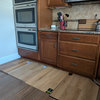
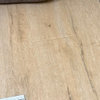
    Well, we ended up going with waterproof cork flooring - WISE by Amorim, with a vapor barrier/underlayment called "Quiet Walk Plus" made of recycled but non-cork materials. We like it very much so far. Despite sitting on top of the concrete, it feels much gentler on my joints than our laminate that we have upstairs. It's hard to say how much is attributable to the cork versus the underlayment. I didn't think I would really be able to notice the difference. I don't find it to be noticeably bouncy or anything weird though either. It does feel a little warmer, too, which is great in the basement. The surface texture is great for the kids - smooth enough that it's easy to clean, but grippy enough for playing in socks. I suspect that by going with the waterproof version we may have sacrificed some of the characteristic qualities of cork flooring (softness and sound absorption), but I rest easier knowing that a spill isn't going to wreck our floors (which is certainly not the case for our laminate - it's only 5 years old and I don't think it will make it to 10 mostly due to the under layer's sponge-like absorption of any spill). Our contractor said he enjoyed working with it. He said it snapped together really well and he didn't have to cull any broken or ugly/weird-looking pieces.

  • 4 years ago

    How has your cork floor been holding up? We are renovating our walk-out basement and have pretty much settled on cork.


    One of my possible installers suggested using 1/4” rubber underlayment—he said it would be a vapor barrier but also offer insulation (we are in Utah). Anybody have feedback on rubber as an underlayment material?

  • 4 years ago

    @darlintonia I’m also curious how your floors are holding up? We want to use it in our basement playroom.