Software
Houzz Logo Print
cauliehamling

Overpruned Japanese Maple

6 years ago

Hi,
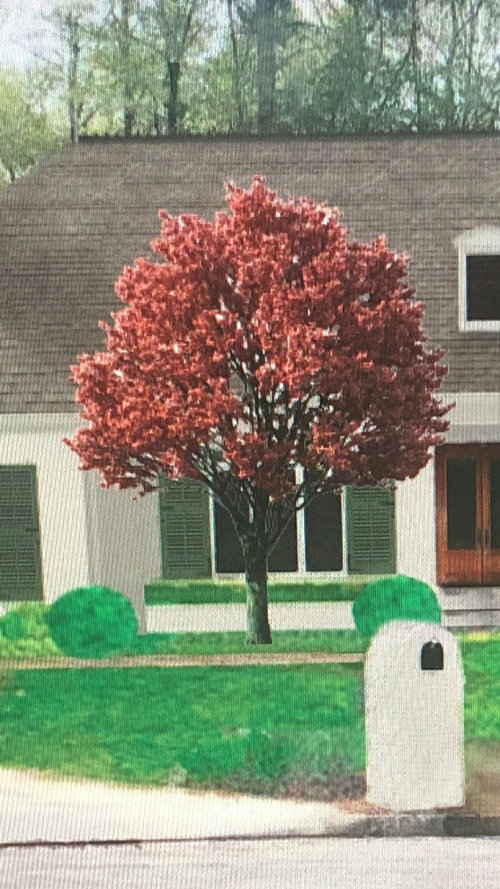
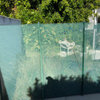
We recently moved and this Japanese Maple appears to have been aggressively overpruned to keep it this height. I’d prefer to let it grow taller to expose the window. My two questions are:

  1. What variety Japanese maple is this? Would this type even grow as tall as I am hoping (see photoshopped image)
  2. How do I correct the over pruning and encourage a more natural shape like I’m trying to get?

Thank you!

Comments (11)

  • 6 years ago

    There is no simple answer to your question. There are nearly a thousand registered cultivars of Japanese maples and their size and shape can vary very widely. And the wide array of seedling maples that only add to the numbers and the complication. Even JM authorities rarely go out on a limb (sorry, pun not intended) to ID a specific cultivar as there are multiples that will look very similar. So it is almost impossible to say if yours will ever look like the photoshopped image.

    If you have any contact with the previous owners, you could ask them for any info they could provide. And it would helpful to see a close up of the base of the tree to determine if and where it is grafted and where the branching structure begins.

    Also the best pruning advice can be given when the tree is out of leaf. You might need to repost in another month or so.

  • 6 years ago

    The leaf shape and quite tall upright leafless stems all aiming to be leaders says Acer palmatum in the upright small tree form to me. That puts it in the 25 foot range. It looks to be 6 to 8' now. Whatever its ultimate size. it should be pruned as an upright tree form.

    The best time for that is after the leaves drop so you can see the structure. That would be a good time to select and reduce leaders from the large upright stems. How much of your window will be seen only time will tell. In order to find out you have to prune it to be a tree.

  • 6 years ago

    I will stand by my diagnosis for this and most Japanese maples commonly found in and available for suburban landscapes.

  • 6 years ago

    things with trees.. happen in tree time.. usually counted in decades ...


    topiary is an art form.... wherein.. thru pruning.. you can turn a plant.. usually a tree or shrub.. into any form you want ... in essence ... that is what you want to do ...


    usually this process is started when the tree is very young... for faster sale ... but there is no reason you cant start now ...


    but you have to learn how to properly prune trees .. and you have to have a lot of patience.. and a lot of years ...


    if you want height.. never prune the top ...


    if you want bare trunk.. start removing bottom branches... one or two per year.. until you achieve your goal ...


    its rare that you can kill something by pruning ... with just a few rules ... like no stubs ...


    you will need a good pair of hand pruners .. i like felco .. and a good hand tree saw ... and a lot of patience ... something like this: https://www.tractorsupply.com/tsc/product/komelon-7-in-straight-folding-saw-fb-180?cm_vc=-10005


    trees usually never stop growing.. at some magical height ... its just a function of where you are.. how long the growing season is.. and how many decades you care to wait ... really .. the key is the annual growth rate .. and if yours grows a foot per year.. its going to get taller than one that grows 6 inches per year ... if you get my drift ...


    and once its nudey ... if the top has been ruined by repeated topping.. that can be dealy with also ... removing to many branches dow to one or two.. for a more tree like shape ...


    at worse.. in 5 years.. if you simply hate what you ended up with.. remove it.. and start over ...


    good luck ... this isnt really all that hard ... and its a very slo motion project .. never remove more than 1/3 of the energy making machines .. le3aves/canopy ... and have no fear ...


    if you care to add some pix after leaf fall.. we might enjoy giving you direction ...


    ken


    see if any of these help: https://duckduckgo.com/?t=ffnt&q=raising+the+canopy+of+a+japenese+maple&iax=videos&ia=videos


  • 6 years ago

    I'm with Christopher C...anyone who prunes their JM like that and planted in that location probably bought the big box special which are usually either palmatum tree types or a cutleaf weeping types.

  • 6 years ago

    Thank you all! I may try to move this one to a more inconspicuous location around back when it goes dormant and start over up front. Since this is right by my front entrance, I’d prefer it not look so unsightly for decades.

  • 6 years ago

    Two seasons, two years would be about all the corrective pruning it needs to become a nice looking tree You are at the end of year one now. First haircut time.

    Is this actually a good location for it? You can certainly move it and start over with something better. Step back and get a better picture of the front entry. Maybe a tree shouldn't go there at all.

  • 6 years ago
    last modified: 6 years ago

    Maples bleed if pruned during the winter. Dig this one up next month (if in USDA 6 or milder) and put it where it can restore its natural shape on its own, with little fiddling on your part - after it has spent some time in recovering you can do some summer editing, as needed. Removing any crossing branches that appear, for instance.

  • 6 years ago
    last modified: 6 years ago

    Don't panic and jump to do anything. Yes, you probably have the, what I call regular JM. Measure the leaf size top and bottom. The fancy maples are grafted and the root graft will grow and over take the desired top graft. If the leaves are different at the top from the bottom, that is a dead giveaway. Wait until the leaves fall off. Observe the color as they change and drop. Take pictures after leaf drop.

    Since it is trying so hard to be taller, I do believe you have the, what I call original JM tree. Backyard growers sell them all the time here. I actually like them better than the cutleaf, shrub, type, although both are beautiful in the right place. After the leaves drop, you will be able to see if there is a graft joint. If there is, what is growing BELOW the graft is the root stock. If there is not a graft, you have an own root maple grown from seed. and can prune from there.

  • 6 years ago
    last modified: 6 years ago

    If you like, there is a Maples forumhere where you can repost once the JM loses its leaves and can be seen clearly. It is heavily populated by very skilled JM growers and you are more likely to get better and more accurate advice from people with a great deal of experience with these trees.

  • 6 years ago

    There are several rules for pruning Japanese maple. Japanese maple is pruned in late winter or early spring. This is his natural resting period, and during this time, pruning Japanese maple causes less injury.


    For the most part, pruning Japanese maples removes dead trees and thin stems that get in the way of the tree's beautiful skeleton. In young trees, the lower limbs should be removed to increase ground clearance. This should have been done when the tree was two or three years old. Remove any limbs that rub against each other or are too close. Remove small twigs and twigs from the inside of the tree. This helps create an attractive shape and silhouette, which is more difficult to do with an older tree.

Sponsored
Peabody Landscape Group
Average rating: 3.5 out of 5 stars8 Reviews
Franklin County's Reliable Landscape Design & Contracting