

Compost /topsoil for garden beds
I am planning out my garden for next spring and was wondering: where to get good soil for garden beds? I live in Ocean county NJ. The county does have free compost, but how reputable is that? they claim it’s only from leaves but I’m not sure something for free will be the best quality. i want a very good and rich soil because my topsoil is new construction and very poor. I put in an estimate on a website for delivery in NJ and the price was 400! I don’t need that much so it’s sounds like a lot. i would like to order a soil that someone recommends instead of randomly finding a place online. Thanks!
Comments (55)

HU-196206895
Original Author5 years agoThanks everyone. My best bet is to go to a garden center and lug home with me. just wish someone here can name a place they’ve used in central jersey area (freehold/Howell/Jackson?) and was good quality (decent weed free).
Related Professionals
Dothan Landscape Contractors · Alexandria Landscape Contractors · Tulsa Landscape Contractors · Newport Landscape Contractors · Middletown Stone, Pavers & Concrete · Lawrence Stone, Pavers & Concrete · Grand Island Stone, Pavers & Concrete · Watertown Stone, Pavers & Concrete · Middletown Landscape Architects & Landscape Designers · Lima Landscape Architects & Landscape Designers · Augusta Landscape Contractors · Lynchburg Landscape Contractors · Salinas Landscape Contractors · Athens Home Builders · Myrtle Beach Home Builders- 5 years ago
I agree with what Richard said. Don't waste money on frames, just dig up the soil adding compost. Depending on how much you dig in you'll raise the soil level. I get a good 8 inches above the surrounding lawn. I have used peat and sand mixed into my clay. Also I've used mushroom compost and horse manure. Right now I'm working on a couple yards of free horse manure I hauled from a horse boarding facility in a U-Haul pickup truck.
The mushroom compost won't be criticized here as much since it's already been used to grow a couple crops of mushrooms. In your area you should have no trouble finding it as the largest mushroom grower is just south of Philly, and there are a couple more operations there. They haul it all the way here from there so you should have no trouble finding some closer to home that came from there. You should know that if you go to the mushroom "plant" that it's said that they give the mushroom compost away charging only to load it. I'm paying $38 a cu yard for mushroom compost here and they deliver for about the same $38 for as much as will fit in the truck (8-12? cu yards)
HU-196206895 thanked John D Zn6a PIT Pa HU-196206895
Original Author5 years agoThank you people!
question now: is there any benefit by making the garden ready now for spring? I was planning on doing it this April, but @Richard Brennan mentioned how I should mulch on top for the winter. Is thetr any advantage to that?
- 5 years ago
From the page I linked to above:
Last fall we collected soil samples from a local organic demonstration garden and sent them out for nutrient analysis; this garden had recently experienced some soil and plant health problems. Every single one of the sites that was tested came back with nutrient readings off the scale. In large capital letters the report warned “DO NOT FERTILIZE THIS SOIL.” The excessive addition of nutrient-rich compost to this landscape contributed not only to plant health problems but to nutrient loading of adjacent natural waters.
The Bottom Line
• Ideal soils, from a fertility standpoint, are generally defined as containing no more than 5% OM by weight or 10% by volume
• Before you add organic amendments to your garden, have your soil tested to determine its OM content and nutrient levels
• Be conservative with organic amendments; add only what is necessary to correct deficiencies and maintain OM at ideal levels
• Do not incorporate organic amendments into landscapes destined for permanent installations; topdress with mulch instead
• Abnormally high levels of nutrients can have negative effects on plant and soil health
• Any nutrients not immediately utilized by microbes or plants contribute to non-point source pollutionHU-196206895 thanked Embothrium  5 years ago
"...is there any benefit by making the garden ready now for spring?"
When turning fill soil into gardening soil using organic means, sooner is always better than later. The good news in using an organic approach is that the beetles, earthworms, bacteria and fungus are all doing the work for you processing the ingredients you are adding. The bad news is that they take time to do it.
If you dig in amendments now, you will have loamy soil by Spring 2022. It will be OK in Spring 2021, but will still have chunks of compost and clay. If you wait until spring you are just six months farther behind. It's not terrible, and you will be able to grow things even then in 2021, but if you are asking what is better - now is better. Over the winter the soil biology will come to life responding to all the new materials.
Also, it's easy to work the soil now when there is the residual warmth of early autumn. It's a lot harder to get going in early March when the ground may still be frozen, or boggy from melting snow. Especially if you want to do early plantings like peas, spinach, kale and lettuce - if the ground has already been worked all you need is a mild day to put in the seeds and you are off and running.HU-196206895 thanked Richard BrennanHU-196206895
Original Author5 years agoI’m glad I asked; and thanks for the informative answer! I just have to find the time to get it all done
HU-196206895
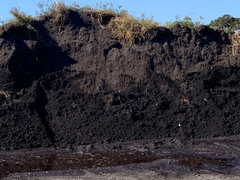
Original Author5 years agoI checked out the local compost today, attaching a photo. I see weeds and stuff growing on top. Is that normal for big compost piles?
- 5 years ago
I would attribute the weeds to weed seeds that blew onto the pile. It's also possible that the surface of the pile didn't get hot enough to kill all the seeds. And some seeds just seem to survive. You have to remember that the seeds you see that germinated won't germinate again.
- 5 years ago
Pretty normal, you'd think something wrong with it if nothing grew on it. My own piles often have some stray things growing, too, I have the time to yank them out. That stuff looks great, I'd take as much as I could.
HU-196206895
Original Author5 years agoThanks for all the advice! being a newbie to gardening, you’ve all been so helpful getting me started.
- 5 years ago
Good luck. Man, now that I've looked at that on a bigger screen, if I were in the area, I'd be backing the truck up.
If I had a truck.
 HU-196206895 thanked annpat
- 5 years agolast modified: 5 years ago
Really? That close? No, I am selling my truck, but I got lucky. A 20-year-old girl bought my car and her brother is buying my truck. I never even put them up for sale. Their grandfather walked by when I was cleaning the car and came back the next day with the kids. Really low mileage made the cars attractive.
- 5 years ago
I understand these warnings about "too much compost" and it's hard to disagree in one sense ("too much" is bad by definition), but after reading around some, I wonder how practical it is in terms of advice.
Sure, there are specific circumstances - raised beds (where sometimes may be filled with primarily compost), for example. But overall it seems to me the amounts involved for normal garden usage would just be gargantuan and/or application over very long periods of time and/or amending with manure and also fertilizing. And the warning "do not fertilize" not really the same as saying modest amounts of top dressing compost wont' be okay.
The cases referred to seem to be really heavy and large amounts of compost and manure - and not specified, quite possibly with additional fertilizer as well (organic or chemical).
Again, I'm not saying it's not possible to apply 'too much compost' - of course it is - but when I do some basic math on amounts involved both for topdressing/mulch and some percentage of organic matter in soil below, even before accounting for decomposition of OM over time, it just becomes unbelievable amounts. (I was thinking about including some math here but perhaps not useful).
Now of course my specifics may be very different from others - cold climate but compost added seems to degrade quite quickly, my compost mostly leaves so not that heavy on macronutrients, soil tending to clay and fairly compacted, lots of trees on property, I don't bring in that much extra compost from outside my property (just opportunistically from time to time, tending more to wood chips and not manure), and I don't think soil was amended (at all) before I moved here. When I do apply compost degrades quite quickly and I'm not digging in huge amounts, and applying over fairly large area, and I mostly compost further what I do bring in, minimal fertilizer or manure application.
Again, I fully take the point that it is possible to overdo it, and that some macronutrients (K and P) will tend to build up over time. Soil tests a good idea to be sure not overdoing it. Heavy application of manure and additional nutrients/fertilizer will exacerbate. Lots and lots of compost year over year - yes, you can overdo it. "Manufactured soil" on new builds may have a lot of organic material in it already because that's how they make it (and make it affordable). And sure, people newly into composting may add a lot esp if they think they're correcting poor soil to begin with. There probably are cases of people bringing in enormous amounts (corrected for yard/garden size), but how many?
But once those caveats taken into account, it seems to me I'd have to import such huge amounts, year over year, incorporate into beds and then just keep adding continuously, that it's just not a practical warning. For my desired area of application (not that large but not just garden beds), we're talking dozens and dozens of 'extra' cubic yards I'd need to bring in, probably over multiple years, before it could remotely become an issue.
But again, I'm mostly just applying what we generate onsite, after composting, and as mulch most of the time.
[Hope I'm not starting a polemic here, I just think the warnings of 'too much compost' or too much organic matter not practical in a lot of cases. Of course, too much is possible.]
HU-196206895 thanked armoured - 5 years ago
Re: Too Much Compost
I think your point about raised beds is a good one - a lot of people put in raised beds, but then are confused about what soil should be in them. And if they just dump in compost and manure that will definitely be a problem. (It doesn't help that big box stores sell bags of "garden soil" that are really nothing else but partially composted sawdust and wood scraps.)
When figuring out if something is good or bad, one of the things my mind goes back to is the way nature replenishes itself on the forest floor - a mature and stable ecosystem. In the forest there is a constant supply of fresh mulch that slowly degrades into compost, and finally humus. At every step in the process it is supporting different colonies of insects, animals, fungus and bacteria.
Of course, different plants thrive in different stages of succession - so part of the key is finding what plants need what natural environment. Mature perennials often love the damp, heavily mulched, acidic forest-like environment. While grasses and annuals (and most vegetables) prefer the loamy, more mineral, less acidic open meadow soil structure.HU-196206895 thanked Richard Brennan - 5 years ago
Good point that different plants need different soils. Esp for eg seedlings I should think, there are different needs.
- 5 years ago
start with the free stuff, add more to it as you go.
good gardening soil takes a lot of time and effort to get it there. start with something that is available to you for free or low cost and go from there.  5 years ago
PU-LEASE do not drive to the nursery and believe you are getting TRU TOPSOIL. Topsoil is the top 4 to 5 inches of our ancient earth. You can imagine how expensive it would be if sold!
What you’re buying at the nursery is pine bark mixed w some kind of soil to make it fluffy so those baby roots can grow and not be fighting getting through clay.
Its intended use t mixed up with your existing soil (no matter how crappy) and sand and compost and a good BALANCED fertilizer.
When you go to get it, REMEMBER to bring your bed measurements. They will ask you for them.
When you go to get the sand compostand BALANCED FERT. someone will ask you again for your measurements and what you are going to plant. Your answer should be: 1. SHRUBS 2. FLOWERS and 3. SMALL TREES/
OR: VEGETABLES/ OR: ALL OF THE ABOVE.
Best of luck! :)HU-196206895 thanked Rachel Williams 5 years ago
Couple of observations :-)
"True" topsoil is sold all the time. Virtually every new development starts by the developers scraping off the existing topsoil during a preliminary grading process and selling it. It is a small but considered impact in their profit margin.
Sand is rarely ever recommended as a soil additive. You would need to add it in huge quantities for it to make any sort of impact on soil texture. And less than optimum amounts can often have a very negative impact, turning a clay based soil into something akin to concrete.
Whether or not one needs to add any fertilizer will depend on the nutrient analysis of the soil. It is never a forgone conclusion. Test first, then add only what is needed.
- 5 years ago
When u can Ide love to know your location. Mine is coastal Louisiana. Less than 1 hour from from the Beautiful Gulf of Mexico and we are 2 miles from the Mississippi River, one hour from New Orleans in Baton Rouge. My house is 4 feet off the ground, and we put sand in everything but our food.
In Baton Rouge developers scrape the surface of the ground with no regard for top soil. The soil just gets mixed up with what ever sub soil is there in an effort to build the soil up and level it so as to get excellent drainage; down here, "we gotta drain", BIGTIME! And FAST!
I agree about the soil test, but most young homeowners here know nothing about soil additives and could care less. I didn't want to dump too much on the person since he sounded like he was starting out. Thats why I emphasized a balanced fert.
A load of just what he should need "Filler" to get the beds fluffed up (we use chopped up Pine tree bark) with the correct amount of sand to get the water to drain depending on his soil structure, with a good healthy (recommended) portion of compost and a Good Brand of Balanced Fert. and he should be on his way. TMI is a real ENTHUSIASM KILLER! He'll learn, just like we did, by reading and asking questions and getting help from professionals and family and having fun along the way.
Many thanks for your comments and I would still love to know your location so we can talk more.
All the best, Rachel Williams - 5 years ago
I used to own a large parcel of land here in suburban Pittsburgh. I sold it to a developer after they reassessed it. I had a large pile of rich black loam, maybe 10 or 20 yards and a much larger pile of soil that had a higher level of clay; still nice garden soil. I tried to sell it; but since it wasn't shredded they weren't interested. What they do sell is a very nice shredded clay/sand mix.
I was still living on the property when the crew came to clear the trees. They spread the top soil and pushed it a couple feet into the clay with the huge equipment.
Real top soil used to be called "farmers topsoil"
Myself I would avoid any commercial topsoil or "mulch". Ask yourself where the mulch from the sewage plant goes???? Use google; find a horse boarder in your town, They're everywhere, I know, I googled the term with NYC. Run a test for problems with herbicides by sprouting some seeds, maybe in a damp paper towel. I've been using manure from the same barn for going on 30 years.
- 5 years ago
"Ask yourself where the mulch from the sewage plant goes????"
Not into commercial compost operations !! Or even mom and pop ones. Biosolids can and often are sold for garden purposes but they are very highly regulated and must be labeled as such for any home usage.
btw, there is absolutely nothing wrong with using biosolids in your garden or on your lawn unless you are going for organic certification. Locally there is a very large distributor of a biosolids product known as Tagro which has excellent ratings and is very much in demand.
- 5 years ago
Regarding where you get horse manure: what a grand idea!!!!! Thanks for the heads up :)
- 5 years ago
Keep in mind that manure from pastured horses can be very weedy unless hot composted. Another alternative is dairy cow manure. Because of a much more complicated digestive system, cow manure tends to be very weed free. But ALL manures should be well aged if not composted before application to any vegetable garden.
- 5 years ago
Thanks so much. Just figured IDE “deal” with the weeds (my garden consists of 2 /4 x 8 x 3 raised beds)
but we have a dairy in Baton Rouge,
will call them on Monday :)
tks rachel
- 5 years ago
The barn I get my manure from has a steep slope next to the barn which is where they dump their manure. So if I use the bottom of the pile it is VERY composted. Anyone who would complain about the few weeds that grow is just looking for problems. It always amazes me how some will recommend the same product in a bag or even human manure but find a problem with a wonderful organic solution to a shortage of compost.
- 5 years ago
I wouldn't say that the comment on horse manure was phrased as a problem. All types of compost and mulch have plusses and minuses. The comment simply noted that there are other alternatives (if for example one has an issue with weeds).
One advantage of horse manure is that it comes in an almost-ideal C:N ratio for hot composting (in my experience), cow manure seems to need bulking up/mixing with other stuff.
But in all cases can depend on farm-specific conditions and if you come across a pile like the one you describe, sounds perfect.
- 5 years ago
Armoured - I would say that for gardeners the biggest advantage of horse manure is that's available to most any gardener close to where they live. And also the folks who have cow manure are very likely to use it for their own purposes. From my experience the people boarding horses thank you for helping them reduce the size of the pile.
- 5 years ago
"I would say that for gardeners the biggest advantage of horse manure is that's available to most any gardener close to where they live. And also the folks who have cow manure are very likely to use it for their own purposes."
These are some personal assumptions that are not easily validated. There are many, many gardeners that are far removed from horse boarding facilities or even pastured horses. Same for dairy cows. But cow manure is routinely sold processed and bagged. I've yet to see any soil or soil amendment supplier sell horse manures, either in bulk or bagged.
None of these products is necessarily better or worse than the other. As armoured stated, they all have their pros and cons. I lean most heavily to yard waste compost and where I live, that is readily available from dozens of sources, easily accessible from even very urban locations. Some is even certified organic. Because the input is so varied, it offers a much broader range of nutrients than do any types of manures and very few drawbacks. But none of these products are applied as a major source of nutrients because they are not. Their nutrient load is uniformly very low, which is why they are considered to be amendments, not fertilizers.
Just pick what is readily available to you and easily affordable, if not free. They will all offer relatively similar attributes and any source of composted OM is better than none at all.
- 5 years ago
"...it offers a much broader range of nutrients than do any types of manures and very few drawbacks. But none of these products are applied as a major source of nutrients because they are not. Their nutrient load is uniformly very low, which is why they are considered to be amendments, not fertilizers."
For two years I have been converting a 34 X 65' plot of what was a 70+ year old lawn to a vegetable garden along with some young fruit trees. The soil is raw clay with maybe a 1/2" to an inch of sod on top. I have improved the soil with mushroom and horse manure, some lime, a little wood ash and a tiny amount of bone meal on tomato plants the first year. I've grown much of our potatoes, tomatoes and many other vegies in that plot. I didn't use a bit of and have never used any bagged fertilizers.If you would simply try a test plot using manure you might learn some real gardening truths and stop spreading your lies. Mankind has been farming for centuries using manure and compost as their source of nutrients. Some still do among them the Amish and Pennsylvania Dutch. I'm not getting paid to promote the use of free manure or compost. Compost is wonderful, but if you decide to increase your gardening space you won't have the compost to improve your new soil. Most gardeners will need a jump start.
In the WSU link posted near the top of this thread it states:
"The dubious practice of amending soil areas destined for permanent landscape installations has been discussed in this column on other occasions. To summarize briefly, the problem with this practice is that within 10 years (conservatively) the organic amendment will have decomposed; one is then left with the original soil, which will have subsided and compacted during this time."
My 70 year old lawn needs some improvement; or amendment if you wish. My results show that 3 inches of manure mixed into the clay will grow wonderful lush plants with fruits and vegetables that you'll be proud of. The manure I use is all that is needed, it's an amendment with all the nutrients you'd need to grow a year or more of your crops.
- 5 years agolast modified: 5 years ago
"If you would simply try a test plot using manure you might learn some real gardening truths and stop spreading your lies"
That is an unnecessarily rude and inflammatory statement!! Not to mention incorrect! Just exactly what have I (or others) said here that could be considered lies?
@John D Zn6a PIT Pa, I have no idea what your credentials are - if any - but I'd suggest you calm down and stop taking any comments or opinions that disagree with yours quite so personally. If you bothered to do any research at all, you would see that everything I have stated in this thread (and the many others of the same ilk I have responded to) are completely factual!
- 5 years ago
NPK values from the link in the above post:
Average Home Made Compost NPK 0.5 0.27 0.81Horse Manure.................................NPK- 0.7 0.3 0.6
I find those surprisingly similar. To compare NPK values you need to compare them with a method that considers the weight. If I use a few fingers full of a bagged commercial fertilizers and you use a spade full of horse manure we may be applying the same amount of NPK. However you are amending your soil and I am not.
From a different source I obtained the following:uncomposted horse manure NPK 1.5 - 1.4 - 1.75 I have to point out that the numbers there are different for horse manure. I post it here because it's always stated that if you use uncomposted manure you may burn your crop. My question is; if horse manure is so low in nutrients; how is it we burn our crops.
i also want to post a warning. I stated above that i add 3 inches of horse manure to raw clay. If you add that much to a rich black loam you WILL get very tall tomato plants as an example. I've gotten 14 foot tall beefsteak tomato plants; but they did have a normal amount of fruits per plant. - 5 years ago
That was one of the most conservative links I could find to post just so there were no shenanigans with "your link is wrong and the actual NPK is much lower!" It kept me from having to post yet another stupid nitpick to confound.
I've played this game with some posters before, would be the takeaway point here. Quite apart from qualification claims, some of us actually do have some minor chops as a chemist (even if we did get it in the gutter while doing awful things to achieve them, horrible things that we don't want to talk about, but remember fondly). Some do not.
There's a vast difference between soluble and insoluble nutrients as well, and even insoluble nutrients will vary by how easily accessible they are with biological processing. Manures will tend to have more readily available forms, while compost has nitrogen sources that are more firmly bound and much harder to access. Everything that was easy to process is gone.So there is far more than a simple difference between 0.5 and 0.7, it's the difference between the solubility and availability of nutrients as well. Manure has a high level of solubility and availability.
It's also the reason why soybean (6%-7% nitrogen equivalent) doesn't burn the lawn in normal amounts, but blood meal (12%-13% nitrogen equivalent) is touchy stuff under any circumstances. Blood processes very fast, whereas soybean is protein-based and takes ages to process down to available nitrogen. You have to pour it on so heavily the grass smothers or dies from a fungal infection to do damage.
And feather meal (12% nitrogen) won't burn no matter what you do. It's so slow it takes months. It won't do damage
Do I believe your tomatoes got huge? Yep! My flowers are enormous just from soybean meal and Milorganite (composted human feces). Potted plants, in the gardens, everything does beautifully just from that. At the end, it's all just a nitrogen source, and half of mine never went through the animal. The other half, the animal was just a human being, then a few thousand bacterial generations to render it safe to use. - 5 years ago
I've mostly heard the warning about manure "burning" sensitive plants referring to fresh cow manure. Cow manure doesn't have as much of the undigested carbon-stuff in it, and some farms use little bedding and urine content may also be high (ammonia smell so pretty easy to tell); composting deals with that. Horse manure: digestive system works different and manure (when I've used it) mixed with bedding (which will counteract the urine), so much less of an issue. I think I've heard similar warnings about poultry waste but no personal experience.
Don't really understand what dispute here is - organic material additions usually helpful, add what you can get. Volume matters, so what you can get free/cheap helps. Sure, manure's good; it does have more nutrients than many other amendments. All mulches/amendments have advantages and disadvantages.
Personally I reckon the differences exaggerated between them all. But arguments on the internet proceed from small differences.
- 5 years ago
Hi armoured. It’s Rachel here. Being nosey; what state and location do u garden in. I’ve been chatting w 1 person from coastal Georgia, 1 from Pa.
Im in coastal La., Baton Rouge. How about you??? FYI no argument here
just chatting, wishing I had listened a littl better in high school chemistry class.
bye now-
- 5 years agolast modified: 5 years ago
Edited to clarify: This is more in response to Armored's post above. /Edited
Really, any manure is capable of burning plants if applied in too heavy a layer and depending on its provenance. (Humanure, of course, really shouldn't be used without special processing so I'm just going to exempt it from the argument out of hand).Diet, where the animal went, how fast it was collected and deposited, rainfall, if any, they all count. For collected and shipped manures, they're carefully moderated and maintained to give a balanced, measured product that can be confidently labeled. But even then, the labels sometimes change in percentages of available nutrients.
Stuff you buy from Farmer Brown down the road is a lot more loosey-goosey, so to speak, and you risk everything up to and including pathogens.
But the difference between compost and manure is very, very clear and not at all in dispute; compost has been processed until it contains nothing in the way of "hot" nitrogen--freely available nitrogen compounds. There are, in fact, nothing in the way of free sugars or easily-accessed carbon compounds, either. Nutrients are only very slowly available and, often, only in smaller amounts. They've already leached out during the pile aging process in rainfall.
Manure has both easily accessible and would, in sufficient layers, begin to self-compost. In thin layers of bits and pieces, rainfall leaches water-soluble nutrients out of it and into the soil where, after some minor biological processing (if necessary), plants can access them very quickly.
Less easily accessed nutrients take a bit longer and require bacterial and fungal processes. Essentially, the manure undergoes an in situ composting process slowly over time, releasing those nutrients into the soil at that locale.
That's the same reason many of us feed organically with grains. It...avoids the issues with manures, which many of us object to in residential areas.
Compost is grand. But it's not manure, and it's not feeding with grains. There's a big difference between them and differences between manure and grain feedings, even though the similarities between the latter two are considerable.
The erroneous statement in question was, "But none of these products are applied as a major source of nutrients because they are not."
That is untrue, as easily proven by the fields in my locale who use manure every year to fertilize. While I'm sure the cry of "Anecdotal!" would be heard across the land, a bit of Google research would cure that one, showing its effective use back 8,000 years.
"But that's only indirect evidence!"
I'll wait while you go argue with a doctor in archaobotany. I'll make the popcorn.
- 5 years ago
That was in response to Armored's post as we've discussed the like before. I've clarified that point with an ETA/ETA. There are a lot of basic chemistry courses available free or cheap online if you're interested, though none of them will cover anything like the above. Biochemistry is something most people find difficult, but something you might work into over time.
Regrettably, most people discussing the subject matter at hand simply don't have a background in either--even casually--and will mistake a percentage of nitrogen as an equivalency without understanding the different nature of the nitrogen chemistry. It usually isn't even that simple on a bag of synthetic nitrogen.
- 5 years ago
I'm pleased you're happy to be educated. I certainly receive many nice personal messages thanking me for my efforts.
- 5 years ago
I took some pictures today of the soil in my new garden. it's two years old.
The first picture is from a plot that was amended in the fall of 2018 and I planted potatoes here in 2019. In 2020 I grew garlic, beets, kohlrabbi, carrots, lettuce, and cabbage here.
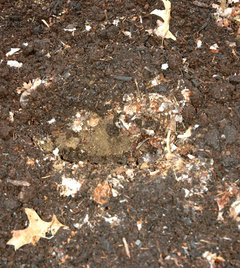
The 2nd is a plot that I dug up late in 2020. Late June or early July. I set out a Dester beefsteak tomato here on July 6 as a part of my experiments on getting nice crops of large delicious tomatoes late in the fall.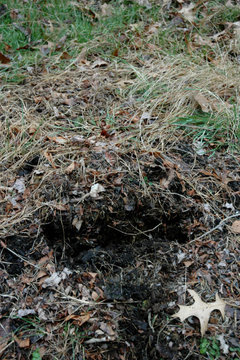
As you can see it's a little weedy, but the weeds are what I think is Bermuda grass which has overrun the neighborhood after a neighbor seeded his new lawn with big box seed. I don't see any weeds that you might find in manure.
The last picture is from the path thru the center of the garden. It gives you an idea of the soil I started with.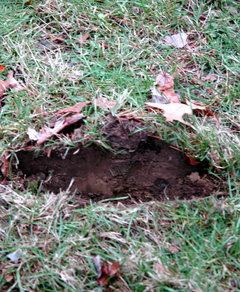
I don't side dress with nutrients from any source during the growing season. I'd also like to warn that if you amend your clay with the 3" of manure and add any fertilizer that you risk burning your crops. When I add some manure to a garden that I've been planting in I amend with maybe an inch of manure either mushroom compost or horse manure.If I'm planting root crops or a leafy crop such as lettuce or spinach then I'll amend the soil with manures the previous year. Fall of the previous year at the latest.
- 5 years agolast modified: 5 years ago
I am sooo confused here. Somewhere someone went off track and stopped trying to help the poster’s question. I think that the last help was given by Richard and the rest was some disagreement between folks; I think. Lol. Please be nice and as the old saying goes if you can’t say something nice don’t say anything at all. People will always disagree so just please agree to disagree. 😉
- 5 years ago
It's not a matter of opinion, it's a matter of factual information versus things that can, at best, be called "non-factual." A momentary perusal of links provided should be sufficient to a duly open mind.
Conversations do frequently drift, of course. As far as the rest, thank you for your opinion, of course. And naturally, if one couldn't say anything nice and had to descend to an pointless admonition...one was probably better off not saying anything at all. But of course, we can just agree to disagree on that, now can't we? 😉
- 5 years ago
A few quick points:
-I'm certainly not denying manure is used to fertilize because higher nutrient content than some other things. (As someone who's actually operated a manure spreader and mucked out cow barns, last thing I'd deny).-I've pretty much only noted that manure can vary a lot - not only type but batch to batch and how long it's been laying out ('composting' if you want to call it that, or just aged manure). Obviously compared to more concentrated fertilizers, you need to put more manure on (same with compost). Manure and compost both have added advantage of lots more organic matter compared to synthetic fertilizers, which is a good thing in and of itself.
-Regarding 'burning', I also don't deny any manure has the potential to burn. I only said that in my experience, horse manure has less potential to do so - although will also vary. (Again in my experience - because horses don't digest cellulose parts of plants much - different digestive system than cows - and often has more roughage, and the bedding with it often less urine-soaked. YMMV) All manure has to be applied with common sense.
-Some people have strong opinions about whether the nutrient content of manure is 'high', 'low' (obviously in comparison to other things like compost, but compost varies even more than manure). There's sometimes discussion of whether manure/compost can be called fertilizer - which I gather is driven at least partly by govt regulations on whether it can be sold as a fertilizer / needs precise NPK and other values (expensive testing often impractical for selling manure). I mostly don't care about those arguments at all.-I don't think I'm pro or anti-manure at all. I'm pro "add organic matter, it's usually good for soil." Since volume matters, I'm also pro "go with what you can get cheap, convenviently and in volume." Common sense must be applied too; if you're amending some really poor neglected soil, you'll need more, less if you start with good healthy soil.
-Everyone's soil and climate is different; if someone tells us what they do works great for them, I'm not going to argue.
-Probably the only caution I have is at the margin: adding concentrated or expensive or inconvenient fertilizers unless certain (pref by means of soil test) that your soil needs it. Again, common sense here. Some gardeners know from experience what their crops need. Others think they 'need' specific additives or manure or 'grade A topsoil' (which isn't really a thing) or whatever, and they may well not.
- 5 years ago
i try to aim my comments to a person new to gardening or perhaps someone who wants to tackle a new, to them, project. If you have compost use it! If you don't have enough consider some manure. I've never had manure burn crops. I got 14 inch tall tomato plants one year, but they produced the same amount of tomatoes which as usual was too much. I put 2 inches of FRESH horse manure on the 2nd batch of corn in the same plot in the same year; It didn't burn.
In my opinion you'll get good crops of veggies if you use an inch of manure instead of the 3 inches I recommend, you won't improve your soil as much; that's all! So if you have access to chicken manure use it maybe use a little less. If you have raw clay as I do in my new plots more than 3 inches of well composted manure will be fine; to a point.
This isn't rocket science; it's gardening; manure is flexible it doesn't release all it's nutrients at once.
Find a source of manure, make sure you can get back out before you go in, pick the oldest manure you can find. At the bottom of a pile on a slope or away from the outer edges of a pile on level ground. Or order mushroom compost, or buy a bag.


Richard Brennan