Software
Houzz Logo Print
webuser_909268349

Japanese maple sprouts

5 years ago
last modified: 5 years ago
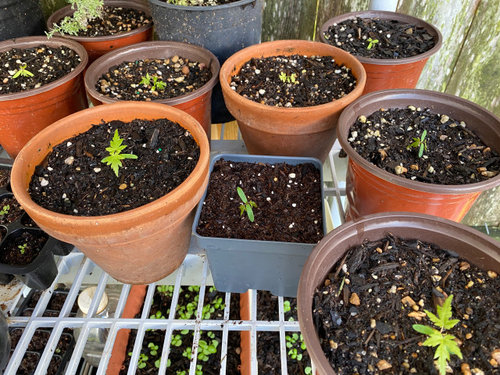
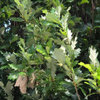
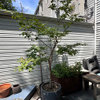
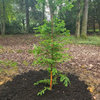
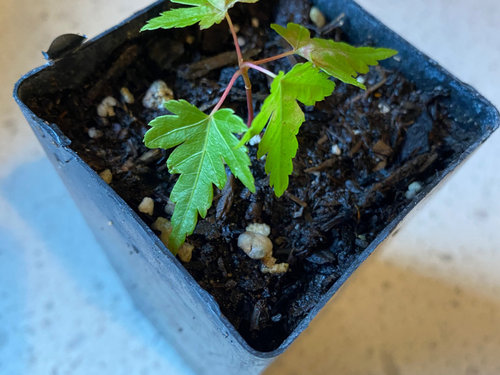
I bought some green leaf Japanese maple seeds at the end of the summer.. Started to stratify but about 3 weeks later threw them outside in some pots. They have been germinating over the past couple months at different rates. Some are getting bigger and some are just starting to sprout


now. My question is what do I do with these since it will start getting in 30s this week? Do I bring them inside and put a light over them? Do I leave them outside? Will the cold temperatures kill them since most don’t have roots yet? Wasnt sure what to do with them since they sprouted in fall instead of spring. Want to make sure they survive. Thank you.

Comments (19)

  • 5 years ago

    Yep. If they were mine I would bring them in and keep them under lights.

    They might or might not survive your outdoor winter temps. I wouldn't chance it since they're so young. Next winter they'll probably be fine outdoors.

  • 5 years ago

    Yes, bring them in. Japanese maple roots are rather sensitive to cold and even fairly mature container planted JM's can be fatally damaged at temperatures below 25F if sustained for very long. Seedlings won't have a chance.

  • 5 years ago

    Thank you both for your replies. I appreciate it. I will bring them inside for now

  • 5 years ago

    answers might be a bit better.. if we knew where you are ... big city name ...


    and if we knew with any specificity what JMs they actually are .. some are much more cold tolerant than others ....


    but then.. you just got random seeds.. so we probably wont know which they are.. with any certitude ...


    ken

  • 5 years ago
    last modified: 5 years ago
    The root tolerance to cold for containerized Japanese maples does not change with cultivar. ANY containerized JM can be irreparably damaged below 25F for more than a few hours and any lower than that, they are pretty much guaranteed to be toast.

    Planted in the ground is a different matter entirely.

  • 5 years ago

    btw, seed grown JM's will always just be representative of the straight species Acer palmatum regardless of their source. So we can know with certitude what you are growing :-) Any named forms are grafted, usually to straight A. p. rootstock so no increased root hardiness even from that source.

  • 5 years ago

    I am in Houston. And they are green leaf maples. Might be from trees that resemble coral bark.

  • 5 years ago

    Doesn't really matter what kind of Japanese maple you obtained the seeds from. Any seed grown JM will just be an example of straight Acer palmatum. Appearance of the seedlings can be very variable but all still considered just species trees.

  • 5 years ago
    last modified: 5 years ago

    Actually seedings of distinctive named forms such as 'Sango-kaku' can resemble the parent tree to a fairly high degree. For instance a friend with a mail order nursery once collected and planted seeds of a coral bark maple and got numbers of seedlings with red bark and similar leaves to the cultivar. Likewise I have seen purple seedlings coming up beneath a purple leaved Japanese maple. (Same thing happens with purple forms of Norway maple, blue or yellow forms of Lawson cypress and so on). Such offspring sharing all or part of the variant characteristics of the cultivar generating the seeds will also not fit the profile of the original wild species.

  • 5 years ago

    They can bear a strong resemblance to the parent tree......but they don't always. Red leafed maples can generate green leafed seedlings as well as red ones and colored bark JM's can produce offspring that lack that attribute. What the seedlings look like has no bearing on their status. Seed grown JM's are all considered to be no-name forms of just Acer palmatum whether they resemble the wild species or not.

    Most of the named forms/cultivars that are now available for sale originated as random seedlings with attributes unique from their parent(s) that were developed and encouraged and then propagated clonally to retain those attributes or unique characteristics.

  • 5 years ago

    Your previous statement was that

    Any seed grown JM will just be an example of straight Acer palmatum

    My subsequent statement was

    seedings of distinctive named forms such as 'Sango-kaku' can resemble the parent tree to a fairly high degree

    and not that they

    always

    do.


  • 5 years ago

    I didn't mean morphologically........I meant taxonomically.

  • 5 years ago

    It's a fun case where you're both right. They look kind of like their parent, but don't class as the named cultivar and, if you sequenced the genome of the daughter plants, they don't carry the sequences that would classify them closely enough to the definition of the cultivar's to be called such.

    At least usually. There's always some room for cases where siblings look so much alike they might as well be twins, or for a mother and daughter who might be sisters twenty years apart.

    They may look like it, at least to some or a great extent, but they're not that close.

    Morphologically (part of my name, after all), they resemble their parent to some level.

    But their classification wouldn't be the same.


    It happens all the time in my gardens; I either intentionally cross or open-cross ageratum, Salvia farinacea, Salvia splendens and half a dozen other things. The ageratum still looks the same, but stopped being Aloha Blue fifteen years ago on the first crossbreed. The blue salvia also looks the same, but the cultivar fell apart. The red salvia doesn't look the same at all, it keeps drifting one way or another as I push it.

  • 5 years ago

    A red barked, purple etc. Japanese maple seedling doesn't fit the parent species taxonomically because it does not match it morphologically. This is why differentiating botanical designations like var. atropurpureum and var. dissectum exist within the total concept of Acer palmatum - a variant type like a purple Japanese maple or a lace leaf maple is not an example of the typical species.

  • 5 years ago

    Most growers of JM's from seed do not care either what kind of maple they may have....they just enjoy the process. There are some unscrupulous or unknowing souls that try to sell named seedlings online or in person, but they tend to be a small minority.

    Just keep your potted seedlings out of cold winter weather - would not risk the outdoors - and they should be fine.

    And god save us all from pedants!!

  • 5 years ago

    That's saying an auburn-haired person, redhead and a blond don't fit the species taxonomically because they don't match the average morphologically. Certainly we (myself being auburn-haired) do. We can all back-breed into the general human species at will with no problems. Taxonomically, we're all human and part of the greater Homo sapiens.


    Eugenics is distasteful at best, but if somebody wished to isolate the blonds in a place (let's call it Sweden) and breed them into a...let's call it country and people to keep this from being really distasteful...called the Swedish...for a while, they'd be blond. It's just a characteristic.

    Then a few centuries of various distasteful activities later (not everybody's going to be blond, after all, as things aren't that simple and people aren't plants), the experiment gets discovered and we stop it because yuck, allowing these people to re-enter the world and marry whoever the heck they want.

    They have no trouble breeding because they were, at the heart of it all, never anything other than Homo sapiens. Just blond because somebody thought it was "better."


    Cultivar is a human concept. It's nice, but the plant doesn't really care (heck, species is a human concept; see "mule" and "liger" and "human" since I contain 2.7% Neandertal genes; I haven't been tested for Denisovian).

    It does happen that plants can generate a new species (a la zinnia in the 1970's), but that's a speciation event, not just cultivars.


    So if you're stating that there's a specific definition of the parent species that, quite literally, specifies bark color? That would be overly specific. It's literally only a group of individuals capable of exchanging genes and interbreeding, and that generally live close enough to do so (although extended ranges are allowed via gene transfer over time or limited drift).

    Hence the reason why lions and tigers are not the same species; plus the above definition is a tad oversimplified for quick work, of course, as I don't have all day. Consequently, concepts like ring species and the albatross aren't covered.

  • 5 years ago

    "I just wanted to know if they needed to come inside for winter. I could care less what brand name they are. Completly irrelevant to the thread. I love my sprouts no matter what they turn out to be and just want them to survive. Sitting on kitchen table now waiting for me to move them somewhere for the winter."


    Regardless of what they are, they're not going to like the cold in pots. :-) Bringing them in was the right idea.

  • 5 years ago

    And people who resort to name calling when their debatable assertions are debated!


    Exactly. Like me, I'm sure, you've determined it's simply an attempt to shut down conversation and declare herself the "winner." Simply report the name-calling to Houzz and move on. It's not worth it and Houzz will take care of her.