Software
Houzz Logo Print
alwayscold

Shower floor tile size question

5 years ago
last modified: 5 years ago

I have a shower being built that will be 3’x5’ and really like a hexagon tile that is 8”x9”, Is that too big of a floor tile? i know that more grout lines give traction so I have some concern the larger tiles means less grout. In the images I’ve seen for large tile shower floors it is typically rectangle tile.

Comments (14)

  • PRO
    5 years ago

    You will need to have the tiles probably cut to work with the slope of the shower floor , that is why you usually see smaller tile in that situation. What is the shower design ? is it a center drain shower or linear. Maybe a bit more info. My guess is it is replacing a tub but I could be wrong.

  • 5 years ago

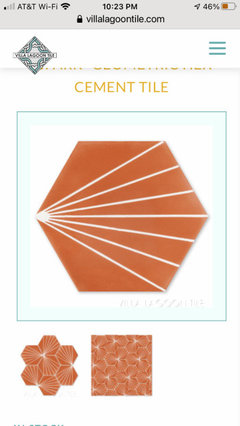
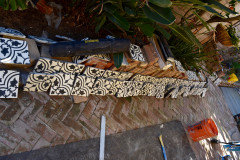
    Combined a closet and bathroom to make 2 separate bathrooms, shower will have a center drain. I do suspect some tile will have to be cut for the slope as you mention. Step in shower with a pony wall. Here is a picture of

    the tile. I wish it were 6x6, these are 8x9.

  • 5 years ago

    those tiles are very matte, even when wet. they'll be fine.

    contact your tile guy to inquire about the slope w/that size.

  • 5 years ago

    @Beth H. : good info on the surface, thank you. Do you think the tile are too big for the space?

  • 5 years ago
    last modified: 5 years ago

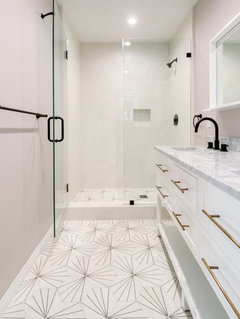
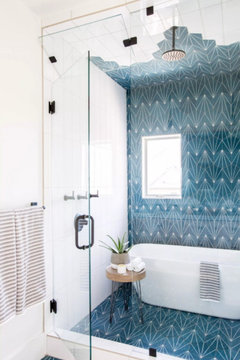
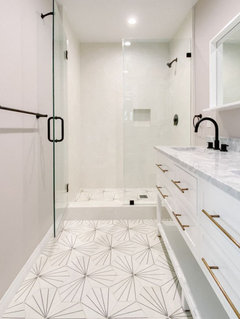
    This looks to be a 3x5 size shower.

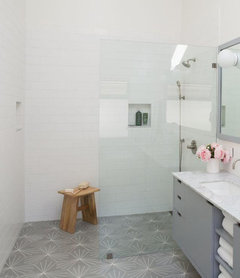
    These cement tiles are 8x9


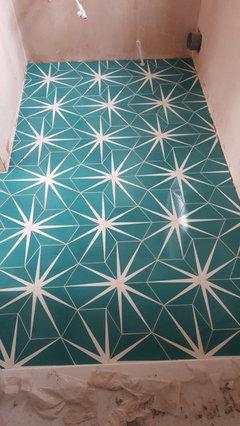
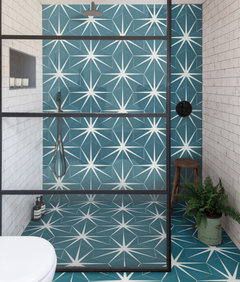
    so are these


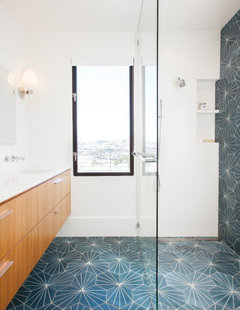
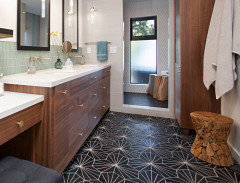
    I love the look of this one. however, they used the penny rounds for the shower floor.


    to answer your question, no, I don't think the tiles are too big.

    if real cement, make sure you seal the crap out of them prior to installation. I have cement tiles in my shower and applied 4 coats of the sealer to them before they went up. (faces only, don't let the sealer drip down the side).

    I set them outside and wiped on the sealer, let it absorb, wipe off excess. waited and applied another coat the following day. I'd squirt them w/the hose. when the water beaded up, they were complete.


    some places like Cle'Tile, seal them from their factory.

    Also, make sure the tile installer knows to dunk them in water before setting them in the mortar. when grouting, don't spread the grout over the tiles like he would when grouting regular tiles. try to keep the grout in the joint lines only, and wipe up excess promptly.

    The grout can stain the tops of the tile. (which is another reason to seal these things prior to install. When water beads up on the top, they're sealed)

    alwayscold thanked Beth H. :
  • 5 years ago

    One way to think of it is to ask yourself if your foot is bigger or smaller than the tile. Grout lines help your foot grip. You may want to add non slip shower strips for better safety.

  • 5 years ago

    Well evidently my asking the planned tile installer about the size being an issue was ignored as he responded with “doesn’t recommend installing cement tiles“ with no other explanation. We are still 3-4 weeks away from the work, but I’m bummed as both bathrooms were getting cement tile shower floors. Why would they be rated for shower floors?

  • 5 years ago

    I've seen articles that say cement tile is too porous for showers and will need frequent sealing, at best. Many tile makers have great porcelain tile that looks like concrete. Check out Daltile website.

  • 5 years ago
    last modified: 5 years ago

    they are rated. it just depends on how the shower floor is constructed. there has to be a slope (1/4" per foot) and w/smaller tiles it can adjust to the slope. w/larger tiles you'll have uneven heights as it slopes towards the drain. get it?

    if you notice in most of those pics, the drains aren't standard and most of them have no curb.

    I don't know how the tile guy did this one w/the drain in the middle. maybe he was really good.


    That's why I asked you to check w/your tile guy. Apparently he isn't very good but he doesn't even give you an answer of how to accomplish it.

    I'd hire someone else that can actually explain things to you.

    why not do the cement tiles on the wall, or the outside floor, and do a smaller tile on the shower floor?


    apple pie, these tiles are already non slip. no need for traction strips.


    cement tiles are no more porous than marble. (their coloring actually comes from marble dust)

    Yes they need to be sealed.

  • 5 years ago

    @User I’m not following your “always saturate with water”. Everything I’ve read was similar to @Beth H. : on cement tiles being no different than marble.

  • 5 years ago

    Once again, cement tile is porous, it is not glazed, it is not fired and it will absorb water and it will stain. Contractors seal it to protect it, but it must be sealed repeatedly and will sometimes stain shortly after sealing. From an article in the New York Times: Ceramic tile usually has a layer of glaze on top and is impervious after being fired at a high temperature in a kiln. Cement tile is cured at room temperature, not fired, and the colored layer on top, usually about an eighth of an inch thick, is porous.

  • 5 years ago

    Re: Marble for shower floor, this is a quote I just found on builddirect.com: "However, as nice as it looks, marble is not always ideal for a shower floor. It’s a delicate porous stone, prone to damage and requiring special care. It is easily scratched and stained. Continuously exposed to soap, water, and oils in a shower, marble flooring can develop a film residue on its surface. To protect the stone and maintain its appearance, you’ve got to commit to spending time and money on a regular basis. You might need to seal it several times a year and can only clean it with products that are deemed safe for it." Most contractors will tell you that the best shower floor tile is a glazed porcelain tile mosaic.

  • 5 years ago
    last modified: 5 years ago

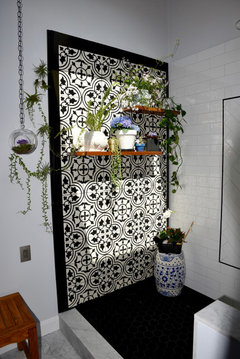
    alwayscold,, I have cement tiles in my shower on the back wall, and a marble tile floor.

    If you are willing to accept that the tiles will not always look 'perfect', and will show imperfections, then get what you like.

    Like I said, I sealed the crap out of my cement tiles prior to install. water beads on top, w/no penetration. It's no different than the marble tile I have on the floor.

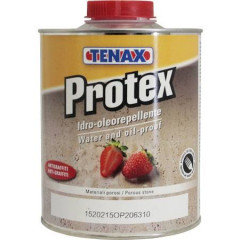
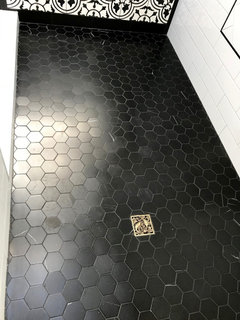
    after install, I used a wrong cleaner and ended up etching my brand new black marble floor tile. (just because something says "green" doesn't mean it's safe for marble!) I called in a marble restoration guy ( these guys can also do your encaustic tiles if need be) and he resurfaced all of that black marble floor. The tiles were honed. After he re-honed them, he applied this sealer.


    It's been 3 years and water still beads up on the tile. there is no absorption, at ALL!

    this was how it looked after he left. The marble isn't perfect. ( the light and dark spots you see is due to the skylight directly above)


    and the wall.


    If you look closely at the tile you'll see a lot of imprecations. that's the way it's supposed to look. it's hand made. my tile has some cracks (some broke during install) , some have some edges that aren't perfect, and you can see where the black grout has bled into the white portion (I was very careful when I grouted these. ) It's just the nature of these tiles


    If you want perfection and something that looks perfect years from now, get a diff type of tile!