Software
Houzz Logo Print
prairiemoon2

Problem with Blue Holly

5 years ago
last modified: 5 years ago

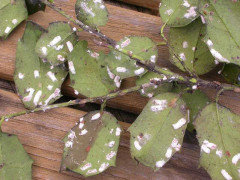
I have a large Male Blue Holly in the foundation planting in the front of my house. It's always been very vigorous and full of flowers. I end up pruning it at least every 2 years just to keep it in bounds. I probably should have kept it at a smaller size. Last year I noticed there was some kind of black soot like material on the foliage on the back. It also had some white bugs on it. I garden organically and I don't know what this is or if there is an organic treatment for it. It really has gotten too large and I thought I would just give it a really hard pruning this season. But I was out there looking at it yesterday and now that black soot on the leaves is even on the front. If it was on the back only, I would have thought maybe it was from not getting any sun. Now I'm thinking that even cutting it back severely might not take care of it. I don't know if there is healthy material deeper in the shrub, that I could cut back to.

Hoping someone here might know what disease this might be or have some experience dealing with it?

Comments (30)

  • 5 years ago

    @prairiemoon2 z6b MA can you take a pic of the white bugs? I may be able to id them.

    prairiemoon2 z6b MA thanked Mars SC Zone 8b Mars
  • 5 years ago
    last modified: 5 years ago

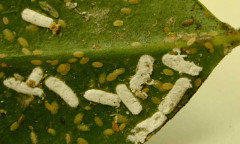
    Mars, they were only on the shrub last year at some point. So I just did a search and this photo from the internet looks close to what I remember they looked like.


    And I wonder if there are two problems, the white bugs and the black soot?

  • 5 years ago
    last modified: 5 years ago

    'Black soot' sounds like sooty mold, a fungal pathogen that grows on the honeydew or excretions of sucking insects like aphids or scale. The sooty mold in itself is not really harmful - unless the infestation is so severe as to interfere with photosynthesis - and can be washed off plant foliage. What is of much greater concern are the insects that are the source of the honeydew. They can be very debilitating to the plant if something like scale. Control the insect problem and the sooty mold will no longer be an issue.

    Provide photos for an ID but I'd bet money on this being a scale infestation!

    ETA: Photos now showing and I win that bet!! That is cottony camellia scale.

    https://hgic.clemson.edu/factsheet/holly-diseases-insect-pests/

    prairiemoon2 z6b MA thanked gardengal48 (PNW Z8/9)
  • 5 years ago

    I think I found my answer at this link....


    Black Sooty Mold


    It's evidently from Scale insects. Thinking that has to be it, just a question of an organic solution. It does recommend wiping off leaves if it's on a few and spraying to get rid of the droppings from the scale insects. But I did that last year and maybe not enough because it does seem worse.

  • 5 years ago
    last modified: 5 years ago

    Ok found the problem.

    You have a whitefly problem. The whiteflies make a mold that looks like black soot that they need to grow. So you need to get rid of the whiteflies somehow.

    They are one problem

  • 5 years ago

    Not whiteflies - scale!!

  • 5 years ago
    last modified: 5 years ago

    I think it has to be scale. I remember they were not flying insects and I've seen whitefly on houseplants. I did another search for organic solutions and it was not encouraging. It suggested you take care of it quickly, which I obviously didn't do. And I remember now, that I saw more of these scale insects on the other side of the foundation on a Taxus which I never had seen before.

    Oh what a mess the Holly is and I and the bees enjoy that shrub every season. And it said that not having enough water or nutrients may have made it vulnerable and it's in an area that is not easy to water and I think I probably wasn't watering it enough.


    It would appear that I have to get rid of the scale.

  • 5 years ago

    Horticultural oils are a standard treatment for scale and are considered an organic control. But the timing of the application is critical.

  • 5 years ago
    last modified: 5 years ago

    Looks like we all got to the same answer at the same time....lol. Well...the black sooty mold evidently is produced by both the white fly and the scale, but, whiteflies do fly and scale doesn't right?

    Here is one reference on organic solutions. It does mention oils...and others.


    Scale Insects

  • 5 years ago

    Y'all are really convinced its a scale.

    Scales don't fly.

  • 5 years ago

    Right. And there is NO question that it is scale!! I encounter all manner of scale species in my role as a consulting horticulturist. And darn near any woody plant is vulnerable and its growing conditions really do not have much bearing on whether or not the plant will contract the issue.

    btw, the camellia scale is often found on yews (Taxus sp.) as well

  • 5 years ago
    last modified: 5 years ago

    Mars, Exactly, they don't fly and these were attached to the leaves and didn't fly. And either way, I think the treatment is going to be the same. The Black Soot is definitely from the bugs, which you pointed out.

  • 5 years ago

    Have either of you had this problem and have experience in dealing with it?


  • 5 years ago

    I hate spraying....even organic. But I guess I have no choice and I have to get to it early. GG do you know the critical time I'm supposed to be doing this?

  • 5 years ago
    last modified: 5 years ago

    So @prairiemoon2 z6b MA you said there were white bugs, which i'm convinced they are whiteflies and y'all say there are scales. What if you have a whitefly and scale problem?

    I'm starting to think that the "whiteflies" are just white splotches caused by the scales.

    Also @gardengal48 (PNW Z8/9) if you have encountered many species of scale, can you tell us what species it is?

    And @prairiemoon2 z6b MA I suggest taking a photo of the scales and posting it on INat.

  • 5 years ago

    prairiemoon, did you even read my posts? Scale is very common and if you have been gardening for any length of time I am surprised you have not encountered it previously!

    I provided several links that describe the pest, its life cycle and control methods but feel free to research 'camellia scale' to find your own solution. Hard but not impossible to control organically and as stated, timing is everything.

  • 5 years ago

    I have never encountered a scale on my plants before. Which is strange because they are common.

  • 5 years ago
    last modified: 5 years ago

    "Also @gardengal48 (PNW Z8/9) if you have encountered many species of scale, can you tell us what species it is?"

    I did.......several times!! Cottony camellia scale, Pulvinaria floccifera.


    ETA: Just an aside and I don't mean to be critical with this comment but I identified the problem and the pest in my first post on this thread. And the article I linked to would have explained treatment options. Sometimes I wonder if anyone bothers to actually read the responses given.......... 😯

  • 5 years ago
    last modified: 5 years ago

    Thank you.

    Yeah its definitely that species.

    I would be very frustrated greatly if i had that scale problem.


  • 5 years ago

    listen.. you admit its too vigorous for its spot... forcing you to beat it back every year or two ...


    and you dont like spraying ... or chemicals ...


    so why not just be done with it.. problem solved ...


    and if you insist on the same type of plant.. find out if there are more resistant varieties ... and if there arent ... just find something else ... that will fit the space ...


    scale is VERY..... VERY .... hard to get rid of ... unless you go full out systemic soil drench ... unless you want to battle with hort oil for a few years running ... and keep in mind.. those ugly leaves arent going to ever look better.. until they fall off ...


    crikey.. just be done with it ...


    ken


    ps: one thing that always interested me was the beauty bush ... with those cool purple berries ... but i suspect it has too much potential in your small space


    https://duckduckgo.com/?q=beauty+bush+berries&t=ffcm&iar=images&iax=images&ia=images


  • 5 years ago
    last modified: 5 years ago

    @ken_adrian Adrian MI cold Z5 if your going to put up a link press the link button.

    @prairiemoon2 z6b MA you should pluck the leaves off the plant.


  • 5 years ago

    "Also some plants like marigolds might repel them."

    Not a chance with scale! And testing has found that marigolds are really inefficient at repelling any pests. Rather, they are more likely to attract pests rather than repel. But scale seems to be an affliction that is mostly restricted to woody plants.

  • 5 years ago
    last modified: 5 years ago

    Oh! So what deflects those scales?! They are almost impossible to destroy!

    @gardengal48 (PNW Z8/9) you really are a plant expert!

  • 5 years ago

    Like most insect issues, you cannot completely prevent, only treat when present.

    And as ken noted, with a severe infestation or on multiple similar plants, removal of the plants may be the best method.

    Or if not diligently organic, just treat the plants with a systemic drench periodically. Systemics tend to be a better control method than spraying.

    Thanks, Mars :-) Yes, a lot of experience and specialized training but still a long way to go to be considered a real expert!

  • 5 years ago
    last modified: 5 years ago

    Wow, did some of you get up on the wrong side of the bed this morning? [g] I posted 5 hours ago, I come back and see these posts and I'm scratching my head.

    GG - Thank you SO much - You are always so quick to answer a question. I SO appreciate it. Information received - Scale - Cottony camellia scale, Pulvinaria floccifera to be specific - Black Sooty Mold - Treatment Horticultural oil. Did I miss anything? Anything else you want to add?

  • 5 years ago

    Dave, thank you for sharing your experience, which tells me that you apparently are not getting rid of it from year to year. And while I might hope that this year would be better than last year, my fear would be leaving it alone and having it travel to other plants.

  • 5 years ago

    Camellia scale is a soft bodied scale so should be easier to treat/control than the armored kinds. Hort oil, neem and even insecticidal soap can make inroads on the problem. Start now and keep on top of it :-)

    prairiemoon2 z6b MA thanked gardengal48 (PNW Z8/9)
  • 5 years ago
    last modified: 5 years ago

    Ken - Thank you - as usual - you always add another dimension to the discussion. And information that fills in the picture more fully.

    Just telling me that Scale is VERY VERY difficult to get rid of, is very important information that I needed to understand. Just what I was looking for.

    I’ve only encountered scale on one other occasion, on a Houseplant a long time ago and I’m reminded that I tossed that plant after reading about how hard it is to get rid of scale and my initial efforts failed. And I’ve been gardening on this same property for 35+ years and not had scale on any of my shrubs before.

    This shrub is not too vigorous for the spot. It fills a purpose. I have a small Cape with a bedroom window that faces the street and this shrub provides welcome screening. And I actually enjoy pruning it. I certainly didn’t have to keep pruning it every couple of years, I could have cut it back and kept it much smaller so I had to prune it less often, but I value the height and width that provide the screen. And it’s been in place for 25 years and healthy until the year before last I noticed a little of the black sooty mold on some back branches and then last year, more of it.

    The Taxus on the other side of the foundation has been there for over 40 years without one pest or disease problem. So, that is unfortunate.

    I also have 4 other blue hollies in the garden. One is the same variety of Blue Holly, but the female version. It’s about 10 ft away from this shrub, but closer to a large Maple and it is very slow growing in that location. The same with the other three. So it has been surprising that this particular shrub has grown so much more than the other 4 that I have. I can only think it is the only one that is planted enough distance away from trees, which is hard to do on my property. And actually, none of them are large enough to have screened my window.

    From the sounds of it, I think I’m going to end up having to remove it. But, is there any chance that I could cut it back by 50% and get rid of it that way? And would the shrub tolerate that in one season? If I prune and treat with H. Oil and/or NEEM and Insecticidal Soap, as GG suggests, is the shrub going to tolerate the pruning and the treatments?

    And no, I would never decide to drench the soil with anything. I’d rather remove the shrub rather than do that.

    The Beauty Bush is deciduous, correct? No, I need an evergreen there and there is a walkway right in front of it, which I didn’t want to end up having berries all over it. Pretty shrub though.

  • 5 years ago

    And I actually enjoy pruning it.


    ==>>> well then.. thats not a reason to get rid of it ... but will you still enjoy doing such in 10 years??? .. always think ahead ... i really wish i did not plant so many things that need pruning.. 20 years ago ... but then.. on 5 acres.. who cares now .. lol ... they arent within a couple hundred feet of the foundation ...


    and no.. reducing the canopy will not solve the problem ... it might slow it down ... but not solve it ...


    if you want ideas on something unique to replace it ... we might need a pic or two ... perhaps after removal ... so we can really see the spot ... [but we can try before removal...]


    ken


Sponsored
Peabody Landscape Group
Average rating: 3.5 out of 5 stars8 Reviews
Franklin County's Reliable Landscape Design & Contracting