Software
Houzz Logo Print
flopsycat1

Totally floored!

5 years ago

We are purchasing a house and want to change the floors before we move all of our furniture in. We initially considered bamboo, but were told by a reputable installer that they’ve had a lot of problems with shrinkage, warping and buckling, even when the material was properly acclimated. I now read that similar problems can occur with hardwoods. Please advise on how much of a concern this should be. Is engineered hardwood less problematic? What is the best way to acclimate the material? The floors will be installed by professionals. Thank you!

Comments (9)

  • 5 years ago

    I am not a flooring expert but in order for you to get real advice, you need to be more specific about where your home is located and type of construction because climate and construction need to be taken into consideration. For example, engineered wood is better in certain climates and slab construction also requires specific type of wood flooring.


    But wood flooring is installed in homes in every type of climate and in all kinds of construction although some conditions require it to be engineered versus regular hardwood.

    flopsycat1 thanked Helen
  • 5 years ago

    The house is in the Los Angeles area. Built in 1924, two story, and meticulously cared for. All updated HVAC. Does that help? Of course we will ask the installers the same questions, but any advice in advance would be appreciated.

  • 5 years ago

    @Helen Thank for your responses. To clarify, the professional said that bamboo could be problematic. Too much internetting led me to question possible problems with hardwood as well. May be just another overthink dilemma.

  • 5 years ago

    Engineered hardwoods are, in *theory, more stable than the solid hardwoods. But that's a big 'in theory'. Engineered hardwoods should be well made, should have several layers. They should be as close to 3/4" thick with a wear layer that is 4mm - 6mm thick.


    The width of the plank is the biggest variation that can bring perfection (narrow planks) or catastrophe (wide planks).


    Acclimation *should happen:

    • In the same rooms they will be installed in.
    • stacked and racked properly
    • when the house HVAC is up and running and controlling the home at the living conditions the homeowners will maintain for 20+ years. The HVAC will do this for nothing less than 10 days PRIOR to the flooring being brought to the site
    • when the flooring pro will be on site to receive the material. S/he will document the time it arrived, weather, humidity (indoors or out) and the state of the material when it is brought into the site.
    • After the flooring pro takes moisture readings of 10% of the subfloor areas (randomized but easily identified so that more readings can be taken later) and 10% of the planks to be installed
    • After the subfloor (assuming plywood subfloor) and the wood are within 3% MC of each other (moisture content)

    This is all from the NWFA Hand book. You are welcome to purchase a copy (maybe find one in a library) for about $750.


    The flooring will ALSO list all of this (and more) on the installation instructions. Once you have chosen a floor, feel free to down load/print of a copy so that you can read it 5-10 times. Yah...sounds excessive but it takes that many 'reads' to understand what is needed. After reading hundreds of them, I can now skim them....to see what they say....but also to see what they DON'T say.


    When you print off your copy, print a second for the flooring contractor. You will hand them a copy that includes the date and your signature showing the installer received the copy.

    flopsycat1 thanked SJ McCarthy
  • 5 years ago

    @SJ McCarthy Thank you for your very comprehensive response! Wow, it seems so much more complicated than just opening up boxes and letting them sit. Your information is helpful....and a little scary.

  • 5 years ago
    last modified: 5 years ago

    Honestly it's not that scary. The trick is to make sure you are using honest and skilled and knowledgeable suppliers and installers. It also helps to do a bit of education so that when you meet with people you can ask intelligent questions.

    If you are using reliable sources, they will do all of that automatically just as I am sure SJ McCarthy does for his clients. The "hard" work is making sure that you hire capable and intelligent people and that you listen to their advice in terms of specific quality - e.g. for engineered wood certain brands would be higher quality or if it is not factory finish then certain suppliers of the wood would be where you would go to select the wood. So at a minimum if you go with engineered wood, understand what the wear layer is and also the durability of the finish.

    I recently did a gut remodel which included installing wood floors everywhere but the bathrooms. I did some research so that I became an *educated* lay person but certainly not a flooring expert. But enough so that I was able to evaluate information and also be more educated in terms of making actual selection of what I used. Consider it like going to the doctor - you would want to have some knowledge so that you can ask your doctor relevant questions and understand responses but ultimately you are relying on their expertise.

    I wasn't physically around to supervise installation of the floors. That is what I hired my great GC for and he hired installers who knew what they were doing. My engineered wood floors were not site finished so there is aesthetics involved in terms of laying the floors - a good installer is going to choose planks so that the length and patterns is most attractive just as a good tile installer will lay out marble tiles so that they work together in terms of mixing the variations.

    It is good to be educated but the most important *education* (at least in my opinion) is making sure that whoever you use for a job is skilled and honest.

    flopsycat1 thanked Helen
  • 5 years ago
    last modified: 5 years ago

    @Helen Thanks again for your insights. Still a little scary, but we are hiring the most skilled and knowledgeable professionals we can find. And since I practiced medicine for over thirty years, I know exactly what to ask my doctor!

  • 5 years ago

    Congrats on the new house!

    This is old information, but years ago I read an article about why bamboo is hit or miss. Basically, only a small section of each stalk is strong enough to be used for flooring. But because the inventory got so so low, some suppliers would cheat and include a bit of the softer parts. It all gets spliced up, so the good product would get mixed in with the bad. Apparently it was difficult to tell what you were getting. Note: this is based off of a memory of something I read a long time ago, so I might be muddling the details there. (Maybe at this point there are companies who managed to build up a reliable reputation on their bamboo sourcing.)

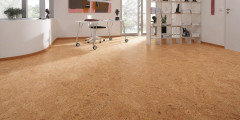
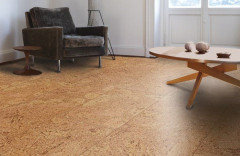
    But bamboo flooring is so sustainable, it would be worth further research. If you want the look of a natural material, one alternative is cork flooring. depending on the style, it can look really cool.


    flopsycat1 thanked User