Software
Houzz Logo Print
heruga

Fertilizing newly germinated tree seedlings?

5 years ago
last modified: 5 years ago
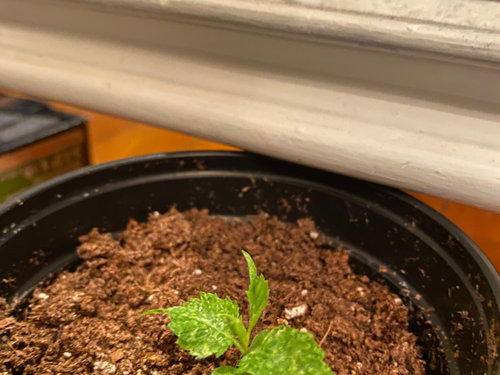
I have a selection of tree seeds that I’ve started already(mostly conifers) and so far the ones that have germinated are larix kaempferi and prunus sargentii.

Bill’s quote ’It's vitally important to start giving your plants a weak solution of a good fertilizer, as soon as the damping off danger is past.’ Would I fertilize before repotting or after?

Also would foliage pro dyna gro be a good choice for them? I use them for my citrus. And how often to fertilize? One last thing I would like to know is at what point can I repot them.


And Bill, does this look like damp off threat is over?


Comments (15)

  • 5 years ago

    The first is getting close to an appropriate size and age to need fertilization but the second batch are still too small. I'd wait until they were at least around 3" tall. Potting up can be done then as well.

    And the Dyna Gro will work perfectly well. I'd apply at the production rate - 1 tsp per gallon of water applied weekly.

  • 5 years ago

    Oh that much would be ok? I’ve been giving 1/2 tsp per 2 gallons for my citrus this whole winter, which I guess I’ve been fertilizing them too less then.

    Also judging by their nature of growing extremely fast, do you think I can plant them in the ground by this fall? Or better to wait until it’s second year

  • 5 years ago

    What you have been using on the citrus is the maintenance rate and is completely appropriate for an already established plant. The production rate is what you want to use on any seedlings or cuttings to supplement their significantly faster rate of growth.

    Can't possibly predict if they will be mature enough for a fall planting! Just too many variables involved. But I doubt I would risk it, even in my much milder climate. IMO, better to grow them on in a pot for a full year before planting out (my preference for direct planting of any woody plant is that it has developed a root system sufficient to fill a nursery 1G container).

  • 5 years ago
    last modified: 5 years ago

    I'd be careful with that Larix.

    'Safe from damping off' generally means, once the plant is producing 'real growth' or 'real leaves', not just cotyledons.

    Once they do become 'safe from damping off', so I feel I can water them again, I use about 1/8 teaspoon of a wide spectrum fertilizer with micronutrients per half gallon of water.

    Conifer seedlings need very little in the way of nutrients and my seed starting mix has minute amounts of certain nutrients already in it. And I've read claims that if small plants aren't given fertilizer right from the get go, they don't respond as well to fertilizer that's given to them later on. I have no idea if that's all truth or not but I've been giving my conifer seedlings the dilute amounts stated above and have had remarkable results in growth.

  • 5 years ago

    The cherry has something "off" happening because it is speckled. Look at it with a magnifier to see if you can see any indications of what is going on.

  • 5 years ago

    I will give the amount gardengal mentioned for my cherry and Bill’s for the larch. But I actually just watered the cherry yesterday so won’t be able to water until next week which means no fertilizer for another week. I’m hoping they don’t go into shock because they received no fertilizer at the beginning. But I’ll wait for the larch.

    Embothrium, yes I just noticed.. will take a look when I get home.

  • 5 years ago

    Lack of fertilization early on won't send them into "shock" :-) They may just not display growth commensurate with their age/stage of development.

  • 5 years ago

    Got it!

    The plants I started last year in nothing but peat and perlite, still grew fine. :-)

  • 5 years ago

    I will keep an eye on them.

    Should I water when the media becomes completely dry or only when it feels dry when you stick your fingers in, even if the lower part is still moist?

  • 5 years ago
    last modified: 5 years ago

    'One last thing I would like to know is at what point can I repot them.'

    I don't know what you have them in now, you didn't say but you won't grow good trees in mix of peat and perlite, I can tell you that. Roots need air as much as they do water & fert but you should know that.

    I'd get them into a good container mix as soon as possible (DO danger is passed).

    I use a 5-1-1 recipe that I screen the bark down to 1/4" maximum diameter. That just makes it easier to repot tiny seedlings into. I've used regular sized 5-1-1 in the past and that works fine too.

  • 5 years ago
    last modified: 5 years ago

    'Should I water when the media becomes completely dry or only when it feels dry when you stick your fingers in, even if the lower part is still moist?'

    Use a 'Tell' to check your pots and only water when they need it.

    https://www.gardenweb.com/discussions/1394855/wooden-skewer-for-testing-moisture#n=21

  • 5 years ago
    last modified: 5 years ago

    Yes I use 5-1-1 for all my container plants and they perform very well in it. But what if their permanent planting site will be in a rather moist spot(before I made a thread about my yard being soggy)? If it’s in a rather heavy media right now, won’t they adapt easier to the wet native soil in ground? Just like how non marshy trees thrive in a swamp because they grew up in such habitat from birth. Just a theory I kinda came up with..

    And no I won’t be planting anywhere near the puddle I posted in my other thread, it’s away from it but my whole yard is rather saturated, being in the lowest spot of the immediate neighborhood.

    Also one other question, would they be ok in temps of low 40 F? Thinking whether I should leave them outside tonight.


    Embo, I couldn’t detect anything on my cherry even with my magnifying glass. And I had my contacts on so my eyesight was perfect at that time.


  • 5 years ago
    last modified: 5 years ago

    I don't know where you got the idea that non marshy trees can thrive in a swamp.

    At least, I don't think they can.

    Larix kaempferi prefers moist, well drained soils, that means you want to match the trees you have with soils/locations that they like to grow. I don't know how you will accomplish doing that, I've only had well drained soils to work with so have no experience with your clay.

    Planting small trees outside the first season can be risky. They're so tender that even a windy day can do them in. I've done this before but am a stickler for over protecting my small trees and even then, there's no guarantee.

    I wouldn't let the plants get too cold, they might go into dormancy after growing for a couple of months in a nice warm house. Once they set resting buds, it's pretty hard to get them going again, at least not this year.

    Remember Heruga, you'll have a lot to figure out with a new yard. A lot to learn too. Do much research and have a plan for the finished product. Making a layout or map of the yard can help you plan. I'm just making suggestions here so do what you want. haha.

    Hope you have success! Keep us updated on things as the season plays out. :-)

  • 5 years ago

    Where I work we have a swamp that is constantly flooded all year round and there are many different species of trees there and I’m sure some are non marsh trees. A self seeded callery pear is also growing in there.

    Well then I can only hope for the best then. There were a couple websites that stated this larix species can tolerate wetness and even standing water so I did have my hopes. The prunus not so I gotta plant it even further away.

    I won’t be planting them out this year, I’ll wait until next spring. And ok thought so. I did the right thing of bringing them back indoors. It just seems to cold for such tiny seedings to stay out.

    Will keep updating, I have a land survey of my property and am currently in the process of designing it.

  • 5 years ago

    i would probably avoid actually putting fert.. even diluted .. on newly emerged babe leaves ... let them harden off to reality ...


    you surely dont want to burn them .. when there are so few ...


    if you had a thousand of them... what the heck .. so what if you kill a few ...


    often.. getting the seed to sprout is the easy part ... the hard part is not screwing it up.. and not killing them afterwards ... dont love them to death ... pampering them too much.. too soon ...


    ken