Software
Houzz Logo Print
srilata_dabbiru

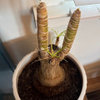
please help - ponytail palm

5 years ago

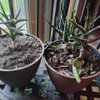
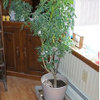
When the soil in the ponytail palm felt wet even after 2 weeks I decided to take it out and place it on the deck since the temperatures rose. It rained heavily a few days ago. But since I haven’t watered the plant at all. It’s been about a week the plant stayed out and the last 2-3 days have been really hot. The deck gets a lot of sun being on the southwest side. I noticed today that the leaves looked parched and dried out. I checked the soil this afternoon and it was completely dry atleast 3 inches in. Did this happen to the plant because of the heat and lack of water? Will it revive if I bring the plant back in? It’s been an indoor plant since we bought it. Any help would be appreciated. Thank you!

Comments (3)

  • 5 years ago

    When intervals between waterings are measured in weeks, there is no denying you're leaving a large measure of potential in terms of growth, vitality, and appearance lying on the table, unrealized. The plant is very tolerant of challenging conditions, so unless the plant has contracted a fungal infection during the recent stressful period it went through, it should recover. The plant prefers a medium you can flood, only to have all or almost all water in the pores between soil particles to drain completely. This is achieved by way of using a coarse medium with little or no peat. Peat fills spaces between large soil particles and invites excess water to remain in the grow medium in defiance of the force of gravity. The plant is not genetically programmed to deal with this treatment.

    It's often said the plant thrives on neglect, which makes no sense. The plant prefers being watered before it dries down completely during active growth, and can be allowed to dry down completely in the darker months (late autumn, winter, early spring), though it's still better to water before it becomes completely dry. The idea the plant thrives on neglect stems from the fact the plant doesn't tolerate soil saturation well. It's reasoned the stress associated with being too dry is less lethal that the root/caudex rot that usually accompanies extended periods of soil saturation, That reasoning encourages you to trade one stress for another, not a good deal when you can avoid both forms of stress and offer your plant a much better opportunity to realize much more of its genetic potential by using an appropriate medium. Example:


    Al

  • 5 years ago

    I am wondering if a houseplant goes from indoors, to outside on a very hot deck exposed to the elements, couldn't that be quite a shocking change for the plant? When I move plants outside for the summer, I try to find them a kind of 'halfway' more shady spot and gradually expose them to full sun.

  • 5 years ago

    Leaves that emerge under low light conditions are often unable to adjust to full sun conditions, even if in situ the plant wants full sun. I wrote/saved something about that:

    Light Acclimatization

    The degree to which a leaf can 'acclimate' to changes in photo load is limited. IOW, you can't expect a leaf that emerged under a full sun light load to acclimate to light levels in a dim corner, any more than you can expect a leaf that emerged in a dim corner to acclimate to a full sun site; this, no matter how long you allow for gradual acclimation. Too, the plant's ability to adapt to higher light loads is greater than its ability to adapt to lesser light loads.

    Using a 1-10 numerical example to illustrate (numerical value of 1 is low light, 10 is high light): If a leaf emerges where the light level is measured at 5 units, it's range of adjustment might only be 3.5 on the low side, but 8 to 8.5 on the high side. When the level of adjustment required is greater than what the plant is genetically programmed to deal with, the leaf is shed. Whenever a new leaf appears it will be perfectly acclimated to whatever the photo load is where the plant is positioned (within the limits of what it is genetically programmed to tolerate).

    A plant, having lived indoors in a fairly constantly temperature range for a long time span (many months), is not in any jeopardy of physiological damage associated with moving it outdoors where temperatures are much higher; but, what the plant is genetically programmed to tolerate is still a limiting factor. If your house was 55* and you moved a plant outdoors to 90* (with a shaded pot) - no problem; unless the plant was a petunia, cyclamen, or other plant whose ability to tolerate heat was limited to temps lower than 90*. Too, the roots are the most sensitive organs, the top (parts above the soil line) of the plant is much more tolerant of heat than its roots.

    When it comes to chilling temperatures, the plant's normal genetic program determines what is too cold or too hot; but it should be noted that sudden drops in temperature (like a cold draft on a winter's day) can cause chill injury. The sudden chill can cause phenolic compounds to leak from intracellular spaces into intercellular spaces, which kills cells/tissue, the damage presenting in similar fashion to freeze damage. This can occur at temperatures as high as 50* if the drop in temperature was sudden.

    Finally, roots of most plants we commonly grow indoors (other than cacti/succulents) are incapable of withstanding root desiccation. As a bonsai practitioner who repots about 300 trees per year, I have a built-in timer that tells me when the roots of whatever tree I'm working on need to be spritzed or dunked in the tub I'm working over. That's not something I worry about when I repot succulents.

    The pigment, chlorophyll, is nature's sunscreen for plants. It protects against the sun's harmful rays and is key in the process of photosynthesis. Since roots do not have this protection, I would expect death of roots exposed to the sun, even for periods as short as 1 hour. Photo-oxidation (sunburn) occurs when the sun's energy excites molecules to abnormal levels. As the molecules return to a normal state, the plant produces an oxidase. In this case the oxidase is H2O2, which many of us recognize as hydrogen peroxide. Once produced, the free O- oxygen radicle attacks (oxidizes) the nearest organic molecule. That is why sunburned plant tissue first looks silver or gray, then turns to brown or black, depending on how much moisture the damaged tissue was holding.

    Al

Sponsored
Hope Restoration & General Contracting
Average rating: 4.7 out of 5 stars35 Reviews
Columbus Design-Build, Kitchen & Bath Remodeling, Historic Renovations