

Average Time to Buy a Home
We've bought close to three dozen homes over the years, so it may have become routine. But I realized I spent ten minutes tops buying our latest. No conditions, no inspections in the hottest market in North America. Up against three other offers in a "blind" auction. Ugh.
I've spent more time deciding on garbage bags from Amazon!
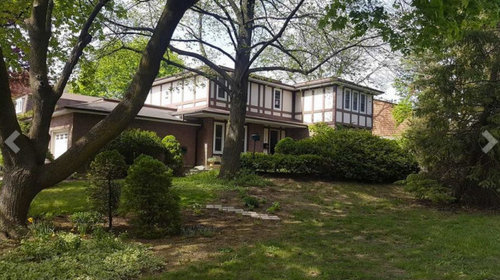
worthy spur of the moment. C$1,581,500
It's a temp while we build a new home. Figured it was cheaper to invest than blow C$4K a month renting, i.e., paying someone else's mortgage.
mrs. worthy couldn't be bothered to see it. Nothing new. worthy daughter and partner approve and will be happy to rent it in the future. (Better yet, gifted as inheritance.)
Comments (28)
 5 years agolast modified: 5 years ago
Beautiful house! Love Tudors. We are real estate investors and have bought many homes over the years, never inspections, rarely any conditions, no attorneys. We know what we are looking at when we see it, what renovations it needs and make a cash offer on the spot. Its worked well for us and has been profitable. We didn’t do that with our primary home since we built it, but have done it with many of our vacation homes (we are on our 4th in 8 years).
worthy thanked Caroline HamiltonRelated Professionals
Gainesville General Contractors · Brunswick General Contractors · Plattsburgh General Contractors · Oxnard General Contractors · Santa Maria General Contractors · Martinsburg Architects & Building Designers · Saint Marys Architects & Building Designers · Pullman Architects & Building Designers · Mobile Kitchen Remodelers · Baton Rouge Kitchen Remodelers · Lynchburg Kitchen Remodelers · Springfield Kitchen Remodelers · Detroit Kitchen Remodelers · Bakersfield Kitchen Remodelers · Pullman Kitchen Remodelersworthy
Original Author5 years agoNo title search needed?
The solicitor does that and if his requisitions aren't satisfied, we don't close.
*****@Caroline Hamilton
Thanks for the affirmation!
Yep, no conditions, no inspections, C$75K deposit.Still, the last time I went on a house-buying spree, the prices were in the low to mid-hundreds.
- 5 years ago
In Ottawa, market is nutso. We just bought our forever home in the same way. Done and done.
worthy thanked likestonehomes - worthy thanked tete_a_tete
- 5 years ago
Yay? I mean....what should I say here? I will never be in a position to drop $1.5M in such a carefree manner, like it's mere pennies on a sidewalk...and then just give it to someone else when I'm through with it...
worthy thanked porkchop_z5b_MI  5 years agolast modified: 5 years ago
"No conditions, no inspections in the hottest market in North America."
Sure it is. And with the response to the question about title search, at least one aspect of the original comment was found to be an exaggeration.
What's the purpose of this thread?worthy thanked Elmer J Fudd- 5 years ago
In my neighborhood coming soon houses without even listing pictures receive over fifty bids all at least 10 percent over asking price with less than 30 days to close and all cash offers. It really worries me that a crash will be very likely soon with these super inflated prices due to lack of supply.
worthy thanked roarah  5 years ago
We have been trying to buy a home, but can’t compete with all the cash offers. We were wondering where everyone is getting all the cash until we had a cash offer on our house. It turned out it was an investment group that buys them for cash and turns around and sells them to a buyer at an even more inflated price. We discovered this when he couldn’t get his investors together in time to make the closing date. We ended up going with the backup offer even though they need a conventional loan and happy we did. If your selling why not give a qualified buyer (non cash) a chance?
 5 years agolast modified: 5 years ago
I have been flummoxed about the “hot” market.
Banks/lending companies learned a sad lesson in the ’80’s, a time when a hot market was supported by banks willing to loan on over-inflated homes. Those banks are long gone because when the market adjusted, there was no way the lenders would see that money again.
This too shall pass; I wonder what will happen to the buyers who paid 40-60% over asking. To me it is Russian Roulette. The market will falter, readjust, it always does, and when that happens, what will these buyers do with a house they can’t sell for what they paid?
With no contingencies, what might a home inspector find?
4K a month rent for 12 months….$48,000.00? Drop in the bucket, ultimately?
worthy thanked elcieg- 5 years agolast modified: 5 years ago
Investors are chasing income. With interest rates at such a low level, investors such as hedge funds are putting cash into income generating real estate. First time buyers and affordable home buyers are priced out of the market and can only rent. These investors are turning around and renting the housing that they just purchased.
If you know what to look for at Zillow or Realtor.com you will start to recognize these large investor management companies and their listings. Your first clue in the listing is they accept pets.
Are these investors are taking a risk? Maybe. Rising interest rates might cause all of them to run for the exits at one time when they start chasing other more liquid bond returns. Real estate is not a liquid investment. The demographics do seem to favor the investor groups. People have to have somewhere to live. The supply of resales cannot satisfy the demand of the investor groups.
Thus, they buy new developments. I've seen a number of new construction neighborhood/developments mass purchased in their entirety by these investor groups. Every home in the development will be a rental.
Cities and counties are skeptical about approving new apartment developments because they want the perceived stability of the single family development. They may be surprised in a year or two that their nice suburban neighborhood development is filled with those same renters that are making demands on their services.
Is it skewing the market? I think so. I would hate to be a first time buyer trying to scrape together enough money for a down payment. Forget about trying to buy a FHA or VA loan. Even conventional sales with 20% or more down are being left in the dust of the offering frenzy.
worthy thanked homechef59 worthy
Original Author5 years agolast modified: 5 years ago^^^^^^
Not so organized here!
While both US and Canada housing markets are hot, there is another big difference. Regulated Canadian lenders require buyers with less than a 20% downpayment to pay for mortgage insurance, mostly through the government-owned Canada Mortgage & Housing Corp. ,which protects the lender in case of default. As well, there are strict guidelines on carrying costs as a percentage of income.
Still, I have seen the scenario several times before: a lineup of Bimmers, Mercs and Audis as buyers/investors rush to buy up what a few months before no one would look at twice. (The only difference now, all offers and counteroffers are done on-line.)
******
What's the purpose of this thread?
To elicit comments!
Both about the current market frenzy and how many houses people own in a lifetime. As little as four years for Americans, according to one source. By contrast, my inlaw's family have occupied the same Caribbean seashore home for 60 years+. But I figure if I keep moving, the Grim Reaper won't know where to look!
- 5 years agolast modified: 5 years ago
Just my 2 cents on the hot real estate market, and guaranteed to be worth at least twice that or your money back.
I think this is the real estate adjustment rather than an upward bubble that will adjust back down. After the 2008 derivative driven bubble, we put a lot of safeguards in place that were designed to prevent bubbles, but we are really not good at that. In reality many of the mechanisms acted as price deflators rather than a guard against bubbles.
In the ten years following 2008, new housing met only about 12% of the demand for new housing. However, prices didn't adjust anywhere near what it should have for such a difference in supply and demand, so rental property went up in value significantly, but owner occupied housing prices remained low. I have been told some of this has to do with the backwards looking nature of appraisals but I don't want to put that forth as my own theory.
One of the things that happened during the pandemic is that household savings skyrocketed. This allowed home purchasers some freedom from those maximum amounts that banks would loan and house prices adjusted up drastically. However, there are nowhere near enough houses to meet the demand still. At our current pace of construction we would have to build twenty years worth of homes in the next year to catch up with demand.
So I don't see prices adjusting down personally. However, I also thought the market would tank during the pandemic and that turned out to be completely wrong so maybe you should treat all my housing market insights as 100% wrong.
ETA: It should be noted that we were discussing the housing bubble constantly before 2007-2008 so I should get credit for that one.worthy thanked bry911 - 5 years agolast modified: 5 years ago
Cities and counties are skeptical about approving new apartment developments because they want the perceived stability of the single family development.
Boston and close suburbs are filled with condos…not just new construction, but old multi-family homes which have been converted. Banks are conservative and demand to know the number of resident owners before they lend on a property (they want 60%- 80%). If you are a resident owner you are rewarded by having reduced property taxes…and the reduction is significant. The cities want owner occupancy, not rentals because condominium projects can essentially turned into apartment buildings – "substantially reducing the resale value of the individual units."
- 5 years agolast modified: 5 years ago
"new housing met only about 12% of the demand for new housing."
The demand for "new housing", which can also be called new construction, is not at all the same thing as the overall increase in market demand caused by first time home buyers. First time home buyers don't always buy new construction and buyers of new housing are not always first time buyers. I'm not sure which you're referring to.
The area I live in has been in a residential price boom for the last 40 years. Other than at the entry level that was overheated by out of control lending practices, I don't recall there being much of a dip in the 2008 period at higher price levels. There was a slow down in the market for sure as the lenders tried to return their practices to reality but not much in the way o value declines and if there were, they recovered much quickly than any rise in prices at the entry level of the market. Home prices have consistently increased with increases in earnings in this area over the decades and I attribute it to that.
I know other areas are different as markets are local but the general trend of income increases has been pretty strong for many sectors of the economy in many regions of the US. Outside of rust belt and flyover states that have experienced economic declines and population losses resulting from business contractions, closures and relocations.
Overall supply and demand factors are nuanced. Part of demand increases at various levels stem not only from increases in the count of buyers in a market but also, as an example, increases in the spending budgets of those buyers. If you want to enjoy price appreciation, jump in and buy in areas where markets are hot and houses sell quickly at overpriced values. Prepare to wait a while.
worthy thanked Elmer J Fudd - 5 years agolast modified: 5 years ago
bry911…I hear you, but what I see in my neck of the woods is second home buying. Large or small, houses that were selling two years ago at fair market rates are now going 60/80% over asking. It’s unbelievable that in a space of 16 months a house worth $375,000 is now selling (in 24 hrs) as high as the mid 500’s. First time home owners are shut out. There are no year ‘round rentals available. Result? We are losing our schools because there aren’t enough children to fill the seats. Yes, I am living the dream, so to speak, but in a short time there will be no one young enough left to run the show. The kids go off to college and don’t come back because there are no jobs which will provide an income substantial enough to let them buy a home. A community can’t survive with the majority of residents here seasonally
That issue, in itself, will correct our market and it won’t be pretty.
As of today, the median sale price was $1.3M with the highest home priced at $18,000,000.00.
It is used as a second (or maybe 3rd or 4th) home.
Remember when a young couple saved diligently for a downpayment and bought the smaller house. After living in it for some years, and as the family grew, the house was sold for more than they paid for it. That “bonus” allowed them to size up.For sure, that scenario has become “once upon a time”.
worthy thanked elcieg - 5 years agolast modified: 5 years ago
The demand for "new housing", which can also be called new construction, is not at all the same thing as the overall increase in market demand caused by first time home buyers.
I was discussing the increase in aggregate demand. Simply take the total housing units demanded at one point and subtract the total housing units demanded at a previous point, and you have the total increase in aggregate demand. In reality, since there are no great swaths of built and unused homes, that is a demand for new housing, as the only way to add supply is to build new houses.
The problem, in a nutshell, is that new construction never recovered. Today we are producing a bit more than half the single family homes that we did in 2005. What is worse is that the number of housing units constructed by year has been growing for a solid 10 years. So the numbers for 2019 aren't really representative of the previous years. This largely means we have 15 years of unsatisfied demand.
This has also made multi-family units (MFU's) more profitable, while single family homes are only back to 58% of their 2005 numbers, MFU's are 15% more than they were in 2005 (which was their highest year to date at that point) and 87% of the MFU's being built today are greater than 20 units. There was a comment above about hedge funds getting into the rental game, they are doing that because anyone can see there is not enough supply for the demand and everyone knows what happens when there is not enough supply.
The area I live in has been in a residential price boom for the last 40 years.
Yes, and does that have anything to do with the increase in supply of housing units versus the increase in demand for housing units?
worthy thanked bry911 - 5 years agolast modified: 5 years ago
Remember when a young couple saved diligently for a downpayment and bought the smaller house. After living in it for some years, and as the family grew, the house was sold for more than they paid for it. That “bonus” allowed them to size up.
For sure, that scenario has become “once upon a time”.
The problem being, that scenario was never real and rarely good. Also I am not sure it works today because rents are so high.
While houses regularly sell for more than you paid, they rarely sale for more than they cost. The cost of owning a house isn't simply the amount you paid for the house. It is also the amount of interest you paid, the amount you paid mowing the lawn, or repairing a sink, fixing a roof, etc. On average homes cost between 1.5% and 2.5% per year to maintain (the difference comes from house vs land value). Add that money in and suddenly your gain on a home is usually not so good.
Then you have transaction costs that are roughly 8% to 10% of the cost of selling a house. Those are the marginal costs you have from selling and buying again, things like realtor fees, moving expenses, new loan origination fees, etc.
Your new house has probably also increased in value more than your starter home did. In almost all scenarios, you would have been better off finding a way to buy your "size up" house and skipping the starter home.
---
From a financial perspective you should live at home until you can save for the last home you are ever going to buy and then buy it. Not to say there isn't value in the other method, I bought my first starter home the same month I turned 18 and I traded my way up. It may have been a bad financial move, but sometimes bad financial moves are great life decisions.
worthy thanked bry911 - 5 years ago
In my area, I see some landlords putting rental properties on the market. Many rentals are 60+ years old and only now back to their pre crash values. The market here for "starter" houses absolutely tanked after the crash and many were bought for cash at a fraction of the amount owed and then rented. The big firms avoided our town because our school district doesn't have a good reputation.
I currently have one house I am choosing to dump for much more than I paid for it. The original house is 125 years old and has been expanded twice without the assistance of competent designers or skilled trades. I am keeping other properties which are smaller and better built but I am not going to miss this one. Rents have gone up but not as fast as prices so most monthly rents are below 1% of current sales price. It just seems like a good opportunity to sell but now I have to decide how to invest the proceeds. Trading one set of issues for another...
worthy thanked Lyndee Lee - 5 years agolast modified: 5 years ago
"Simply take the total housing units demanded at one point....."
These are completely unknowable numbers.
"new construction never recovered."
Another unknowable number. New construction doesn't directly provide added supply that existing homes do. In my area and many others, aside from lots where people buy, knock-down and rebuilt, there isn't land available to produce new units with the same location advantages existing homes offer. New construction is often in previously undeveloped areas and entail long distance and lengthy time commutes. Something many buyers are unwilling to bite off. Not a substitute for the existing housing base.
"This has also made multi-family units (MFU's) more profitable, while single family homes are only back to 58% of their 2005 numbers, MFU's are 15% more than they were in 2005 (which was their highest year to date at that point) and 87% of the MFU's being built today are greater than 20 units."
More nebulous information. People who want and can afford a single family home buy single family homes. Multifamily structural developments in many areas are done to produce lower and more affordable selling prices. Builders build what buyers want and can afford to buy.
"The area I live in has been in a residential price boom for the last 40 years.
Yes, and does that have anything to do with the increase in supply of housing units versus the increase in demand for housing units?".
No, very little, because the area was long ago built out and geography limits new development. The same is mostly true in the other major populated area in my state. There has been some opportunity over the decades for some new development in outlying areas but for many, the inconvenience of such locations diminishes interest. The result is to bid up prices for the existing housing supply, which is why there has been such a sustained boom. It's been the same in the urban and near-in suburban areas of the mid-Atlantic to Boston corridor on the East Coast.
"Then you have transaction costs that are roughly 8% to 10% of the cost of selling a house."
Transaction costs are not a new development, they've been around forever.
"From a financial perspective you should live at home until you can save for the last home you are ever going to buy and then buy it."
Few do this, home ownership and transitioning from school years to adulthood and employment don't go hand in hand. The failure to launch, adult child living at home situation is an unhealthy strategy and one with often undesirable consequences. Best to not go there.
worthy thanked Elmer J Fudd - 5 years agolast modified: 5 years ago
The numbers I have discussed are known numbers. It doesn't matter where the homes are, there are not enough. You are trying to use microeconomics to disprove macroeconomics and that hasn't worked yet for anyone. Sure there is less demand for less desirable houses, thanks for pointing out what a third grader after a blue crayon knows. However, the fact that everyone wants the blue crayon is irrelevant when addressing the problem that there are more kids than crayons.
The entire discussion is about the forces driving prices of single family homes up. So an observation about people who want and can afford single family homes buying them is simply irrelevant. That is what supply and demand does. Everyone wants a three bedroom home in Nashville for $80, no one wants a three bedroom home in Nashville for $80 million. The market will move the price of three bedroom homes in Nashville until the number of people who still want three bedroom houses in Nashville (they see value at that price and can afford it) is roughly equal to the supply of three bedroom homes in Nashville. Price increases literally exist to drive demanders out of the market.
Also I assure you that your area is still beholden to the laws of supply and demand. To even attempt to rationalize that prices are not driven by demand is a sign you are more interested in an argument than a discussion.
I am not going to get dragged further into some internet flex with you. Have a great Memorial day.worthy thanked bry911 - 5 years agolast modified: 5 years ago
Sorry, most of your comments are unsupported despite your calling them "known numbers" and trying to sound authoritative. I'm quite familiar with how markets work, including real estate markets.
Just as an example, I don't believe there's any way to tally how many potential buyers there are in a real estate market, something you cited as an essential "fact". Can you explain, without deflecting the question, an approach that can be used?
- 5 years agolast modified: 5 years ago
Sorry, most of your comments are unsupported despite your calling them "known numbers" and trying to sound authoritative.
The U.S. census gathers data on the number of family units, owner-occupied housing, rental housing, the number of new housing starts (both single family and multifamily). All the information you want is at Census.gov. The catalyst for my analysis was an article in a February 2019 copy of the Atlantic, that discussed Wall Street buying up rental property in America. The article specifically noted that 1 million residential housing units were added and 6.5 million rental housing units were added. Since I wanted post 2008 I moved the numbers a bit, however, I didn't adjust for the change in multigenerational housing, which I was tempted to do but felt it was unnecessary.
ETA: I suspect I am next going to be asked to prove that the rental market and the owner-occupied market are connected. At some point people are simply allowed their opinions... This is mine and I am not going to continue to follow the moving goalposts.
ETA2: Just to be clear, I didn't go out and recalculate the data given in The Atlantic in order to form an opinion for an internet forum on homes... I simply used that information to form an opinion on our current circumstance.
- 5 years agolast modified: 5 years ago
My comment to you, bry911, had to do with what you described as "known numbers" of buyers in a real estate market. I said there was never any way to know such numbers. In addition to responding with a lot of peripheral and off topic fluff of uncertain meaning or relevance, you cite the US Census bureau. They have no clue about such things, you should know that.
"I moved the numbers a bit,"
Of course you did. And created a few too.
sushipup, you win!
- 5 years agolast modified: 5 years ago
My comment to you, bry911, had to do with what you described as "known numbers" of buyers in a real estate market. I said there was never any way to know such numbers.
I said something about the aggregate demand for housing, I didn't say anything about knowing the number of buyers. However, I am starting to see the misunderstanding and will endeavor to clear it up.
Almost all households are demanders of housing. There is a statistically insignificant number of non-financial co-dependent living arrangements, everyone else wants housing. Not only do almost all people want housing, almost all people would prefer home ownership if the conditions are right. Let's do a test and see if we can determine how many people in your area are buyers at the right price. I believe you live near the San Francisco area, so why don't you ask 1,000 random people if they would be willing to buy your home for $8.
I bet, so long as they find the question credible, that all thousand people will say yes. So then all thousand of those people are buyers at the right price. In fact, I bet almost every adult in San Francisco would buy your house for $8. So almost everyone in San Francisco is a buyer at the right price. As the price goes up the number of people willing to pay that amount goes down until you reach the level where increasing the price would shrink the pool of interested buyers too much for a timely sell.
Because almost all families want housing, we can use the total households as a proxy for the total aggregate demand. Owner-occupied and rental property are supposed to be substitutable goods, so we really don't even need to know whether the demand is for buying or renting. We know that when one gets too expensive the other is used as an alternative and that is enough. In other words, we don't need to know if rent going up drove up the demand for housing or if house prices going up drove up the demand for rentals. However, we know for sure that when the supply of available housing is insufficient to meet demand the prices of those things will increase.
In reality the two should go up together but they move at slightly different rates, usually because of regulation. Typically rental rates lag a bit because of rent stabilization and the fact that leases reflect the conditions at the time of leasing, but occasionally rents may surge ahead of house prices.
Now back to my original point, in this very thread other posters have commented on the fact that rental rates have increased such that owner-occupants are not competitive in the market for homes. That is because some force didn't allow the price of homes to climb as a substitution for high rents. This led to a situation where there was high profits in the rental market and that attracted all kinds of Wall Street investors.
It also acted as a force to move would-be consumers of housing into co-dependent living situations as the short supply of housing drove up rental rates such that living with parents became a necessity for those who were driven out of the market because they couldn't afford it.
ETA: Please understand that I am oversimplifying. I am aware of that, but I am taking ideas that people have quite literally written books on and simplifying it into a forum post.
ETA2: I tried to add the clarification of my opinion here for all, rather than in response to any single post.worthy thanked bry911 - 5 years agolast modified: 5 years ago
When people talk about real estate markets, or the stock market, or a produce market, or a fish market, they're talking about the here and now. Not theoretical or econometric studies about what happened 15 years ago in the San Juan Islands that happened to be some poor PhD student's thesis topic, a report that no one outside of the student's advisory group ever read.
In the here and now, behavior described with supply and demand is not theoretical, it's actual. You might come upon pieces in print or broadcast media talking about local markets, saying " average time to sale is 6 months because of an oversupply" in the town. Or, you might hear "houses typically get multiple offers and prices are bid up on average to 10% over listing price because of a supply shortage". All of this is shorthand for more sellers than buyers, or more buyers than sellers, overall observed market factors. Not theories. What's known and real real, not theoretical. Nothing more than a basic understanding of supply and demand is needed to figure out what's happening.
The number of active buyers as far as market actions are concerned could be learned about if sale experiences of actual sellers were analyzed but this information is not publicly available. And if the number of wannabe buyers who remain inactive on the sidelines waiting for markets to cool could be learned. But, these numbers are not known nor subject to your "fiddle with the numbers" attitude. So, aggregate buyer demand cannot be known. Only MLS-type sales stats are. For you to suggest otherwise is misleading and inaccurate. The rest of the blah blah is, again, peripheral and adds no support to what you've said.









Mama Cita