Software
Houzz Logo Print
webuser_344195141

What is wrong with my grass?

5 years ago
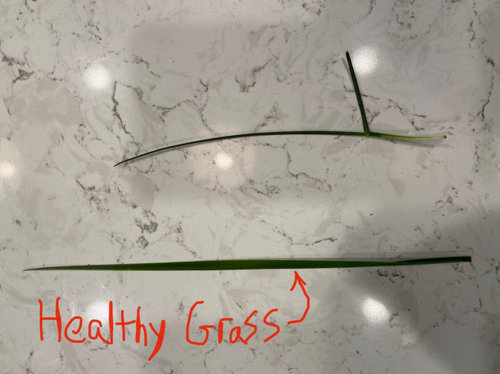
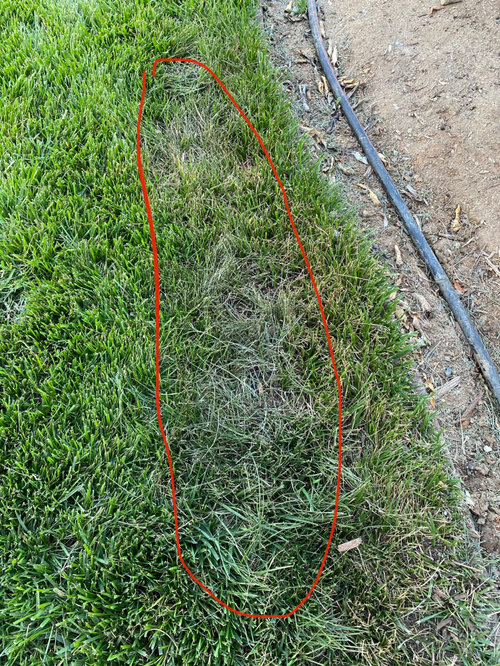
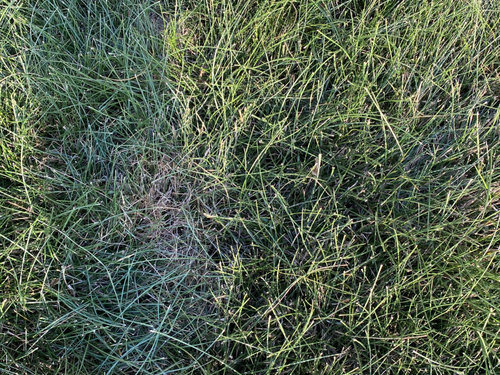
My grass seems to have some sort of disease. In large patches it only grows in long, thin, straw-like blades. It eventually turns dark, dies and turns into a brown patch. I have it on my front lawn and in my backyard. I have attached some pictures.


Comments (14)

  • 5 years ago

    Is the lawn getting uniform water? Is it possible that those areas are in not getting enough?

  • 5 years ago

    I don’t believe so. Both lawns get pretty good coverage and are regularly watered. . The back lawn was just put in 4 months ago and the front lawn is 2 1/2 years old. this didn’t start happening until after the new turf in the backyard was put in. That’s what makes me think it might be some sort of grass fungus/disease that I transferred from the backyard to the front when mowing.

  • 5 years ago

    Where do you live? I assume California but there is more than one climate and soil in CA. If you could name the town, that would help.

    What kind of grass do you have?

    What is your watering schedule? How often and for how long do you water?

    Have you fertilized, used weed killer, insecticide??? If so, what did you use and when?

  • 5 years ago

    I live in the San Diego Area. I water just before sunrise and just after sunset for 8-15min intervals, depending on the heat that day. I fertilized a month ago with 15•15•15. Never used weed killer or insecticide.

  • 5 years ago

    "just after sunset". Hmmmmm. Has the water in that exposed hose been getting hot during the day and when it first turns on that is where the water first squirts? Hot water burns leaves. Is the pattern of dying grass always about the same distance from the tubing?

    What kind of spreader do you use to fertilize. Could it have put more in those spots when you were walking around, or turning?

    My mantra is that if something looks wrong on top, look underneath to rule out soil/root problem. Dig and roll it back to rule that out. You would think that it would be more spread out if you spread it with a lawn mower, and not in such a narrow swath. Good luck!

    -Babka

  • 5 years ago

    I'm going to ask where you live again, because the San Diego area includes La Jolla and El Cajon. If you live there you should see why I'm asking you to narrow it down. Also what kind of grass.

    You are watering far too frequently...unless you live in La Jolla and you have Marathon fescue. If that is the situation, then you should really consider changing to a warm season grass. But even if you live on the cliffs, you should not be watering like that.

    If you can home in on the location and grass type, I can help you better.

  • 5 years ago

    @Babka NorCal 9bThat hose is not yet in use. it feeds the drip irrigation in a planting bed beside the lawn. The lawn is watered with pop-up sprinklers through irrigation run under the lawn.

    I am going to aerate the lawn and see if that helps. I did some digging and the thatching at the base of the lawn seems quite thick and tight. I think getting it some air would do it some good. What do you think?

  • 5 years ago

    @dchall_san_antonio

    I live in North County, Fallbrook to be precise. I believe rhe grass is West Coast Blue Fescue. the soil here is pretty compacted and has a lot of clay. we planted some 25gal trees and had a heck of a time digging the holes. I know they put down gypsum before they put in the sod. As i said in a previous reply I’m going to aerate the lawn and see if that helps.

  • 5 years ago

    In the photos, your problem looks like a strip of drying grass. Many years ago we had a lawn fungus, on a 3 year old sod lawn that I probably over fertilized to make it grow fast., but it appeared in random dying patches across the lawn. Aeration took care off that. Was yours seeded or sodded. You shouldn't have to aerate a lawn after only 4 months. Aerating might help, certainly will do no harm. Do you have a farther away photo to see how your patches are arranged? Wondering how long you have seen this....just wilting grass and nothing dead? Yet??? Sometimes you need to just wait and see if those "funny" areas die or recover. Usually fertilizer burn will brown the tips of the blades. Your photos above look like dry leaves, but that cannot be if there is green all around them. Dig and see what the roots underneath look like compared to the healthy grass right next to the bad spots. Sometimes there are critters (grubs and sod web worms) that are gobbling roots. Ah nature.

    -Babka

  • 5 years ago

    I believe Fallbrook is a hidden treasure in SoCal. Hidden because the freeway bypassed it decades ago. But geography is geography. It's a treasure because of the climate and access to avocados. But anyway...

    Deep and infrequent is the mantra for watering grass. Deep means 1 inch all at one time. You can measure this with cat food or tuna cans placed around the yard in the dry and not-dry spots. Turn on the sprinkler(s) and time how long it takes to fill all the cans. That will be your watering time from now on. Deep watering builds deep roots which take advantage of nutrients and moisture deeper in the soil. Just for reference, my oscillator sprinkler set on full sweep takes 8 hours to fill the cans, but a high flow, in-ground system might take only 20 minutes. You have to measure this for your water pressure, hoses, and sprinklers. Infrequent means once a week in the hottest heat of summer and once a month in the non growing season. Generally it goes by temperature like this: Temps below 70, deep water once a month. Temps in the 70s water once every 3 weeks. Temps in the 80s water every 2 weeks. Temps in the 90s deep water once a week. This is a general starting guide which works from Phoenix to Vermont for most all grasses. If you are in the "late night and early morning low fog and clouds burning off around 11 am" zone, you might water less often. You can adjust for yourself from that guide, but you should never be watering on a daily basis. If you find you have to do that, then you need to change to a warm season grass. You will need to wean your lawn off of daily watering because currently its roots are too short to work with infrequent watering. Start by deep watering. If you get runoff before the cans are filled, then stop and let the water soak in for a half hour. Then restart the watering/clock and continue timing. Start/stop as necessary to fill the cans and get your time. This alone will soften your soil, and you may not need or want to aerate.

    One more thing you can do to soften your soil is to apply any clear shampoo at a rate of 3 ounces per 1,000 square feet. The shampoo is a surfactant which will help water penetrate much deeper into the soil.

  • 5 years ago

    @dchall_san_antonio

    Yes, Fallbrook is a hidden gem. It‘s a quiet community with lots of open space and agriculture, which seems increasingly harder to find in SoCal these days. I appreciate your advice. I was under the impression that my grass needed to be watered daily, but I will certainly give your method a try. Watering weekly, allowing the roots to grow deeper makes sense. Shampoo? I’ve never heard that before, but I will give it a try. How would you suggest the application? I have a 3gal portable pump sprayer. Can I mix it w/water and just spray it on the lawn? Should I do this before/after I water?

    Thanks again for the advice.

  • 5 years ago

    @Babka NorCal 9b

    The lawn is sod. As I said previously, it was put in about 4months ago when we had our backyard landscaped. The patches are currently green, but the grass itself seems to be very thin and whispy. As you can see in the picture the healthy grass has nice wide blades of grass, but the patches are thin, almost as if their growth was stunted. I did notice some brown tips after I fertilized for the first time, but I assumed that was from the fresh mow. I used 15-15-15 fertilizer (as recommended by my landscaper) and spread it with a Scotts Wizz motorized spreader. I followed the manufacturers guidelines, but i’s possible I may have over-fertilized.

  • 5 years ago

    Relax. ;-) Wait a month and see what the grass looks like then.

    It is difficult to get exactly uniform coverage with that spreader, and a swath of burned grass that shape is very likely from your not moving fast enough and more got put in that area. Grass is pretty tough and it will recover.

    -Babka

  • 5 years ago

    My mom and niece were in Temecula for many years, so right around the corner from you, but much warmer on the back side of the hills. Niece's husband took care of my mom's lawn and insisted on daily watering. I wasn't there to look after it, so he took over. It never did thrive. It was Marathon fescue and was thin and weedy with the daily watering. That's the other thing with daily watering. Seeds need daily watering to sprout, so all the weed seeds will do very well. By watering infrequently the weeds will never/seldom get enough water to sprout.

    If you have never used an organic fertilizer on your lawn, I'm going to suggest using something organic at least once a year. What I like to use is alfalfa pellets (rabbit chow). If you look on the bag of many organic fertilizers you see ingredients like alfalfa, soybean meal, corn meal, corn gluten meal, and other ground up nuts, beans, grains, and seeds. I just get whatever main ingredients I can at the feed store. It works great. I also use ordinary corn meal. Call these guys and see what they have. Alfalfa pellets should be under $15 and corn meal should be under $10 for a 50-pound bag. Make sure you're not confused about pellets versus alfalfa bales. The application rate for these organic materials is 15-20 pounds per 1,000 square feet. If you get too much, no problem. These don't need to be watered in like chemical fertilizers, but they don't really do anything until they get wet enough for the microbes to decompose them. It takes a full three weeks before you see the improvement from organic fertilizers. They are referred to as 'slow release', but that's not quite accurate. Once the 3-week microbial processing time is up, they are fast release, but they still don't burn anything. Since organic fertilizer and chemical fertilizers are so different in the way they act, you can fertilize with organics the same day you use chemical fertilizer. One doesn't affect the other.

    As for shampoo, golf courses will spray an expensive surfactant to improve water penetration into their soils. Shampoo is just a handyman way to do the same thing. If you have 2,000 square feet, then you need 6 ounces of shampoo. I would put 6 ounces into a hose end sprayer, fill the sprayer tank with water, and try to spray it evenly over the 2,000 square feet. This really (really) doesn't matter if you get too much. People have tried to overdose with the professional products and it can't be done. This is like the organic fertilizer in that you cannot overdo that. Spray the shampoo and then do a deep watering of at least 1/2-inch. I used shampoo one time in 2012 and that lawn still gets very soft after a couple days of rain. Just don't let the yard dry out completely for months at a time. Then you'll have to reestablish the microbe population and do the shampoo again.

Sponsored
Peabody Landscape Group
Average rating: 3.5 out of 5 stars8 Reviews
Columbus' Reliable Landscape Design & Contracting