Software
Houzz Logo Print
webuser_308931658

why do my plants keep being in bad condition

5 years ago
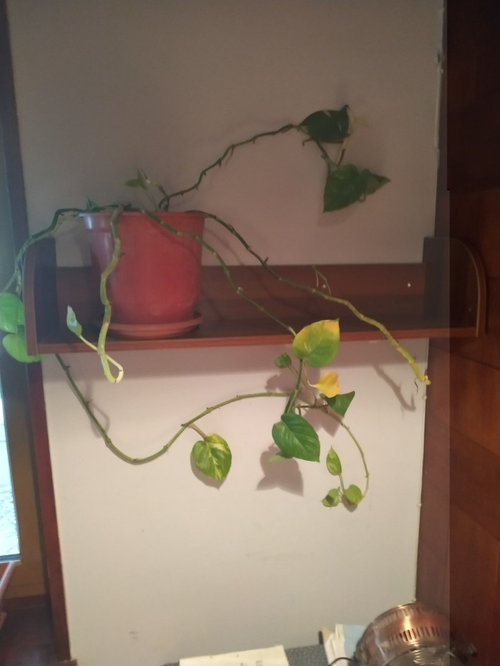
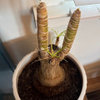
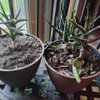
Hello, my plants keep dying even though i really try to be following the intructions of the people in the plant stores i m buying them from. I feel like they will suffer either from too much water, either from too few water. At this point i cant understand what is going on, i uploaded 2 pics of my plants that are doing bad for reasons i cant understand. First of all, apparently the size of the pot was the reason for my overwatering. The bigger one was overwatered, while the smaller one was underwatered. Or at least thats what the (so called?) florist said, since a few plants of mine died right after a few days which he came to say that they were fine. Is the size of the pot more important than the size of the plant for watering? But anyway, my problem remains that even when i stopped watering the overwatered one, and started watering more the underwatered one, i was still having problems, i see leaves keep dying in the smaller one with no new ones growing, some branches even turned yellow, i had to cut 2 of them cause they dried for real and probably i will cut the other one i guess since its following the same pattern. Is the problem now that i switched from underwatering it to overwatering it abruptly or what? About the bigger one, i havent watered it since then and indeed, the mud hasnt seemed to have dried up even after more than a month or so that has passed i think. But then, why does the few leaves that have been left on it start turning yellow too and there are no signs of new growth? I also had a sansevieria and a few cactus that turned mushy and died, apparently that means overwatering, even though i was just following instructions. At this point, i desperately need some proper advice. How to save the remaining plants and how much and how often should i be watering them from now on? I really think that the problem lies on the water, at least for the ones that already died the reason was too much water, besides, there is good temperature in the room, there is some sunlight but not too much on it, and i often open the windows to renew the air. If you could provide some tips for these plants first and foremost, but also overall tips for watering cactus and sansevieria, it would be extremely helpful. Thanks in advance.


Comments (24)

  • 5 years ago

    Water management is one of the primary factors in determining the health and vitality of any container grown plant, indoor and out. And that water management is highly influenced by the soil mix or potting media.

    I would suggest you take some time to research and read through some of the posts on the Container Gardening forum to get a better understanding of both these critical factors. In particular, there is a very long running thread on that forum (almost 20 years!) that addresses these in detail. It is a long read but so worth the time for the greater understanding it will provide in giving your container plants optimum care. Container Soils and Water Movement

    There are other necessary considerations including light, fertilization and pruning but they are really very secondary to understanding how your soil mix works, how to make it better and how it impacts watering.

  • 5 years ago

    Apart from watering issues it looks as if the location is too dark.

  • 5 years ago

    They need light.

  • 5 years ago

    @floral_uk z.8/9 SW UK @JoJo (Nevada 9A) i have been told that this type of plant doesnt need a lot of sunlight hitting it directly (yet they shouldnt be on the dark either) and i have enough windows for light to sufficiently spread through the room during the day. What are the symptoms that suggest that they may need more light?

  • 5 years ago

    @gardengal48 (PNW Z8/9) thanks, i will be sure to check it out... but to be sure, the way you view them do you think the need more or less water and which one?

  • 5 years ago

    I cannot tell you that without inspecting your soil mix and the roots of the plants themselves. Both over- and under-watering can produce the same appearance so just looking at the plant (especially with just a photo) it is impossible to tell.

  • 5 years ago
    last modified: 5 years ago

    @gardengal48 (PNW Z8/9)i see... others are also suggesting that light might be the issue, which i could try solving by having more curtains open during the day, i was careful not to have too much light fall on them cause i was notified that they dont need a lot when i bought them and they better be in a spot where they are not hit directly by sunlight, do you suggest i try inviting more light in or worst case scenario have them change spots?

  • 5 years ago

    Lack of adequate light is certainly a factor but I doubt it is the primary concern. It is rare that lack of light would create the very extreme conditions shown. And Epipremnum/pothos are very tolerant of low light conditions as well. But bright, indirect light is best (mine is actually outside in part sun and shade for the summer).

  • 5 years ago
    last modified: 5 years ago

    What are the symptoms that suggest that they may need more light?

    Leaves yellowing and dropping, no new growth, stem sections look elongated, few surviving leaves getting smaller. Your plants are starved for light. So they are dying and drowning, because they are too weak to use the water you're providing.

    Light provides the energy to use water as part of photosynthesis. Without enough light, that water remains unused or is used very slowly.

  • 5 years ago

    Another question -- where was you cactus located when it died? On the same shelf?

  • 5 years ago

    @tapla (mid-Michigan, USDA z5b-6a) thank you, seems informative and i will now read the article in your link too

  • 5 years ago

    @JoJo (Nevada 9A) no, it was in a place that light was hitting it more directly and afterwards i moved it by the window cause i heard that even more light would be better.... one day i suddenly saw it tilting, and inspecting it near the root i saw it becoming soft and watery, when i cut it the whole interior of the plant had turned into liquid and emptied itself, leaving only the exterior, it was actually surprising that i could notice it only after so much damage was done, it was looking as usual up till then.... my understanding was that i overwatered it because i had it planted in a big pot with plenty of soil, apparently more soil results to water being dried slower, so when i was thinking it was the correct time to water it according to my tips it probably wasnt

  • 5 years ago

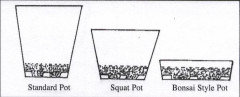
    Yes, your cactus was overwatered. If you want to try it again, plant it in a container that's wide but not tall (cactus roos are shallow and spread from the base like spokes of a wheel). Use only potting mix formulated for succulents. And make sure you place it by a window (and not a north-facing window).

  • 5 years ago

    @JoJo (Nevada 9A) noted, thanks a lot for your time

  • 5 years ago

    I have to gently disagree with JoJo re the comments about plants with shallow roots needing shallow pots. Roots of plants which are known for having most of their root system near the soil surface when growing in situ or in the landscape will happily colonize pots of any depth as long as the medium is appropriately aerated and as long as the pores between soil particles in the pot's deeper reaches are not full of water.

    Also, shallow containers are more difficult to grow in when using a medium that supports more than a modicum of perched water (PW). PW is water that won't drain from the medium when acted upon by gravity alone. It remains in the medium, defying gravity, and displacing/limiting the oxygen supply essential to normal root function. For any given medium, the maximum ht of a perched water table (PWT) is a constant; i.e., it will be the same ht for that specific medium, no matter what the size or shape of the pot it's in. Most commercially prepared media are based on huge fractions of finely textured components, often more than 90% fine material like peat, coir, compost, composted forest products, sand ..... . Since the ht of a PWT is driven primarily by particle size, these finely textured media usually support 3-6" of PW, sometimes more, seldom less.

    Remaining optimistic, let's say medium x supports a PWT with a maximum ht of 4". This means that using that particular medium in a pot 4" deep or less will ensure that 100% of the medium is completely saturated with water. The following image illustrates a PWT in relation to pot depth.

    Notice as the depth of the pot increases, the ht of the PWT remains the same, a constant, but the % of the media volume that remains free of excess/perched water after a thorough watering increases, so it's best to exercise caution whenever pairing a medium which supports even an inch or two of perched water with shallow pots.

    If using a shallow pot, best medium choice would be one which supports a negligible amount of PW. Second best choice would have the grower ensuring there is in place a way to passively limit the amount of excess water a planting can hold (ballast, tipping the pot, wick, ....), or to actively limit the amount of water retained after a thorough watering.

    Al

  • 5 years ago
    last modified: 5 years ago

    Tapla, I'm not going to read this... I know you put a lot of thought in your posts but ... no... sorry, I will not be commenting on this.

  • 5 years ago

    Note what I wrote. ”Apart from watering issues it looks as if the location is too dark.”

    I did not suggest light was the only factor.


  • 5 years ago

    Apart from all the great advice given here, i would give you the advise my sister gave me when every plant i bought died . Go buy a small cheap plant, maybe a pothos, read up on the requirenents, use a tell and water it only when the tell is dry. If you keep that plant alive and it is doing well, buy another small inexpensive plant and do the same thing, than repeat. what this did for me was gave me confidence that i could keep a plant alive. Also reading about the plant helped a great deal too and there is always knowledge and wisdom on this platform. i now have over 90 houseplants, all doing well. i think you are buying plants way over your plant range as to how to take care of them and it’s stressing you out. plants aren’t sppose to do that but just the opposite😜

  • 5 years ago

    @Ellen Bshaw thanks for the advice, 90 houseplants? that sound like a typo, lol.... should i keep the common advice of watering the plants when i shove my finger in the soil and about 2 cm in its dry?

  • 5 years ago
    last modified: 5 years ago

    Water When the Top Inch or Two of Soil is Dry?

    I don't think so. Most growers unfamiliar with how water behaves in container media are prone to repeating the title mantra. But, if we were to look at some facts, first on the list would be saturated or partially saturated medium is limiting in a number of ways.

    Roots need an ample supply of oxygen in order that roots can function normally. Saturated soil surrounding roots limits oxygen required to drive root function, thereby impairing root efficiency and possibly setting the stage for any of a number of fungal pathogens that thrive in anaerobic (airless) conditions.

    Soil saturation limits gas exchange, so waste gases like methane and CO2 in the root zone are less able to leave the soil, also limiting root function; and, it kills the fine roots that do the lion's share of work involving water uptake and nutrient distribution. When this occurs, chemical messengers tell plant central injury to the root system has occurred. Top growth stops immediately, because root growth always precedes top growth – the top will not grow if the roots cannot support the growth with water/nutrients. The plant is then forced to regenerate dead roots, using energy which otherwise would have been devoted to additional top growth, keeping the plant's systems orderly, keeping the plant wearing a 'healthy glow', and improving the plant's ability to defend itself. In short, the wasted energy would have kept the plant looking/ growing better, and healthier.

    If a pot is 10” deep, the top 2” can feel completely dry to the touch, even while the bottom 6” is 100 saturated. That means 60% of the medium would be fighting you tooth and nail for control over the plant's vitality …… and this is the point at which you should water again? Does that sound reasonable? We don't care even a whit if the top 2" of the soil are dry. Roots there are largely plumbing and anchorage, with essentially none of the fine almost microscopic roots that do the lion's share of the plant's heavy lifting.

    Most of us who grow plants which don't provide food are doing so because we were born with a nurturing bone, and we're looking for the personal satisfaction that comes from knowing we're successful nurturers. Growing a plant that handles wet or dry conditions well doesn't mean we should test them to see what they'll tolerate, but it does mean you can and should let the soil dry down so you can only detect moisture (by using a 'tell') in the bottom inch or two of soil. Let me know if you're unfamiliar with the term 'tell'.

    *************************************************************************

    Fear of failure limits our abilities. While it's often said that failure is just another opportunity to make a more intelligent start, it doesn't make sense to use failure and the disappointment that comes with it as a preferred method of acquiring knowledge. Trial and error is a painfully slow way to learn; and unfortunately, it takes a fair amount of knowledge to even identify or determine what mistake(s) led to the failure.

    The fastest way to advance in our journey toward green thumb status is by way of learning all we can about the plant and the science of growing as soon as we possibly can. Knowledge saves us from the punishment inherent in the error part of 'trial-and-error'. Some might say that growing is supposed to be fun and all that science baloney is a distraction; however, if we consider the reason we grow is for the personal satisfaction, the question becomes 'is there more personal satisfaction in failure after failure or in advancing from a rank beginner to the place where all the successes behind us, provided thanks to an improved set of knowledge and tools, combine to rightly allow us to expect further success in any subsequent growing adventure'? Learning first, then acting second to make use of time spent in practical applications to validate what we already learned is exponentially faster than trial-and error; and it provides us with a real opportunity to leave the trial-and-error crowd standing in our slipstream.

    Al

  • 5 years ago
    last modified: 5 years ago

    very briefly 🙄 😏…and simply on roots and water:

    when plant sits for a lng time in mucky soil without oxygen roots suffocate and rot. when

    you water it lots it gets worse : more rot ..

    when you start keeping it very dry without roots ..it drops leaves and dehydrates more.

    you can’t grow plant without roots 😏.

    so what to do? if you want to save the plant it needs to be bare-rooted (all mix removed and whatever roots it has trimmed to healthy white ) and rerooted like cuttings from scratch, in perlite or starter mix or water for some(pothos roots great in water) . often you wont be able to save the whole plant and its best to just take tip cuttings for rooting.

    and then it needs to be potted (after it has good roots ) in proper well draing medium and properly sized pot. not in the florist /nursery muck.

    the simplest workable mix for smallish plants is soiles houseplant diluted with large horticultural perlite at least 30% for thirsty plants and up to 50% for succulents.

    once you can handle that you can advance to al’s mixes and more precious plants.

  • 5 years ago

    I believe 90, I have way more than that.

  • 5 years ago

    Sunlight. Needs sunlight. What seems bright to our eyes is actually dark for plants. Remember our eyes adjust.