Software
Houzz Logo Print
snlearn

What’s going on with my peperomia polybotrya?

5 years ago
last modified: 5 years ago
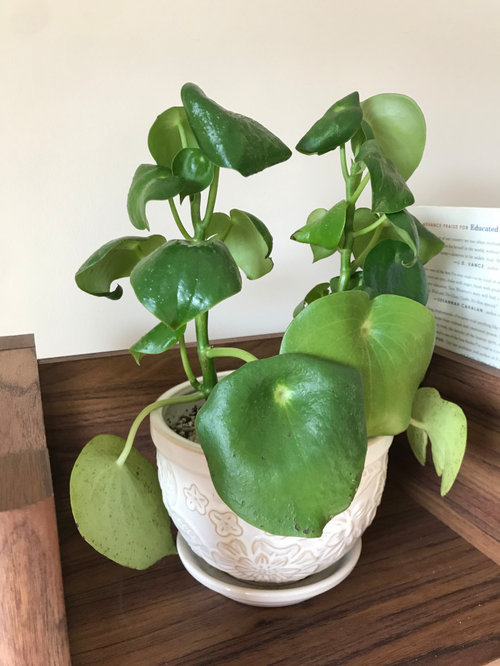
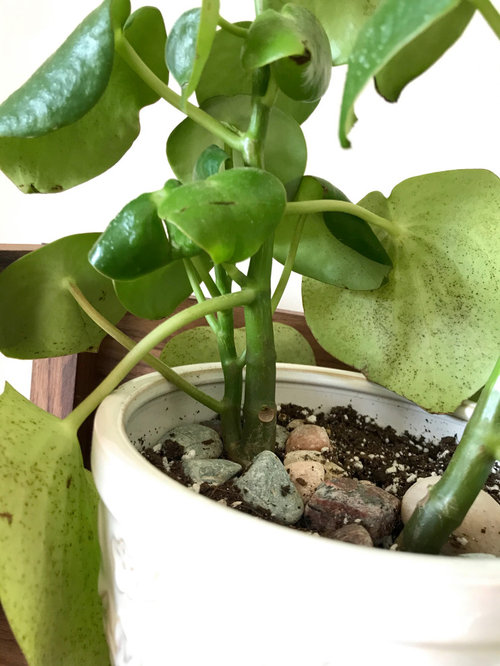
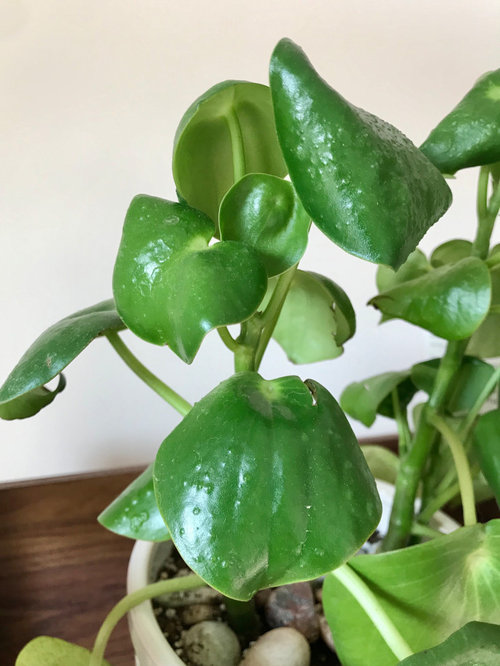
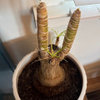
This raindrop peperomia seemed healthy when it was first gifted to me about six months ago, but it started looking sickly after a couple of weeks and has continued to worsen ever since. I’ll attach a couple of pictures below.


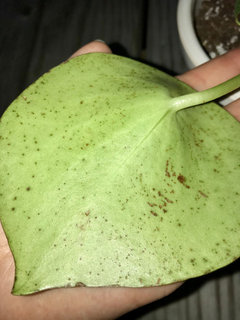
The plant has nearly doubled in size since I got it, but it has developed dark spots on the back of some leaves (mostly the older, larger ones) and a lot of the newer leaves are curled under and have an odd dimpled texture. It’s about six feet away from a large west facing window and I’ve been watering it every 10 days or so. There are a couple of little rocks around the base to keep it from shifting/wobbling. Any advice or insight is welcome!


Comments (6)

  • 5 years ago

    did you repot it... did you put the rocks in because you didnt pack down the media enough???


    6 feet from a window is completely insufficient light ...


    water when a plant needs water .. let near dry between waterings ... and dont use some random schedule.. unless you insert finger.. and it confirms the schedule is useful ...


    the spots might be spider mites ... i cant tell from the pix ...


    ken

  • 5 years ago

    Thank you for your responses. I did move the plant from its nursery container into its current pot, but I added the rocks a couple of months ago after the leaves on one side (the bottom front-facing leaves visible in the first photo in my original post) started to weigh the plant down a bit. But you were right, @tapla (mid-Michigan, USDA z5b-6a)! I took the rocks off and the plant seems perfectly stable now.


    @ken_adrian Adrian MI cold Z5 do you think insufficient light could be causing this leaf damage? Currently, it sits in unobstructed (no blinds, curtains, trees, etc) sunlight for most of the afternoon/evening. I’ll try moving the pot closer to the window to see if it improves.


    @tapla (mid-Michigan, USDA z5b-6a) — I so appreciate the info you shared on watering! I have been giving this plant ”sips” instead of watering beyond saturation. I tested the soil with a dowel this afternoon and it came out dry as a bone, despite being watered earlier this week. I’ll adjust my routine accordingly. Could underwatering have been the culprit all along?


    And finally, I’m mite-free! No webs, and under a reading glass the spots are just spots, not bugs. Here’s a closer pic:


    Thanks again for both of your tips and suggestions.

  • 5 years ago

    After the closer look, the spots are oedema, a physiological disorder that can affect all plants. It occurs when the plant takes up more water than it can rid itself of via the process of transpiration. The word itself means 'swelling', which is usually the first symptom, and comes in the form of pale blisters or water-filled bumps on foliage. Under a variety of circumstances/cultural conditions, a plant's internal water pressure (turgidity) can become so high that some leaf cells rupture and leak their contents into inter-cellular spaces in leaf tissue, creating wet or weepy areas. Symptoms vary by plant, but as the malady progresses, areas of the leaf turn yellow, brown, brown with reddish overtones or even black, with older damage appearing as corky/ scaly/ ridged patches, or wart/gall-like bumpy growth. Symptoms are seen more frequently in plants that are fleshy, are usually more pronounced on the underside of leaves, and older/lower leaves are more likely to be affected than younger/upper leaves.

    Oedema is most common in houseplants during the winter/early spring months, is driven primarily by excessive water retention in the soil, and can be intensified via several additional cultural influences. Cool temperatures, high humidity levels, low light conditions, or partial defoliation can individually or collectively act to intensify the problem, as can anything else that slows transpiration. Nutritional deficiencies of Ca and Mg are also known contributors to the malady.

    Some things that can help you prevent oedema:

    * Increase light levels and temperature

    * Monitor water needs carefully – avoid over-watering. I'd heartily recommend a soil with drainage so sharp (fast) that when you to water to beyond the saturation point you needn't worry about prolonged periods of soil saturation wrecking root health/function. Your soil choice should be a key that unlocks the solutions to many potential problems.

    * Avoid misting or getting water on foliage. It slows transpiration and increases turgidity.

    * Water as soon as you get up in the AM. When stomata close in preparation for the dark cycle, turgidity builds. If you water early in the day, it gives the plant an opportunity to remove (for its own needs) some of the excess water in the soil.

    * Put a fan in the room or otherwise increase air flow/circulation. Avoid over-crowding your plants.

    Al

  • 5 years ago

    Thank you for the information! This is extremely helpful.

  • 5 years ago

    You're welcome. Glad you found it useful. I hope it leads to you putting the info to work and getting a little more from your growing adventures.

    Al