Software
Houzz Logo Print
travisaz

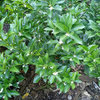
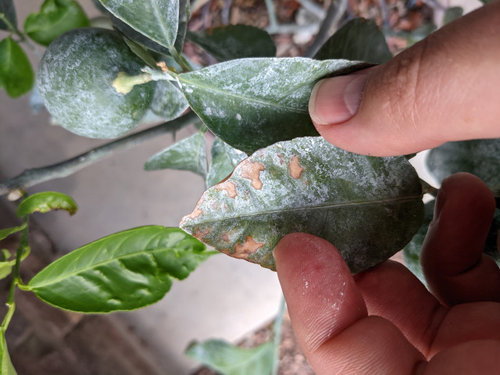
Any idea what this leaf damage is?

5 years ago
last modified: 5 years ago

I spotted this damage on my leaves this morning. Any ideas what could be the culprit?
It kind of looks like leaf burn, but it's not confined to the leaf tips. I also haven't upped my fertilizer.
I did add DG Pro-tekt for the first time last week. We had strong wind yesterday (damage from blown debris?).
The white on the leaves is kaolin clay to help with sunburn and heat stress.


Comments (13)

  • 5 years ago

    Check out powdery mildew. Im not sure but i think it might be that

  • 5 years ago

    It’s the brown blotches which are the issue, not the white stuff.

  • 5 years ago

    Yes, the white powder is kaolin clay to help sunburn and heat stress. It's the rust colored spots I'm worried about.

  • 5 years ago

    IMHO. Asphyxiation of the roots, or burning of the roots with fertilizer.


    "I did add DG Pro-tekt for the first time last week." - Why did it, who advised?


    Travis in PHX (9b) thanked Alex [Lithuania z6a]
  • 5 years ago

    I started it because I saw on the internet that plants love it and it helps with heat, drought, and wind stress. Three things we have a lot of in Phoenix.


    Several leaves dropped off today at the slightest touch. They did not look in bad shape. I'm going to stop the Pro-tekt for now and see if that helps.

  • 5 years ago
    last modified: 5 years ago
    Travis, hello friend)

    The Pro-tekt should not be doing that but in fact building a stronger and better plant.

    I would look into something else doing that, like heat stress?

    Mechancal damage.

    Are there other leaves doing that brown spots you showed above now?

    I would not worry about leaves falling off like that either unless you start loosing branches. Many of my trees shed like that all of a sudden during this time. But they always fill back out.

  • 5 years ago

    What is the pro-tekt? Silicone?

  • 5 years ago

    @Mike, hello friend, good to hear from you!
    It did coincide with a heat wave, some pretty windy nights, as well as an application of Neem oil. I sprayed the Neem oil because the previous flush was devastated by aphids or thrips or leaf miner. I sprayed at night when the sun was gone and the temp was down, and haven't seen evidence of burning.
    I haven't noticed the brown spots spreading.
    It is a bit confusing because the tree is also putting out several new shoots. So I am seeing signs of health and vitality at the same time as this leaf drop. The leaves that drop do not look like they were sapped for mobile nutrients.
    @Ken B, yes, Pro-tekt is basically soluble silicone.

  • 5 years ago

    As far as what caused the necrotic leaf tips, the first suspect would normally be over-watering, but it appears that you're using the gritty mix as a grow medium? If the ingredients were screened, it would seem likely it's not over-watering; however, in looking at your plant I see several hooked/ malformed leaves. This is commonly caused by a Ca deficiency, which is very often caused by over-watering. What are you using as a medium? If gritty mix, was it screened?

    The other potentiality is the Kaolin clay as causal. The clay coating on the leaves blocks a notable fraction of the plant's photo load/ light. We know that a reduction in light levels, particularly a sudden one, can cause leaf loss, so that might be what you're seeing re the shedding. The first phase of leaf shedding is resorption, during which the plant 'reclaims' reusable nutrients and biocompounds from leaves to be shed. The second phase is the formation of an abscission layer where the leaf is attached to the branch. The abscission layer walls off the leaf from the rest of the plant, which limits flow of water and nutrients to the leaf. Desiccation first occurs at the leaf's thinnest points, the leaf tips/margins, which also happen to be least protected by the leaf's boundary layer (of still air, surrounding the leaf), so we would expect symptoms of desiccation to first appear there. Unfortunately, that doesn't account for the malformed leaves.

    When was the tree last repotted? Was it bare-rooted? Are you using FP 9-3-6? How long have you cared for the tree?

    Al

  • 5 years ago

    Thanks for the input Al. I'll try answer all your questions, feel free to remind me if I miss anything.
    I suspected over-watering, too, because I have had issues with that in the past, but I've never had the necrosis like this before. Also, the leaf drop I did have didn't seem to go through resorption, like in past over-watering events (leaves turn yellow before falling off). The leaves that dropped were either very crispy (post-abscission) or fairly healthy looking, and the slightest touch would knock them off. I hadn't increased my watering before this and I didn't get any free flowing water when I would tip the pot to check a day or so after watering (define drainage when watering, though).

    I'm growing in a lazy man's 5-1-1. By lazy man I mean I didn't screen anything. I always bare root my trees when first potting them because the native growing medium is usually quite different than the 5-1-1. This tree is on its second year with me, and I bought it from the local big box store in the 5 gallon size.

    The malformed leaves are all from the same flush and I assumed it was pest damage, or maybe from the kaolin clay. I sprayed the tender growth with clay one night to protect it from sun and pests while it was still new and tender and unspoiled by aphids. When I came out the next morning they (the tender shoots I had just sprayed) looked awful. At first I thought it was the spray, but as the leaves matured they looked like aphid/thrip/leaf miner damage. So I don't know. But this happened several weeks before the problem in the original post, namely the necrosis and leaf drop. I don't think the clay is responsible for that because the tree was sprayed 1-2 months before this issue developed. It really began almost simultaneous to the addition of the DG Pro-tekt. But my grapefruit and peach trees have not shown these symptoms despite the same watering and feed schedule.

    I give 1/4 tsp Pro-tekt and 1/4 tsp FP per gallon when I water by hand once per week. They also have some Osmocote Plus slow release. The trees are watered by drip system two times during the week. Temps are 100+ daily. They get afternoon shade by around noon (sunrise between 5-6 am).

  • 5 years ago

    I have considerable doubt the necrotic leaf tips/margins are related to the ProTeKt, unless you used coir instead of peat in your mix. Coir is known to be very high in K/ potassium, which presents a problem when using fertilizers that contain K. It's also not unusual (actually, common) for it to take several weeks for the shedding associated with a reduction in photo load to be made manifest in conspicuous symptoms.

    About the drip watering. Are you using a spray emitter or is it an actual drip emitter? How many emitters per pot? I'm wondering if the entire soil mass is fully moistened each time the system is activated? Usually, media like the 5:1:1 and gritty mix are not good candidates for drip irrigation because water doesn't move well laterally as it moves through the pot. A reduction in o/a capillarity comes with a reduction in the ht of the PWT, the purpose of highly aerated media based on media particles like pine bark chips, Turface, grit larger than 1/10", ...... .

    I'm also wondering if watering 2X/ week is frequent enough in the heat you describe, and if root damage due to heat isn't a part of the issue. I have had all fine roots die on the south side of pots due to excessive heat, here in MI. When temps are 100*, well above the 80* mark where roots of most plants start to shut down, evaporative cooling is essential to keeping roots from rising to whatever the ambient temperature might be.

    Finally, the symptoms are consistent with a toxic reaction to ammonia. When root temps are high, sugar in the root is rapidly depleted by cell respiration. Metabolism of NH4 (ammonium) ions occurs in the roots where sugar is used to detoxify free NH3 (ammonia) molecules produced in cells. Low concentrations of sugar + high root temperatures + plus an increasing NH3 level inside the cell challenges survival of cells; this because once root temperatures rise to the point where all sugar in the root is depleted, nothing is left to prevent NH3 toxicity. Since we can't see the roots, the first conspicuous symptoms are usually made manifest in foliage and include necrotic areas at leaf tips/ margins subsequently expanding to larger random necrotic areas on leaves.

    Al

  • 5 years ago

    Thank you for the ideas and information Al. They are emitters, not sprayers. They are in-line and circle the pot, 16 emitters in this tree.

    I too have wondered if watering 3x/week in this weather is sufficient. I used to water less frequently and my grapefruit tree has really taken off since upping it to 3x. This Meyer though seems to experience YLD when I water too frequently. I don't know if there's something wrong with my mix, the tree is extra sensitive, or I'm mistaking correlation for causation.

    If it is toxic ammonia exposure, are there any remedies?

    I am still seeing growth on all my potted tree, even in this heat, so that suggests the roots are not baking too bad, right?

Sponsored
Peabody Landscape Group
Average rating: 3.5 out of 5 stars8 Reviews
Franklin County's Reliable Landscape Design & Contracting