Software
Houzz Logo Print
hzdeleted_19696500

Hydrangeas non-productive this year

4 years ago
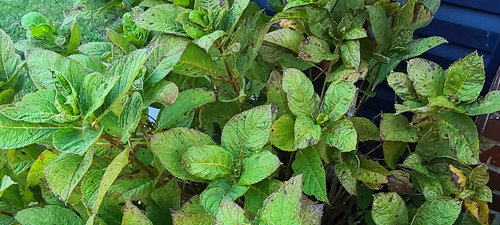
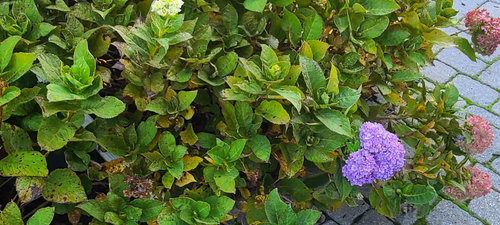
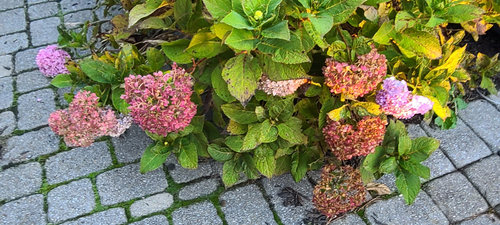
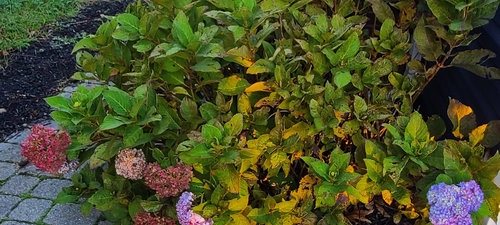
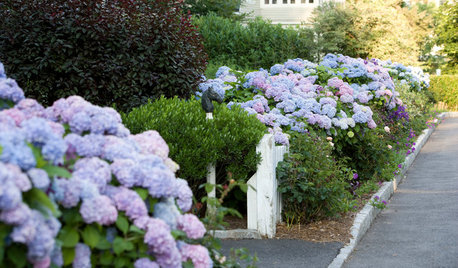
Hello, I am trying to figure out why my girlfriend's Hydrangeas did so poorly this year. Very few blooms, inconsistent color, and perhaps a disease on the foliage? See photos below. Recommendations for improvement in the future are more than welcome.


Comments (4)

  • 4 years ago
    last modified: 4 years ago

    You did not say what type of hydrangeas are in those hedge pictures so I will assume hydrangea macrophyllas. Also known as Big Leaf Hydrangeas, French Hydrangeas, Hortensias and Mopheads, macrophyllas may have blooming issues at times in very cold locations. They also produce flower buds at the ends of the stems some time after they stop opening flowers so by now, the stems m-a-y have invisible flower buds that open in 2022. Where I live near Dallas, flower bud production happens around July. It would occur earlier than that south of me and later north of me (you did not say where are you located). Because of this, avoid pruning the ends of stems/branches at the end of the growing season because you could then be cutting off spring 2022 blooms. Any pruning should be done soon after the plant stops opening new blooms.

    Also check for pests, like deer, squirrels and bunnies that like tograze and eat the flower buds. Fertilizing with very high nitrogen fertilizers and too much shade can also reduce bloom productions so check how much sun they are getting during the year, use a fertilizer with a NPK 10-10-10 or thereabouts (you can also use composted manure, organic compost or cottonseed meal) but start applying fertilizers after your average date of last frost & stop applying fertilizers about three months before your average date of first frost . Early/Late frosts and extremely cold winters can also kill flower buds and-or the stems of macrophyllas. Maintain the plants well mulched with 2-4" of organic compost past the drip line.

    I am unclear exactly what do you mean by inconsistent colors so please elaborate when you can. Macrophyllas produce blooms of different colors. The plants that produce blooms that are initially a shade of pink, purple or blue will change the color from one year to the next depending on the soil acidity/alkalinity or the amount of aluminum available on the soil. Some varieties will produce blooms with different colors (or shades of colors) mixed in. Once the blooms open, they will stay like that for a while and then go through a series of color changes that varies depending on the cultivar. The duration of the colors is a function of a variety of factors such as the geographical location, amount of sunlight, amount of soil nutrients, etc. Each stage of colors lasts several weeks or a month or so. For example, a pink bloom may start pink, turn darker shades of pink, add some greens and finally end brown. Spent blooms can be left on the plant for winter interest or you can very carefully deadhead them at any time by cutting off the petiole string of the bloom.

    The pictures of leaves are too far away to check the leaves for problems but the most common one is leaf spot, which I think is what I saw on pics 1 and 3 (dark brown/purple sots). At this time of the year though, many leaves do not look as they once did at the beginning of the growing season. Many of the plants are not producing as much chlorophyll as they once did so the leaf spots and other issues become visible in the fall or earlier. Some of these leaf spots can be aesthetic problems only, caused by over head watering.

    In general, it is best to avoid getting the leaves wet at any time if you can. If possible, try to water with soaker hoses or drip irrigation to minimize the chances of developing fungal infections and leaf spots. If you have a sprinkler, consider setting the station that waters the hydrangeas to activate around 6-8am so the leaves do not stay wet for long periods of time.

    Using clean sanitation practices can also help: discard plant debris (leaves, blooms, etc.) in the trash; increase air movement and sunlight to help dry out leaves faster, never water the leaves if you can help it, etc.

    There are some sprays that you can use to control (not cure) cercospora leaf spot, the most common type of leaf spot. I have seen a Bonide brand for sale at Lowes in spring for much less than $10 per small bottle but since leaf spots become visible at the end of the growing season, most people use clean sanitation practices to keep the leaf spots under control.

    Another common leaf problem is iron chlorosis. It is caused when the plant gets too much water or the soil acidity is too high and the plant cannot absorb minerals like iron. In those cases, you should observe foliage that becomes a light green or yellow-ish color, except for the leaf veins which remain dark green. To lower the alkalinity, you can use garden sulfur, aluminum sulfate or greensand per label directions. Cement leaches lime so planting close to the house or near cemented surfaces can cause this problem too but given enough time/years, the amount of lime tapers off a bit. I think I may have seen symptoms of iron chlorosis on some pictures but I was not sure if that caused by the sun striking the leaves instead. You can double check that.

    User thanked luis_pr
  • 4 years ago

    Wow, that's a lot of information. To answer some questions....my girlfriend lives in Northern NJ so it's Zone 6b. The plants are not watered at all or maintained in any way except cutting them back in the Fall I believe. As you can see in the pics, some blooms are purple and some are an ugly mixture of pink and brown. For the size of the plants I would have expected far more blooms than she received. All of the blooms are on the East side so I don't know if that has anything to do with it. A lot of the leaves have brown spots and a good amount are turning yellow. I will take pics from further away tomorrow to give you an idea of the layout next to the house.

  • 4 years ago

    "The plants are not watered at all or maintained in any way except cutting them back in the Fall I believe........For the size of the plants I would have expected far more blooms than she received."

    Cutting back in fall is certainly going to reduce any flowering!! As luis indicated, most macs set flower buds for the following season in late summer or early fall. Cutting back after that time is going to remove/reduce flowering potential. As will winter cold in a zone 6. The flower buds are cold sensitive and without some sort of winter protection they will be killed or damaged and fail to develop. This is why they have bred macs that bloom on new or current season's growth as well.....so that macrophyllas grown in colder climates will produce some flowers without protection. However the flowering from new growth is often iffy at best.

    And I can't imagine never watering them. As the name implies, hydrangeas are moisture loving plants and dislike dry conditions, full sun and excessive heat.


  • 4 years ago
    last modified: 4 years ago

    The climate (6b) could be causing some flower buds to be killed but the late pruning may be the real cause: the plants develop flower buds but the late pruning cuts them off.

    I also agree with gardengal48 about the watering. These plants need a lot of water so there should be some way now that they are getting water… either automatically or via hand watering. Overhead watering, sprinkler systems that let the leaves remain wet + fungi that is almost everywhere will start producing the leaf spots. When watering by hand, just water the soil directly. Start near the crown/base and move in a circular motion around and away the crown/base. Hydrangea roots are shallow (4” deep), tiny and fibrous so try not to disturb them much when gardening or watering.

    Try not pruning them this late going forward. If you have to do some pruning now, do some selective pruning. if a hydrangea is planted where it can attain its estimated size at maturity, you should only need to prune in spring to remove dead wood from winter.

    The plants will produce flowers that typically change colors after a while and these colors vary from one hydrangea variety to another. As previously mentioned, the blooms can be deadheaded at any point that you do not like the colors or keep them for winter interest. For example, you can the cut the little string called peduncle that connects the bloom to the stems/branches.

    The shrubs should have markedly more blooms normally provided you do not prune this late and the weather helps. Since the flower buds develop somewhere at the ends of the stems and since there is late pruning being done, this plus the weather can reduce the amount that one gets.

    Cercospora leaf spot is caused by fungi that is almost everywhere. It can be treated either with clean sanitation guidelines (previously mentioned), watering between 6-8am (or using soaker hoses or drip irrigation) or controlled using fungicides that treat Cercospora leaf spot.

    At this time of the year, expect fall foliage to appear in the form of leaves that normally turn yellow (or other colors). But an excessive number of leaf spots can also trigger leaves to prematurely turn yellow. Leaves that have a very large number of leaf spots can be cut off as they will yellow out when they have ”too many” leaf spots (cut the petiole string that connects the leaf to the stems/branch). Leaves that are green should be left on the plant as the green leaves are busy providing food for the roots to store and use in preparation for winter.