Software
Houzz Logo Print
samohtep

River Birch or Quaking Aspen

4 years ago
last modified: 4 years ago
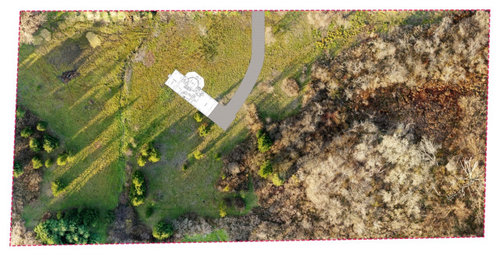
Planning ahead for the future, we’re about to break ground on our home, and thinking about our landscaping.

Quick overview, our property is roughly half vacant field and half scrubby woodland, focusing on the field half right now. Running through the middle of that half is a bit of a drainage swale, barely visible on the ground, at its closest, it’s roughly 50ft from the house. To the right of that swale, we’ll have the maintained grassy lawn area around the house, and beyond, we’ll be leaving it more natural for now.

Main question for now, I’d like to have a row of trees along the swale. Mostly decorative and screening from the road and houses in that direction. I’ve been going between clumps of river birch and/or quaking aspen.

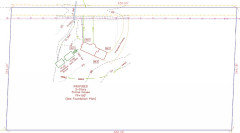
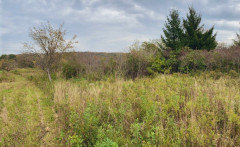
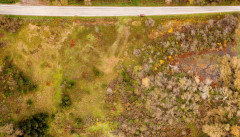
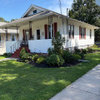
Any thoughts/suggestions/preferences/experience? Aerial of the lot for reference, and photo in roughly the direction the trees would screen.


Sorry forgot to add, located in Western New York, Southeast of Buffalo, zone 5b


Quaking Aspen
Something Else - please offer in comment
River Birch

Comments (24)

  • 4 years ago

    Where are you located?

    tj

    samohtep thanked tsugajunkie z5 SE WI ♱
  • 4 years ago

    Sorry forgot to add that. Western New York, Southeast of Buffalo, zone 5b

  • 4 years ago

    River birch drops branches of all sizes. I wouldn't plant it again.

  • 4 years ago

    What is the topography of your lot? Is it nearly flat or is there a slope into the swale?


    Where is you septic system going to be installed.


    What is the size in of the swale drainage basin? ie how much water is expected to come down the swale. You can not plant trees in the swale, as they will mess up the drainage


    Approximately where are your lot lines?


    How close can a house be built to your house?


    All of the above will affect what plantings can be done in on the property.

  • 4 years ago

    - Realizing that swale is a technical term, maybe I've misnamed it in my original post. The septic plans label it as ditch, so I'll use that instead. The lot has a gentle pitch towards the ditch, also noted is the grading away from house.


    - Septic is noted in green to south west of house.


    - Not sure to the answer of that, it seems to be an old field ditch, filled in or never dug too deep (The lot has been vacant and untended for many years). At the back edge of the property, it make a 90 degree turn to the east, travels about 150 feet, then makes a 90 degree turn south.


    - Lot lines are roughly the edges of the photograph, the lot is 5 acres. Measurements on the drawing below.


    - No houses can be built closer than 300+ feet in each direction, two existing houses to the west, to the north and east, several hundred acres of farmfield and woodland, sloping away. To the south is 20+ acres of similarly scrubby wooded land. The current code calls for minimum 250' street frontage and 3 acres total.


  • 4 years ago

    Plan for a windbreak west, northwest.

  • 4 years ago

    If I have my bearings correct, he wants to plant the trees west. northwest, the top left of the house in plan view.

    You most certainly can have a tree lined* ditch. That is a good way to protect and clean the water that will pass through there for the future. Give your tree selection some more thought. The eastern deciduous forest is bountiful and the right community of trees for this site exists.

    Talk to the forestry people at your local Cooperative Extension Service. They are online too. Lots of trees to consider.

    *lined - in the figurative sense - not a long row of the same kind tree.

  • 4 years ago

    What a beautiful site, I envy your opportunity to plant multiple trees! Look at this article for trees that work in your zone and your conditions, especially your wet ditch: Trees for wet areas. I love both metasequoias and bald cypresses. They grow fast and turn such a beautiful russet brown in fall, they'd be awesome paired with a ginko.

    Most importantly, like gardengal said, don't plant all of one species -- not only will it look better, it provides resilience when bugs or diseases sweep through an area and wipe out all of a particular kind of tree.


  • 4 years ago

    Thanks for the comments all and you have the direction correct. We are in a shallow valley so slightly protected from the prevailing west/southwest winds that come off Lake Erie (20+ miles inland). To the south and west, the trees that ring the back of the property are taller and thicker, with more evergreens.

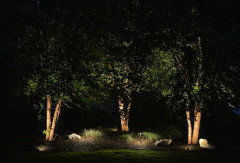
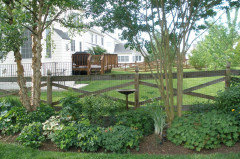
    Wind break/screening isn’t so crucial here, so let me explain a bit more of the idea. I’d like to put up a bit of split rail fence to delineate the “house area” from the “wild area” and in my head, I’m placing some lighting beneath the trees. Also, want to provide some fall interest with the bright yellow leaves catching the morning sun, and being side lit in the afternoon/evenings, and winter interest with the barks of both.

    We’ve got lots of other areas that will be selectively “naturalized” as we clear trails into the wooded area and thin out the gray dogwood and crabapple thickets.

    To the north/north east we’re keeping the view clear because the house is angled to view the treed ridgeline in the distance. (Phone photos don’t do it justice)

  • 4 years ago

    With the additional information, and the knowledge that you have nearly unlimited land for landscaping. The fist thing I would do is get a good lawn tractor/mower with a small trailer, this will help get all of the plantings to their final location ;-)


    I would plant the distant edge of the ditch with Evergreen and Willow. The contrasting color will make a nice back drop for your house. I may extend these trees to the bottom of the area in the landscape picture of the lot.


    I would flank the front central area of the house with something like Rose of Sharon, for color in the front of the house. I would create a flower bed in the angle of the drive with the garage pad.


    In the front yard I would put several flowering trees, Crab apple, Peach, etc.


    Final in the area to the lower right of the house I would create a large semi formal bed with perennials flowers and lilac, and other flowering plants. I would create several paths through the flower beds, with informal paths leading to through the yard.


    I assume you will have a patio in the back of the house which I would surround with various flower plants.


    Would also plant several flowering trees around the back yard.


    As for the Ditch. a graceful bridge to the meadow behind the Evergreen and willow trees, with a path would add interest to the back yard.

  • 4 years ago

    some might suggest that you live there a year.. experiencing all 4 seasons.. before you change the landscape ....


    i too would suggest you stand out there in a blistering winter wind storm.. and discover where the prevailing winter winds come from.. and plant trees to stop that wind ... or at least slow it down ... even if you have to infringe on the precious view to some extent ... you can artfully work around such to maintain it ... based on standing in every window of the house ... and highlight spots for your future trees ...


    so far your project has been engineered ... that is what house building is.. but understand.. that landscaping moves out of the left brain.. and into the right.. making it more of an art rather than a science ... and you need to experience the setting.. before you act ... imo ...


    once you more fully understand what you have there already.. then you can manipulate it toward reasonable goals ... e.g. are you aware of what if any spring ephemerals you might have in the wooded area??? ... how can you make a future plan without that knowledge.. for the wooded area??? .. let your paths evolve naturally.. rather than forcing some preconceived notion on the area ...


    good luck...


    ken


  • 4 years ago

    Thanks Ken, we’ve had the land a bit over a year now, I go out and wander around it a few times a week. Understood about acting on impulse, and the idea of standing in the windows to get the view is a good idea.

    The few paths that I’ve started to widen slightly have been the little animal trails that have been the easiest to travel and find my way through the thicket around the edge.

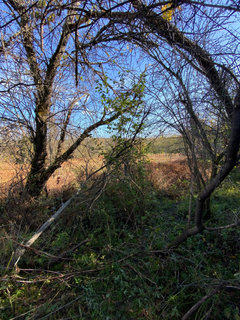
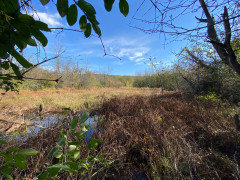
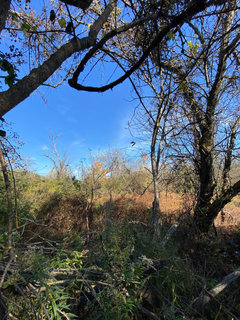
    As for ephemerals, the central portion of that wooded area is wet to some degree throughout the year. Attached is a overhead shot from this weekend following a day of intense rain. Quite a bit of water running between the little tussocks of grasses in there. As we go, I’d like to create some sheltered viewing areas and some places to sit just to see who else enjoys this land.

  • 4 years ago

    Just adding photos that I forgot to upload for the last post.

  • 4 years ago

    I take it the ditch drains to this marsh area? The drone shot shows a pretty big puddle. That could be an interesting ecosystem to care for. The trees look like they might be apples. Deer food.

  • 4 years ago

    Currently there is no ditch at the road edge, because it has been vacant land, the county never felt the need to maintain it. just a culver under the road for the water that finds its way there. The ditch that cuts through the property runs straight to the culvert.

    I haven’t discovered exactly where this water comes from, may be bleeding over from the field to the east, but that seems like it’s lower, so still a mystery how this fills.

    You’re right about the apple trees, lots of mushy ones carpeting the ground currently. I love that sweet cidery scent of fermentation! Haha. Plenty of deer tracks all over, I’m mostly just widening the trails they’ve made.

  • 4 years ago

    Would the deer come close enough to eat your trees?

  • 4 years ago

    Oh definitely. Plenty of them around here.

  • 4 years ago
    last modified: 4 years ago
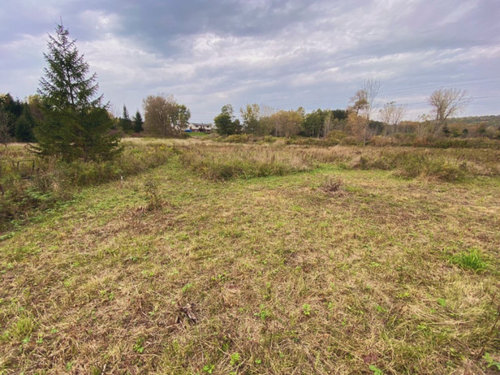
    Back to your original question, it seems you are wanting a more civilized planting of trees along the ditch/swale (that drains OFF the property via the culvert?) that screens the road a bit and acts as boundary of sorts between the more natural areas and the grounds around the house. Fall color, winter interest and maybe some up lighting are features you are most interested in. You have narrowed the choices down to Aspen and Birch.

    Of the two I'd pick the birch with all the never ending falling sticks and twigs over the colony forming aspen.

    There is currently a post on here about Nyssa sylvatica, Black Gum. I think that is a tree with good possibilities and fewer demerits within your criteria. Maybe some other folks can think of trees for fall and winter interest that will look good with a light up their skirts.

  • 4 years ago

    Would sycamore grow too large for your taste? I think their winter interest can't be beat.

  • 4 years ago

    That’s an option, I’d love to bring in some long-lived trees throughout the property.

  • 4 years ago
    last modified: 4 years ago

    Most any bottomland-loving tree can take occasional standing water. I've got swamp white oak, shellbark hickory, pond pine, pin oak, honeylocust, pond cypress and bald cypresses in such conditions and they thrive.

  • 4 years ago

    Seems like you got some great advice. You have endless possibilities with your land. Being stuck in suburbia I am envious. Gardengal made some great points. Black gums do have amazing fall color. They are turning before most trees where I live right now and the color is unreal. The lighting of the trees is a great idea too. I plan on doing that eventually as well. Kentucky coffee tree could look interesting in the winter if your plan is to light the trees up because of its simple silhouette.

  • 4 years ago

    Asen do best in high mountains - as in Colorado. even in Denver they can struggle.