Software
Houzz Logo Print
jonandkellie

Need repotting advise

4 years ago
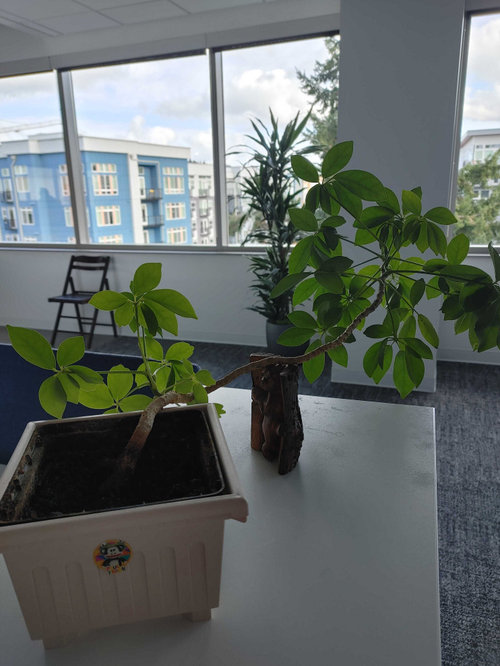
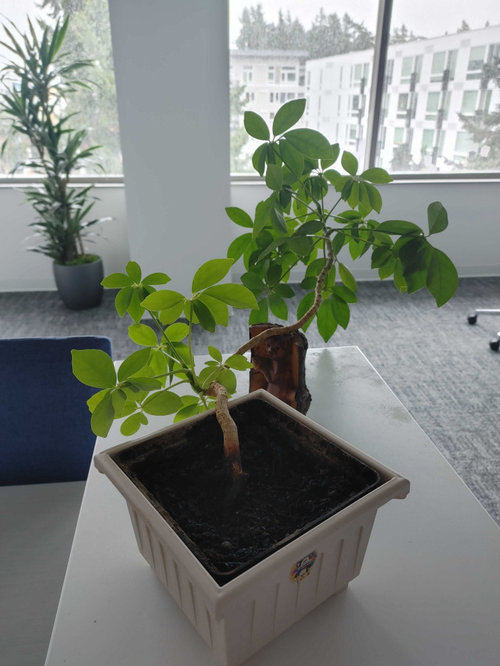
This Umbrella plant has belonged to my company for over 20 years. It was brought back from the brink of death, and DESPERATELY needs to be repotted (it has never been, the current square container is the original). The "soil" is basically just gone and it's one huge root ball. Clearly it is healthy but also growing horizontally. Any advise on what type of soil to use, and if it would be ok to stake it upright? Should we prune it back so it grows differently? Appreciate any and all comments so we don't kill it - that would be a dark day for the company, haha.


Comments (5)

  • 4 years ago
    last modified: 4 years ago

    Someone else should answer this...but if it were my plant and not my boss's, I'd knock the plant out and shake off as much soil as I could and repot it in any brand name houseplant soil. The other thing I would do if my job weren't in the balance would be to take a baggie with some damp soil in it and wrap a node up near the top of the plant hoping that roots will form in the bag from the node so that a new plant could be started. You can stake the plant if you wish.

    If it were my boss's plant, I might tuck it behind another plant to hide its ungainly growth. If it were my plant, I'd do some unattractive air layering.

    Anyone else?


    If the plant falters, by the way, you'll be blamed. You might just want your office nemesis to do the repotting.

  • 4 years ago
    last modified: 4 years ago

    Use a quality commercial indoor potting mix. You’ll find this at a nursery. Not Miracle Grow or Vigro. Gently knock as much mix off the roots as possible. Scrub out the interior of the pot.


    I hope you are taking it home or outside because it will be messy, and I assume it's double potted and the interior pot has holes. Your potting mix should be slightly damp, and after repotting you can give it a drink to settle the mix, then let it drain thoroughly.. I like to let repotted plants sit on a stack of newspaper to help wick out excess water. After it's back in place, use caution watering so it doesn't sit in water collected in that outer pot.


    You could stake the long branch if it cooperates. When a branch goes wild on my huge schefflera I chop it off. I wouldn‘t suggest that for you because it doesn’t leave much plant and co-workers might not approve. Of course it's only going to get longer and wilder. You might want to give it a quarter turn periodically to change the light it gets. Have fun! The plant does need help, and you'll be the hero.

  • 4 years ago

    First, I wouldn't do anything in the way of repotting until next June. It took many years for the grow medium to be broken down and the carbon oxidized and gassed-off as CO2, so a few more months w/o repotting won't be a 'make or break' factor in terms of the plant's viability. You CAN repot now, but repotting now ensures a long recovery (plants make little food during late fall/ winter/ early spring) and greater vulnerability to insects/ disease vectors and disease pathogens. Repotting in June offers greater probability that the plant's energy reserves AND it's ability will peak around the summer solstice (21 June), which would be the best time to perform the work I'll now describe.

    You have 3 practical options:

    1. Repot the plant in June, changing the potting angle so the main stem is close to vertical and the existing branch looks natural. A repot of this plant would consist of bare-rooting the plant, sawing off the bottom 1/3-1/2 of the root mass + other offensive roots (roots which are diseased/ circling/ girdling, growing straight up or down (relative to the new planting angle), j-hooked roots, roots which are crossing or growing back toward the middle of the root mass), and a complete change of grow medium to something appropriate.

    2) Repot the plant in June as described above, but don't change the planting angle. At the same time as the repot, prune the main stem immediately distal to the small branch, which by default become the new leader. Note the tree with the large white scar in the middle of the image - same concept.


    This is the same tree several years later ^^^....

    .... and this ^^^ is the same tree taken this summer.

    3) Follow the plan as above, except that you would prune 6" distal to the small branch, leaving a 6" stub to back-bud. For this option to look natural, you would need to regularly prune back growth on the thick part to reduce thickening, and allow the small branch to 'grow wild' until it is thicker than the stub you left. I expect this would take about 4-5 years to accomplish.

    If it was my tree, I would follow option 2. You're very likely to get some back-budding off of the small branch or the trunk below it.

    Let me know if you have questions or need more details.

    Al

  • 4 years ago

    We have no idea where the OP is located? Not everyone is spending December in some dark cave. Location matters, especially with respect to hemispheres! While I don't do much transplanting midwinter, I have been doing a lot recently this Fall. I get most of my interior sun in the Winter, not the Summer (when it's cloudy half the time anyway.) Looks like there are plenty of windows, so light should be decent, assuming you are not in the upper Midwest, Lakes, or Northwest. Waiting for a summer solstice is not without risks in areas that are prone to high heat at that time of the year. In general though, I prefer to do transplanting in the Spring in the Northern Hemisphere (April-May), and propagating in the HUMID season July-September here.

  • 4 years ago

    It's leaning toward the light. Is there an option for moving it closer to the window(s)?


    If this was my plant, I would propagate the top, leaving the side branch, and repot the base as described well by Al. I would reposition the base so that the foliage is at a more upright angle, just be sure to not change the soil level. The top of the soil in the new pot should be replaced at the same level on the tree as it is now. I don't feel like I know this tree well enough to know if I would propagate now, &/or repot now.


    My schedule is more similar to Margaritaville's, propagating during summer, avoiding repotting during that time whenever possible, with a difference being that this time of year, right before plants come inside, is when I do most of my repotting for vigorously growing plants. The calm, wind-free condition of the great indoors helps bigger plants adjust most easily to root disturbance. Outside they are subject to winds during the rest of the year, so they need to go into those conditions in an established state or risk being mangled by shifting sideways, or even getting blown right out of a new pot.


    Agree that we don't have enough info to make the timing decision yet for the asked-about Scheff, but whatever the decision might be, flushing the soil now could be helpful if this plant has been cared for by watering in place without the ability for excess water to drain away. If there is a place inside, or if it is warm enough to do it outside in the shade, gently but thoroughly add so much water that a lot flows out of the drain holes.

Sponsored
Peabody Landscape Group
Average rating: 3.5 out of 5 stars8 Reviews
Franklin County's Reliable Landscape Design & Contracting