Software
Houzz Logo Print
ginnyjj9b

Why was bread from my Hamilton Beach bread maker a disappointment?

4 years ago

I've only used this Hamilton Beach breadmaker a couple of times. Yesterday I followed a basic white recipe, and the bread was a big disappointment.


The recipe I used was not in their book and I made a couple of changes- added 2 eggs (to the liquid total volume) and butter instead of oil.


The crust was light brown which I wanted, but way too thick for me.

The bread had no flavor.

I like a chewy texture, this was not and was boring!


Can you recommend a book that will help me learn how to make the kind of bread I like?


Thanks!

Ginny

Hamilton Beach Bread Maker

Comments (25)

  • 4 years ago
    last modified: 4 years ago

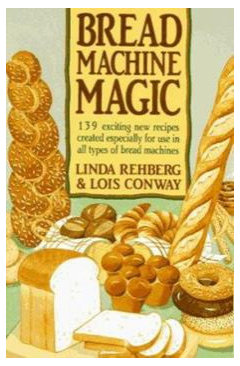
    This is MY go to bread baking recipe book. It's fantastic!


    Link to purchase a used copy

    ginjj thanked User
  • 4 years ago
    last modified: 4 years ago

    I think you've made the right decision to look for a published source for recipes.

    For baked items, I think there's enough chemistry and other physical science going on such that what may seem to be reasonable ad libs and substitutions often don't work. I've found it best to stick to recipe steps and instructions as exactly as I can. I think it also helps to use the best possible ingredients including fresh flour. I like King Arthur Bread flour for bread and pizza dough, I think the results are noticeably better - both flavor wise and texture wise.

    Good luck.

    ginjj thanked Elmer J Fudd
  • 4 years ago

    I've found that many recipes depend on the quality of the ingredients used. They can taste completely different when using other ingredients. As an example, Toll House cookies taste much better with premium, organic eggs than the store brand.

    ginjj thanked User
  • 4 years ago
    last modified: 4 years ago

    I LOVE King Arthur flour! Ingredients DO make a difference! Their catalog has GREAT recipes too!

    I mostly shop at a locally owned, tiny, hole-in-the-wall health food store that carries bread baking supplies in bulk. I found this site, by the same name that has great recipes also.: Mountain Mama cooks

    ginjj thanked User
  • 4 years ago

    It is a bad idea to make substitutions and changes to a bread maker recipe unless you really know your bread maker. They can be very persnickety.

    Egg will make a tender bread without the chew you desire so start there.

    ginjj thanked patriciae_gw
  • 4 years ago
    last modified: 4 years ago

    Enriched breads (butter and eggs) need a longer rise time. Eggs are not a simple substitute for liquid. They provide fat, protein, stickiness, loft, etc. Instant yeast (breadmachine yeast) can make this a bit better, but at a loss of flavor. The biggest culprit in lack of flavor is lack of sufficient salt, but salt slows the rise as well. Longer rise times for just about any bread yeild more flavor, but breadmachine is all about fast. Most of the good bread bakers I know, if they use a machine, it's just for mixing and kneading, They rise in the normal way and bake in the oven. I've only known two people (whose baking I knew) who baked bread start to finish in a breadmachine on a regular basis with good results. One made simple white bread, the fluffy kind, only. The other mastered her machine and didn't know how to bake in the normal way. She spent more than a year trying recipes and ingredients to learn the craft.

    Given all that, I'd follow Nicole’s advice and get the exact book she recommended and follow the recipes exactly, including the ingredients. King Arthur flours tend to be ”heavier”—they have more protein and will develop more gluten, which gives you more bounce and chew.

    As to Raye's comments, the difference in eggs is that the premium organic eggs are very likely to be noticeably fresher, which is likely the difference in the cookies. Additionally, if they're pastured, or at least outside pecking part of each day, the eggs may be tastier in their own right, but probably not to a level noticeable against chocolate and brown sugar. Hers is an important lesson, however. Every ingredient you use will have better and worse forms, and scrimping rarely pays off in the end, especially if you count your time, fuel, wash water, etc.

    ginjj thanked plllog
  • 4 years ago

    I don't have a machine bread maker any longer - DH retired and that's his new hobby. But when I had one I used the same cookbook that Nicole posted - very easy to follow.

    ginjj thanked maire_cate
  • 4 years ago

    Before investing in a book, try a few recipes from the King Arthur Flour website. If those work for you, yes they have a book. Read the recipe and the comments, they often contain useful information too. I'd start with this recipe for: no knead crusty chewy bread.

    ginjj thanked User
  • 4 years ago

    I also like the book that Nicole recommends. You cannot just wing it with bread ingredients.

    ginjj thanked Elizabeth
  • 4 years ago
    last modified: 4 years ago

    "the difference in eggs is that the premium organic eggs are very likely to be noticeably fresher,"

    I don't fully agree with this. There are locally or regionally produced eggs, and sometimes I see in stores eggs from hundreds or thousands of miles away. I'm not sure that the word "premium" has a prescribed meaning when referring to eggs but distance certainly has an implied impact.

    I try to buy locally produced eggs, usually organic and getting those from chickens who were pastured is a plus too. But not these types only, it varies. Local eggs have to be fresher than those coming from another state. But not all locally produced eggs are the same, those from some producers seem to taste better than those from others.

    For me, local eggs seem to taste best. Is that because they're fresher, or from smaller producers that provide better care for their chickens? Maybe one, the other, both, or something else entirely. If the flavor of eggs matters to you, for eating or cooking with, try different types and the ones you like best, are for you, The Best!

    ginjj thanked Elmer J Fudd
  • 4 years ago
    last modified: 4 years ago

    I have found bread makers for little money at thrift stores as well as bread maker cookbooks. I think I only made one recipe or two with the bread maker.

    I would think that the most UNnteresting loaf of bread one could make would be with a bread maker using ho-hum all purpose flour, or even bread flour. I wouldn’t expect it to have much character or flavor.

    If I were going to make something like bread from scratch I would use a good recipe (tested from a good recipe book) with ingredients that held great a promise then grocery aisle all purpose flour. (Not saying that’s what anyone did just my thinking.) I would probably not throw any curveballs until I made the recipe as it was first written.

    Then I would get out my notebook or spiral index card “lab book“ and document any changes and the results.

    I developed a couple of good recipes for bread doing this. For me I first have to know what I’m dealing with before ISet about making changes to it. That’s if something is new to me. With Southeast Asian entrees, I have enough experience to be able to create something without a recipe. So, fiddling around with recipes depends on your knowledge base in a particular area for best results.

    I’m sorry that your bread wasn’t very interesting. What attracted you to a bread maker? Was it the kneading feature? The lack of mess or required space? The appeal of a simple loaf of sandwich bread?

    ginjj thanked petalique
  • 4 years ago

    I've never come across eggs in bread. Brioche, yes but not bread.

    ginjj thanked Islay Corbel
  • 4 years ago

    With bread machine recipes, you have to measure perfectly. Don't scoop the flour, spoon it into the measuring cup then scrape off the excess. Don't change the recipe: odds are it won't work. While you can substitute oil for butter or skip the milk powder (my husband never uses it, I always do), adding eggs when eggs weren't in the recipe at all is a recipe for disaster. And make sure your water isn't too warm or too cool. Add the ingredients in the same order as the recipe calls for with the yeast on TOP.

    ginjj thanked WittyNickNameHere ;)
  • 4 years ago
    last modified: 4 years ago

    "I've never come across eggs in bread. Brioche, yes but not bread."

    There's a style of bread in the US called "Egg Bread". It's different from brioche in that as I remember it, brioche can be a bit sweet and egg bread isn't. Egg bread is a type of regular bread with the richness of eggs but (I believe) not any more sugar than regular bread.

    We brought an old bread machine out of its back cupboard banishment when the pandemic started. One of the recipes in the manufacturer-supplied recipe booklet is for egg bread. The recipe isn't terribly different from regular white bread but the amount of water is reduced and the recipe includes the addition of two eggs. The bread that comes out is yellow in color with a rich flavor - maybe think of it as white bread with eggs. It's delicious, especially when toasted.

    ginjj thanked Elmer J Fudd
  • 4 years ago

    Challah has egg, too.

    ginjj thanked Suzieque
  • 4 years ago

    There's a whole panoply of egg breads from many parts of the world. I think the difference is that in French there might be a real dichotomy in the definitions of "bread" and "brioche". Here, in the USA, "brioche" usually refers to actual brioche buns made in fluted molds with topknots, though sometimes it's used for a rectangular rolled and filled pastry which is basically a square croissant. OTOH, my mother always said that the challah recipe she created was a brioche dough, referring to the method rather than the outcome.

    ginjj thanked plllog
  • 4 years ago

    I believe Islay Corbel lives in France. Since like so many other food and cooking terms, "brioche" is a word from France, I assumed what she was referring to is what in France is called "brioche". It is something specific and, as I recall, it's kind of a halfway product, not exactly pastry but not exactly bread either.


    However people in the US use it would be as a borrowed term and perhaps for items quite different from what in France is called a brioche.

  • 4 years ago

    Brioche is a rich, buttery, sweet yeast bread. Can be any shape! Round, a loaf, plaited.....

    I suppose you don't have butter in your challah but otherwise they would be similar.

    ginjj thanked Islay Corbel
  • 4 years ago

    Thanks. The way borrowed food words go here is that they become more narrow or more broad and lose contact with the mother language. Like "salsa" (sauce in Spanish) is used almost exclusively for tomato based spicy (picante) sauces and relishes. Mole (southern Mexico for "sauce") is almost exclusively for the one that has a couple dozen ingredients including lots of fruit and a bit of chocolate. Whereas (as I've said, annoyingly to me) hummus, which means "chickpea" is used for any kind of thick puree. The challah recipe uses "vegan butter" or vegetable shortening--I've made it with butter for a dairy meal and it's not as good! The butter is too heavy. It also has eggs and a bit of sugar, and is a double rise. Challah in general is supposed to have all of your "best" ingredients. :)

    ginjj thanked plllog
  • 4 years ago
    last modified: 4 years ago

    "I've never come across eggs in bread"

    I've never made a loaf of bread but working in a large bakery as a mechanic for 3 years I know everything about the process, and never saw any type of eggs or egg substitutes used or stored for the dozens of different types of bread made.

    It was a high speed fully automated bakery and breads used basic dry ingredients and no eggs. The doughnut lines could of had powdered eggs in the 50 lb bags of dry mix for cake doughnuts but never saw an egg. One thing I did see was my waistline increase from all the doughnuts and bread I ate daily.

    ginjj thanked outpaientzero
  • 4 years ago
    last modified: 4 years ago

    I just ordered Bread Machine Magic thru Better World Books. Used $3.98! I've bought a lot of books from them and have been very happy. Also free shipping!

    ginjj thanked kathyg_in_mi
  • 4 years ago
    last modified: 4 years ago

    I'm a big user of a bread machine for bread, however, I always just use the dough cycle, and then pop the dough out and knead it at least once real good on my own before the last rise. I don't think that the bread machine can do quite the best job of developing the gluten structure that hand kneading can, if you do it right. That's what gives bread flavor and texture, the interplay between the yeast and the ingredients. Also, a longer rise develops flavor too. I'm always in search of better flavor and texture in my breads, so that's why I am saying these things, I've researched it and tried it out IRL. I also agree that flour quality makes a huge difference. I mail order special flours from Bob's Red Mill and King Arthur and store them in the freezer. I also use recipes specifically designed for the bread machine. I have "The Bread Lover's Bread Machine Cookbook" by Rachel Hensperger, which is also a fun book. Lots of details about using it there, although she bakes in the machine. I also don't care for the hole left by the paddle and the shape of the machine baked bread, which is another reason I convert all the recipes to baking in the oven.

    ginjj thanked l pinkmountain
  • 4 years ago

    How long do you knead it and can you describe "do it right." I am also wanting to find a texture I like and flavor I like. What is IRL? Thanks!

  • 4 years ago

    In Real Life. I kneed until the bread has the texture of an earlobe. Doing it right is kneading in such a way as to stretch but not tear the dough, which builds a gluten structure. When I can feel the dough starting to have tiny tears and feels more gluey, it's at the point where any more will be too much. If I had to generalize, I'd say it's usually about 15 kneads, which I do by rolling the dough with the pressure from the lower palm of my hand. This creates a stretching motion. You can google a lot of videos that demonstrate this process. The machine does build structure, but IMHO (In My Humble Opinion) a bit of hand kneading at the end creates something the machine can't quite replicate. Although folks who do the "Artisan Breads in 10 Minutes" type of breads, where the bread dough rises slowly and repeatedly in the fridge, claim they can get the good structure with just that process. I can't spare the fridge space so have never tried it.

    ginjj thanked l pinkmountain