Software
Houzz Logo Print
leisaowens

Island/ stove venting

13 years ago
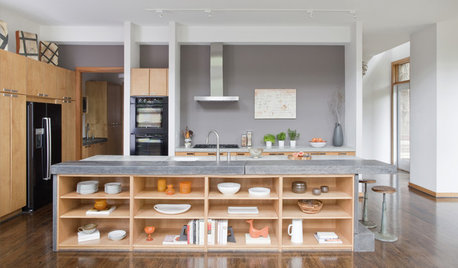
Can someone help please! We are wanting to put a stove in an island vs the corner of a wall? If it goes in the island what type of venting do you put? Any idea on price comparisons? My husband hates stove in corner, I'm not sure about vent hanging from ceiling in an open room? Thanks... Tampa

Comments (39)

  • 13 years ago
    Does your husband cook? I take his point for the luxury of pulling a hot pot to either side but the chimney evacuating the exhaust is to be considered. While being stuck in a corner to look after a simmering dish is awful, smelling the burning oils is no fun either. It's your party as it
  • 13 years ago
    Look up info on recirculation or extraction type hoods. Here's an example: http://ao.com/advice/cooker-hoods/buying-guide/what-is-the-difference-between-extraction-and-recirculation.aspx
  • PRO
    13 years ago
    last modified: 13 years ago
    My first home had a stove in the island, and the island was a huge slab of butcher block, which was great as long as I was careful (burn marks). I had a Jen-Air downdraft to vent the cooktop. It was all one unit and I loved it.
    It was great having it in the island, I felt like I could participate with party guests, pull things off the cooktop and serve them up - you tend to have more of an audience too.
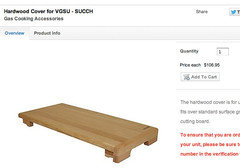
    I didn't have counter seating at the island but people inevitably gathered around the island at parties and I was always concerned about guests accidentally touching hot burners. (They would stay hot for nearly an hour after I turned burners off) I think because they had to stand people were more aware, but I would cover it with bakers sheets and towels when I was done. Not a good look. Now all kinds of products, like the chopping block below, are available to cover hot cooktops and I'd recommend getting them for an island cooktop.
  • 13 years ago
    I like to use a couple of small trifold grease splatter shields at the back of the stove to remind people the stove is hot.
  • PRO
    13 years ago
    Having the cook top or a combination oven/cooktop in the island is ideal for entertaining or everyday cooking so your idea is great. The vent hood above is compromised by cross winds so a downdraft ventilation system is the most efficient but you will need to have an unfinished basement or crawl space that will allow you to run the vent duct to the outside.
    I cook a lot so my personal opinion is buy a gas range and have no ventilation at all. If I burn something I'm going to open windows and doors to get the smoke out.
    I would put cool lighting above the island, build a half wall with a bar top to protect my guests and have fun cooking.
    Please check your local building and electrical codes before you follow my no vent advise.
  • 13 years ago
    They do make kitchen vents that are just a grill on the ceiling.
  • PRO
    13 years ago
    A grill on the ceiling wouldn't fly in California. Title 24 here requires an as needed exhaust fan be at least 100 cfm. In terms of cost, do you have a basement, crawl space or attic to run the venting? If not, it can get pricey.
  • 13 years ago
    @Maguire : I meant a vent (with a fan) that just (looks like) a grill in the ceiling. California does not require a range hood.

    Kitchen hood ventilation can be met with either a ducted range hood, a ceiling or wall mounted exhaust fan, or ducted ventilation system that provides at least 5 air changes of the kitchen volume per hour. A minimum intermittent ventilation airflow rate of 100 cfm and a maximum of 3.0 sone rate are required for kitchen exhaust fan per CEnC.Sec.150(o) & ASHREA 62.2
    http://www.google.com/url?sa=t&source=web&cd=1&ved=0CCcQFjAA&url=http%3A%2F%2Fwww.ci.milpitas.ca.gov%2F_pdfs%2Fbld_permit_sr_res_kitchen.pdf&ei=Os4aUve_BKbf2AXj3oC4AQ&usg=AFQjCNHWV9XLlgkK0z0KmtToif_HXyKE0g

    Further reading for fun and extra credit:

    http://www.google.com/url?sa=t&source=web&cd=3&ved=0CDgQFjAC&url=http%3A%2F%2Fresaveguide.lbl.gov%2Fsites%2Fall%2Fthemes%2Fvent%2Fpdf%2Ftitle24-simple-solution.pdf&ei=Ia8aUsTjOIbOyAGjkoGAAQ&usg=AFQjCNEv9Ozq564oUFcxwNilUcamoFicig
  • PRO
    13 years ago
    Fred, I read both your links. Then did some further looking. It is true that California does not require a range hood, Really, the UBC says you don't need exhaust venting at all (in certain circumstances)...but the caveat in the UBC is that the manufacturer's recommendation for ventilation must be followed. Some inspectors ask for the installation guide on both the range or cook top and the hood to verify that the recommendation has been followed. Cross ventilation allowing HOGS (heat, odor, gas and steam) to escape the air change is the reason most cooking appliances come with a hood or exhaust minimums and maximums in the appliance installation guide....So while the code states no MAXIMUM distance from cooking surface to hood....the Code body relies on the manufacturer to provide proper support and direction specific to their appliance. In many years of installing all kinds of cooking appliances, I've not seen one manufacturer that says it is OK to place the ventilation inlet farther than 36" from the top of the cooking surface. Since the UBC is a California code, some would think this does not apply. to them...but the UBC is really California's rewrite of the IRC (not stating the obvious to Fred, but for others) and the IRC has been adopted in some form by the entire country. Enforcement is a different story.
  • 13 years ago
    Well, here are the first 3 gas ranges picked at random by Google. Not one of them requires a hood. Broan, Nutone, and every other company that makes bath fans also make flush ceiling mounted fans for kitchens. Listed for kitchens with a charcoal filter and everything!
    All three of these examples mention electrical grounding, floor covering, wall covering, distance to upper cabinets, distance to side walls, combustion air, etc., but no need for a hood. The last one even suggests using a stainless steel plate under the cabinet to bring the clearance down to 24" instead of a range hood!
    So, I guess that if you don't need a range hood at all, then one on the ceiling that is LISTED for that would be just fine.

    http://www.google.com/url?sa=t&source=web&cd=1&ved=0CCcQFjAA&url=http%3A%2F%2Fwww.ajmadison.com%2Fajmadison%2Fitemdocs%2F316259336en.pdf&ei=iukaUq7HEsfP2wWb_YCYBQ&usg=AFQjCNFgKKhOxEodS8mbDmkoa8aWwVTymw

    http://www.google.com/url?sa=t&source=web&cd=2&ved=0CCkQFjAB&url=http%3A%2F%2Fc.sears.com%2Fassets%2Fmisc%2F844234i.pdf&ei=iukaUq7HEsfP2wWb_YCYBQ&usg=AFQjCNEWC2COyBFzkv47cctOqw_WxkIRJA

    http://www.google.com/url?sa=t&source=web&cd=3&ved=0CCsQFjAC&url=http%3A%2F%2Fwww.whirlpool.com%2Fdigitalassets%2FMLPDF%2FInstallation%2520Instructions%2520-%25209758657.pdf&ei=iukaUq7HEsfP2wWb_YCYBQ&usg=AFQjCNHPlR8Ks908yq2As3EWMkmad7iBkA
  • 13 years ago
    I did an induction cooktop with a pop up downdraft on a butcher block countertop and it was awesome! The stove is cool in about 3-5 minutes. Completely. Once i went induction, I could never go back. It's amazing.
  • PRO
    13 years ago
    Fred...really? Three generic, non-product specific installation guides? There will always be an exception to the rule, I guess. But a quick review of Viking's generic installation guide for a 30" gas range shows the same thing...right alongside the requirements for a range hood. Picking my battles, Fred. How many inspections have you been through? You can argue your interpretation of the code all day long but a red tag is a red tag...they suck and slow stuff down. Today's high heat ranges really need to be vented properly....and to paraphrase someone recently....what is the benefit of building to code absolute minimum? Is it really something to be proud of...that you did the least possible? Granted, it is an option....but if there is not enough cfm from the fan to drag the HOGS up to the ceiling inlet it is a fail.
  • 13 years ago
    I don't like people saying something needs done for code when it is merely an opinion.

    If a homeowner doesn't want a hood, then that is their prerogative. Even by California's big brother standards.

    My job is to give a customer the best advice I can and if a flush mount ceiling fan is the alternative to them choosing to have nothing at all, then I will suggest it.

    If the range companies (including Viking) do not see any liability in not requiring a range hood, then maybe it isn't as big of an issue as you think.

    The real liability here is the make up air that will cost significantly more than that range hood if they go over 400 cfm.


    Viking:
    Wall cabinets above the range must be a minimum of 36” (91.4 cm) for open top burner units and 42” (106.7 cm) for sealed top burner units above the range cooking surface for the full width of the range. This minimum height requirement does not apply IF a rangehood is installed over the cooking surface

    http://www.google.com/url?sa=t&source=web&cd=5&ved=0CC8QFjAE&url=http%3A%2F%2Fownhonuakai.com%2Fwp-content%2Fuploads%2F2013%2F06%2Fowner-resources%2FAppliance_Manuals_Residences%2FViking%2520Range_Oven%2520Installation%2520Guide.pdf&ei=VP8aUq2sA4Pb2AWqz4DACg&usg=AFQjCNGIQX-LrkwFT5YByXWf37P5BwEdkg


    M1503.4 Makeup air required.
    Exhaust hood systems capable of exhausting in excess of 400 cubic feet per minute (0.19 m3/s) shall be provided with makeup air at a rate approximately equal to the exhaust air rate. Such makeup air systems shall be equipped with a means of closure and shall be automatically controlled to start and operate simultaneously with the exhaust system.
  • 13 years ago
    last modified: 13 years ago
    Besides, if the person that asked the original wanted to use a down draft that may not be adequate either, then an additional flush ceiling exhaust fan to pick up more of what is missed might be helpful. Just because it is not what you usually do doesn't make it wrong. They are listed and approved just like a hood.
  • PRO
    13 years ago
    Fred..I finally found the code i was looking for....CA uses ASHRAE 62.2 (2013) for both make up air requirements and non-required...but the code there definitely calls for a "hood" to exhaust the kitchen. http://www.energy.ca.gov/2010publications/CEC-400-2010-006/CEC-400-2010-006.PDF
  • 13 years ago
    I love cooking and it gets smelly and damp, so code or not, I want ventilation of some sort. And since I'm not willing to pay money for a filter that recirculates moist, I like the traditional hood, that quides my kitchen fumes outside.
    Many ways to make an island hood look good. And if it's allowed and possible to have down draft, I would add a ceiling vent for assistance. The other option is to regularly wash the grease off cabinets and ceiling.
  • PRO
    13 years ago
    A downdraft fan is the best idea for an island, in my opinion. They work great and are usually very quiet because the motor is inside the cabinet beneath. I would never consider a kitchen with no fan. Too much grease collecting on all the surfaces in your home as well as moisture issues. I could go on. If you can connect your island to an outside wall (creating a peninsula), you can run ducting through the backs of adjacent cabinets to the outside, eliminating the need for a crawl space to run ducting. This may not be an option, but I thought I would mention it.
  • 13 years ago
    DISCLAIMER Staff members of the California Energy Commission prepared this report. As such, it does not necessarily represent the views of the Energy Commission, its employees, or the State of California. The Energy Commission, the State of California, its employees, contractors and subcontractors make no warrant, express or implied, and assume no legal liability for the information in this report; nor does any party represent that the uses of this information will not infringe upon privately owned rights. This report has not been approved or disapproved by the Energy Commission nor has the Commission passed upon the accuracy or adequacy of the information in this report

    This guide does not include explanations for the use of other acceptable compliance alternatives in addition to “exhaust-only” ventilation, which are described in Section 4.6 of the 2008 Residential Compliance Manual

    VENTED RANGE HOOD REQUIRED IF EXHAUST FAN FLOWIS LESS THAN 5 ACH.* IF THE RANGE HOOD IS USED FOR LOCAL EXHAUST IT MUST BE VENTED TO THE OUTDOORS

    That is a lot of "IF" there to be a requirement.
  • 13 years ago
    last modified: 13 years ago
    Here is a non-"hood" installation that is practically on the ceiling. It is in San Francisco California.
    ://
    Kitchens · More Info

    http://
    Kitchens · More Info
  • 13 years ago
    Here is another from Berkeley.

    Kitchen Exhaust: Kitchen fans must either be a ceiling exhaust fan or a kitchen range hood. For the kitchen fan to meet the whole-house ventilation requirements, it needs be run continuously and achieve a minimum of 5 air changes per hour for the kitchen area. For local ventilation requirements, the intermittent (as needed) kitchen fan must be at least 100 cfm.

    http://www.cityofberkeley.info/ventilation/
  • PRO
    13 years ago
    last modified: 13 years ago
    It may be unwise of me to insert myself into this code debate, but...

    As far as code requirements for an alteration, I'd go further than Fred on this.

    The only requirement of which I am aware to install any kitchen venting of any kind in a low-rise residential installation in CA State base code (including IRC & CMC, excluding local muni codes) is under the Energy Code T.24,Pt.6,Ch.7 mandatory requirements referred to as "Section 150", under par (o) which requires "dwelling units" to meet ASHRAE 62.2 requirements for "any new construction in a low-rise residential building".

    But simply replacing, moving or adding a cook-top or hood is not "new construction" of a "dwelling unit". It is an alteration within one covered under T.24,Pt.6,Ch.9 which requires compliance of "altered components or newly installed equipment" of an alteration to comply with, among other things T.24,Pt.6,Ch.7,Sec.150,(a)-(p) which includes (o) and by extension ASHRAE 62.2.

    The question boils down to whether the T.24,Pt.6,Ch.9 "altered component" or "newly installed equipment" in the case of required compliance with T.24,Pt.6,Ch.7,Sec.150,(o) is the hood, cook-top or the "dwelling unit."

    Seeing as (a)-(p) refer to all sorts of equipment but not hoods or cook-tops and (o) only refers to the "dwelling unit", an altered or added hood or cook-top in our reading would not qualify for the Chapter 9 and by extension ASHRAE 62.2 compliance requirement. To require anything else would be to require an entire dwelling unit's compliance with ASHRAE 62.2 to be triggered by any alteration of any part or component of the dwelling be it a kitchen renovation, a hood replacement or just new carpet.

    Our interpretation has been met with agreement and dissent among varying municipal code officials.

    Our approach however, with clients, is that of Ironwood: just because code doesn't require it in the case of a renovation, doesn't mean it makes sense to omit it. And just because code would allow you to draw only some minimal cfm out of the kitchen in general as part of a whole house ventilating design in a new construction, we *always* recommend installation of a vented hood over a cook-top in an existing kitchen alteration because it makes sense. We only defend its omission if there is an over-riding rationale and/or insistence on the part of the client demanding it.
  • PRO
    13 years ago
    Fred I wasn't correcting you, just clarifying.
    The OP hasn't been back. Did we scare her off?
  • 13 years ago
    I am not scared off was looking and checking all the options suggested! I am on a budget
    And can not afford some of the options suggested as much
    As I would like too. I do have crawl space and an
    I am in Tampa and need to check into required code
    Here. I just have always had a vent and my husband tends to cook
    On higher heat creating more smoke hence the feel for a
    Need for one! Now looking into the above ceiling flush mounted. I'm am
    Thankful for the knowledge in an area we had none in!
  • 13 years ago
    Hopefully, the OP is just laughing at us. I still think your clarification is off a bit, at least according to Berkeley and other cities. The question then, is how could a 900 cfm ceiling height (8') be inferior to a 100 cfm (by code) fan mounted 30" lower? I prefer to look at these things in a problem solving way, rather than with a "you can't do that because the sheep say so" attitude :). And I think ReSquare likes a good debate as well as the rest of us.
  • 13 years ago
    I had a drop in, Jenn-Air downdraft range in my former kitchen and liked it a lot. It had a gas cooktop and electric oven
  • 13 years ago
    So back to Florida, how tall is your ceiling? According to the IRC, any exhaust over 400 cfm comes with a $2,000 make up air requirement. However, I don't see anything that says 2 systems, each under 400 cfm, totaling around say 750 cfm wouldn't work. Normally, you may only use the down draft, which may be queiter, and, on occasion, need them both. A cheap 350 cfm AUXILIARY fan for the ceiling could cost as little as $300 in parts, but not real quiet.
    http://m.grainger.com/mobile/details/?R=4C700
  • 13 years ago
    My ceiling is 8 foot and there is crawl space and attic space. Gas stoves are extremely rare here!!
  • 13 years ago
    So Fred the larger the com the quieter?
  • 13 years ago
    The smaller the SONES the quieter.
  • 13 years ago
    So, I take it you are going with an electric stove? We were just using gas as the worst case scenario, although the code book doesn't differentiate for the most part.
  • 13 years ago
    Another way to make it quieter is to move the fan up into the attic.
    http://www.hvacquick.com/products/residential/Kitchen-Exhaust/Kitchen-Exhaust-Fans
  • 13 years ago
    This type of thing would go in the ceiling or a soffit/coffin if you prefer.
    http://www.hvacquick.com/products/residential/Grilles-Registers/Filter-Grilles
  • 13 years ago
    The ceiling mount would solve my problem!!
  • 13 years ago
    Of course, as others have pointed out, the local building officials could be a pain to deal with, so definitely check with them. BTW, the filter grill and in-line fan in the previous post go together to make a customizable system along with a roof cap.
  • 13 years ago
    We had a Viking gas cooktop in our island, with a long vent that rose out of the island behind the burners when we turned it on. We didn't use it often, but it was nice to have it there when needed. We had a very large island, so I was able to place a long planter between the cooking surfaces and the spot where my kids would sit at the counter, to keep a separation between the two. I don't think I would ever recommend a cooktop on an island though, because it really breaks up the space and is a place where people like to congregate and lean - not good (or safe) when you are trying to cook.
  • PRO
    13 years ago
    Final answer is: Find out what the sheep say! How about that!
    And lots of votes for the island cooktop.
  • 9 years ago
    last modified: 9 years ago

    I'm glad I found this old string. We currently have a Thermador dual fuel range with a pop-up downdraft in the island, and it's time to replace it (bought it in 2001).

    The downdraft never worked very well at all, and anyway I seldom use it. I guess there is just plenty of air circulation. and we don't do a lot of smoky cooking. No noticeable grease anywhere in all these years. When there is a smoky problem, I just open the window.

    In our old house, when we remodeled, we also had a range in the island, and we just had an exhaust fan (and just a small one at that) in the ceiling. It worked at least as well as this downdraft did!

    The only downdraft ranges (must be a range, not a cooktop) available, Kitchenaid and JennAir, don't look great to me. We like gas cooking, and that style of downdraft just sucks the flame over. I'll get one if I must, but I'd really prefer. to get a range I love and put an exhaust fan in the ceiling (there is nothing above the kitchen, just a flat roof).

    The range I like best so far, just from internet research, is the Samsung Flex Duo. Gas or dual fuel. (thoughts?)

    I know I know I know, code code code, grease grease grease, resale resale resale, and I promise to consider all that carefully before making a final choice. But in the meantime, would someone please recommend an exhaust fan for me?

    Thanks in advance for your advice, o wise ones!

    - Gellchom ("Our Lady of the Tapmaster")

  • 3 years ago

    I have a kenmore classic downdraft slide in range 33 yrs old love the down draft I am looking at a samsung inductuon range and wanted a downdraft to go with it what is recomended its on an outside wall venting not a problem