Software
Houzz Logo Print
josh_warwick82

Looking for privacy screen recommandations with evergreen trees

4 years ago
last modified: 4 years ago

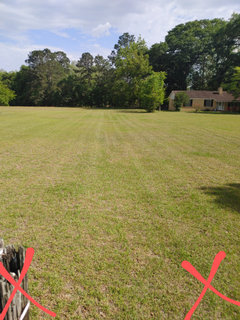
We are going to be planting trees all the way down our property line as a privacy screen and to help a little with noise. The trees will be in south georgia in sandy soil.I believe evergreens would be good choice because of size and staying full year round. Ive looked at green giants but worry about proximity to house and they would be about 15 to 20 feet from septic which im not sure if that is far enough to avoid root problems. We liked american pillars but those arent as available and seemed to cost a bit more. We will need at least 40 to 50 trees down side of property.This is all new to me and still learning so any advice recommandations greatly appreciated Thanks!

Comments (27)

  • 4 years ago

    Sadly, nobody can help you until they know your geographical location. A picture of the proposed planting site and an indictation of the length of the boundary would also be extremely useful.

  • 4 years ago

    Eastern Red Cedar, Juniperus virginiana, may work for you.

  • 4 years ago
    last modified: 4 years ago

    Evergreens don’t have to be conifers. I’m sure there are plenty of interesting flowering broad leaves which would grow there.

  • 4 years ago

    I’d echo eastern red. Thuja green giant, any large arborvitae will grow fast.

  • 4 years ago

    Main reason i was looking at the arborvitaes and thujas was they stay full top to bottom for privacy. How far do green giants need to be from septic tanks?

  • 4 years ago

    If you email or call your local cooperative extension agent they will be extremely familiar with growth rates of various species in your area. They are county specific and have some great thoughts about what might be best suited to your location, what does best, and what other people have found causes root issues. Find them by googling "your state+county+cooperative extension."


    When you do invest in/order all these trees please come back and read about deep watering, and how lack of it will result in about 50% failure rate the first year. Keeping them deep watered will be key to successful establishment.

    Joshua Warwick thanked cearbhaill (zone 6b Eastern Kentucky)
  • 4 years ago

    Because "full to the bottom" is a desire, be sure to find out if deer are an issue for your selection(s) -- they can eat a tree up as far as they can reach. But they rarely bother eastern red cedars. Here's a link with a few cultivars you might want to consider: pros and cons of eastern red cedar

    Joshua Warwick thanked User
  • 4 years ago

    I did a quick search on the root systems of arborvitae and seems like the root system for a Green Giant could reach 24” deep and as wide as the canopy of the tree. If it reaches 20’ at maturity, it’s roots would be approx 20’ diameter. Hope that helps

    Joshua Warwick thanked ginatay124
  • 4 years ago

    "If it reaches 20’ at maturity, it’s roots would be approx 20’ diameter."

    That is a bit of a fallacy :-) The spread of tree roots has very little to do with canopy spread OR tree height and everything to do with accessing resources. Roots travel or spread as far as they need to ensure adequate soil moisture and nutrients are available. There is an indirect relationship between tree height and root spread as the taller the tree, the more resources required so roots need to travel further.

    That 20' tall Green Giant could very easily (and most likely) have a root system that spreads out as much as 30-40 feet (or more) in all directions from the base of the tree.

    btw, 20' at maturity for a Green Giant is a serious underestimation of size :-)

  • 4 years ago

    Yeah most of what ive read shows 50' to 60' once grown is there a comparable tree that gets full top to bottom that would be safe near septic area? Thanks everyone!

  • 4 years ago

    The septic field on my property is surrounded by very tall conifers and bigleaf maples and even after nearly 60 years, there are no issues with tree roots. The real concern is planting directly over the leach field where the roots interfere with the piping. And hopefully the tank is in good condition and secure so that is also a non-issue as well.

  • 4 years ago

    I found and planted an arborvitae variety that tops out at ~20', also to screen my back property line. They don't like being shaded by another tree, I've found out, if that is a chance (my side neighbor's box elder has grown to that point). This one has a more rounded shape at the top - unfortunately I don't remember or have a record of the variety!

    Techny and 'Emerald Green" are two varieties that top out at 15-20' IIRC.

    Do check with your local extension office to see what evergreens are suitable for your soil and climate. I think that arborvitae like moisture - mine are in clay, where the water tends to stand after heavy rain, and they like it.

    Eastern Red Cedar or maybe juniper?

    Joshua Warwick thanked raee_gw zone 5b-6a Ohio
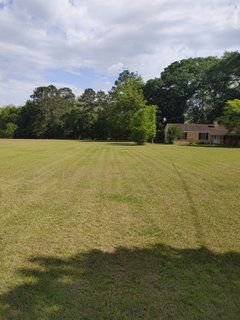
  • 4 years ago

    So i called a tree company and their horticulturist said green giants 100 ft away and emerald greens 50 ft away from septic

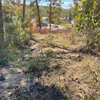
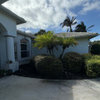
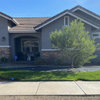
    I might have 20 feet to work with if im lucky everywhere else is wide open except septic on side of house i cant just have a giant hole in my tree screen there though i will post pics so can see what im working with thanks!

  • 4 years ago

    So i measured and have about 40 ft between septic tank and property line but need probly 10 ft for width of trees so maybe 30 ft for something safe near

  • 4 years ago


    Septic tank under the red

  • 4 years ago

    Lordy!! You have plenty of room - plant whatever you like.

    Joshua Warwick thanked gardengal48 (PNW Z8/9)
  • 4 years ago

    Any trees planted in your yard should be at least as far away from the septic tank as the tree is tall. For example, a 20-foot-tall tree should be planted at least 20 feet away from the septic tank. Is this accurate?

  • 4 years ago

    ^^^ Not necessarily. It depends on the type of septic system and the type of tree.

    The trees on my property - 60-80'+ tall Doug firs, bigleaf maples and western red cedars - are well within their height distance from the septic field, in most cases within 20-30 feet of it. And I have clients with septic fields in actual woodland settings with trees surrounding and interspersed with the septic plumbing.

    If you have questions, the best place to ask is the company or agency that services your system.

  • 4 years ago


    The post is property line all our room is on other side of yard but this where we need privacy and noise control at.

    So basically between post existing tree have about 30 ft off of

  • 4 years ago

    What is the length of the tree line you are wanting to plant? is that the same house in the pictures? The setting does not call for a wall of arborvitae. The septic tank is not so much the issue. Where is the drain field? Flat and sandy in S. Ga.

    Joshua Warwick thanked Christopher CNC
  • 4 years ago

    If i spaced trees about 5 to 6 feet apart i would need around 40 trees to go all way down property line im open to planting anything that will give us a privacy buffer and help with noise a little yes same side of house in all photos drain field i need to verify which way it goes and yes we have very sandy

  • 4 years ago

    Got some noisy ppl down the way and there is also a woodchip mill few miles away would like to muffle noise from both and block us off from all

  • 4 years ago

    There are other houses and lots of other random crap not shown in photo we have over 2.5 acres but on other side of our

  • 4 years ago

    Yes 10 to 15 feet would be ideal as long as its ok near septic no root

  • 4 years ago
    last modified: 4 years ago

    You want shrubs not trees. Wax Myrtle, Anise, Juniper, Loropetalum, Pyracantha are a few to consider. Find a good local nursery, not the Big Box. Ask about large shrubs and tell them you are planting an unpruned hedgerow. Add a few trees to frame the view.

    Joshua Warwick thanked Christopher CNC
  • 4 years ago
    last modified: 4 years ago

    If you decide to go with shrubs, check your state's Dept. of Natural Resources (or equivalent) to see which shrubs are invasive in your area. For example, privet, burning bush and japanese honeysuckle are on this state's invasive species list, but nurseries are still selling them. I don't know of any evergreen shrubs that are invasives other than privet, but check to be sure.

    Joshua Warwick thanked raee_gw zone 5b-6a Ohio