Software
Houzz Logo Print
samnsarah

Die Back on Oakleaf Hydrangeas

4 years ago
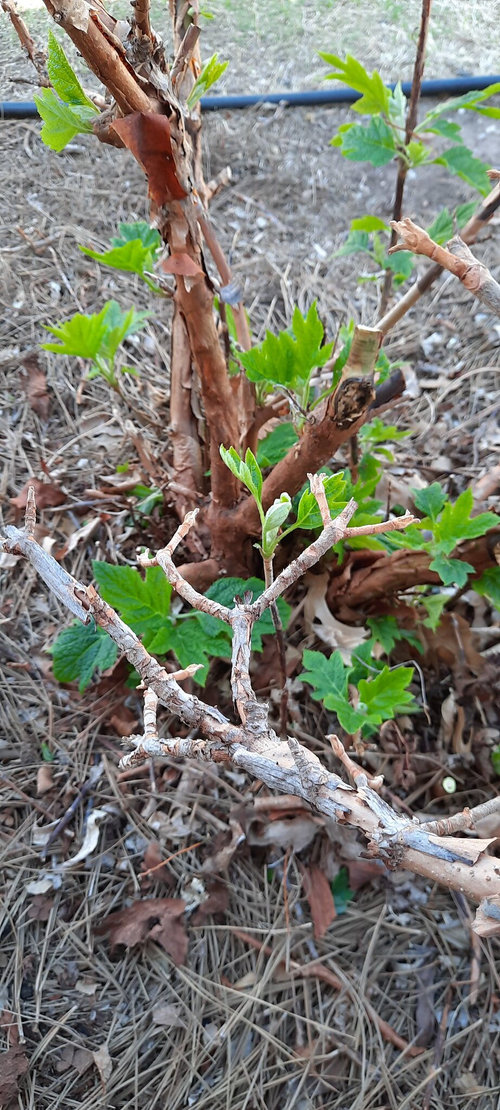
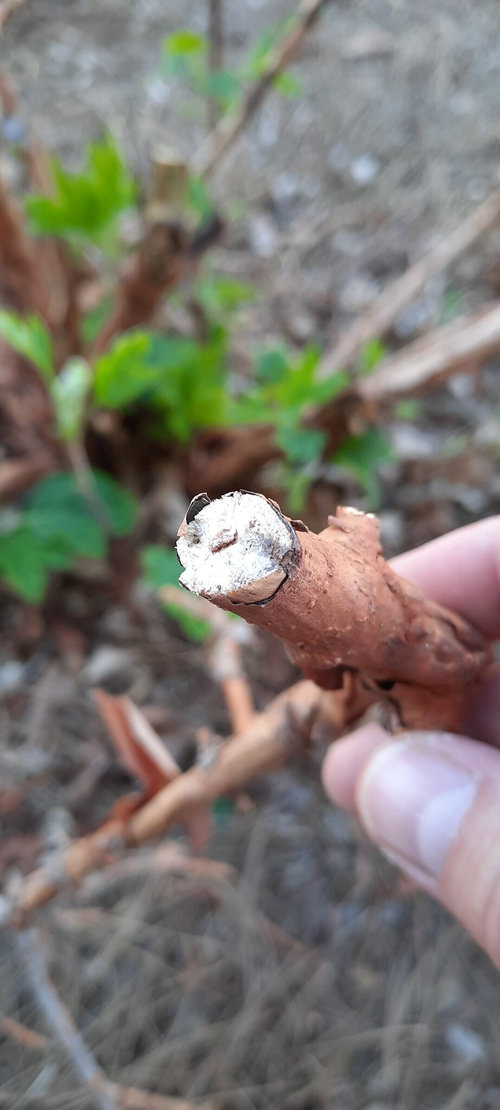
Attached are a couple of photos of a branch I pruned from a Ruby Slippers Oakleaf Hydrangea. We had a prolonged three-month drought from January thru March. Many of the branches on these shrubs had leaf shoots on them in March that would have pushed out new leaves, but instead died. Many of the branches that had die back in them still have new healthy leaves growing, so it doesn't appear to be a disease. All of my Ruby Slippers and Snow Queen Oakleaf Hydrangeas had this happen to them. I also had a Limelight Hydrangea with some dieback, although to a lesser degree. My Diablo Ninebark, located in a different area of my yard, had A LOT of die back. My Chinese Pistache tree, Rosy Glow barberries, Summer Wine Ninebarks, and Gold Mound Spireas were not affected. So do you think it is a result of that drought or something else.


The dead branch is in the foreground, and you can see the new leaf shoots that are now dead. Every branch was this way.


Here is a pic of the cut stem of the same branch. As you can see, it's dead as a mackerel.


Comments (7)

  • 4 years ago

    Sorry to hear that. I learned to monitor for dry winters the hard way too. Lost an Annabelle when I turned off the drip due to extended cold weather and forgot to turn it back to "on". It wasn't until some evergreens started drying out that I realized that my sprinkler system was not running. Oops. Good luck. They will recover if you water and mulch. Maybe wait until May to prune dead wood in case some of those dead looking stems have some life still in them.

  • 4 years ago
    last modified: 4 years ago

    where are you. big city name ...

    winter dieback is not all that uncommon ... in my MI ... it seems i used to have to prune out dead stuff just about every year ... you sound surprised thats even a possibility ...

    and that dead part.. look like its been dead a lot longer than since march ...

    as your plant finally establish a very mature root mass... then this sot of stuff will be more minimal ..

    btw ... how did you rule out cold damage to buds in jan/march???? .. perhaps its due to your unknown location ...

    ken

  • 4 years ago

    So I'm in South Central Kansas (zone 6b).  Wichita, KS is the largest major city.  We very rarely see temperatures in the single digits around here.  When we do, it's not prolonged...maybe one night.  We have dry windy summers and dry windy winters.  Winter die back is uncommon but not impossible.  In 2020 we had a cold snap to 5 degrees for two days (very unusual) that killed every crape myrtle and nandina to the ground, but not my oakleaf hydrangeas.   It didn't even phase them.  However, we had a prolonged ( 2.5 to 3 month) drought from Jan thru March.  No Temps below 20 after the end of January and nothing below 30 after the end of Feb.  The shrubs in question are each about 5 years old so well established.  The oakleaf in the photo also got damaged when the roofers dropped plywood and shingles on it.  Almost sheered it in half.

  • 4 years ago

    If the problem is happening with multiple types of plants, it's probably the drought. Plants don't need much water when dormant, but I guess they still need some. If the roots are still alive, the oakleaf will be fine as will the ninebark. I agree to wait until May and cut off anything that has no new growth.

  • 4 years ago

    I'm sure they will be fine.  I'm not concerned about that as all the shrubs are pushing out new foliage and stems that look healthy and clean.  I just wanted to make sure my drought theory was on the right track, since I've never experienced this much die back on half my shrubs at one time.  Good lesson learned: give the less drought tolerant shrubs some water during the winter droughts.

  • 5 months ago

    Here because I looked this up. Year 3 possibly 4 for my snow queen which always has a little die back but this year is worse. Most plants get stronger with but this appears to be the opposite.

  • 5 months ago
    last modified: 5 months ago

    Well, it is hard to say but Philadelphia’s winter of 2025–2026 followed a period of ongoing drought, with below‑normal precipitation, so it entered winter already stressed, making it more susceptible to winter injury or even having dieback due to lack of enough water.. Sometimes frosts also arrive and damage certain sections of the shrubs and leave the rest unaffected; or they injure one shrub and leaf the next one healthy. Try doing a fingernail scratch test at the base of the dead looking stems to confirm that they are or are not dead; if dead, prune them all the way down; or give the stems a few more weeks like until mid to late May to see if anything happens with those since your overnight temperatures used to be in the 50s but now dropped to the 30s and 40s and are forecasted to stay like that thru May 7th. The stems typically start to break dormancy when overnight temperatures are near or above to 50F but that would be healthy stems. Finally, look to see if these are signs of underground pests like voles that could have damaged roots in one side of the shrub. The area still remains in a moderate drought.

Sponsored
Peabody Landscape Group
Average rating: 3.5 out of 5 stars8 Reviews
Columbus' Reliable Landscape Design & Contracting