Software
Houzz Logo Print
hzdeleted_5149688

Fritillaria recurva, gentneri, and affinis

4 years ago

Hi Everyone. I finally managed to go check out the Fritillaria down in southern Oregon this past weekend. This has been on my list of things to do for about 15 years. Like they say, you’ve got to take the time or time will take you. Actually, I just made that up and I don’t think anyone says that. I digress.


I found what I think are Fritillaria recurva and Fritillaria gentneri, the later is federally endangered and also hypothesized to be some sort of fertile hybrid between F affinis and F recurva as it is somewhat intermediate between the two and grows where the ranges overlaps. From what I can find, F gentneri is found at 106 locations, all in southern Oregon within a 17 mile radius of Medford and there are a total of about 3000 plants in the wild. Several of these 106 sites have a single plant representing the site, and also many of these sites are within sightline of each other. Realistically, there are probably about 20 areas that you and I would call “sites” with more than one plant in a chunk of land. We technically visited “10” of the sites, even though I would call it one site.


Here's what the web thinks is the difference between recurve and gentneri: "The nectaries of F. gentneri generally extend 1/4 to 1/2 the length of the tepals, while those of F. recurva extend 1/4 or less, and the long glands of F. affinis extend 1/2 or more of the tepal length. The style of F. affinis is divided for 1/2 of its length or more, with widely spreading branches, while only the tip (1/4 or less) of F. recurva’s style is divided, with erect branches. The style of F. gentneri is intermediate between the two, with somewhat spreading branches extending slightly less than 1/2 the length of the style."


I doubt if my pictures are good enough to differentiate the two species, but I thought that I would share anyhow. If you have any opinions, let me know.


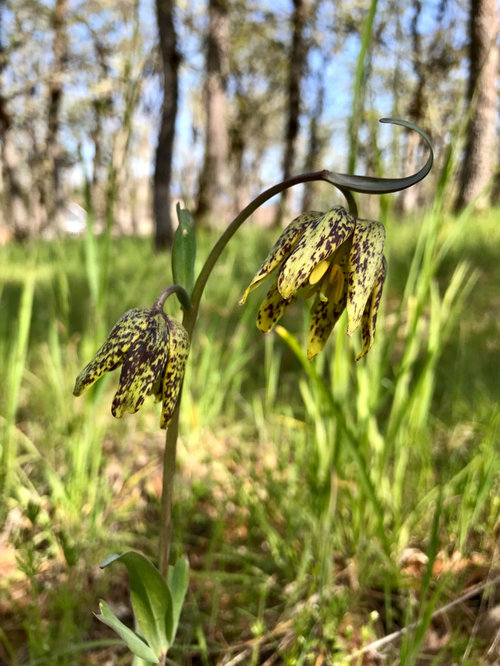
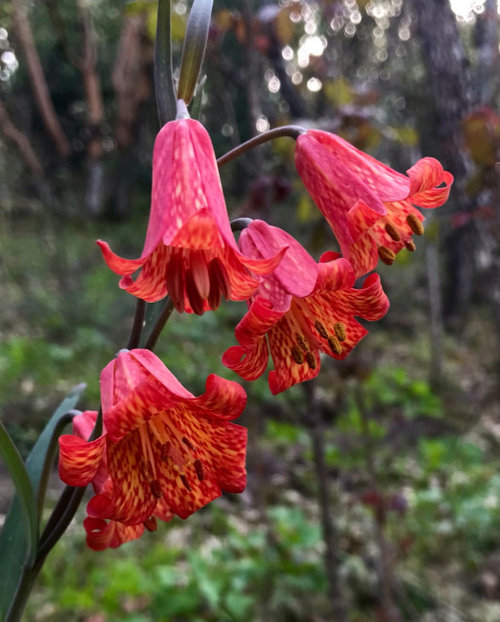
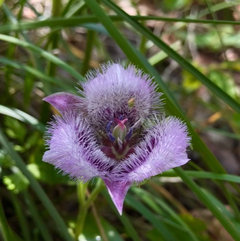
First, here is Fritillary affinis, which I hope everyone knows. The first is from the F gentneri site, and the others are from previous excursions.


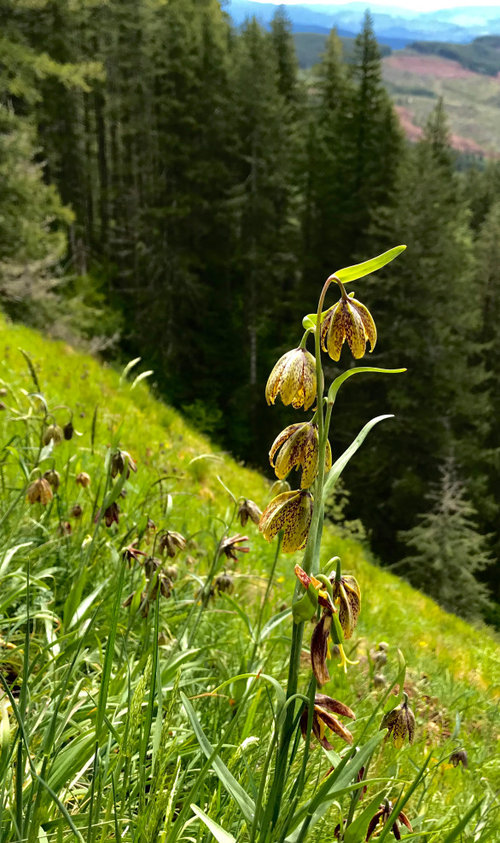
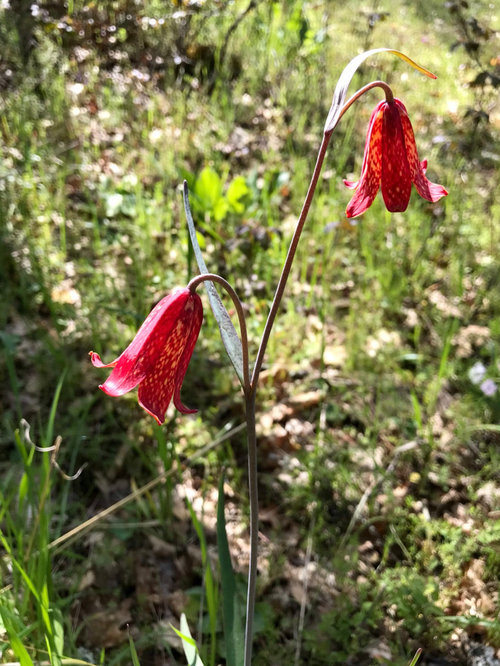
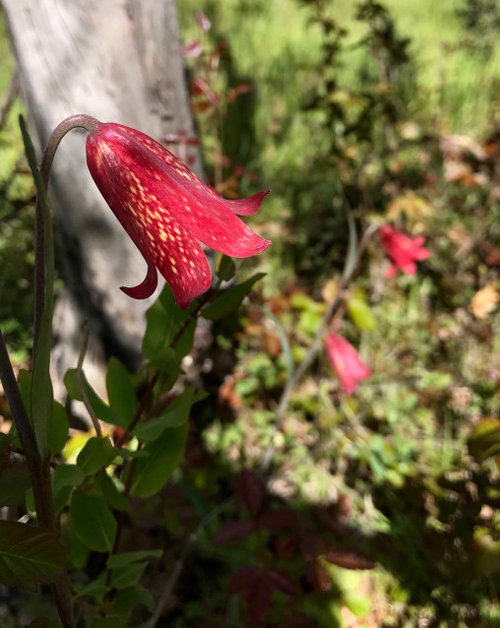
Here’s one that I’m very confident is F recurva since it came from a location where F gentneri is not found. Stunningly beautiful in person. The picture doesn’t do it justice, nor does it show the masses of poison oak one needs to brave to get close.


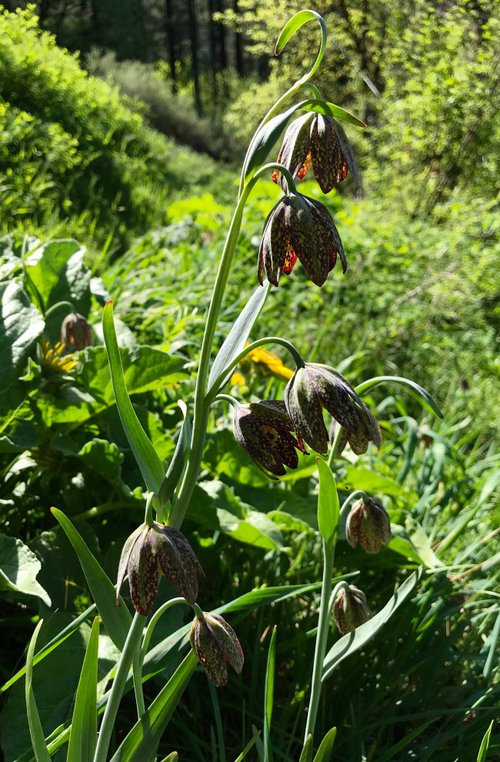
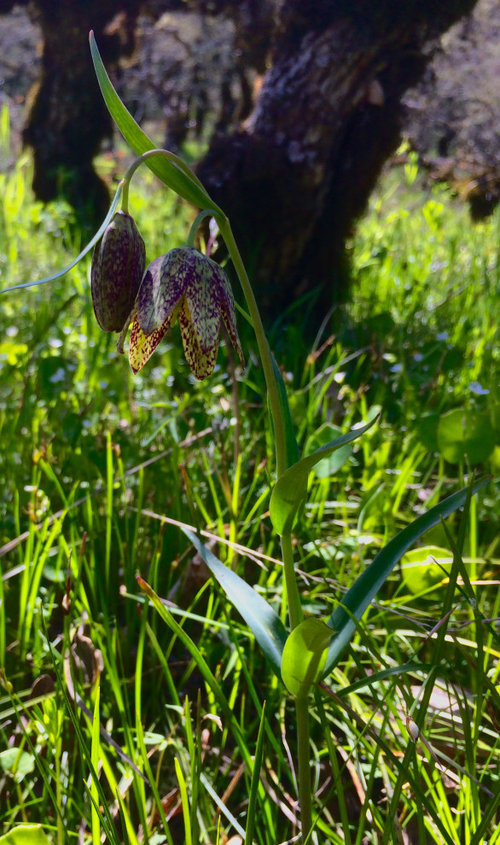
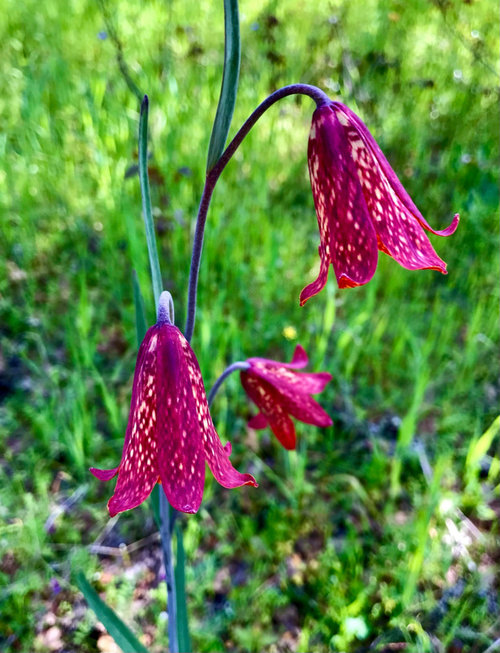
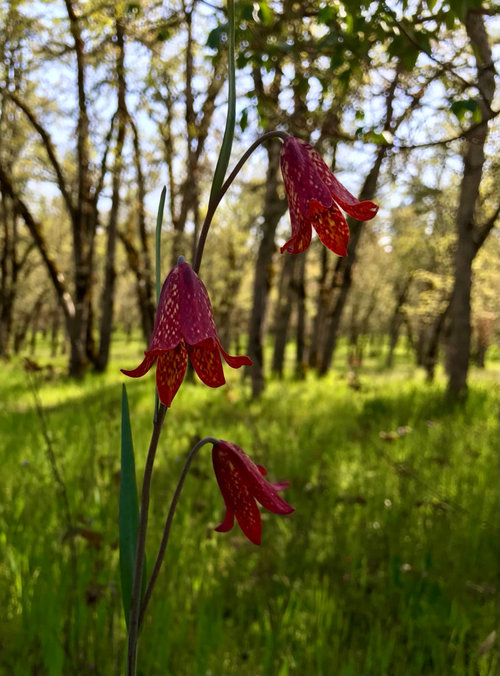
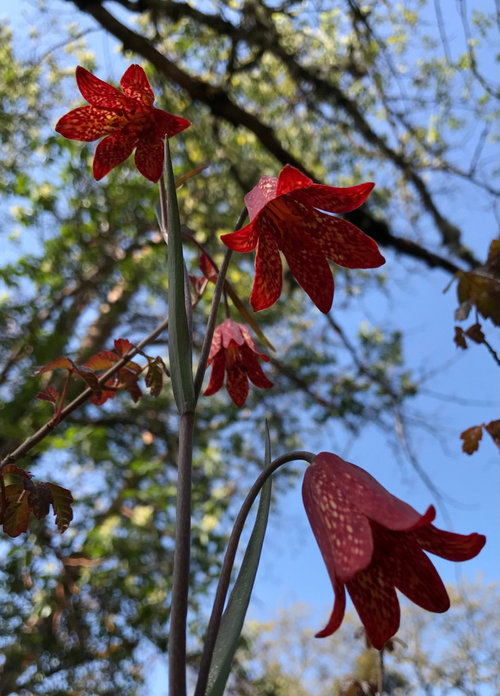
Here are the possible F gentneri plants. I’m fairly confident that several are F gentneri, but, of course, I can’t confirm with certitude. Again, braving the poison oak to get these pictures.


I hope you enjoyed! I sure did

Comments (15)

  • 4 years ago

    Not sure what they are but the pix are great. Thanks.

    tj

    User thanked tsugajunkie z5 SE WI ♱
  • 4 years ago
    last modified: 4 years ago

    Stunningly beautiful! Awesome that you braved the poison oak. I love Frits too and also have only the common F. meleagris after losing F. pallida & imperialis.

    User thanked peren.all Zone 5a Ontario Canada
  • 4 years ago
    Gorgeous photos!!!

    User thanked party_music50
  • 4 years ago
    Thank you so much for letting us see!

    User thanked sweet_betsy No AL Z7
  • 4 years ago
    Thanks so much for posting, macranthos. I always enjoy your photos of populations of wild flowers. The colors and pattern of of the F. gentneri are amazing!

    User thanked NHBabs z4b-5a NH
  • 4 years ago
    second pic.. i would have probably sneezed and rolled down that hill to my death .. dreaming of frits all the way ... lol ...


    or it was a camera trick ...


    thanks for the post ..... i noticed mine on the south side of the house seem weeks early.. and those on the north side of the house.. very close.. arent even up yet... go figure on that ...


    squares are very rare in nature.. and it always fascinated me.. that the F flowers had squared on them ...


    ken


  • 4 years ago
    I hope you will indulge a few more photos from the trip!...

    Camassia leichtlinii

    Plagiobothrys nothofulvus

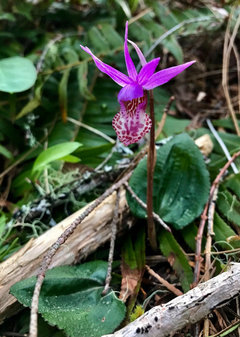
    Calypso bulbosa

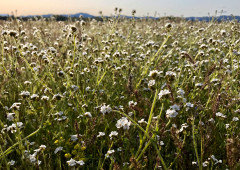
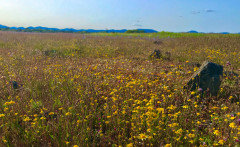
    It's... it's a field.

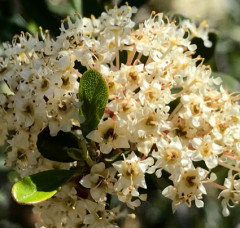
    Ceanothus cuneatus

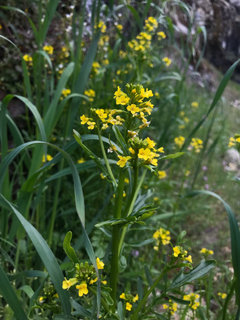
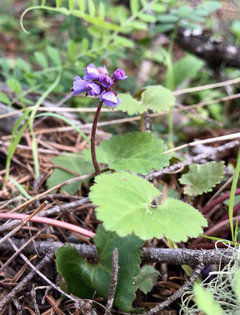
    I dunno. Something in Brassicaceae.

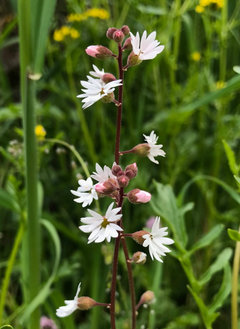
    Lithophragma parviflora

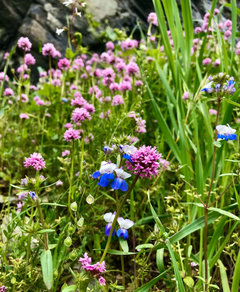
    Collinsia parviflora and Plectritis congesta.

    Romanzoffia californica

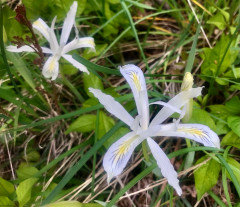
    Iris chrysophylla.


  • 4 years ago
    Sythris reneformis.

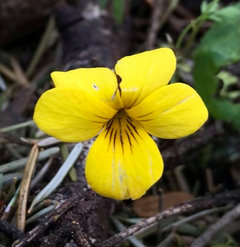
    Viola sheltonii

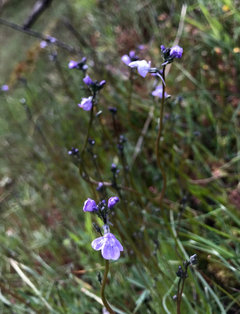
    Nuttalanthus texensis.

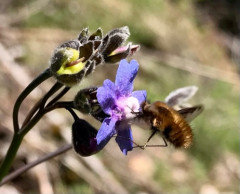
    Cynoglossum grande with a hoverfly.

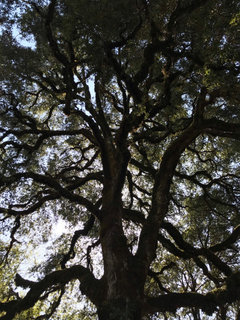
    QUercus chrysophylla.

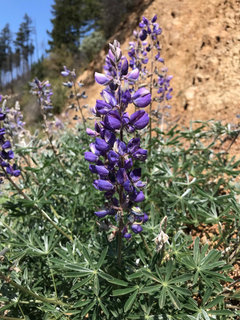
    Lupinus albifrons.

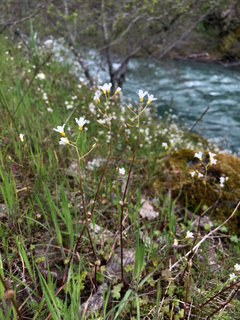
    Arabis aculeolata.

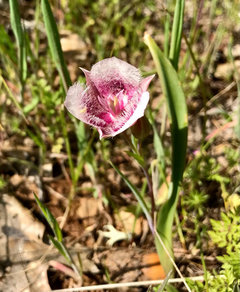
    Calochortus tolmei.

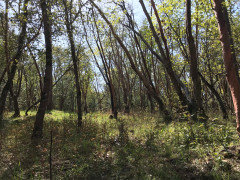
    Arbutus menziesii & too much Toxicodendron! Fritillary habitat.

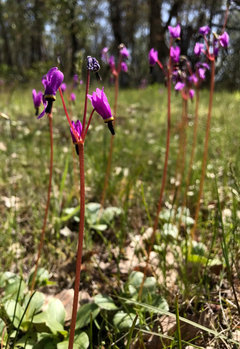
    Primula hendersonii.

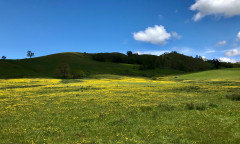
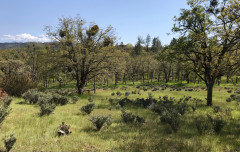
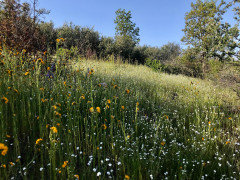
    Quercus garryana with mistletoe and Ceanothus cuneatus. Such a lovely meadow.


  • 4 years ago
    I for one am always happy to indulge!

    User thanked NHBabs z4b-5a NH
  • 4 years ago
    Wow! I love the Recurva and gentneri, not so much the affini. :) Is there a reason why the Recurva is not in cultivation/horticulture trade. What would be the challenges in growing them? I found some seeds on a Canadian online store and on etsy but they obviously take many years to get to blooms that way, if they make it all that far.

    User thanked getgoing100_7b_nj
  • 4 years ago
    In many cases, west coast native species have a very limited natural range and with very distinct climate and cultural requirements that makes growing them outside of those restraints challenging at best. And that Canadian website (also a west coast entity) even states that it "co-evolved with our climate of wet winters and dry summers and will not survive/thrive if grown any other conditions."

    btw, the seeds they harvested date from 2016 and may have issues with viability. Frit seeds are best sown as soon as they are ripe as older seed may develops germination inhibitors that can make late sowings germinate erratically.

    User thanked gardengal48 (PNW Z8/9)
  • 4 years ago

    Post all you want, mac. The pix are great.

    tj

    User thanked tsugajunkie z5 SE WI ♱
  • 4 years ago
    Please, please keep indulging us!!!

    User thanked peren.all Zone 5a Ontario Canada
  • 4 years ago

    Yeah, I couldn't recommend growing these western plants in NJ. The humidity, wet summers, very cold winters would just destroy them.


    Here's a couple more photos from the trip. I just got back from a hike in the Columbia Gorge, we counted more than 50 species of flowers, but we sort of lost count and couldn't decide if seeing them from the car really counted... I'll post those after I get them organized.


    Calochortus tolmei, but a pink version! Never seen it before. Or maybe it's elegans... I don't know how to tell them apart...

    Lasthenia californica on top of Table Rock. Gorgeous.

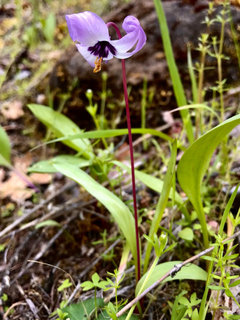
    Erythronium hendersonii. It was very late for these, so there were only a couple still open. This one was tiny, maybe only 5in tall.

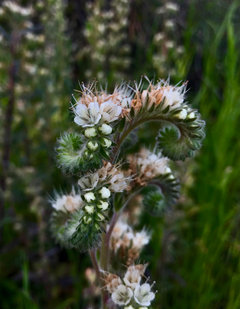
    Phacelia heterophylla.

    Amsinckia and Plagiobothrys.

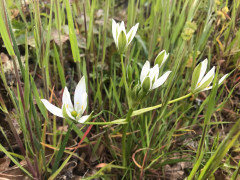
    Ornithogalum umbellatum.... which is not native here.

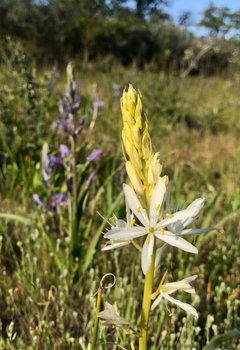
    Camassia leichtlinii alba.

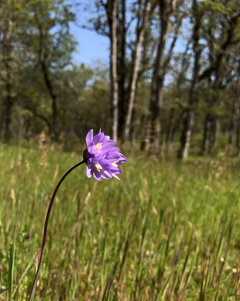
    Dichelostemma capitatum.


    Ok, That's it for now. I hope you all enjoyed!


Sponsored
Peabody Landscape Group
Average rating: 3.5 out of 5 stars8 Reviews
Columbus' Reliable Landscape Design & Contracting