Software
Houzz Logo Print
indianagardengirl

Verticillium resistant shrubs

4 years ago
last modified: 4 years ago

I’ve lost my beautiful Sambucus ’Black Lace’ to what I suspect is verticillium wilt. I am looking for large shrubs that can handle zone 5 in full sun. I’ve done some searching, but most sites list resistant trees, not shrubs. Looking for suggestions that might be resistant - I get that there are no guarantees. What might you advise?

Comments (16)

  • 4 years ago

    All conifers (including dwarfs or shrubby forms), boxwood, holly, willows, dogwoods (most), potentilla, rhododendrons and azaleas are all resistant or immune.

    There is also a nebulous category that cannot be confirmed as susceptible or resistant but have not been documented with the disease in any measurable quantity and are by default considered "resistant". Hydrangeas, weigela, spiraea are a few that are included here but there are more.

    If you Google "verticillium wilt" together with the shrub name, you should be able to find a few more that make no reference to it one way or the other.

    indianagardengirl thanked gardengal48 (PNW Z8/9)
  • 4 years ago

    Unfortunately, Viburnums are quite susceptible.

  • 4 years ago

    I will have to tell my 125 or so taxa to watch out.


    I have not experienced any particular trouble from Verticillium wilt here at the Valley. I suspect that there will be a range of susceptibility across the many species in this genus. When next ensconced at home, I'll take a look at what Dirr had to say - if anything.


    @gardengal48 (PNW Z8/9): were there any particular species mentioned, from your experience or from any particular reference?


    In big old flat and frigid Hoosier wasteland, indianagardengirl can probably only grow one or two species anyway...

    indianagardengirl thanked ViburnumValley central KY Bluegrass z6
  • 4 years ago

    None of my sources, including Dirr, differentiate susceptibility by species. IME, if a genus is susceptible, any member of that genus can be/often is susceptible.

    But it is such an opportunistic pathogen, I generally do not worry about it. Even if an active VW colony is present, that does not mean any susceptible species will contract it. If you can remove as many potential stressors as possible by providing the best cultural care, chances are very good the disease will not manifest.

    I had an active VW situation in a former garden where the pathogen took out a single plant amongst a bunch of very susceptible species, leaving the rest untouched.

    indianagardengirl thanked gardengal48 (PNW Z8/9)
  • 4 years ago

    Viburnums? Let me think. I have V. carlesii, V. plicatum tomentosum, V. nudum, and V. dentatum var. deamii. But these are all in spots that haven’t given me wilt problems. I also have a couple of Aesculus parviflorum. Also have Clethra alnifolia, and Physocarpus opulifolius.

    Been thinking about that holly though. That’s something I don’t have yet. And yes, VV, very flat and periodic inundation across this side of the yard, so conifers a no go there.

  • 4 years ago

    How far north on the Hoosier Horizon? Can I see you from here...


    Yes, yes, yes - Ilex is not only interesting, but illuminating, illustrious, and inimitable!


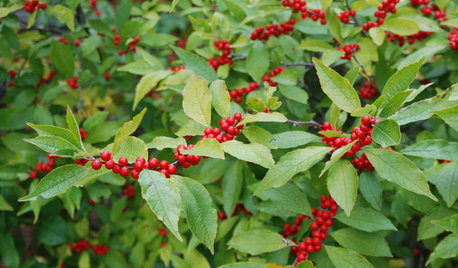
    Some of the most outstanding selections of Winterberry Holly (Ilex verticillata, which seeks out inundation) come from Indiana and the Ohio River valley region. The Great Rivers Chapter of the Holly Society of America was home to many of these plantsmen, horticulturists, nurserymen, and excellent gardeners that ferreted out such stellar deciduous holly selections as 'Winter Red', 'Winter Gold', 'Bonfire', 'Afterglow', 'Jim Dandy', 'Stop Light', and 'Sunset'.


    Sounds you have a handle on Viburnum appreciation - whew.

    indianagardengirl thanked ViburnumValley central KY Bluegrass z6
  • 4 years ago

    @gardengal48 (PNW Z8/9):


    Thank you for the additional information. I didn't find anything jarring in Dirr or Egolf writings, and I agree with your premise of healthy thrifty growing conditions being huge ounces of prevention.


    I suspect - with the additional information that the subject site can be seasonally wet - that a selection of species that tolerate that condition well should pay off, kind of like a big old rain garden. Makes me think of Cephalanthus occidentalis, shrubby dogwoods like Cornus amomum, Clethra alnifolia, Ilex decidua and Ilex verticillata. If you are after assembling a larger planting (not just replacing one Elderberry), then consideration of dwarfer or compact selections of plants often listed as trees might be a good plan. Taxodium distichum 'Peve Minaret', Liquidambar styraciflua 'Gumball', and Magnolia virginiana 'Tensaw' would add all kinds of different seasons of interest to such a site.

    indianagardengirl thanked ViburnumValley central KY Bluegrass z6
  • 4 years ago

    The following list says viburnum is 'sometimes' susceptible to vw.


    Verticillium wilt plant list (rhs.org.uk)

    indianagardengirl thanked BillMN-z4a
  • 4 years ago

    I’m northeast of Indianapolis, and although it’s very flat probably too far for you to see me 😁. I have had Ilex verticillata on my radar but have not seen in local nuseries. May have to consider mail order.

  • 4 years ago

    GG: Sounds like bad stuff. I haven't seen any of that here yet that I know of.

    But I'll be looking for resistant strains or at least considering that when looking for anything new. I'm already doing good as I have Betula, Crataegus, Gleditsia and Ilex already present and of course all the conifers.

    Interesting that Betula is resistant but Ostrya virginiana (related) isn't.


    IGG: I purchased Winter Red with Southern Gentleman bc I thought something that blooms late would be better in my, well, if you're 'big old flat and frigid Hoosier wasteland' I must be somewhere north of the arctic polar region. lol

    Anyways I thought this chart was helpful when choosing Ilex verticillata. Although plant size and berry color are also considerations.

    Winterberry-pollination.pdf (skh.com)

    indianagardengirl thanked BillMN-z4a
  • 4 years ago

    From my own experience ( in the Netherlands) I have seen a lot of Viburnum x bodnantense plants suffering from verticillium wilt. Especially the cultivars 'Dawn' and 'Charles Lamont'. Although popular with garden designers I advise against them. Way better to plant Viburnum burkwoodii or carlcephalum as these seldom suffer from verticillium wilt.

    indianagardengirl thanked Dutch
  • 4 years ago

    I have seen VW take down maples - especially Japanese maples - redbud, cotinus and raspberries. And suspected it on strawberries and sambucus. The only Viburnum I have encountered with VW was V. rhytidophyllum. And a big one at that!! From vibrant to dead in less than a week!

  • 4 years ago

    "... what I suspect is verticillium wilt" - It could very well be VW, but keep in mind that borers and canker diseases can also affect elderberry, and symptoms may be similar to VW.

    "... northeast of Indianapolis" - if your soil is relatively high pH and tends to get pretty dry in the summer, winterberry hollies may not be very happy in full sun at your location. I'd guess that my soil is closer to neutral than yours, and in dry summers if I don't water them my winterberries tend to look pretty stressed (wilty and a little chlorotic). But if you are irrigating they may do OK for you. I think I'd give the same advice for Cephalanthus and Clethra based on my experience with them. Curious if your existing Clethra is irrigated and/or in some shade?

    indianagardengirl thanked arbordave (SE MI)
  • 4 years ago

    My Clethra is in shade, Dave. Definitely drier in summer, but I have inundation any time we get more than 2-1/2” at a time. And this is far from a hose, so it won’t get watered. Yes to higher pH - been a long time since I tested so I don’t remember the number.


    Also have to stay under power lines which is why I was thinking large shrub. It’s my corner property marker.