Software
Houzz Logo Print
webuser_28859125625

house plant help

4 years ago
Hello,

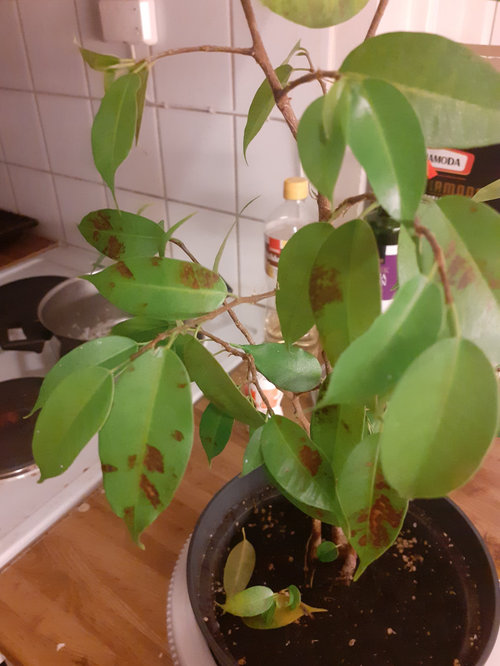
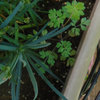
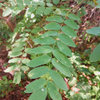
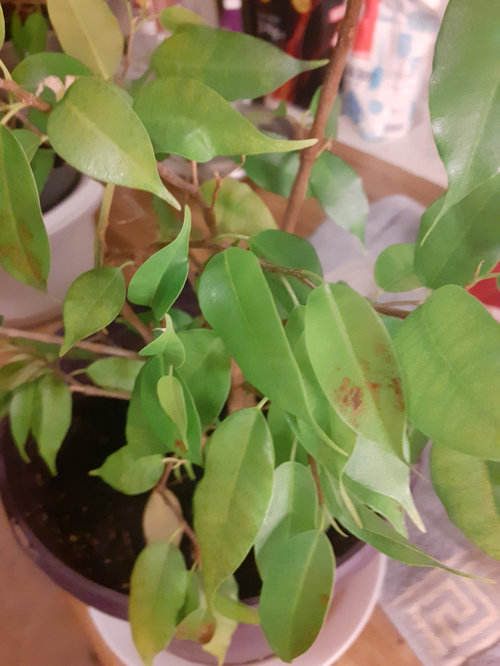
I'm unfamiliar with plants,no idea what species these two are but their pots got small for them after a couple years and I repotted them,approximately 2 weeks later their is visible browning on both,more so on the other.Any advice or tips?I give them a half cup of water every 2nd day and also use a squirt bottle on them.What to do?Thanks


Comments (15)

  • 4 years ago
    last modified: 4 years ago

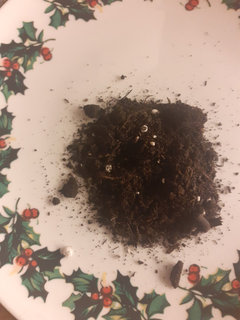
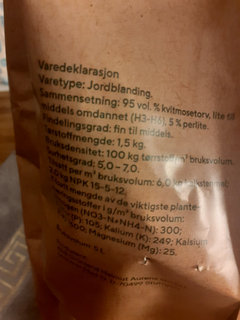
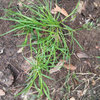
    Appreciate the reply,this is my first time taking care of plants.I have included picture of the dirt but it's basic flower dirt,I live in Norway so it's difficult to translate.Would you reccomend not watering them for a week or two?I have 100% been over watering them.Also thanks for the well written guides! :)


  • 4 years ago


  • 4 years ago
    last modified: 4 years ago

    My recommendation would be to water as needed, not on a schedule, so ideally, each plant's watering interval would be determined by use of the "tell" described above.

    The potting medium you used is comprised of a very high % of fine particles; and it happens that particle size is what primarily drives water retention, so you'll need to take extra precautions to guard against saturated soil for extended periods.

    Once you've had a chance to peruse the info at the links I left, if you're still left with questions, we can talk more about a care regimen in more detail, if you like.

    BTW - you didn't mention whether or not the plant(s) had been exposed to full sun, even for as little as a couple of hours?

    Al

  • 4 years ago
    last modified: 4 years ago

    Nothing to add to Al's information, but just wanted to say it was good to see a post by him. I haven't run across him in ages, it seems like.

    You won't find better advice, anywhere, concerning soil than what Al gives.

  • 4 years ago

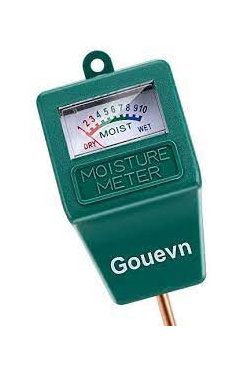
    You can get a gadget to help you know the moisture levels in the soil

    .

  • 4 years ago

    they are severely stressed from shipping from grower.. to seller.. to your house.. and then you immediately repotted them ... and then we suspect you put a stressed plant in sun causing sunburn ...


    but it remains.. simply.. they are stressed... you simply have to stop trying to love them to death ...


    with no furnace going.. in humid summer,, i might water my houseplant once a month.. if not every other months...why yours need water ever other day is beyond me.. and odds are.. you are loving them too much ... reread al's great words about using a tell.. and learning how to water .. water when a plant needs water.. not of some schedule ... ..


    there is nothing you can do.. to repair those leaves .. so dont try to love those leaves anymore ... hope they will fall off soon enough.. so you dont have to look at them.. or the plant starts growing with vigor.. to hide them ...


    fert is NEVER a response to stress .. nor should it be used with a tranplanted or repotted plant .... let them get over the stress of such.. before you start feeding them ..


    ken

  • 4 years ago

    ken, reread the original post. They have owned the plants for over 2 years and only recently repotted them 2 weeks ago as they out grew their container.

    Watering frequency is bumped up in the summer months compared to winter. This is the primary growth season and a period of higher water requirements. If I watered my houseplants only once a month in summer they would all be dead, indoors or out!!

    And just an FYI but moisture meters/probes are not an accurate assessment of determining a containerized plants water needs. The "tell" described by Al is far more effective and efficient.

    In fact, I'd suggest ignoring pretty much anything commented on here other than Al's excellent advice!! 😁

  • 4 years ago

    FI - thanks for the kind words. I'm retired now, so I'm busier than when I was working. I spend most of my free time here at Houseplants and a little less frequently at the Container Gardening forum.


    Any plant in a pot is always stressed, if only because limiting a plant's root system to extending into whatever volume of soil its pot can hold is stressful. That's a given. Even in situ plants are always suffering under some type of stress. Plants are genetically programmed to tolerate stress. It's only when they are obligated to tolerate stress at or beyond the limits they are programmed to tolerate that stress becomes a serious issue. Too, it's not of any more importance to say a plant is stressed than to say an automobile is running rough. What's important is to identify what is causing the stress and alleviating it to the greatest degree possible or to the degree the grower deems appropriate/ sufficient.

    If anyone grows houseplants other than succulents or cacti, it's almost certain that being able to measure watering intervals in months means the grower is leaving a large fraction of the plant's potential in terms of growth rate, vitality (health), and its ability to defend itself, lying on the table. Reason: Watering intervals of a week or more depend on there being excess water in the grow medium, water that occupies the space between soil particles that would otherwise be filled with air. I believe, if we had a way to quantify and compare the damage done by a variety of stress factors to all houseplants wherever they are grown, we would find that over-watering would stand out as the most stressful, followed by too little light. Those 2 stress factors undoubtedly account for more stress than all other stress factors combined.

    Zoe's had the plants for 2 years, so 'stress' from shipping isn't a factor. When a plant is rootbound, repotting (includes bare-rooting, root pruning, and a change of soil) is a stress reliever. Though the act of fully repotting a plant is stressful in a temporal sense, the stress from repotting only lasts a week or two, depending in the plants level of vitality and its genetic vigor as well as the skill of the person doing the repotting. The NET result is a plant completely relieves of all stress due to being rootbound. Tight roots are a tremendous limit on a plant's ability to realize their genetic potential and can sacrifice more than 100% of it's growth potential. I can say "more than 100%" because severe root congestion often causes shedding of leaves and branches or stems. Since the true measure of growth is the increase in a plant's dry mass, and the plant, after shedding parts, would actually be shedding parts, the plant could easily be going backward in terms of its dry weight ..... so more than 100% of growth potential lost.

    While it's true Zoe cannot do anything to reverse the damage done to existing leaves, she can learn to avoid the cause so it doesn't happen again.

    If fertilizer is 'never' an appropriate response to stress, how would we treat a nutritional deficiency. The advice to withhold fertilizer is often given for any of a wide variety of 'reasons' and it's seldom appropriate. Plants need a full complement of nutrients usually acquired via the root pathway, in the soil and available for uptake at all times, and fertilizing transplanted/repotted plants same day of repot is appropriate, as is fertilizing an up-potted plant if at the time of the up-potting it was under-nourished. I have seen the newest of new roots wrapped around fertilizer granules or prills, so the idea an appropriate amount of fertilizer at repotting time will be harmful is not true.

    Zoe - just a cautionary observation. Moisture meter gadgets do not measure moisture levels and are not reliable for that purpose. They measure electrical conductivity. Proof: clean the probe of the meter; then, using a clean cup, fill it half fill with distilled water and insert the probe in the water. Note that it reads 'DRY'. Now, sprinkle a bit of table salt into the water and watch the probe move to 'WET'. They are actually closer to accurate when used to guesstimate the level of dissolved solids (salts from tapwater and fertilizer solutions) in the soil solution.

    Al

  • 4 years ago

    Jordan, if you can't be a little more creative, then at least admit you're not fooling anyone. Sheesh. If you were any more immature, you'd have a negative value for your age.


    garbagegal48

    2 hours ago

    last modified: 2 hours ago

    What you see is chlorisis, not leaf scorch. Due to inadequate soil nutrients / conditions or response to cgsnge in location or being transplanted.. F. benjamina is extremely sensitve to even subtle changes and will react readily.


  • 4 years ago

    @tapla (mid-Michigan, USDA z5b-6a) Al, thanks for the warning about moisture meters. I had read about their unreliability years ago, but I didn't remember exactly why they were unreliable. But I did NOT know they could be used to "guesstimate" dissolved salts. It seems even a bad product can still be useful, just not for what it's sold for, lol.

  • 4 years ago

    Now Jordan is deleting comments before anyone even reads them, lol. I got this alert for a message that was gone before I could even come to read it and laugh:


    Hi fig_insanity Z7a E TN,

    You've been mentioned in question: house plant help

    garbagegal48 said: @fig_insanity Z7a E TN
    Project much? Great controbution there. 🙄
    Anyway, back on topic …,
    The issue at hand with moisture meters is reliability. They aren’t meant to measure moisture in water. They do detect moisture via electrical currents in the soil, not water. After all, it’s meant to measu...


  • 4 years ago

    Let's just acknowledge the guy is a muppet, ignore him and move on from there :-)

  • 4 years ago
    last modified: 4 years ago

    @gardengal48 (PNW Z8/9) I would never disparage the Muppets by such a comparison, lol. Long live Big Bird! But I definitely agree with the sentiment ;)

  • 4 years ago

    LOL!! Look up 'muppet' without any capitalization. Only a very remote and tertiary relationship with the puppets 🤗