Software
Houzz Logo Print
hopesworld

What is wrong with my pothos?

3 years ago
last modified: 3 years ago
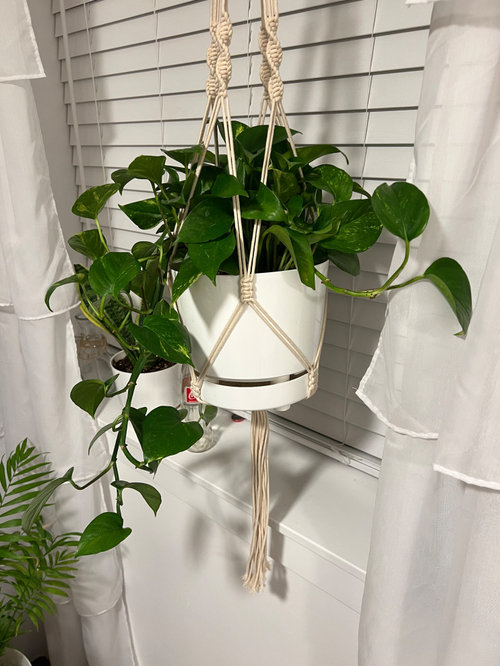
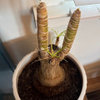
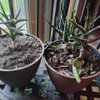
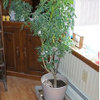
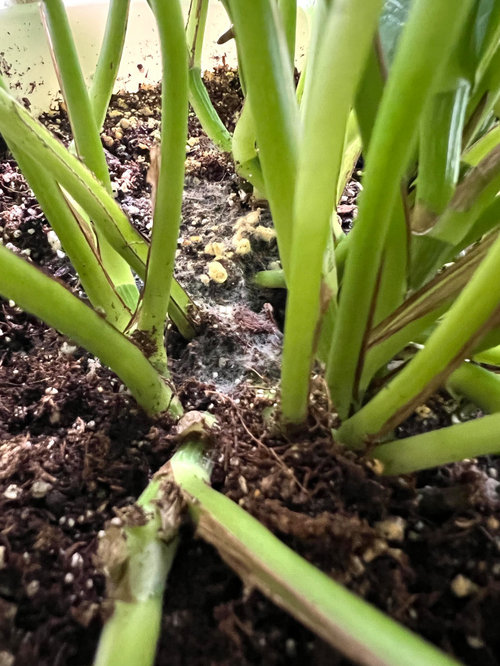
Hey! I am a relatively new plant owner! I purchased a golden pothos a few months ago. It has been doing really well, but I noticed that it had some holes/ tears in the leaves and repotted it a few weeks ago, removed affected leaves, and applied some neem oil as I feared it had a fly infestation. The last time I watered it was a week ago. The pot has drainage holes and I only water when the soil feels like it has dried out. I have it hanging in my window (basement, west facing) so it has low light except for certain parts of the day. It has been getting chillier especially right next to the window, but it is right underneath a heating vent. The plant looks healthy, but upon closer inspection, it seems to be growing a fungus? I don't know how to help it!


Comments (3)

  • 3 years ago

    Your plant looks great!! There is evidence of a fungus growing but on the soil, not on the plant. This is not uncommon with houseplants - fungal organisms are the natural digesters of the organic matter in the potting soil and they often appear, especially if the soil tends to stay wet. They are harmless to the plant but may be an indication that watering is on the heavy side.

    hopesworld thanked gardengal48 (PNW Z8/9)
  • 3 years ago
    last modified: 3 years ago
    you are on the verge of loving your plant to death.. since you brought it home.. youve reduced the canopy.. repotted it.. put it in the basement.. severely reducing light levels.. and you change watering protocol ..

    how about you just water it properly .. and otherwise leave it alone for 2 or 3 months .. and then decide if its over all the stress inflicted on it ...

    house is warm enough.. dont care about the window cold.. unless the window ices up..and the leaves are actually touching the ice/window ...

    the heat register could dry media surface while leave the lower media wet.. so learn how to FEEL the weight of water in the pot.. and water when it drys thru the whole pot...

    what gal said on the mold/fungus being media related. not plant related.. ignore is.. or just scratch it off with a spoon ...

    ken

  • 3 years ago

    Several things can cause holes/tears in the leaves. The most obvious would be mechanical injury (for animals - like a bruise). Sometimes though, dry air/ low relative humidity can cause leaf surfaces to stick to each other while the leaf is still furled and yet to fully emerge, so "right under the heat vent" is a concern. The counterpart to photo synthesis, the process by which plants make their own food (sugar/ glucose), is respiration, during which the food/ energy created is used. Increasing temperatures and decreasing humidity can significantly increase the rate of respiration, so much, in fact, that it causes the plant to use more food/ energy than the plant can create. This is an unsustainable arrangement that can have serious consequences for the plant.

    The other potentiality would be the plant's inability to maintain a steady supply of calcium in the nutrient stream. Only some nutrients are mobile in the plant, that is to say the plant can only mobilize and move certain nutrients from place to place within the plant. Nitrogen, phosphorous, potassium, and magnesium are mobile in the plant. The remainder are only somewhat immobile or immobile in the plant, meaning the immobile nutrients must be in the nutrient stream at all times if cells (and particularly cell walls) are to form normally. Soggy soils limit calcium uptake, causing weak cell walls and abnormal cells. When many cells are affected, it forms weak spots in tissues that cause holes and tears. This can occur as the result of a true deficiency due to an actual inadequate supply of calcium in the soil, or it can be a cultural deficiency, during which a cultural condition inhibits uptake of calcium from what could be an adequate supply; thus, a culturally caused calcium deficiency. If you actually saw fungus gnats flying around the plant, that would tend to add support to the idea the grow medium holds too much water, or, you're watering too frequently. BTW - it is best practice if you do not allow any water to remain in the collection saucer after a thorough watering. If no water collects in the saucer, you're not watering thoroughly. If water does collect and remain in the saucer, you are ensuring that all salts from tapwater and fertilizer solutions remain in the soil where they eventually cause the plant's inability to take up enough water to keep the plant properly hydrated.

    The white filaments on the soil are fungal hyphae. If you notice, they occur where there is the least amount of air movement due to the movement being slowed considerably by the stems. This also contributes weight to the idea you might be over-watering. The fungal hyphae are not in themselves a concern, as plants live in harmony with thousands of fungal species. Like Gardengal mentioned, the concern has more to do with the over-watering that might be occurring chronically.

    Almost all commonly grown herbaceous houseplants in the Northern Hemisphere are best repotted in the 2-3 weeks immediately before the summer solstice (21 June). This is because they will (or should) have a high level of reserve food/ energy, and, their current ability to create food/ energy will be peaking. This means recovery at that time will be quicker than at any other point during the growth period. Repotting in fall, winter, early spring should be avoided because low light and short days increases recovery time considerably, leaving plants more vulnerable to insect herbivory and biotic/ abiotic pathogens. Plants are most vulnerable in terms of energy depletion in mid-winter through early spring.

    Al


    hopesworld thanked tapla (mid-Michigan, USDA z5b-6a)